Skip to content
  • Facebook
  • X
  • Linkedin
  • WhatsApp
  • YouTube
  • Associate Journalism
  • About Us
  • Privacy Policy
  • 033-46046046
  • editor@artifex.news
Artifex.News

Artifex.News

Stay Connected. Stay Informed.

  • Breaking News
  • World
  • Nation
  • Sports
  • Business
  • Science
  • Entertainment
  • Lifestyle
  • Toggle search form
  • Israel Slams UN-Backed Gaza Hunger Report
    Israel Slams UN-Backed Gaza Hunger Report World
  • Women’s ODI World Cup | Buoyant South Africa meets inconsistent Bangladesh
    Women’s ODI World Cup | Buoyant South Africa meets inconsistent Bangladesh Sports
  • Centre Notifies PIB As Official Fact Checker For Online Content
    Centre Notifies PIB As Official Fact Checker For Online Content Nation
  • ‘India Will Be Called A Sporting Country In 10-15 Years’: Sunil Gavaskar
    ‘India Will Be Called A Sporting Country In 10-15 Years’: Sunil Gavaskar Sports
  • AIIMS Delhi researchers show exactly how particulate matter affects foetuses
    AIIMS Delhi researchers show exactly how particulate matter affects foetuses Science
  • Access Denied
    Access Denied Nation
  • Access Denied
    Access Denied Nation
  • Prize Money For Cricket World Cup 2023 Announced. Champions To Get…
    Prize Money For Cricket World Cup 2023 Announced. Champions To Get… Sports
Indian space programme rooted in international cooperation rather than competition: ISRO chief

Indian space programme rooted in international cooperation rather than competition: ISRO chief

Posted on February 10, 2026 By admin


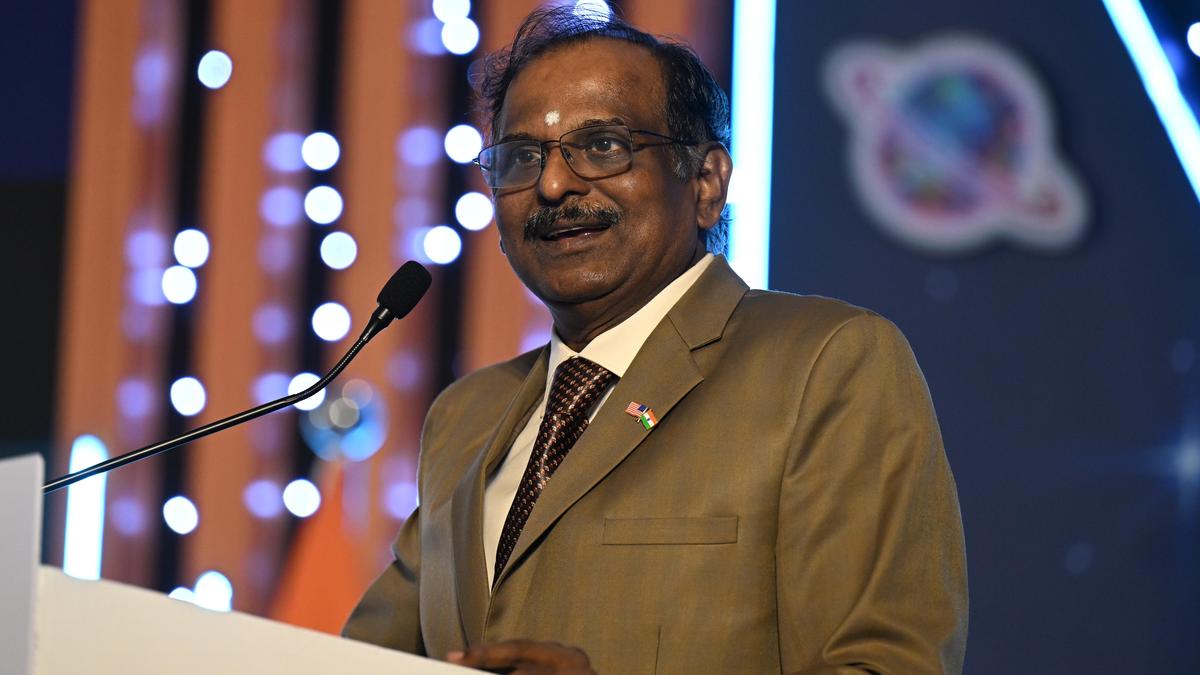
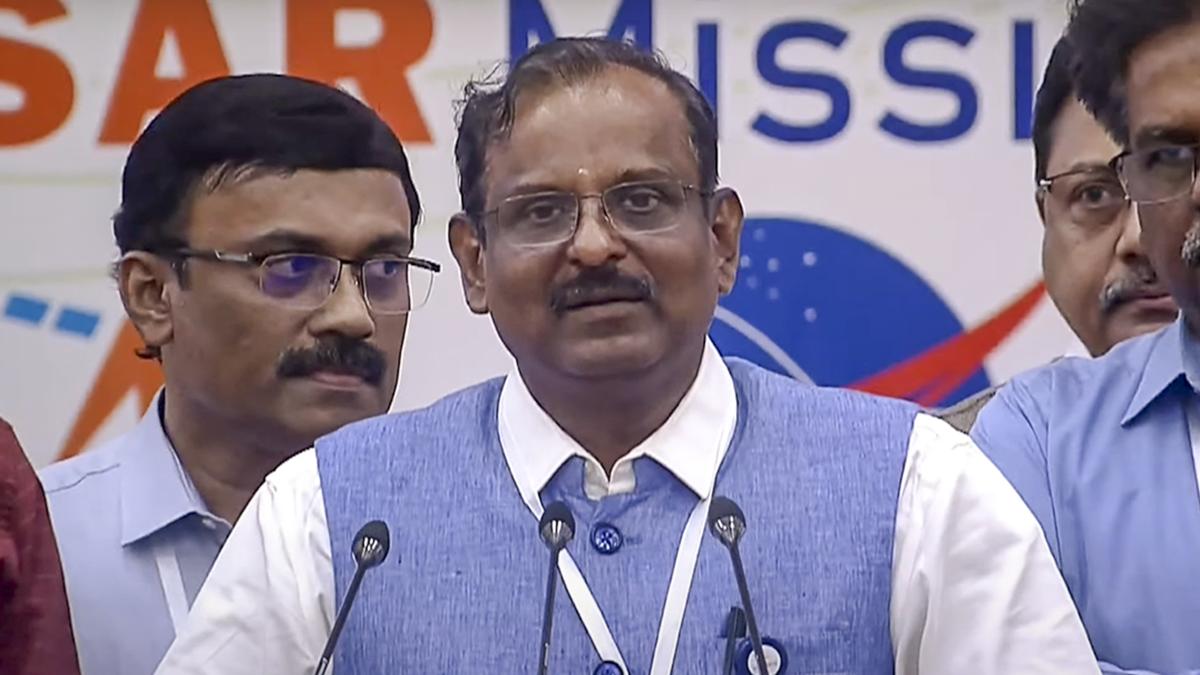
ISRO Chairman V. Narayanan on Tuesday (February 10, 2026) said that India’s space programme was conceived as a people-centric and application-driven initiative, rooted in international cooperation rather than competition.

Highlighting six decades of the country’s space journey, Mr. Narayanan said the programme had evolved from modest beginnings into a globally respected ecosystem that serves not just India but the international community, with collaboration as its core philosophy.

Speaking at the inaugural ceremony of the U.S.-India Space Business Forum, the ISRO chief noted the contribution of USA in India’s space programme.

Space-related activity in India started in 1962, 15 years after the independence and the first rocket India launched was made in the U.S. and supplied by NASA.

Mr. Narayanan underlined that the Indian space mission is mainly for the benefit of people.

“The Indian space programme was started not to compete with anybody but to bring advanced space technology for the benefit of the common man of India,” Mr. Narayanan, Secretary, Department of Space, said.

He stressed that the vision of the programme has expanded over time to serve global needs while remaining human-centric.

“Today, we strongly believe it is not only for the common man of India, it also serves the global community. And it is a human centric, application oriented program,” he said, calling for deeper international partnerships in space exploration and commerce.

Welcoming U.S. delegates and industry leaders, he said the forum symbolised the growing convergence between India and the United States in the space sector.

“This type of programme should be collaborative; an internationally collaborative one, and in that context the U.S.-India Space Business Forum has brought almost 14 business partners from the USA,” Mr. Narayanan said.

Recalling early Indo-U.S. cooperation, he cited the launch of India’s first sounding rocket in 1963 and subsequent joint missions, including satellite applications, health observation studies, and lunar exploration.

“Let me thank the U.S. team for the outstanding support at that point of time, what you extended was the beginning of the space activity in the country,” he said.

Referring to recent milestones, Mr. Narayanan highlighted joint achievements such as the Chandrayaan missions, the NISAR satellite, and commercial launches, stating that cooperation had matured into a partnership of equals.

“It demonstrated to the world the emotional collaboration, rather than just collaboration, between India and the US, and a strong bond was demonstrated through this mission,” he added.

He also pointed to the rapid growth of India’s private space ecosystem following sectoral reforms in 2020 and outlined ambitious future goals, including building the country’s own space station by 2035 and undertaking crewed lunar missions.

“Space is common for the entire global community, and the benefit should be enjoyed by every citizen of this globe,” Mr. Narayanan said, and called for sustained global cooperation.

He said Indian industry today contributes a substantial share of mission hardware and software, enabling ISRO to scale operations while reducing costs and timelines.

“Approximately 75% of the funding and realisation comes through Indian industries, because it is the Indian industries which build most of the hardware and software,” Mr. Narayanan said.

Looking ahead, the ISRO Chairman outlined an ambitious roadmap that includes Chandrayaan-4 and Chandrayaan-5, Mars and Venus missions, expansion of Earth observation and navigation constellations, and the Gaganyaan human spaceflight programme.

He said India is targeting the launch of its first space station module by 2028 and a fully operational multi-module Indian space station by 2035, while also working towards a crewed lunar mission by 2040.

Mr. Narayanan said India’s long-term human space exploration plans would require a new class of heavy-lift launch vehicles with vastly higher capability than those currently in service.

Recalling that India’s first successful launch vehicle in 1980 could lift barely 35 kg to Low Earth orbit (LEO), he said future crewed lunar missions would demand rockets capable of lifting 80-100 tonnes, necessitating the development of entirely new architectures, propulsion systems and manufacturing ecosystems.

He said ISRO is already working on next-generation launch vehicles with a 30,000-kg LEO capacity as an intermediate step, but stressed that achieving lunar human missions by 2040 would require scaling up several times over through sustained technological development and international collaboration.

Published – February 10, 2026 01:45 pm IST


Source link

Science Tags:isro chief narayanan, isro chief on indian space programme, us india space business forum

Post navigation

Previous Post: Access Denied
Next Post: Access Denied

Related Posts

  • ISRO chief V. Narayanan says PSLV-C61/EOS-09 failure analysis completed, report to be sent to PM soon
    ISRO chief V. Narayanan says PSLV-C61/EOS-09 failure analysis completed, report to be sent to PM soon Science
  • Scientists use AI-designed proteins to generate immune cells 
    Scientists use AI-designed proteins to generate immune cells  Science
  • How does the internet always have an answer?
    How does the internet always have an answer? Science
  • As Trump floats buying Greenland, Arctic island still holds toxic US waste
    As Trump floats buying Greenland, Arctic island still holds toxic US waste Science
  • Brazil’s Amazon fires off to record 2024 start as green union blames firefighting budget cut
    Brazil’s Amazon fires off to record 2024 start as green union blames firefighting budget cut Science
  • Aerosols aloft lift, thicken winter fog over North India: IIT-M study
    Aerosols aloft lift, thicken winter fog over North India: IIT-M study Science

More Related Articles

Revealed: how humans evolved in the last 10,000 years alone Revealed: how humans evolved in the last 10,000 years alone Science
How history came to have its first trillionnaire in Elon Musk How history came to have its first trillionnaire in Elon Musk Science
What the dismissal of Gino defamation lawsuit means for science What the dismissal of Gino defamation lawsuit means for science Science
‘We love the way research translates into impact in India’ ‘We love the way research translates into impact in India’ Science
NCBS to collaborate with various organisations on forest research and conservation NCBS to collaborate with various organisations on forest research and conservation Science
U.S. drops a core radiation safety rule as global reforms near U.S. drops a core radiation safety rule as global reforms near Science
SiteLock

Archives

  • October 2026
  • September 2026
  • August 2026
  • July 2026
  • June 2026
  • May 2026
  • April 2026
  • March 2026
  • February 2026
  • January 2026
  • December 2025
  • November 2025
  • October 2025
  • September 2025
  • August 2025
  • July 2025
  • June 2025
  • May 2025
  • April 2025
  • March 2025
  • February 2025
  • January 2025
  • December 2024
  • November 2024
  • October 2024
  • September 2024
  • August 2024
  • July 2024
  • June 2024
  • May 2024
  • April 2024
  • March 2024
  • February 2024
  • January 2024
  • December 2023
  • November 2023
  • October 2023
  • September 2023
  • August 2023
  • July 2023
  • June 2023
  • May 2023
  • April 2023
  • March 2023
  • February 2023
  • January 2023
  • December 2022
  • November 2022
  • October 2022
  • September 2022
  • August 2022
  • July 2022
  • June 2022
  • May 2022

Categories

  • Business
  • Nation
  • Science
  • Sports
  • World

Recent Posts

  • Marco Rubio to skip Delhi, visit Mumbai and Jamnagar next week
  • U.S. lawmaker concerned over India’s actions to ‘purge 130 million people’ from voter rolls
  • School education department holds workshop on AI training for teachers
  • Mining project threatens future of rare Jeypore ground gecko
  • Sai Sudharsan gathering info before the tour down under

Recent Comments

  1. RobertTes on UP Teacher Who Asked Students To Slap Muslim Classmate
  2. HermanTwito on UP Teacher Who Asked Students To Slap Muslim Classmate
  3. WalterBoumn on UP Teacher Who Asked Students To Slap Muslim Classmate
  4. HermanTwito on UP Teacher Who Asked Students To Slap Muslim Classmate
  5. JamesWhazy on UP Teacher Who Asked Students To Slap Muslim Classmate
  • Access Denied Business
  • Why can’t we see well right after entering a darker room?
    Why can’t we see well right after entering a darker room? Science
  • This College Dropout Turns Passion Into ,000 Monthly Passive Income
    This College Dropout Turns Passion Into $18,000 Monthly Passive Income World
  • Critically endangered Peacock Tarantula in spotlight after Pawan Kalyan post
    Critically endangered Peacock Tarantula in spotlight after Pawan Kalyan post Science
  • Access Denied Business
  • Residents complain about irregular water supply
    Residents complain about irregular water supply Nation
  • Arm launches ‘Physical AI’ unit, joining rush to robotics by tech and automakers
    Arm launches ‘Physical AI’ unit, joining rush to robotics by tech and automakers Business
  • Gaza Rescue Workers Scared, Sleepless Under Israel’s Air Strikes
    Gaza Rescue Workers Scared, Sleepless Under Israel’s Air Strikes World

Editor-in-Chief:
Mohammad Ariff,
MSW, MAJMC, BSW, DTL, CTS, CNM, CCR, CAL, RSL, ASOC.
editor@artifex.news

Associate Editors:
1. Zenellis R. Tuba,
zenelis@artifex.news
2. Haris Daniyel
daniyel@artifex.news

Photograher:
Rohan Das
rohan@artifex.news

Associate Journalists
1. Subrata Paul - AN/2020/01
2. Quamruz Zaman - AN/2021/22
3. Ahmed Sha - AN/2021/035
4. Ajay Kumar Shaw - AN/2021/39
5. Tahqiqul Hoda - AN/2021/21

Artifex.News offers Online Paid Internships to college students from India and Abroad. Interns will get a PRESS CARD and other online offers.
Send your CV (Subjectline: Paid Internship) to internship@artifex.news

Links:
Associate Journalism
About Us
Privacy Policy

News Links:
Breaking News
World
Nation
Sports
Business
Entertainment
Lifestyle

Registered Office:
72/A, Elliot Road, Kolkata - 700016
Tel: 033-22277777, 033-22172217
Email: office@artifex.news

Editorial Office / News Desk:
No. 13, Mezzanine Floor, Esplanade Metro Rail Station,
12 J. L. Nehru Road, Kolkata - 700069.
(Entry from Gate No. 5)
Tel: 033-46011099, 033-46046046
Email: editor@artifex.news

Copyright © 2023 Artifex.News Newsportal designed by Artifex Infotech.