




Skip to content
  • Facebook
  • X
  • Linkedin
  • WhatsApp
  • YouTube
  • Associate Journalism
  • About Us
  • Privacy Policy
  • 033-46046046
  • editor@artifex.news
Artifex.News

Artifex.News

Stay Connected. Stay Informed.

  • Breaking News
  • World
  • Nation
  • Sports
  • Business
  • Science
  • Entertainment
  • Lifestyle
  • Toggle search form
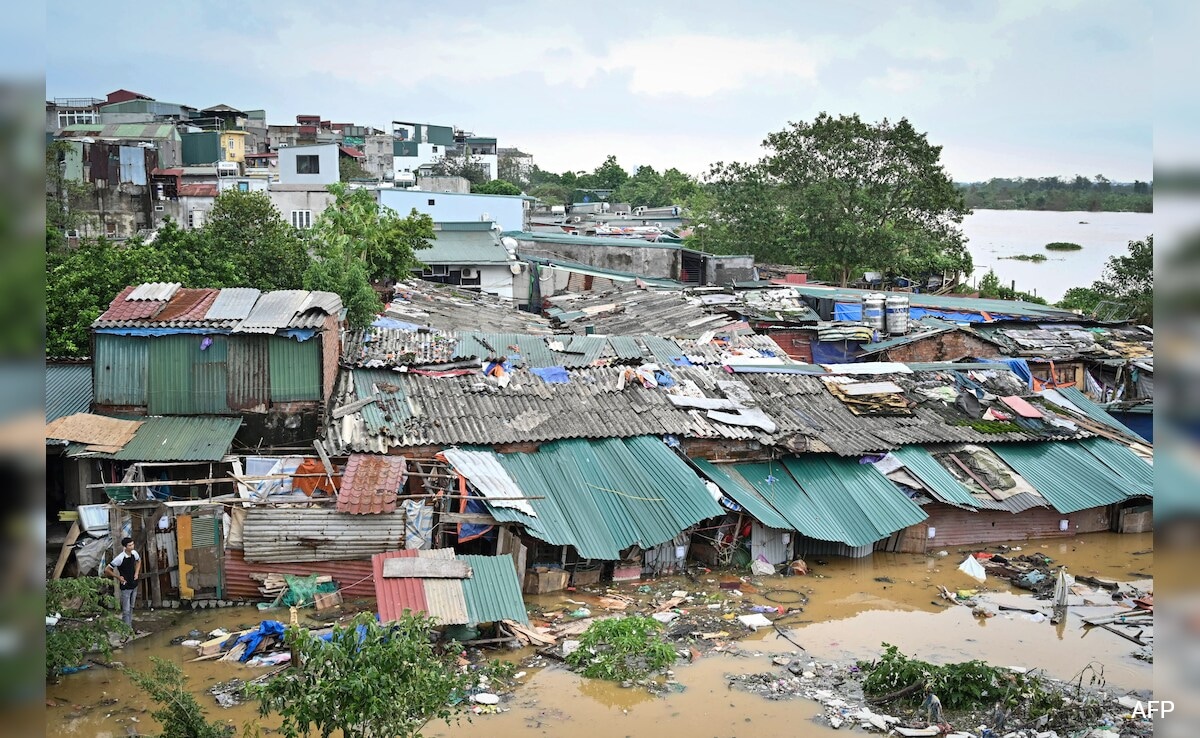
  • India Sends Relief Supplies To Typhoon-Hit Myanmar, Laos And Vietnam
    India Sends Relief Supplies To Typhoon-Hit Myanmar, Laos And Vietnam World
  • Vizag hosts Cognetix IoT summit 2026 to drive DeepTech growth
    Vizag hosts Cognetix IoT summit 2026 to drive DeepTech growth Nation
  • India chase Billie Jean King Cup play-offs spot; Shrivalli pull out due to back spasm
    India chase Billie Jean King Cup play-offs spot; Shrivalli pull out due to back spasm Sports
  • India surpasses Japan, ranks third on Asia Power Index of Australian think tank
    India surpasses Japan, ranks third on Asia Power Index of Australian think tank World
  • Coal India targeting to spend ₹1,900 crore on R&D until FY2030
    Coal India targeting to spend ₹1,900 crore on R&D until FY2030 Business
  • Noel Tata, two others block Mehli Mistry’s reappointment as trustee, deepening rift at Tata Trusts
    Noel Tata, two others block Mehli Mistry’s reappointment as trustee, deepening rift at Tata Trusts Business
  • Access Denied Sports
  • Access Denied Sports
Earth’s early evolution: fresh insights from rocks formed 3.5 billion years ago

Earth’s early evolution: fresh insights from rocks formed 3.5 billion years ago

Posted on February 22, 2024 By admin


While science knows what kind of rocks were being formed on different parts of the planet 3.5 billion years ago, they are still understanding which geological processes drove these formations. Image for Representation.
| Photo Credit: Getty Images

Our Earth is around 4.5 billion years old. Way back in its earliest years, vast oceans dominated. There were frequent volcanic eruptions and, because there was no free oxygen in the atmosphere, there was no ozone layer. It was a dynamic and evolving planet.

Scientists know all of this – but, of course, there are still gaps in our knowledge. For instance, while we know what kind of rocks were being formed on different parts of the planet 3.5 billion years ago, we are still understanding which geological processes drove these formations.

Luckily the answers to such questions are available. Evidence is preserved in ancient volcanic and sedimentary rocks dating back to the Archaean age, between 4 billion and 2.5 billion years ago.

These rocks are found in the oldest parts of what are today the continents, called cratons. Cratons are pieces of ancient continents that formed billions of years ago. Studying them offers a window into how processes within and on the surface of Earth operated in the past. They host a variety of different groups of rocks, including greenstones and granites.

One example is the Singhbhum Craton, in the Daitari Greenstone Belt in the state of Odisha in eastern India. This ancient part of the Earth’s crust has been found in previous research to date back to 3.5 billion years ago. The craton’s oldest rock assemblages are largely volcanic and sedimentary rocks also known as greenstone successions. Greenstones are rock assemblages made up mostly of sub-marine volcanic rocks with minor sedimentary rocks.

My research team and I recently published a study in which we compared the Singhbhum Craton to cratons in South Africa and Australia. We chose these sites because they preserve the same kinds of rocks, in the same condition (not intensely deformed or metamorphosed), from the same time period – about 3.5 billion years ago. They are the best archives to study early Earth surface processes.

Our key findings were that explosive-style volcanic eruptions were common in what are today India, South Africa and Australia around 3.5 billion years ago. These eruptions mostly occurred under oceans, though sometimes above them.

Understanding these early Earth processes is vital for piecing together the planet’s evolutionary history and the conditions that may have sustained life during different geological epochs. This kind of research is also a reminder of the ancient geological wonders that surround us – and that there is much more to discover to understand the story of our planet.

The research

We sampled some rocks from the Singhbhum Craton so we could study them in our laboratory. Existing data from the same site, as well as sites in South Africa and India, were used for comparison purposes.

Our detailed field-based studies were complemented by uranium-lead (U-Pb) radiometric-age dating. This common and well-established method provides information as to when a magma crystallised; in other words, it tells us when a rock formed. In this way we were able to establish key geological timelines to illustrate what processes were underway and when.

We also found that the geology of this area shares stark similarities with the greenstone belts documented in South Africa’s Barberton and Nondweni areas and the Pilbara Craton in western Australia.

Most particularly, all these areas experienced widespread submarine mafic – meaning high in magnesium oxide – volcanic eruptions between 3.5 and 3.3 billion years ago, preserved as pillowed lava and komatiites.

This differs from silicic (elevated concentration of silicon dioxide) volcanism, which research has shown was prevalent around 3.5 billion years ago.

These findings enrich our understanding of ancient volcanic and sedimentary processes and their significance in the broader context of Earth’s geological as well as biological evolution.

Our planet’s formative years

Our discoveries are pivotal for several reasons. First, they offer a clearer picture of Earth’s early tectonic activities during the Archaean times, contributing to our understanding of the planet’s formative years.

Second, the Singhbhum Craton’s unique geological features, including its greenstone belts, provide invaluable information about Earth’s surface and atmospheric processes. This is crucial for hypothesising early habitable conditions and the emergence of life on Earth.

Additionally, comparing the Singhbhum Craton with similar cratons in South Africa and Australia allows us to construct a more comprehensive model related to geological processes that operated during the Archaean. This can help to shed light on ancient geodynamic processes that were prevalent across different parts of the young Earth.

This research emphasises the need for further exploration into the geological history of ancient cratons worldwide. Understanding these early Earth processes is vital for piecing together the planet’s evolutionary history and the conditions that may have sustained life.

The Conversation

Jaganmoy Jodder, Post-doctoral researcher, University of the Witwatersrand

This article is republished from The Conversation under a Creative Commons license. Read the original article.


Source link

Science Tags:Earth’s early evolution, Earth’s evolution, Environment news, Formation of earth’s crust, geology, science news

Post navigation

Previous Post: With 12 Needed Off 3, Mumbai Indians Star Unleashes Mayhem vs New Zealand
Next Post: Sci-Five | The Hindu Science Quiz: On the study of things

Related Posts

  • Understanding ovarian cancer: its causes, symptoms, and screening methods
    Understanding ovarian cancer: its causes, symptoms, and screening methods Science
  • Sci-Five | The Hindu Science Quiz: On Woodpeckers
    Sci-Five | The Hindu Science Quiz: On Woodpeckers Science
  • The many benefits of coconut
    The many benefits of coconut Science
  • How the Widal test is clouding India’s sense of its typhoid problem | Explained
    How the Widal test is clouding India’s sense of its typhoid problem | Explained Science
  • Observations by Aditya-L1 help decode unusual dawn-time geomagnetic disturbances during strong solar storms
    Observations by Aditya-L1 help decode unusual dawn-time geomagnetic disturbances during strong solar storms Science
  • Warming climate intensifies flash droughts worldwide
    Warming climate intensifies flash droughts worldwide Science

More Related Articles

SpaceX launches eighth long-duration crew for International Space Station orbit SpaceX launches eighth long-duration crew for International Space Station orbit Science
What is a GPU? An expert explains the chips powering the AI boom, and why they’re worth trillions What is a GPU? An expert explains the chips powering the AI boom, and why they’re worth trillions Science
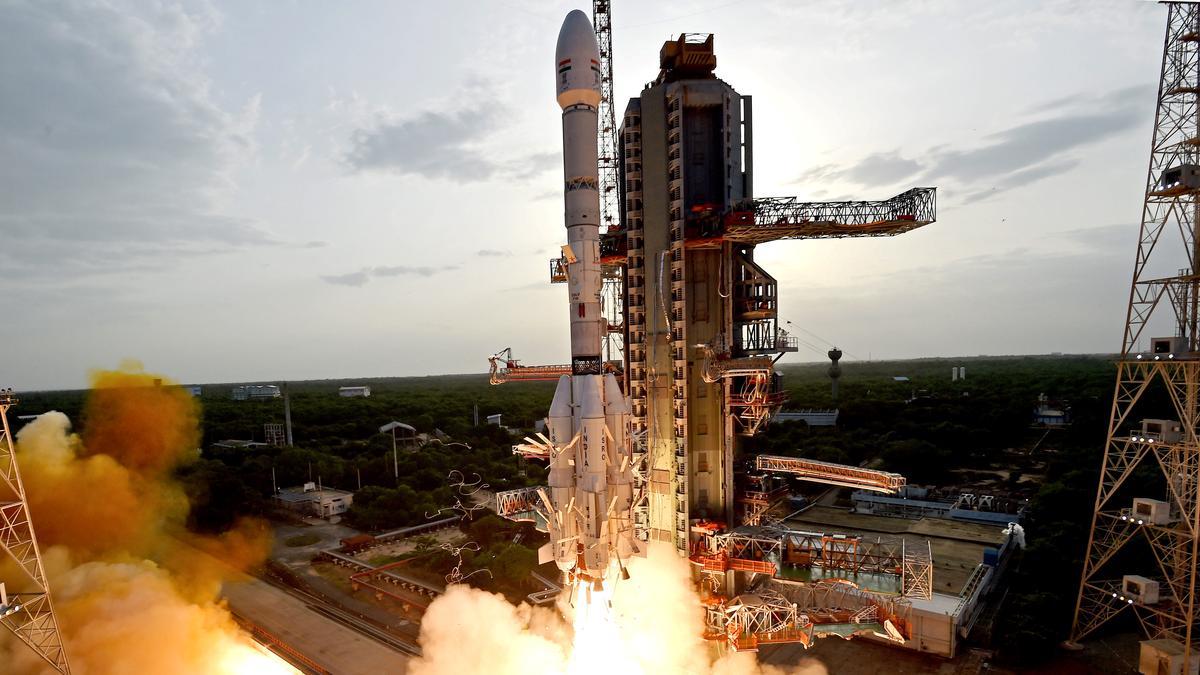
ISRO gearing up for next U.S. collaboration with BlueBird communications satellite launch after NISAR ISRO gearing up for next U.S. collaboration with BlueBird communications satellite launch after NISAR Science
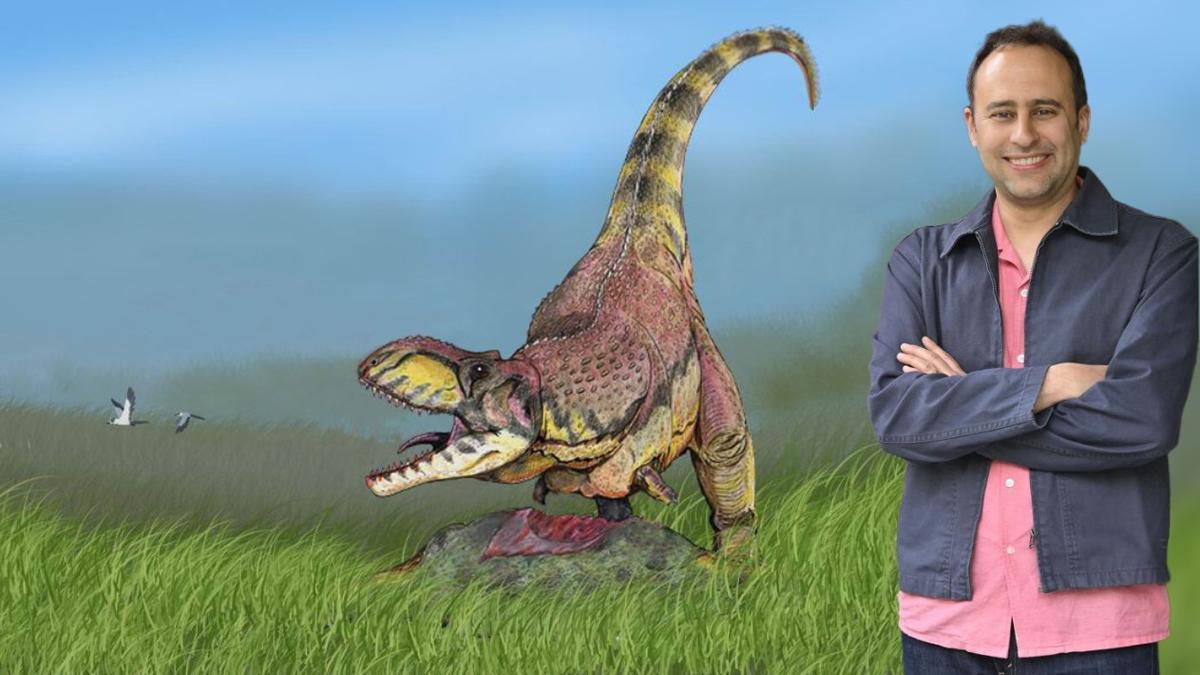
Interview | Steve Brusatte on why India could be the world’s next dinosaur hotspot Interview | Steve Brusatte on why India could be the world’s next dinosaur hotspot Science
The hidden polluter in your wardrobe: How fast fashion is fuelling the next pollution crisis The hidden polluter in your wardrobe: How fast fashion is fuelling the next pollution crisis Science
Nylon: A synthetic fibre that created a craze Nylon: A synthetic fibre that created a craze Science
SiteLock

Archives

  • October 2026
  • September 2026
  • August 2026
  • July 2026
  • June 2026
  • May 2026
  • April 2026
  • March 2026
  • February 2026
  • January 2026
  • December 2025
  • November 2025
  • October 2025
  • September 2025
  • August 2025
  • July 2025
  • June 2025
  • May 2025
  • April 2025
  • March 2025
  • February 2025
  • January 2025
  • December 2024
  • November 2024
  • October 2024
  • September 2024
  • August 2024
  • July 2024
  • June 2024
  • May 2024
  • April 2024
  • March 2024
  • February 2024
  • January 2024
  • December 2023
  • November 2023
  • October 2023
  • September 2023
  • August 2023
  • July 2023
  • June 2023
  • May 2023
  • April 2023
  • March 2023
  • February 2023
  • January 2023
  • December 2022
  • November 2022
  • October 2022
  • September 2022
  • August 2022
  • July 2022
  • June 2022
  • May 2022

Categories

  • Business
  • Nation
  • Science
  • Sports
  • World

Recent Posts

  • DGCA bans specific power banks on flights
  • Saudi Supreme Court sets aside Sri Lankan migrant worker’s death penalty
  • Nedumbassery accident: CPI(M) stages protest march to police station over ‘indifference’ in handling of case
  • Why CJI Surya Kant said ‘no’ to Rahul Gandhi’s request to meet | Explained
  • September WPI Inflation rises to 11.39% as food, fuel and manufactured goods prices increase

Recent Comments

  1. RobertTes on UP Teacher Who Asked Students To Slap Muslim Classmate
  2. Manuelret on UP Teacher Who Asked Students To Slap Muslim Classmate
  3. RobertTes on UP Teacher Who Asked Students To Slap Muslim Classmate
  4. RobertTes on UP Teacher Who Asked Students To Slap Muslim Classmate
  5. BrentWes on UP Teacher Who Asked Students To Slap Muslim Classmate
  • Microsoft, Indian Startup Develop Solution To Halve Water Use In Industries
    Microsoft, Indian Startup Develop Solution To Halve Water Use In Industries Nation
  • Stock markets end higher in-line with firm global trends amid hopes of US Fed rate cut
    Stock markets end higher in-line with firm global trends amid hopes of US Fed rate cut Business
  • Who Won The ‘Minnesota Nice’ US Vice Presidential Debate? Analysts Say…
    Who Won The ‘Minnesota Nice’ US Vice Presidential Debate? Analysts Say… World
  • Nothing can shame people unfazed by Ram temple donation theft: Allahabad High Court
    Nothing can shame people unfazed by Ram temple donation theft: Allahabad High Court Nation
  • Access Denied Sports
  • Arsenal Hit Sheff Utd For Six, Make Premier League History
    Arsenal Hit Sheff Utd For Six, Make Premier League History Sports
  • Chennaiyin hopes to end barren home run in SC Delhi clash
    Chennaiyin hopes to end barren home run in SC Delhi clash Sports
  • Poverty Ammo For Madhya Pradesh Illegal Arms Belt
    Poverty Ammo For Madhya Pradesh Illegal Arms Belt Nation

Editor-in-Chief:
Mohammad Ariff,
MSW, MAJMC, BSW, DTL, CTS, CNM, CCR, CAL, RSL, ASOC.
editor@artifex.news

Associate Editors:
1. Zenellis R. Tuba,
zenelis@artifex.news
2. Haris Daniyel
daniyel@artifex.news

Photograher:
Rohan Das
rohan@artifex.news

Associate Journalists
1. Subrata Paul - AN/2020/01
2. Quamruz Zaman - AN/2021/22
3. Ahmed Sha - AN/2021/035
4. Ajay Kumar Shaw - AN/2021/39
5. Tahqiqul Hoda - AN/2021/21

Artifex.News offers Online Paid Internships to college students from India and Abroad. Interns will get a PRESS CARD and other online offers.
Send your CV (Subjectline: Paid Internship) to internship@artifex.news

Links:
Associate Journalism
About Us
Privacy Policy

News Links:
Breaking News
World
Nation
Sports
Business
Entertainment
Lifestyle

Registered Office:
72/A, Elliot Road, Kolkata - 700016
Tel: 033-22277777, 033-22172217
Email: office@artifex.news

Editorial Office / News Desk:
No. 13, Mezzanine Floor, Esplanade Metro Rail Station,
12 J. L. Nehru Road, Kolkata - 700069.
(Entry from Gate No. 5)
Tel: 033-46011099, 033-46046046
Email: editor@artifex.news

Copyright © 2023 Artifex.News Newsportal designed by Artifex Infotech.