Skip to content
  • Facebook
  • X
  • Linkedin
  • WhatsApp
  • YouTube
  • Associate Journalism
  • About Us
  • Privacy Policy
  • 033-46046046
  • editor@artifex.news
Artifex.News

Artifex.News

Stay Connected. Stay Informed.

  • Breaking News
  • World
  • Nation
  • Sports
  • Business
  • Science
  • Entertainment
  • Lifestyle
  • Toggle search form
  • Woman chopped into pieces identified in Salem
    Woman chopped into pieces identified in Salem Nation
  • India ready to provide all possible assistance for peace in Ukraine: PM Modi in Kazan
    India ready to provide all possible assistance for peace in Ukraine: PM Modi in Kazan World
  • Access Denied Sports
  • Access Denied Sports
  • Access Denied
    Access Denied Nation
  • Access Denied World
  • Woman Strangles Newborn To Death While Feeding, Cites Girl Child Stigma
    Woman Strangles Newborn To Death While Feeding, Cites Girl Child Stigma Nation
  • Vladimir Putin Says Kursk Incursion Will Not Halt Russian Advance In Eastern Ukraine
    Vladimir Putin Says Kursk Incursion Will Not Halt Russian Advance In Eastern Ukraine World
Does India need to upgrade its biosecurity measures? | Explained

Does India need to upgrade its biosecurity measures? | Explained

Posted on December 16, 2025 By admin


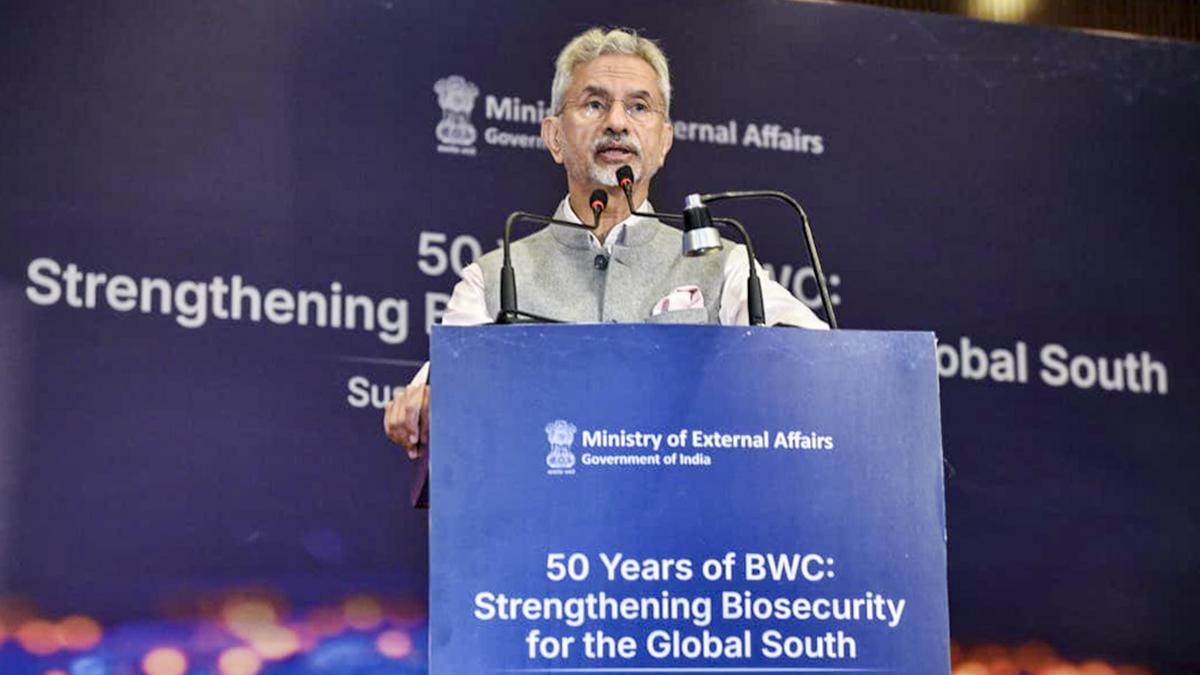
External Affairs Minister S. Jaishankar addresses a conference on ’50 Years of the Biological Weapons Convention: Strengthening Bio-security for the Global South’, in New Delhi on December 1.
| Photo Credit: PTI

The story so far: New age biotechnologies endow powers to understand biology better and, consequently, harness biological agents to target humans. Thus, biosecurity measures need to be upgraded.

What is biosecurity?

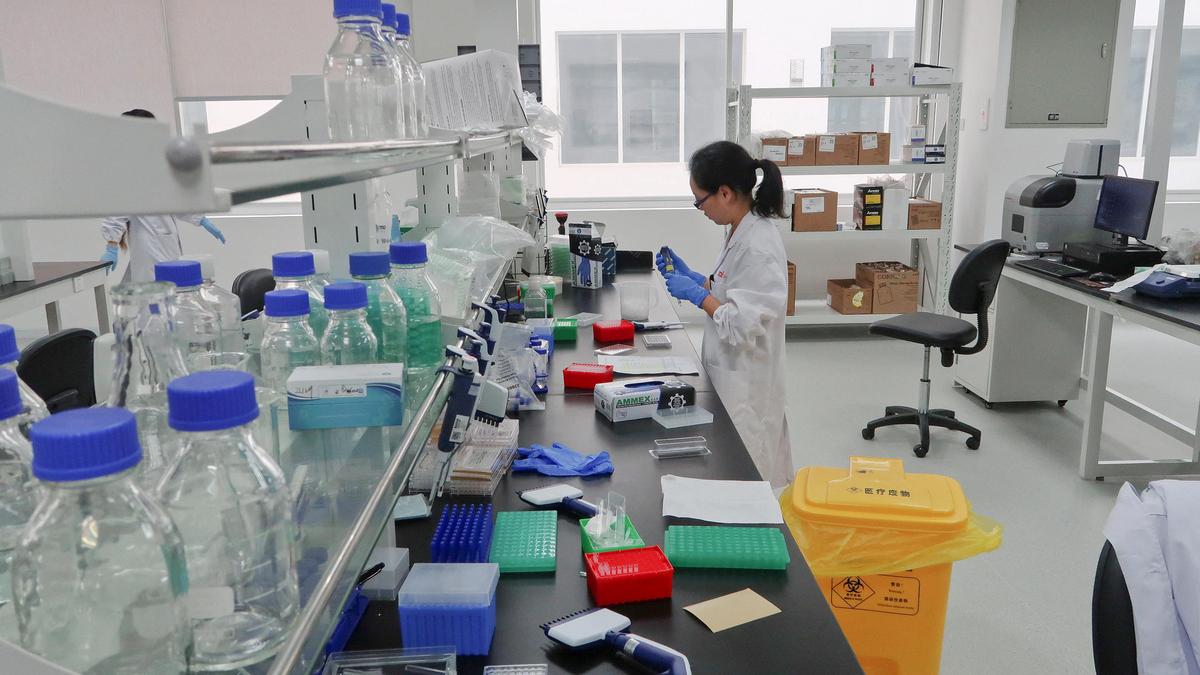
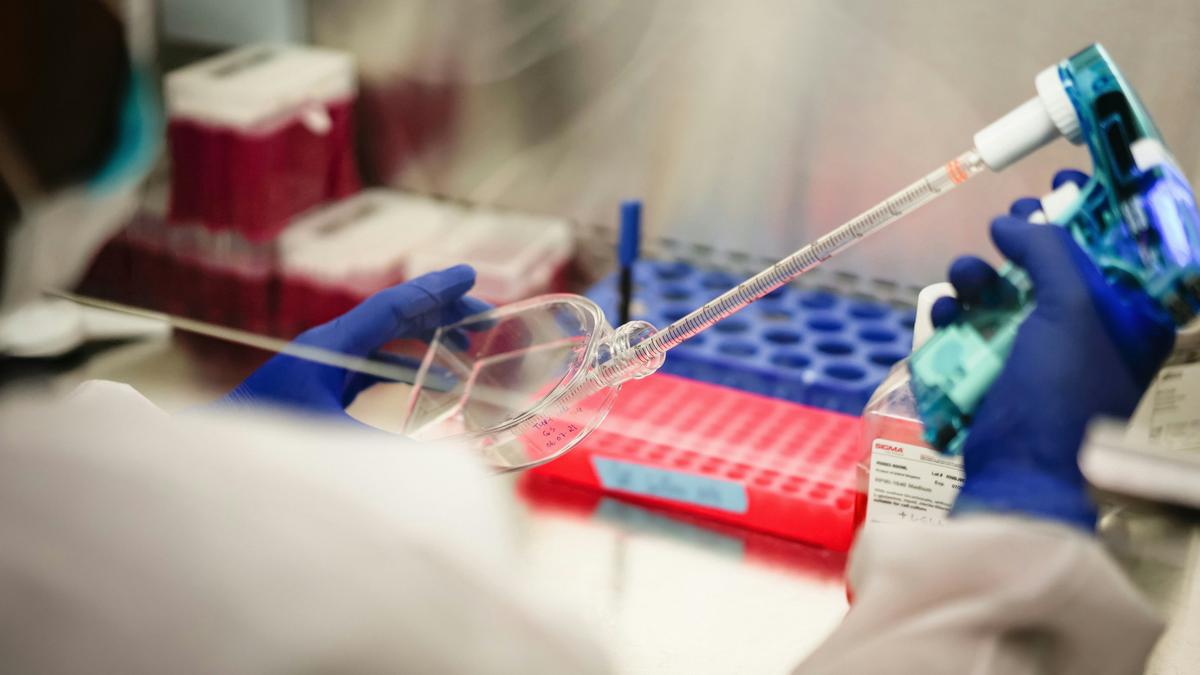
Biosecurity refers to the set of practices and systems designed to deter the intentional misuse of biological agents, toxins or technologies. In other words, it covers everything from safeguarding labs handling dangerous pathogens, to detecting and containing an intentional outbreak of a pathogen. Biosecurity is not only about protecting human health from pathogens, but extends to agricultural and animal health too. Biosecurity differs slightly from biosafety, which is a set of practices meant to prevent the accidental leakage of pathogens. A robust biosafety protocol feeds into biosecurity.

After a few instances of bioweapons development, the Biological Weapons Convention came into existence in 1975. It became the first international treaty that not only prohibited the use and development of biological weapons of mass destruction, but also asked its signatories to destroy existing stockpiles. Over the past many decades, the use of bioweapons has been muted.

Why does India need biosecurity?

India’s geography and ecology make it vulnerable to cross-border bio-risks. India’s dependence on agriculture and large population makes the threat more dangerous. While India has not had any explicitly known biosecurity attack, there have been reports of the alleged preparation of the toxin Ricin (derived from castor oil) for potential use in a terror attack. This incident underscores how non-state actors are pursuing biological tools, reinforcing the urgency of robust biosecurity. Further, the rapid spread of biotechnologies have endowed humans with increased control over biology, increasing the chances of malicious actors experimenting with bioweapons development.

The Department of Biotechnology oversees research governance and safety frameworks for labs. The National Centre for Disease Control manages outbreak surveillance and response. The Department of Animal Husbandry and Dairying monitors livestock biosecurity and transboundary diseases. The Plant Quarantine Organisation of India regulates agricultural imports and exports. India’s biosafety and biosecurity laws include the Environment (Protection) Act, 1986, which governs hazardous microorganisms and genetically modified organisms (GMOs), and the Weapons of Mass Destruction and their Delivery Systems (Prohibition of Unlawful Activities) Act, 2005, which criminalises biological weapons. India has also developed Biosafety Rules (1989) and specific guidelines were released in 2017 for the purposes of Recombinant DNA Research and Biocontainment. The National Disaster Management Authority has a detailed guideline on the management of biological disasters.

India is also part of international platforms that emphasise biosecurity, such as the Biological Weapons Convention and Australia Group.

Although India has multiple agencies engaged in bio-risk reduction, lab regulation, public-health surveillance, agriculture protection, a unified national biosecurity framework is still evolving. Further, most of the current policies and laws have to be also updated to keep pace with new forms of biothreats that are emerging. India is currently ranked 66 on the Global Health Security Index, and while its score for detecting biothreats has increased, its score for being able to effectively respond to threats has reduced.

What are other countries doing?

The U.S. anchors its biosecurity framework under the National Biodefense Strategy (2022-2028) which integrates health, defence, and biotech oversight. In 2024, the U.S. further strengthened this system through the Federal Guidance on Synthetic Nucleic Acid Screening, requiring gene synthesis companies to verify DNA orders against pathogen databases to prevent misuse. The European Union regulates through the EU Health Security Framework (2022) and Horizon Europe’s dual-use research guidelines, embedding biosecurity in its One Health model. China’s Biosecurity Law (2021) treats biotechnology and genetic data as matters of national security, mandating centralised control over research and material transfers. Australia’s Biosecurity Act (2015) provides a unified legal framework across human, animal, and plant sectors, now extending to synthetic biology. The United Kingdom’s Biological Security Strategy (2023) focuses on biosurveillance and rapid response.

What are the risks ahead?

The risk of an inadequate biosecurity apparatus is profound. It jeopardises the lives of billions of Indians. It is therefore necessary that a national biosecurity framework that coordinates actions across various government agencies is developed. Such a framework would also be able to identify infrastructure and capability gaps that need to be addressed. Use of new-age biodefence technologies such as microbial forensics and new approaches such as social media surveillance could then be appropriately adopted to plug such gaps.

Shambhavi Naik is chairperson, Takshashila Institution’s Health & Life Sciences Policy

Published – December 16, 2025 08:30 am IST


Source link

Science

Post navigation

Previous Post: Access Denied
Next Post: Why were IndiGo operations disrupted? | Explained

Related Posts

  • Invasive water hyacinth threatens fishers’ livelihoods on popular Kenyan lake
    Invasive water hyacinth threatens fishers’ livelihoods on popular Kenyan lake Science
  • National Science Day | What do scientists do? 
    National Science Day | What do scientists do?  Science
  • ‘Defect to win’: science is set to be overwhelmed by fraud papers
    ‘Defect to win’: science is set to be overwhelmed by fraud papers Science
  • How scientists are using ‘DNA maps’ to expose pangolin trafficking hubs
    How scientists are using ‘DNA maps’ to expose pangolin trafficking hubs Science
  • Scientists discover the anatomy behind the songs of baleen whales
    Scientists discover the anatomy behind the songs of baleen whales Science
  • Photobiology: speeding up enzyme reactions in microbes using light
    Photobiology: speeding up enzyme reactions in microbes using light Science

More Related Articles

‘Datura’ lands e-commerce platforms in trouble in Karnataka: What is the plant? ‘Datura’ lands e-commerce platforms in trouble in Karnataka: What is the plant? Science
Study traces Turkey quake to interrupted ‘chat’ between fault lines Study traces Turkey quake to interrupted ‘chat’ between fault lines Science
Science for all Why did scientists create a new type of nanopasta which is thinner than spaghetti Science for all Why did scientists create a new type of nanopasta which is thinner than spaghetti Science
Theory of relativity, quantum physics key to explaining Big Bang, says scientist Theory of relativity, quantum physics key to explaining Big Bang, says scientist Science
Will new Act aid India’s nuclear development? | Explained Will new Act aid India’s nuclear development? | Explained Science
Sun bears appear so human-like they are mistaken for people in suits – experts explain Sun bears appear so human-like they are mistaken for people in suits – experts explain Science
SiteLock

Archives

  • October 2026
  • September 2026
  • August 2026
  • July 2026
  • June 2026
  • May 2026
  • April 2026
  • March 2026
  • February 2026
  • January 2026
  • December 2025
  • November 2025
  • October 2025
  • September 2025
  • August 2025
  • July 2025
  • June 2025
  • May 2025
  • April 2025
  • March 2025
  • February 2025
  • January 2025
  • December 2024
  • November 2024
  • October 2024
  • September 2024
  • August 2024
  • July 2024
  • June 2024
  • May 2024
  • April 2024
  • March 2024
  • February 2024
  • January 2024
  • December 2023
  • November 2023
  • October 2023
  • September 2023
  • August 2023
  • July 2023
  • June 2023
  • May 2023
  • April 2023
  • March 2023
  • February 2023
  • January 2023
  • December 2022
  • November 2022
  • October 2022
  • September 2022
  • August 2022
  • July 2022
  • June 2022
  • May 2022

Categories

  • Business
  • Nation
  • Science
  • Sports
  • World

Recent Posts

  • 2 missiles strike the airport in Yemen’s port city of Aden, officials say
  • Neha Bora released, Abhijeet Dipke to be produced before SEM court: Delhi Police
  • Donald Trump waives sanctions, tariffs on purchase of Russian oil and gas
  • Anti-CEC protest LIVE | Abhijeet Dipke to be produced before SEM Court after Delhi Police action under BNSS
  • Akal Takht declares AAP MLA Giaspura ‘Tankhaiya’ over alleged objectionable remarks

Recent Comments

  1. RobertGat on UP Teacher Who Asked Students To Slap Muslim Classmate
  2. RobertGat on UP Teacher Who Asked Students To Slap Muslim Classmate
  3. RobertGat on UP Teacher Who Asked Students To Slap Muslim Classmate
  4. RobertGat on UP Teacher Who Asked Students To Slap Muslim Classmate
  5. Davidbrurf on UP Teacher Who Asked Students To Slap Muslim Classmate
  • Donald Trump Leads In 2 Red States As Counting Begins For US Elections
    Donald Trump Leads In 2 Red States As Counting Begins For US Elections World
  • Access Denied Sports
  • FOOTBALL | Chhetri now fully focused on delivering for Bengaluru Football Club
    FOOTBALL | Chhetri now fully focused on delivering for Bengaluru Football Club Sports
  • Access Denied Business
  • Access Denied Sports
  • Air India revamps pilot pay, career path to curb attrition
    Air India revamps pilot pay, career path to curb attrition Business
  • Reliance to invest ₹7 lakh crore in Gujarat over next five years: Mukesh Ambani
    Reliance to invest ₹7 lakh crore in Gujarat over next five years: Mukesh Ambani Business
  • Access Denied
    Access Denied Nation

Editor-in-Chief:
Mohammad Ariff,
MSW, MAJMC, BSW, DTL, CTS, CNM, CCR, CAL, RSL, ASOC.
editor@artifex.news

Associate Editors:
1. Zenellis R. Tuba,
zenelis@artifex.news
2. Haris Daniyel
daniyel@artifex.news

Photograher:
Rohan Das
rohan@artifex.news

Associate Journalists
1. Subrata Paul - AN/2020/01
2. Quamruz Zaman - AN/2021/22
3. Ahmed Sha - AN/2021/035
4. Ajay Kumar Shaw - AN/2021/39
5. Tahqiqul Hoda - AN/2021/21

Artifex.News offers Online Paid Internships to college students from India and Abroad. Interns will get a PRESS CARD and other online offers.
Send your CV (Subjectline: Paid Internship) to internship@artifex.news

Links:
Associate Journalism
About Us
Privacy Policy

News Links:
Breaking News
World
Nation
Sports
Business
Entertainment
Lifestyle

Registered Office:
72/A, Elliot Road, Kolkata - 700016
Tel: 033-22277777, 033-22172217
Email: office@artifex.news

Editorial Office / News Desk:
No. 13, Mezzanine Floor, Esplanade Metro Rail Station,
12 J. L. Nehru Road, Kolkata - 700069.
(Entry from Gate No. 5)
Tel: 033-46011099, 033-46046046
Email: editor@artifex.news

Copyright © 2023 Artifex.News Newsportal designed by Artifex Infotech.