


Skip to content
  • Facebook
  • X
  • Linkedin
  • WhatsApp
  • Associate Journalism
  • About Us
  • Privacy Policy
  • 033-46046046
  • editor@artifex.news
Artifex.News

Artifex.News

Stay Connected. Stay Informed.

  • Breaking News
  • World
  • Nation
  • Sports
  • Business
  • Science
  • Entertainment
  • Lifestyle
  • Toggle search form
  • Israel-Hamas war: The significance of Rafah border and why its reopening matters to Egypt | Explained World
  • Delhi Health Minister Saurabh Bharadwaj Vs Chief Secretary Over Shortage Of Medicines Nation
  • Gold Worth Rs 42.91 Lakh Seized At Tamil Nadu’s Trichy Airport Nation
  • Canadian Tourist, 24, Dies After Falling From Moving Train In Thailand World
  • After Uddhav Thackeray’s “If Insulted” Call, Nitin Gadkari In BJP’s 2nd List Nation
  • Delhi Capitals Head Coach Ricky Ponting Gives Update On David Warner’s Fitness Ahead Of IPL 2024 Match vs Gujrat Titans Sports
  • A comprehensive immunisation schedule for adult women is now ready Science
  • Rs 3 Lakh Paid To Change Blood Sample Of Pune Porsche Teen: Sources Nation

IIT Mandi, DBT-inStem Bengaluru scientists find how dengue mosquito eggs are so hardy

Posted on October 26, 2023 By admin


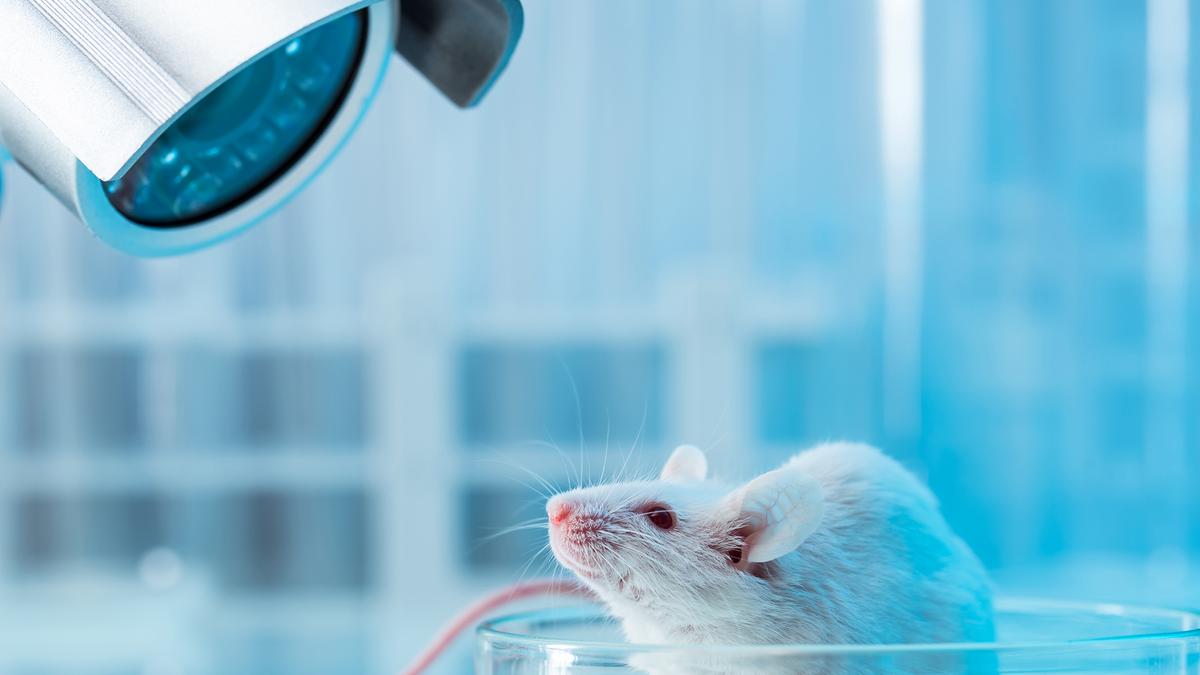
The eggs of dengue and zika-carrying Aedes mosquitoes can endure extended periods without water, akin to plant seeds patiently waiting for germination in the absence of moisture.
| Photo Credit: Getty Images/iStockphoto

Researchers from the Indian Institute of Technology (IIT) Mandi and the Institute for Stem Cell Science and Regenerative Medicine (inStem) in Bengaluru have discovered the biochemical processes that enable the eggs of the dengue causing mosquito to survive harsh conditions and rejuvenate when favourable conditions return.

The research could potentially aid the battle against mosquito-borne diseases by enabling more effective vector-control measures. 

The details of the research have been published in the journal PLOS Biology. The paper was co-authored by Baskar Bakthavachalu, assistant professor, School of Biosciences and Bioengineering, IIT Mandi, along with Anjana Prasad, Sreesa Sreedharan, and Sunil Laxman from DBT-inStem.

Karnataka has been facing a dengue outbreak, with 11,576 cases this year as of October. Bengaluru recorded the highest number of cases in the State, with 6,093 cases over the same period.

Mosquitoes, viral vectors for various diseases, deposit their eggs in water, where they hatch. The eggs of dengue and zika-carrying Aedes mosquitoes can endure extended periods without water, akin to plant seeds patiently waiting for germination in the absence of moisture.

Despite the knowledge of this phenomenon, the molecular reasons behind the desiccation tolerance and post-rehydration survival remained a mystery until now.

The collaborative team reared Aedes aegypti mosquitoes, studying their eggs through a series of innovative experiments. By subjecting the eggs to dehydration and subsequent rehydration, they discovered that the developing larvae undergo specific metabolic changes required for survival.

“Mosquito eggs, facing drying conditions, enter an altered metabolic state to significantly increase the production of polyamines, which play a crucial role in enabling the embryos to withstand the damage caused by water loss. Furthermore, they utilise high-calorie lipids as an energy source to complete their development once they are rehydrated,” said Dr. Bakthavachalu, the lead researcher.

The implications of the research could be far-reaching as understanding these survival mechanisms provides a foundation for innovative mosquito control strategies.

By disrupting the desiccation tolerance of mosquito eggs, researchers anticipate a significant reduction in mosquito populations and disease transmission. The understanding gained from this work could potentially prevent the resurgence of mosquitoes following monsoon rains, a period traditionally associated with increased disease transmission risks.

The knowledge gained has applications beyond disease control. Similar pathways exist in agricultural insect pests, suggesting potential solutions for agricultural challenges. By deciphering these biochemical processes, scientists may pave the way for eco-friendly, targeted pest control measures, ensuring sustainable agricultural practices.


Source link

Science Tags:biochemical processes eggs of the dengue causing mosquitoes, IIT Mandi, Indian Institute of Technology Mandi, Institute for Stem Cell Science and Regenerative Medicine (inStem) Bengaluru, PLOS Biology

Post navigation

Previous Post: How a climate-proofed MSME sector can drive Tamil Nadu’s EV leadership
Next Post: Maine mass shooting | At least 22 killed in U.S. city, dozens wounded 

Related Posts

  • Sci-Five | The Hindu Science Quiz: On Dormancy Science
  • Dial it up to Category 6? As warming stokes storms, some want a bigger hurricane category Science
  • The story of how the deadliest virus to humans was revived Science
  • European court ruling puts cautious Swiss in climate bind Science
  • Scientists solve Manipur salamander ‘puzzle’ Science
  • President launches India’s first homegrown CAR T-cell therapy for cancer treatment, calls it ‘new hope’ Science

More Related Articles

Bernard and the discovery of glycogen Science
Sci-Five | The Hindu Science Quiz: On Solar Eclipse Photographers Science
International Asteroid Day: Asteroids fly-by Earth in serendipitous celebration Science
World’s oldest cave painting in Indonesia shows a pig and people Science
Pfizer reports patient death in Duchenne gene therapy study Science
Explained | What the fate of Luna 25 means for Russia Science
SiteLock

Archives

  • July 2024
  • June 2024
  • May 2024
  • April 2024
  • March 2024
  • February 2024
  • January 2024
  • December 2023
  • November 2023
  • October 2023
  • September 2023
  • August 2023
  • July 2023
  • June 2023
  • May 2023
  • April 2023
  • March 2023
  • February 2023
  • January 2023
  • December 2022
  • November 2022
  • October 2022
  • September 2022
  • August 2022
  • July 2022
  • June 2022
  • May 2022

Categories

  • Business
  • Nation
  • Science
  • Sports
  • World

Recent Posts

  • River Seine To Have Flying Taxi Landing Pad At Paris Olympics
  • Hathras Stampede, Bhole Baba: Hathras Organisers “Failed To Make Adequate Arrangement”: Probe Report
  • Viswanathan Anand’s Rajinikanth Style Welcome As R Ashwin Buys Chess Team
  • Rotten eggs chemical detected on Jupiter-like alien planet
  • Hathras Stampede Tragedy Reaches Supreme Court, Hearing On Friday

Recent Comments

  1. ywdVpqHiNZCtUDcl on UP Teacher Who Asked Students To Slap Muslim Classmate
  2. bRstIalYyjkCUJqm on UP Teacher Who Asked Students To Slap Muslim Classmate
  3. GkJwRWEAbS on UP Teacher Who Asked Students To Slap Muslim Classmate
  4. xreDavBVnbGqQA on UP Teacher Who Asked Students To Slap Muslim Classmate
  5. aANVRzfUdmyb on UP Teacher Who Asked Students To Slap Muslim Classmate
  • Telangana Tribal Woman Kicked, Slapped Stomped On In Money Dispute Nation
  • Dominican Republic President Abinader re-elected to 2nd term World
  • Glossing over unemployment, its high electoral price Business
  • SEBI using Artificial Intelligence for investigations, says official Business
  • Four Pakistanis killed by Iranian border guards in Baluchistan province World
  • IPL 2024 Points Table, Orange Cap, Purple Cap: What Loss Against Gujarat Titans Means For Chennai Super Kings’ Playoff Hopes Sports
  • Vasundhara Raje Hosts Rival Gajendra Shekhawat Ahead Of PM’s Jaipur Trip Nation
  • Why is Venice charging an entry fee for tourists? | Explained World

Editor-in-Chief:
Mohammad Ariff,
MSW, MAJMC, BSW, DTL, CTS, CNM, CCR, CAL, RSL, ASOC.
editor@artifex.news

Associate Editors:
1. Zenellis R. Tuba,
zenelis@artifex.news
2. Haris Daniyel
daniyel@artifex.news

Photograher:
Rohan Das
rohan@artifex.news

Artifex.News offers Online Paid Internships to college students from India and Abroad. Interns will get a PRESS CARD and other online offers.
Send your CV (Subjectline: Paid Internship) to internship@artifex.news

Links:
Associate Journalism
About Us
Privacy Policy

News Links:
Breaking News
World
Nation
Sports
Business
Entertainment
Lifestyle

Registered Office:
72/A, Elliot Road, Kolkata - 700016
Tel: 033-22277777, 033-22172217
Email: office@artifex.news

Editorial Office / News Desk:
No. 13, Mezzanine Floor, Esplanade Metro Rail Station,
12 J. L. Nehru Road, Kolkata - 700069.
(Entry from Gate No. 5)
Tel: 033-46011099, 033-46046046
Email: editor@artifex.news

Copyright © 2023 Artifex.News Newsportal designed by Artifex Infotech.