


Skip to content
  • Facebook
  • X
  • Linkedin
  • WhatsApp
  • Associate Journalism
  • About Us
  • Privacy Policy
  • 033-46046046
  • editor@artifex.news
Artifex.News

Artifex.News

Stay Connected. Stay Informed.

  • Breaking News
  • World
  • Nation
  • Sports
  • Business
  • Science
  • Entertainment
  • Lifestyle
  • Toggle search form
  • Kohli has shown he isn’t averse to learning new tricks
    Kohli has shown he isn’t averse to learning new tricks Sports
  • Aspiring India Cricketers To Be Turned Into Baseball Players For Olympics? Sports Ministry Says “Completely…”
    Aspiring India Cricketers To Be Turned Into Baseball Players For Olympics? Sports Ministry Says “Completely…” Sports
  • Atalanta vs Arsenal Live Streaming UEFA Champions League Live Telecast: When And Where To Watch
    Atalanta vs Arsenal Live Streaming UEFA Champions League Live Telecast: When And Where To Watch Sports
  • Siddaramaiah Hits Back At PM’s Karnataka Muslim Quota Claim
    Siddaramaiah Hits Back At PM’s Karnataka Muslim Quota Claim Nation
  • Congress Has Lost Its Moorings, No Debate About That: Jyotiraditya Scindia
    Congress Has Lost Its Moorings, No Debate About That: Jyotiraditya Scindia Nation
  • Access Denied Sports
  • Access Denied Sports
  • Kenyans combat mangrove logging with hidden beehives 
    Kenyans combat mangrove logging with hidden beehives  World
Chimps imbibe two cocktails’ worth of ethanol daily from ripe fruits

Chimps imbibe two cocktails’ worth of ethanol daily from ripe fruits

Posted on October 22, 2025 By admin


While humans have been drinking alcohol for thousands of years, some scientists think this history could go back millions of years. According to the drunken monkey hypothesis, humans’ taste and indeed preference for alcohol may have evolutionary roots, shaped by our primate ancestors consuming small doses of alcohol found inside ripe fruit. Our bodies may also have evolved to metabolise alcoholic compounds more effectively as a result.

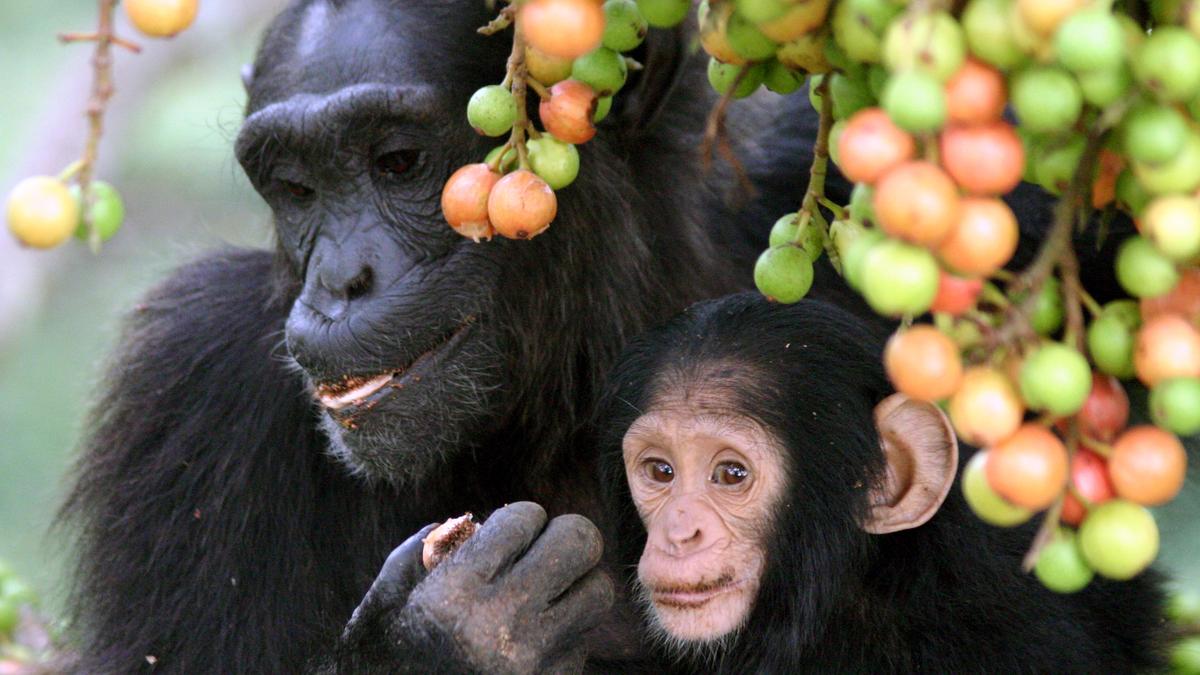
In a new study in Science Advances, researchers at the University of California (UC), Berkeley, analysed ripe fruits eaten by wild chimpanzees, the closest living relatives of humans, to discover that chimpanzees could be ingesting as much alcohol as in one to two glasses of wine every day.

Ripe fruits

Chimpanzees share about 98.8% of their DNA with humans, making them an excellent model for exploring questions about human evolution. Their fruit-heavy diet is also believed to resemble that of our last common ancestor. By estimating the chimpanzees’ daily alcohol intake from these fruits, researchers can gain insights into the levels that may have been ingested by this ancestor as well.

The researchers conducted their studies in two forests in Africa: one in Ngogo in Kibale National Park in Uganda, home to one of the world’s largest known chimpanzee communities; and the other in the Taï National Park in Côte d’Ivoire.

From previous observations, the researchers had already identified the fruit varieties the chimpanzees consumed. They collected ripe fruits from these feeding sites — sometimes plucked directly from branches, at others scooped up from the ground just after they dropped — and tested them in the lab for their alcohol content. Since they also knew the approximate quantity of fruit a single chimpanzee ate, they were able to estimate the amount of alcohol the individual ingested in a single day.

The lab results confirmed that the fruits the chimpanzees consumed did contain small amounts of ethanol. The microbe yeast, which is used to brew beer and wine, is naturally present in fruits. When the fruits ripen, their sugar content increases and the yeast ferments these sugars into alcohol.

‘Nearly two drinks’

The lab results also showed that ripe fruits contained less than 1% alcohol. To compare, a pint of beer (473 ml) typically contains 4-6% alcohol by volume. However, unlike humans, a large portion of a chimpanzee’s diet consists of fruits: nearly three-quarters of their intake, amounting to around 4.5 kg per day.

“The chimpanzees are eating 5-10% of their body weight in a day in ripe fruit, so even low concentrations yield a high daily total, a substantial dosage of alcohol,” Robert Dudley, an evolutionary physiologist at UC Berkeley, and coauthor of the study, said.

Researchers calculated that the total alcohol intake from consuming fruits amounted to roughly 14 grams — equivalent to a glass of wine, or two when adjusted for a chimpanzee’s body weight.

“Across all sites, male and female chimpanzees are consuming about 14 grams of pure ethanol per day in their diet, which is equal to one standard American drink,” Alexsey Maro, a PhD researcher at UC Berkeley, and the first author of the paper. “When you adjust for body mass, because chimps weigh almost 40 kg versus a typical human at 70 kg, it goes up to nearly two drinks.”

‘An evolved attraction’

Among the 21 fruit varieties the researchers identified in the chimpanzees’ diet, the primates showed a strong preference for sticky figs (Ficus mucuso). Only 75 of these figs, which are abundant and sugary, can contain as much as 10 grams of alcohol — a significant amount when consumed in a single bout.

However, despite consuming as much as 14 g of alcohol in a day, the chimpanzees didn’t display any obvious signs of intoxication. Researchers suggested this was because they didn’t imbibe the alcohol in one go but spread it throughout the day.

The researchers also said such low-level exposure to natural alcohol may have influenced key physiological adaptations.

“Our research shows that chimpanzees in Cantanchez National Park in Guinea-Bissau share fermented fruits with each other and use leaf tools to access fermented palm wine harvested by humans, indicating an evolved attraction and tolerance to ethanol,” Kimberley Hockings, a primatologist at the University of Exeter who has been studying apes in West Africa, said. “These findings suggest that an attraction to ethanol is deeply embedded in animal and human evolutionary history.”

This interpretation is aligned with research by Matthew Carrigan, an associate professor of biology at College of Central Florida, USA. His work has concluded that about 10 million years ago, the last common ancestor of living African apes and modern humans experienced a genetic mutation that increased the rate of ethanol metabolism 40-fold.

Cue for ripeness

The UC Berkeley study also raises a few questions. Do chimpanzees actively prefer fruits with higher alcohol content, or are they simply attracted to the sweetness of ripe fruits? 

Dr. Dudley, who first proposed the drunken monkey hypothesis in 2014, has theorised that alcohol in fruits could serve as a cue for ripeness — a signal of extra calories and perhaps enhanced taste that adds to the pleasure of eating.

While previous studies have documented alcohol use in chimpanzees, the UC Berkeley effort is the first to measure the alcohol content of the fruits they consume.

Tetsuro Matsuzawa, former director of the Primate Research Institute at Kyoto University, Japan, said, “These observations contribute to a growing body of evidence for the drunken monkey hypothesis. From tool-assisted palm wine drinking to the spontaneous consumption of fermented fruits, wild chimpanzees consistently show behaviours that suggest an evolved attraction to ethanol.”

Ipsita Herlekar is an independent science writer.

Published – October 22, 2025 05:30 am IST


Source link

Science

Post navigation

Previous Post: Trump doesn’t want ‘wasted meeting’ with Putin, confirms talks on Ukraine war are off for now

Related Posts

  • Hospital admission after taking hallucinogens triples risk of schizophrenia: study
    Hospital admission after taking hallucinogens triples risk of schizophrenia: study Science
  • Explained | What the fate of Luna 25 means for Russia
    Explained | What the fate of Luna 25 means for Russia Science
  • First U.S. Artemis astronaut mission around the moon on track for April
    First U.S. Artemis astronaut mission around the moon on track for April Science
  • Gastrointestinal problems could heighten Parkinson’s disease risk by 76 per cent, study finds
    Gastrointestinal problems could heighten Parkinson’s disease risk by 76 per cent, study finds Science
  • Sikkim flood was a matter of time despite uncertainties, scientists knew
    Sikkim flood was a matter of time despite uncertainties, scientists knew Science
  • Ancient humans evolved to walk on two legs in two steps
    Ancient humans evolved to walk on two legs in two steps Science

More Related Articles

The Science Quiz | How well acquainted are you with your face? The Science Quiz | How well acquainted are you with your face? Science
How AI is redefining death, memory and immortality How AI is redefining death, memory and immortality Science
Sci-Five | The Hindu Science Quiz: On Snow Leopards Sci-Five | The Hindu Science Quiz: On Snow Leopards Science
IIT-Delhi researchers achieve secure quantum communication for 380 km in standard telecom fiber IIT-Delhi researchers achieve secure quantum communication for 380 km in standard telecom fiber Science
Auction of world’s largest Mars meteorite sparks ownership debate Auction of world’s largest Mars meteorite sparks ownership debate Science
RNA, not DNA, is the main cause of acute sunburn RNA, not DNA, is the main cause of acute sunburn Science
SiteLock

Archives

  • October 2025
  • September 2025
  • August 2025
  • July 2025
  • June 2025
  • May 2025
  • April 2025
  • March 2025
  • February 2025
  • January 2025
  • December 2024
  • November 2024
  • October 2024
  • September 2024
  • August 2024
  • July 2024
  • June 2024
  • May 2024
  • April 2024
  • March 2024
  • February 2024
  • January 2024
  • December 2023
  • November 2023
  • October 2023
  • September 2023
  • August 2023
  • July 2023
  • June 2023
  • May 2023
  • April 2023
  • March 2023
  • February 2023
  • January 2023
  • December 2022
  • November 2022
  • October 2022
  • September 2022
  • August 2022
  • July 2022
  • June 2022
  • May 2022

Categories

  • Business
  • Nation
  • Science
  • Sports
  • World

Recent Posts

  • Chimps imbibe two cocktails’ worth of ethanol daily from ripe fruits
  • 80 rescued after mine collapses in Dominican Republic, no injury or death reported
  • Trump doesn’t want ‘wasted meeting’ with Putin, confirms talks on Ukraine war are off for now
  • Access Denied
  • Access Denied

Recent Comments

  1. dfb{{98991*97996}}xca on UP Teacher Who Asked Students To Slap Muslim Classmate
  2. "dfbzzzzzzzzbbbccccdddeeexca".replace("z","o") on UP Teacher Who Asked Students To Slap Muslim Classmate
  3. 1}}"}}'}}1%>"%>'%> on UP Teacher Who Asked Students To Slap Muslim Classmate
  4. bfg6520<s1﹥s2ʺs3ʹhjl6520 on UP Teacher Who Asked Students To Slap Muslim Classmate
  5. pHqghUme9356321 on UP Teacher Who Asked Students To Slap Muslim Classmate
  • “3 Proposed Criminal Bills Have Flavour Of Indian Soil”: Amit Shah
    “3 Proposed Criminal Bills Have Flavour Of Indian Soil”: Amit Shah Nation
  • India Hold New Zealand To Thrilling 3-3 Draw In Hockey U21 Sultan Of Johor Cup
    India Hold New Zealand To Thrilling 3-3 Draw In Hockey U21 Sultan Of Johor Cup Sports
  • How is India’s hunt for critical minerals going? | Explained
    How is India’s hunt for critical minerals going? | Explained Business
  • 0, 0, 0, 0, 0: In Terrible 46 All Out Display vs New Zealand, Virat Kohli And Co. Set Unwanted 136-Year First
    0, 0, 0, 0, 0: In Terrible 46 All Out Display vs New Zealand, Virat Kohli And Co. Set Unwanted 136-Year First Sports
  • Jailed Iranian Nobel Winner Denied Medical Care: UN Experts
    Jailed Iranian Nobel Winner Denied Medical Care: UN Experts World
  • "Don't Think I Would Retain Any Players": AUS Great's Big Advice To IPL Team
    "Don't Think I Would Retain Any Players": AUS Great's Big Advice To IPL Team Sports
  • Kolhapur Crash Sets Off ‘Ghost Auto’ Run, Five Injured
    Kolhapur Crash Sets Off ‘Ghost Auto’ Run, Five Injured Nation
  • England vs Sri Lanka 3rd Test, Day 2 LIVE Scorecard And Updates
    England vs Sri Lanka 3rd Test, Day 2 LIVE Scorecard And Updates Sports

Editor-in-Chief:
Mohammad Ariff,
MSW, MAJMC, BSW, DTL, CTS, CNM, CCR, CAL, RSL, ASOC.
editor@artifex.news

Associate Editors:
1. Zenellis R. Tuba,
zenelis@artifex.news
2. Haris Daniyel
daniyel@artifex.news

Photograher:
Rohan Das
rohan@artifex.news

Artifex.News offers Online Paid Internships to college students from India and Abroad. Interns will get a PRESS CARD and other online offers.
Send your CV (Subjectline: Paid Internship) to internship@artifex.news

Links:
Associate Journalism
About Us
Privacy Policy

News Links:
Breaking News
World
Nation
Sports
Business
Entertainment
Lifestyle

Registered Office:
72/A, Elliot Road, Kolkata - 700016
Tel: 033-22277777, 033-22172217
Email: office@artifex.news

Editorial Office / News Desk:
No. 13, Mezzanine Floor, Esplanade Metro Rail Station,
12 J. L. Nehru Road, Kolkata - 700069.
(Entry from Gate No. 5)
Tel: 033-46011099, 033-46046046
Email: editor@artifex.news

Copyright © 2023 Artifex.News Newsportal designed by Artifex Infotech.