In January 2006, I stayed at Kashmir House in Islamabad’s posh F-5 Sector, a neighbourhood of broad avenues framed by hills, a rare sight for a South Asian capital. Having spent much of my college life at Delhi University visiting Kashmir House in Chanakyapuri, I could not help but notice the contrast. In New Delhi, the compound was lined with ageing Ambassador cars, while in Islamabad the political elite showcased their clout with fleets of Pajeros, SUVs that were still a rarity in South Asia at the time. When I remarked on this to one of my hosts, a young journalist from Bagh, situated in central Pakistan occupied Jammu and Kashmir (POJK) and based in Islamabad, he quipped that it was the “Pajero culture” that ruled the region, a telling reflection of the elitism that has long defined its politics.
For decades, the Pakistani state has diplomatically showcased Pakistan-occupied Jammu and Kashmir (POJK) to the world as if it were a separate country, complete with its own constitution, a Prime Minister as Chief Executive, and a President as constitutional head. In actual practice, the diverse political unit of Jammu and Kashmir that came together because of a confluence of many factors in the 19th century, has propounded many myths. One such myth relates to POJK, a sliver of the undivided princely state that has been controlled by Pakistan since 1947, which has often escaped popular discussion. Pakistan refers to this area as “Azad Jammu and Kashmir”, meaning independent Jammu and Kashmir. Its legislative assembly has the power to elect its prime minister and president. At international fora, the nomenclature of executive positions and a separate Constitution are presented as evidence by Pakistan that the region is an independent entity. However, the reality is a lot different.
Global spotlight on the territory
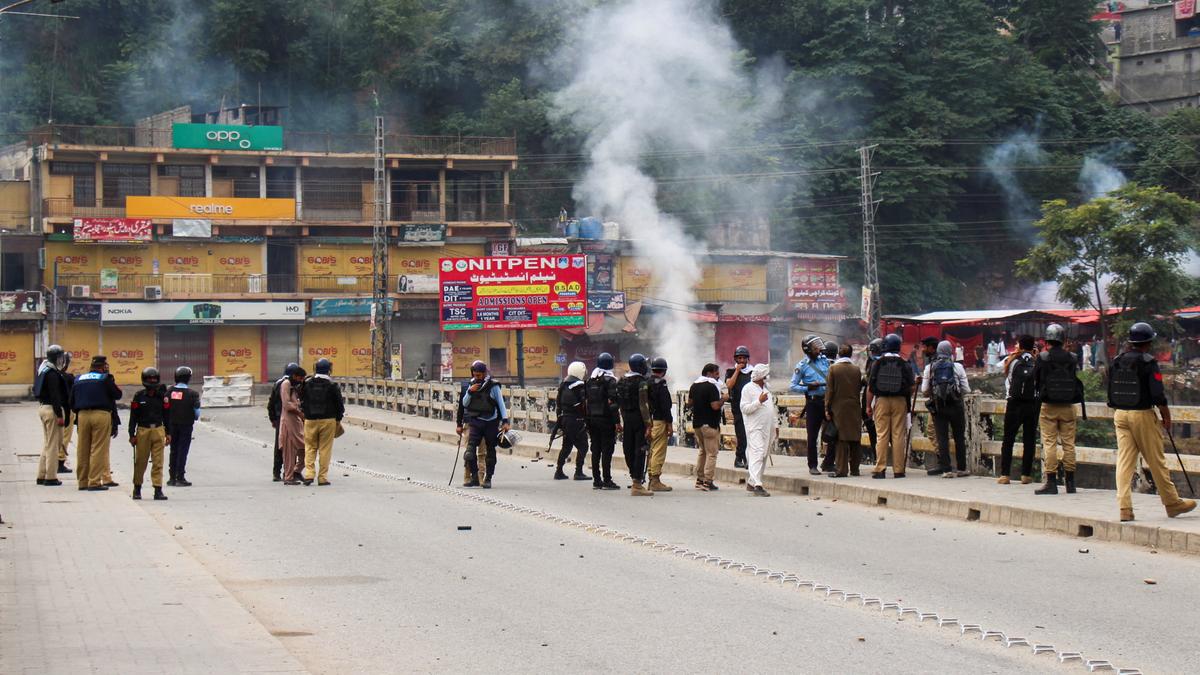
Yet, the recent violent developments in the region have once again turned the global spotlight on the territory, underscoring the failure of a political structure devoid of accountability and transparency to the local people. According to independent sources, at least eleven protesters and three policemen have been killed in days of clashes, even as the government urges demonstrators to return to dialogue. There is communication blackout in the region. The protests are being spearheaded by the Jammu Kashmir Joint Awami Action Committee (JKJAAC), which has mobilised around demands for ending special allowances to government officials and securing subsidised electricity and wheat, as provided in other parts of Pakistan. The JKJAAC leadership accuses authorities of reneging on promises. Its leaders draw members from traders, transporters, lawyers, students, and other grassroots groups. Formally established around September 2023, it emerged as a cross-regional platform to channel extensive public discontent over economic misgovernance, inequities, and the concentration of power in elite circles. JKJAAC’s demands fall broadly into two interlinked categories: immediate economic relief and structural/constitutional reforms.
The JKJAAC has called for immediate economic relief in the form of subsidised electricity and wheat prices, on a par with other regions of Pakistan. It also demands the removal of elite perks and privileges for Ministers and bureaucrats, alongside free and equitable access to education and health care. Longer-term reforms include judicial and governance restructuring as well as improved infrastructure, including the establishment of an airport. Beyond economic relief, the JKJAAC has also pressed for structural reforms, including the abolition of 12 reserved “refugee seats” in the POJK Legislative Assembly, widely viewed as a tool of Islamabad’s control. It also calls for a reduction in the size of the executive, the rollback of elite perks and bureaucratic privileges, and guarantees that local communities benefit from POJK’s hydropower and natural resources. Finally, the movement seeks the elimination of quota-based allocations that disadvantage the region’s residents.

In the recent violent protests, JKJAAC leaders claim that at least 11 protesters have been killed and more than 200 injured; “all suffering gunshot wounds.” These claims, however, have been denied by the authorities, who insist that their offers to meet the demands have been ignored. Officials claim that about 90% of the demands were accepted during talks, including electricity and local government reforms, and withdrawal of protest cases. Rejecting this, JKJAAC leader Syed Hafeez Hamdani, in a written statement, asserted: “The claim that our demands have been accepted is contrary to the facts… If our demands had been accepted, we would have had no reason to keep protesting.” In reality, the protests are not merely about local grievances; they reflect the deeper structural control exercised by Islamabad through constitutional provisions that have long shaped the uneasy relationship between Islamabad and Muzaffarabad since 1947. This layered history, with all its nuances, is often reduced to a simplistic binary. As a result, any critique of the system is too readily dismissed as “India-sponsored.”
Political demand for abolition of refugee seats
At the heart of the current stalemate is the political demand for the abolition of refugee seats. The Prime Minister of POJK Chaudhry Anwar ul Haq has openly acknowledged that “there is a deadlock on the seats of the refugees, which cannot end in the context of the Kashmir movement.” To understand why these seats have become such a flashpoint, the issue must be examined through a historical and constitutional lens. The POJK Constitution reserves 12 of the 45 elected “general” Assembly seats for those who migrated from the Indian side of Jammu and Kashmir in 1947 and later settled across Pakistan. In practice, however, these constituencies represent Pakistani citizens with little connection to POJK’s daily realities. Strikingly, nine of these 12 seats are located not in POJK at all but across Punjab, while the remaining three are in Khyber Pakhtunkhwa, Balochistan, and Sindh. This arrangement has provided Islamabad with a direct and often decisive lever of influence over the Assembly and, by extension, POJK’s political landscape.
The larger demographic picture behind this allocation and distribution of the 12 seats is that refugees who arrived from Kashmir and Jammu, two culturally, ethnically and linguistically distinct provincial units, have been allotted six seats each. However, on the ground, this allocation and their distribution has resulted in an absurdity in terms of representation as in 1947, migration from the Kashmir valley was minimal.
Reportedly, in the 2021 election, 3,73,652 [3.73 lakh] were registered in the six constituencies representing the refugees from Jammu, whereas only 29,804 (just 7%) were registered in the six constituencies representing the refugees from Kashmir valley. In 1947, approximately 80% of migrants from the Indian side of Jammu and Kashmir settled in Pakistani Punjab, not POJK. Several factors contributed to this phenomenon. Most migration occurred from the Jammu plains, geographically closer to the Sialkot district and culturally similar to the Punjab province. Compared to POJK, Punjab offered more economic opportunities for migrant communities.
Economist Mehboob-ul-Haq, the creator of the acclaimed Human Development Index, universally accepted as a better alternative to Gross Domestic Product as the measure of a nation’s prosperity, was a Jammu migrant. Pakistan’s famed female singer, Malika Pukhraj, who migrated to Lahore during the 1947 riots, was born in the Hamirpur Sidhar village near Akhnoor in Jammu. In fact, the bulk of Muslim migration was from the Dogri and Punjabi speaking Jammu plains of Jammu province. Even before 1947, a substantial portion of the population living on the Jammu plains, Muslims as well as Hindus, was tied to neighbouring parts of Punjab province, now in Pakistan, because of family, trade, education and employment. The geography played its part as from Jammu city, the winter capital of Jammu and Kashmir, major Pakistani cities such as Sialkot and Lahore, the capital of Pakistani Punjab, are less than one hour and less than two hours away respectively. In contrast, the distance between the summer capital of Jammu and Kashmir, Srinagar, Lahore is at least 10 to 12 hours away.
As mentioned earlier, equal seats, six each, have been allocated for refugees coming from Kashmir province and Jammu province respectively, the two culturally, ethnically and linguistically distinct provincial units of Jammu and Kashmir. However, on the ground, it results in absurdity in terms of representation. The data of the 2006 Assembly elections reveal that there were 5,46,031 registered voters for the six seats for Jammu whereas there were only 35,256 voters for the six seats reserved for the Kashmir province refugees. Although the number of seats is the same, the number of voters from the Kashmir province was only 0.06% of the total migrant vote bank. Even within the six seats for the Jammu province, the strength of the constituencies is uneven: LA5 and LA6 in Rawalpindi had 5,000 and 1,50,000 voters respectively. Holding elections for these refugee constituencies has little practical representational and legislative relevance as the descendants of the 1947 migrants are socially and economically well-integrated in Pakistan, particularly Pakistani Punjab.
Past trends and experience demonstrate that the party ruling in Islamabad is able to corner the majority of refugee seats, giving the party ruling Islamabad the advantage in government formation in Muzaffarabad, the capital of POJK.
In 1975, Zulfikar Bhutto’s Pakistan People’s Party (PPP) brought down the Muslim Conference government on the strength of these seats. In 1990, the Muslim Conference won all 12 refugee seats and Nawaz Sharif, the then Prime Minister, boasted that his government had “gifted” these seats to Muslim Conference founder and leader, Sardar Qayoom. The pattern replicated in the 2021 POJK election. The PTI won 75% of the refugee seats, compared to 48% of seats in the remaining 33 elected seats within POJK. In December 2007, Sultan Mehmood Chaudhry, presently President of POJK and a jat from Mirpur, had demanded abolition of the 12 seats reserved in the Assembly for “Kashmiris” settled in other parts of Pakistan. He had alleged that the “ruling parties in Pakistan always manipulate elections for these seats. The holding of elections for Jammu and Kashmir migrants in various parts of Pakistan merely serves as an instrument to benefit the ruling party in Islamabad. More important, it perpetuates a selective pan-Pakistan societal narrative on Jammu and Kashmir that consequently limits the scope and ability of the Pakistani State to approach the Kashmir issue and the broader India-Pakistan peace process with realism.
The protesters’ demand to end elitism gains added urgency in a system where institutional frameworks enable elite capture of key appointments and decision-making. The Islamabad based POJK Council has long held authority, formal or informal, over high-stakes appointments, especially in the judiciary, bureaucracy, and constitutional bodies. It has influence over the selection of the Chief Election Commissioner (who is appointed by the POJK President on the advice of the Chairman of the Council). More broadly, the Council has historically had say in appointments of judges to the High Court and Supreme Court of POJK, often via advice or consultation roles vis-à-vis the President and the federal government. In addition, it has wielded control over bureaucratic postings within the Council Secretariat itself, such as deputy secretaries, section officers, and drawing and disbursing officers—appointments that critics argue have often bypassed the jurisdiction of the POJK government and been driven by favoritism.
Beyond appointments, the Council’s reach historically extended to administrative oversight and control of departments, fiscal management, and legislative subjects: taxation, natural resources, tourism, infrastructure, and major development schemes have been subject to Council jurisdiction under its legislative list of 52 subjects. While the 13th Amendment of the POJK constitution in 2018 sought to strip many of these powers and devolve them to the POJK Assembly or to Islamabad directly, the structural role of the Council in appointments and oversight remains controversial and contested.
POJK often been sidelined
In this setup, the POJK Legislative Assembly, which is elected, has often been sidelined. Even though it is supposed to make laws on state subjects (especially those not reserved for the federal side), it lacks comparable powers over appointments, major administrative decisions, or control over constitutional bodies. The Assembly does not appoint judges or constitutional commissioners; those remain under the Council’s domain (or under advice of the Council). Thus, in practice, while the Assembly may debate or influence policy in its domain, the real levers of power, from who leads the Election Commission to who occupies senior judicial or bureaucratic posts, often lie beyond its reach. This structural disparity intensifies the protesters’ critique: even democratic institutions such as the Assembly can exist in a hollowed form, while elite executives entrenched in the Council and federal apparatus maintain decisive control.
The POJK council, though presented as a joint administrative mechanism, has functioned largely as an instrument of control rather than self-governance. Its composition itself reflects this imbalance: the Prime Minister of Pakistan serves as its Chairman, with the POJK President as Vice-Chairman, but the majority of members are appointed by Islamabad.
Out of its 11 members, six are nominated directly by the Government of Pakistan, while only five are elected by the POJK Legislative Assembly. This structure ensures that decisive influence rests with Pakistan’s federal authorities, allowing them to steer legislative, financial, and administrative matters in the territory. Instead of empowering local representatives, the Council has curtailed the authority of the elected POJK Assembly, keeping key subjects such as natural resources, taxation, and important appointments under the watchful eye of Islamabad. In effect, the body underscores the reality that POJK’s political autonomy is limited, with the Council serving as a tool through which the federal government manages and contains the region.
It is important to highlight the substance of the protests haven’t crossed or challenged the institutional redlines of Pakistani state on POJK or its broader official stance on Jammu and Kashmir. For instance, the broader constitutional and procedural contours within which elections to the POJK Assembly had been previously held demolish the myth that the region is an independent entity as Pakistan claims. There are bigger constitutional provisions that contest Pakistan’s official and diplomatic claims, such as Article 257 of Pakistani constitution, which says, “When the people of the State of Jammu and Kashmir decide to accede to Pakistan, the relationship between Pakistan and the State shall be determined in accordance with the wishes of the people of that State.”
On the contrary, Part 2 of Section 7 of the 1974 POJK Constitution says that “no person or political party in Azad Jammu and Kashmir shall be permitted to propagate against or take part in activities prejudicial or detrimental to the ideology of the state’s accession to Pakistan.” Section 5(2)(vii) of the POJK Legislative Assembly Election Ordinance, 1970, says a person will be disqualified for propagating any opinion or action in any manner prejudicial to the ideology of Pakistan, and that the ideology of the state’s accession to Pakistan or the sovereignty and integrity of Pakistan. Nobody is allowed to participate in the POJK Legislative Assembly election without signing an affidavit pledging allegiance to Jammu and Kashmir’s accession to Pakistan.
In several polls, several parties such as the All Parties Nationalist Alliance (APNA), espousing an independent state of Jammu and Kashmir, were not allowed to participate because they refused to sign such an affidavit. Islamabad has the power to dismiss any POJK government. Article 53 of the POJK Constitution gives the federal government the power to dismiss an elected government in POJK. This provision is part of the emergency provisions of the Pakistani Constitution. Therefore, the federal government enjoys the same emergency powers over POJK as it does over any other province of Pakistan. During the rule of Pakistan’s first military leader, Ayub Khan, the president of POJK, K. Khurshid, a rare Kashmiri-speaking leader in the region and private secretary to Mohammad Ali Jinnah, the first governor-general of Pakistan, was forced to resign by a mid-level police official and later jailed when he started espousing his views in public, which were in opposition to Pakistani official stance on J&K.
There is no doubt that protests have long punctuated the political history of POJK. One such early episode took place in the Sandunti area of Bagh, commonly remembered as the Sudhans rebellion in the central POJK. The Sudhans, a prominent clan in the region, rose up in the early post-Partition years against what they saw as exclusion from power and heavy-handed interference by Islamabad. Though localised, the rebellion highlighted simmering resentment over unequal representation, economic neglect, and the imposition of authority from outside the region. Later, in the 1960s, Mirpur witnessed large-scale protests against the construction of the Mangla Dam, which displaced nearly 81,000 people and set in motion another cycle of grievances. Their migration has a layered history: the first wave came a century ago, when men from Mirpur and nearby areas found employment as seamen in Britain, while the second wave followed the Mangla Dam displacements. Migration has since continued unabated, supported by strong familial connections, and today the diaspora is widespread. After the outbreak of militancy in the Kashmir Valley in 1989, militants in the valley also relied on the Mirpuri diaspora for material support. That is why the political aspirations of this community are not uniform.
That is why one needs to be realistic and more attuned to the ground which are manifested in geographical, military, sociological and historical realities. It would be misleading to interpret these protests as evidence that POJK is inclined to align with India in the future. The reasons for the present Line of Control lie in deeper ethnic, geographic, and historical dynamics. The political realities in POJK in 1947 were very different from those of the Kashmir Valley, where Sheikh Abdullah’s popularity and his opposition to the two-nation theory determined the course of history. The region has a different ethnic and linguistic base as compared to Kashmir valley, and is culturally, ethnically and linguistically, more close to adjoining parts of Pakistani Punjab such as Rawalpindi, Gujrat, Jhelum or even Sialkot districts. There are familial and caste ties between the two areas.
In central POJK, local Muslims, many of them ex-servicemen of British Army, rose in rebellion against Maharaja Hari Singh, for a host of reasons, a development soon reinforced by the tribal invasion launched from the then North-West Frontier Province. Unlike in the Kashmir Valley, this combination led to the rapid collapse of the Maharaja’s forces and immediate de facto control of the area by the Pakistani army. Also, the area of POJK is geographically adjacent to the main cities of Pakistan, Islamabad and Lahore. It takes eight hours to travel the direct route between Mirpur and Muzaffarabad within POJK, whereas passing through Islamabad cuts the travelling time by half. This is explained by the geography of the hilly region of POJK. At the same time, there is no doubt that there had been frequent protests against the Pakistani ruling leadership. In the face of these facts, with a renewed attention on the region and as documented in my book on the region, a binary narrative should make way for a more nuanced and granular understanding of the facts relating to the region which are grounded in the prevailing socio-political realities of the region, including a complicated constitutional relationship with Pakistan, geographic realities, history and a diverse set of aspirations of the POJK diaspora.
The “Pajero culture” I observed in Islamabad nearly two-decades ago was not merely about symbols of wealth. It reflected a deeper elite order that has long shaped politics in POJK. The current protests are not an aberration but a direct outgrowth of this entrenched system, where privileges, refugee seats, and constitutional constraints have ensured Islamabad’s dominance at the expense of local accountability. What is unfolding today is, therefore, less about isolated economic grievances and more about a struggle against a political culture that has denied ordinary people in POJK a meaningful say in their own future. At the same time, however, one should be careful not to read too much into these developments; the realities remain more complex, rooted in local governance failures and the peculiar constitutional relationship with Islamabad.
(Luv Puri has authored two books on Jammu and Kashmir namely Uncovered Face of Militancy and Across the Line of Control, the latter published by Columbia University Press, which was based on field work in the region.)