

Skip to content
  • Facebook
  • X
  • Linkedin
  • WhatsApp
  • YouTube
  • Associate Journalism
  • About Us
  • Privacy Policy
  • 033-46046046
  • editor@artifex.news
Artifex.News

Artifex.News

Stay Connected. Stay Informed.

  • Breaking News
  • World
  • Nation
  • Sports
  • Business
  • Science
  • Entertainment
  • Lifestyle
  • Toggle search form
  • Rupee sees range-bound trade against U.S. dollar in morning deals
    Rupee sees range-bound trade against U.S. dollar in morning deals Business
  • Access Denied Business
  • How Boeing’s Starliner Mission To Send Sunita Williams, Barry Butch Wilmore On Space Faced Setbacks
    How Boeing’s Starliner Mission To Send Sunita Williams, Barry Butch Wilmore On Space Faced Setbacks World
  • Access Denied
    Access Denied Nation
  • New York protesters demand Israeli cease-fire, at least 200 detained after filling Grand Central station
    New York protesters demand Israeli cease-fire, at least 200 detained after filling Grand Central station World
  • Man Drugs, Robs Fellow Passenger In Maharashtra Bus, Arrested In UP
    Man Drugs, Robs Fellow Passenger In Maharashtra Bus, Arrested In UP Nation
  • Trump launches ‘Project Freedom’ to open Strait of Hormuz, Iran strikes ships, UAE port
    Trump launches ‘Project Freedom’ to open Strait of Hormuz, Iran strikes ships, UAE port World
  • Alexander Zverev Reaches ATP Finals Last Four, Carlos Alcaraz On Brink Of Exit
    Alexander Zverev Reaches ATP Finals Last Four, Carlos Alcaraz On Brink Of Exit Sports
How does glue work: the physics of what makes glue so sticky

How does glue work: the physics of what makes glue so sticky

Posted on September 23, 2025 By admin


The other day I received a letter from a friend. My love for letters is very old. These magical spacetime capsules bring in thoughts of a person written in a different location about a different period of time in their lives. And while reading that piece of paper, one can slowly be transmitted to that zone, as if by a time-machine — a becalming feeling very different from the disturbing ting-ting you get when you receive a one-line WhatsApp message on your phone.

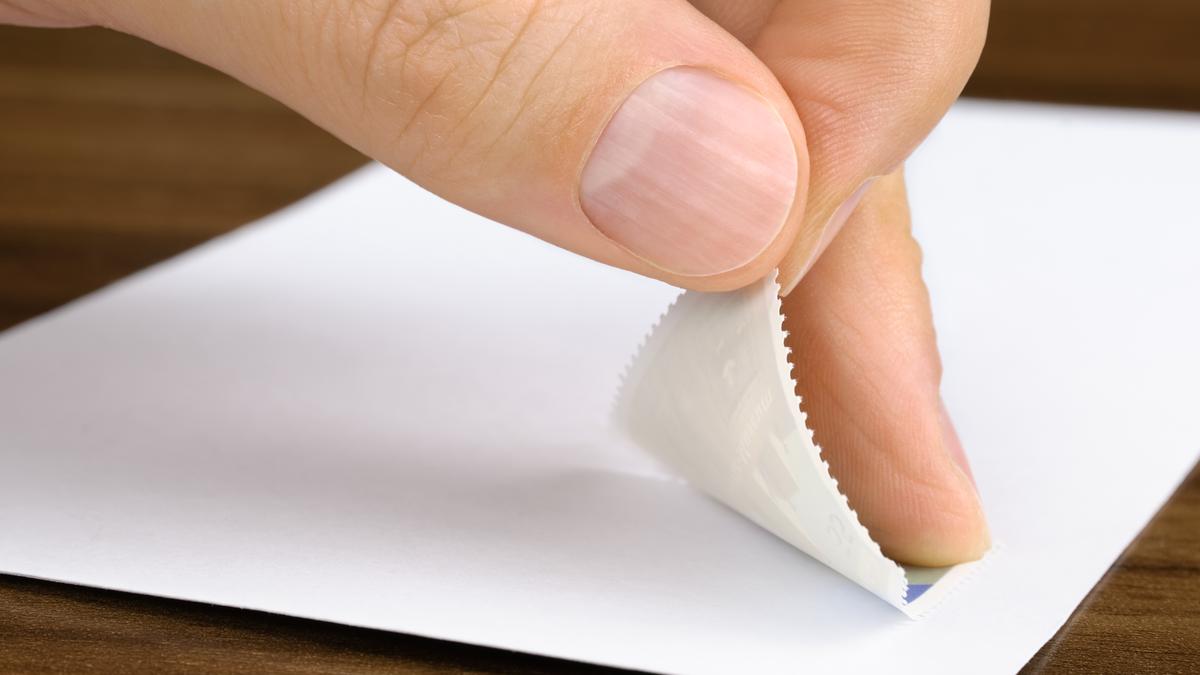
An important part of the letter writing ritual, however, is to buy stamps of your choice and fix them on the envelope. Stamps are magical things in their own right. To affix one, you only need to moisten the blank side with a few drops of water (or, if no one’s watching, your spit) and it’s ready to stick.

Why is it so simple, though?

Forces of nature

Any two things stick to each other due to attractive forces between them. These forces can arise due to multiple reasons. For example, when you jump, you fall back to the earth. What brings you back? That’s the gravitational force, one of the fundamental forces of nature. The heavier the object is, the stronger the force is.

How much force does the whole earth exert on any of us? That quantity is what we measure as our weight. A 60 kg of weight means about 600 newtons (N) of force. If you’re worried about your weight, it’s just the earth pulling you towards itself with that much more attractive force.

Another important force we see around us all the time is the electromagnetic force. It contains two types of forces that are interrelated: electric and magnetic. Electrical forces happen due to electric charges. We know electrons are negatively charged while protons are positively charged, and electrical forces arise between them. Similarly, magnetic forces occur between magnetic charges that we call north and south. Like charges repel while unlike charges attract.

When refrigerator magnets stick to the fridge door or electric forces from your battery drive a current in your fan, it’s all due to electromagnetic forces.

There are two other fundamental forces, called the weak and strong forces, but they are only important at very, very small distances, like inside the nucleus of an atom. We don’t experience them in our daily lives.

The question now is: which of these fundamental forces keeps the stamp stuck to the envelope?

World of glue

This question takes us inside the world of glue. What we call glue is really a chemical compound called polyvinyl-acetate (PVA). That name may not say much: it’s really a material with long, chain-like molecules of carbon, hydrogen, and oxygen. These molecules look like noodles and tend to stick to each other — and also to other surfaces.

Atoms are usually charge neutral because they each contain an equal number of positively charged protons and negatively charged electrons. Every molecule, which is made of multiple atoms, is then also charge neutral. We know that like charges repel and opposite charges attract. The puzzle here is to figure out how one charge neutral molecule can attract another charge neutral molecule.

The answer has to do with a beautiful piece of physics discovered in the early 1900s. Even though every molecule is charge-neutral overall, it can fluctuate such that one part of it can be slightly more negatively charged than another. And when such a molecule comes close to another charge-neutral molecule, it can slightly distort the distribution of charges in the second molecule.

Thus the molecule, which was until recently overall charge-neutral, now starts feeling attracted to another charge-neutral molecule — all because they have opposite charges at different parts of their bodies. This kind of force, while it’s secretly of the electromagnetic variety, goes by the name Van der Waal force. It’s named after the Dutch physicist Johannes Diderik van der Waals.

This brings us to the final piece of the puzzle: why do we need those few drops of water?

Swimming in water

Imagine you want to stick one piece of paper to another. You’ll find the glue bottle and inside you’ll see that it’s a liquid. This is important.

It turns out that manufacturers mix the PVA molecules with water to prevent them from fully sticking to one another. This way, the PVA is swimming in a small pond of water.

Since these molecules attract each other due to fluctuating charges, they can stick to each other only if they’re relatively close. But if there’s enough water around them, these molecules will swim far apart and not feel each other’s attraction.

On the other hand, when you take some glue and spread it around a surface, the water evaporates, bringing the PVA molecules closer to each other. Imagine there are a bunch of people in a swimming pool: you can make it more crowded by reducing the pool’s size instead of adding more people. It’s the same principle.

If you’re quick enough, you can bring the two pieces of paper you need to stick together before the glue dries. This way, the PVA molecules will stick to both surfaces as well as to each other, sealing both pieces of paper together.

The glue will thus have done its job.

Quantum stamps

The same glue trick works on stamps as well — just that the back side of a stamp already has dried glue. A few drops of water just makes these molecules separate out and become more dilute, allowing you to place the stamp on the envelope. Then, the water molecules dry up again and allow the stamp to stick to the envelope.

In all this, you might have wondered: what causes the changes in the PVA molecules to fluctuate, leading to the Van der Waals forces? Understanding this requires us to learn a bit of quantum mechanics. If you’re interested, you should consider taking a course in physics, for example here in IIT Kanpur, where some of us teach.

The next time you receive a courier or a letter from a friend, don’t just thank the person bringing it to you. Also whisper a word of gratitude to the molecules hard at work behind the stamp, and which probably also kept it safely sealed all the way to your doorstep.

Adhip Agarwala is an assistant professor of physics in IIT Kanpur.

Published – September 23, 2025 08:30 am IST



Source link

Science

Post navigation

Previous Post: Access Denied
Next Post: Why is India not importing corn from the U.S.? | Explained

Related Posts

  • After traversing 100 metres, Pragyan prepares for long night of -200 degree Celsius on Moon
    After traversing 100 metres, Pragyan prepares for long night of -200 degree Celsius on Moon Science
  • Ayurveda, Siddha: Can Indian Knowledge Systems be evidence-based?
    Ayurveda, Siddha: Can Indian Knowledge Systems be evidence-based? Science
  • IAF signs MoA with IISc and FSID
    IAF signs MoA with IISc and FSID Science
  • What we call animals when they come together
    What we call animals when they come together Science
  • ISRO demonstrates boot-strap mode start on CE20 cryogenic engine
    ISRO demonstrates boot-strap mode start on CE20 cryogenic engine Science
  • The Science Quiz: The evolutionary edge to human survival
    The Science Quiz: The evolutionary edge to human survival Science

More Related Articles

Queensland positions itself as a strategic partner in India-Australia biotech collaboration at BioAsia 2026 Queensland positions itself as a strategic partner in India-Australia biotech collaboration at BioAsia 2026 Science
Bacterial cell walls could hold clues to better human health, say CCMB scientists Bacterial cell walls could hold clues to better human health, say CCMB scientists Science
Why can’t we see well right after entering a darker room? Why can’t we see well right after entering a darker room? Science
The challenge of writing about the science Nobel Prizes The challenge of writing about the science Nobel Prizes Science
Sci-Five | The Hindu Science Quiz: On Nikola Tesla Sci-Five | The Hindu Science Quiz: On Nikola Tesla Science
Snow leopards are the world’s least genetically diverse big cat Snow leopards are the world’s least genetically diverse big cat Science
SiteLock

Archives

  • October 2026
  • September 2026
  • August 2026
  • July 2026
  • June 2026
  • May 2026
  • April 2026
  • March 2026
  • February 2026
  • January 2026
  • December 2025
  • November 2025
  • October 2025
  • September 2025
  • August 2025
  • July 2025
  • June 2025
  • May 2025
  • April 2025
  • March 2025
  • February 2025
  • January 2025
  • December 2024
  • November 2024
  • October 2024
  • September 2024
  • August 2024
  • July 2024
  • June 2024
  • May 2024
  • April 2024
  • March 2024
  • February 2024
  • January 2024
  • December 2023
  • November 2023
  • October 2023
  • September 2023
  • August 2023
  • July 2023
  • June 2023
  • May 2023
  • April 2023
  • March 2023
  • February 2023
  • January 2023
  • December 2022
  • November 2022
  • October 2022
  • September 2022
  • August 2022
  • July 2022
  • June 2022
  • May 2022

Categories

  • Business
  • Nation
  • Science
  • Sports
  • World

Recent Posts

  • Why CJI Surya Kant said ‘no’ to Rahul Gandhi’s request to meet | Explained
  • Frankfurt-Delhi Air India flight diverted to Jaipur following bomb threat
  • U.S. judge backs CNN, MS Now, Politico access to White House
  • India urges UN human rights mechanisms to avoid politicisation, selectivity
  • Saudi says Houthi attacks sparked Aramco fire, wounded 4 in Riyadh

Recent Comments

  1. RobertTes on UP Teacher Who Asked Students To Slap Muslim Classmate
  2. Manuelret on UP Teacher Who Asked Students To Slap Muslim Classmate
  3. RobertTes on UP Teacher Who Asked Students To Slap Muslim Classmate
  4. RobertTes on UP Teacher Who Asked Students To Slap Muslim Classmate
  5. BrentWes on UP Teacher Who Asked Students To Slap Muslim Classmate
  • The first human-made object recovered from space
    The first human-made object recovered from space Science
  • A Face-Off Between King Cobra And Dog In Karnataka
    A Face-Off Between King Cobra And Dog In Karnataka Nation
  • IIT Bombay, TCS To Develop India’s 1st Quantum Diamond Microchip Imager. What It Does
    IIT Bombay, TCS To Develop India’s 1st Quantum Diamond Microchip Imager. What It Does Nation
  • Former UK PM Rishi Sunak, Family Visit Parliament House
    Former UK PM Rishi Sunak, Family Visit Parliament House World
  • England faces Sri Lanka in a must-win game for both
    England faces Sri Lanka in a must-win game for both Sports
  • Access Denied Sports
  • Boy, 16, Kills Father For “Thrashing” Mother During Quarrel In Delhi: Cops
    Boy, 16, Kills Father For “Thrashing” Mother During Quarrel In Delhi: Cops Nation
  • Access Denied
    Access Denied Nation

Editor-in-Chief:
Mohammad Ariff,
MSW, MAJMC, BSW, DTL, CTS, CNM, CCR, CAL, RSL, ASOC.
editor@artifex.news

Associate Editors:
1. Zenellis R. Tuba,
zenelis@artifex.news
2. Haris Daniyel
daniyel@artifex.news

Photograher:
Rohan Das
rohan@artifex.news

Associate Journalists
1. Subrata Paul - AN/2020/01
2. Quamruz Zaman - AN/2021/22
3. Ahmed Sha - AN/2021/035
4. Ajay Kumar Shaw - AN/2021/39
5. Tahqiqul Hoda - AN/2021/21

Artifex.News offers Online Paid Internships to college students from India and Abroad. Interns will get a PRESS CARD and other online offers.
Send your CV (Subjectline: Paid Internship) to internship@artifex.news

Links:
Associate Journalism
About Us
Privacy Policy

News Links:
Breaking News
World
Nation
Sports
Business
Entertainment
Lifestyle

Registered Office:
72/A, Elliot Road, Kolkata - 700016
Tel: 033-22277777, 033-22172217
Email: office@artifex.news

Editorial Office / News Desk:
No. 13, Mezzanine Floor, Esplanade Metro Rail Station,
12 J. L. Nehru Road, Kolkata - 700069.
(Entry from Gate No. 5)
Tel: 033-46011099, 033-46046046
Email: editor@artifex.news

Copyright © 2023 Artifex.News Newsportal designed by Artifex Infotech.