

Skip to content
  • Facebook
  • X
  • Linkedin
  • WhatsApp
  • YouTube
  • Associate Journalism
  • About Us
  • Privacy Policy
  • 033-46046046
  • editor@artifex.news
Artifex.News

Artifex.News

Stay Connected. Stay Informed.

  • Breaking News
  • World
  • Nation
  • Sports
  • Business
  • Science
  • Entertainment
  • Lifestyle
  • Toggle search form
  • “Cringe, Need Downfall”: Pat Cummins’ One-Word Description For Virat Kohli Irks India Fans
    “Cringe, Need Downfall”: Pat Cummins’ One-Word Description For Virat Kohli Irks India Fans Sports
  • Eminent Gold, Magnus, Evolvita and Master way impress
    Eminent Gold, Magnus, Evolvita and Master way impress Sports
  • Israel Vows To Hit Hezbollah After Rocket Kills 12 On Football Field
    Israel Vows To Hit Hezbollah After Rocket Kills 12 On Football Field World
  • Bangladesh violence escalates as media houses torched, editor assaulted; uncertainty deepens over February elections
    Bangladesh violence escalates as media houses torched, editor assaulted; uncertainty deepens over February elections World
  • ‘Where Is Rahul Gandhi?’: Telangana BJP over students fee reimbursement dues
    ‘Where Is Rahul Gandhi?’: Telangana BJP over students fee reimbursement dues Nation
  • Access Denied World
  • Access Denied Sports
  • Boxing At Olympics 2024: Nikhat Zareen “Ready To Pack A Punch”, Handed Tough Draw
    Boxing At Olympics 2024: Nikhat Zareen “Ready To Pack A Punch”, Handed Tough Draw Sports
Robert Koch’s Nobel Prize: winning discoveries on tuberculosis and the foundations of bacteriology

Robert Koch’s Nobel Prize: winning discoveries on tuberculosis and the foundations of bacteriology

Posted on September 14, 2025 By admin


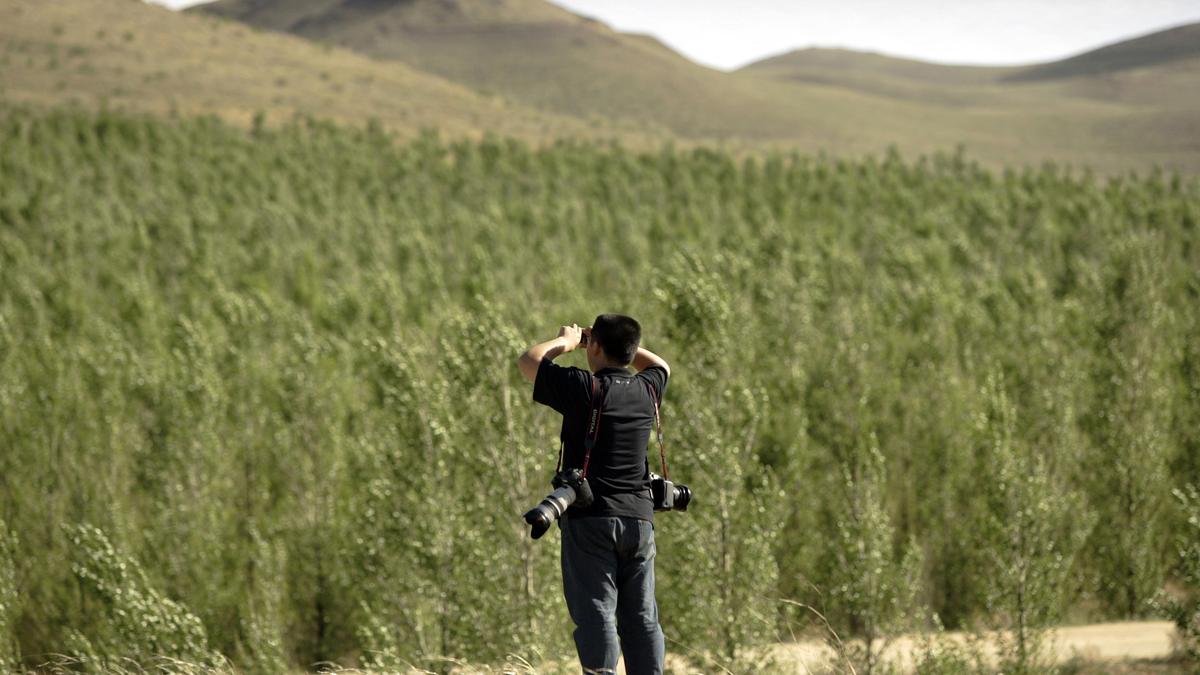
In 1905, German physician and microbiologist Robert Koch was awarded the Nobel Prize in Physiology or Medicine “for his investigations and discoveries in relation to tuberculosis.” At a time when TB claimed millions of lives, Koch’s identification of Mycobacterium tuberculosis as the causative agent transformed medical science and confirmed that the disease was infectious, not hereditary. The discovery not only guided prevention and treatment but also shaped public health strategies worldwide.

Early years and scientific beginnings

Robert Koch was born on December 11, 1843, in Clausthal, a mining town in the Harz Mountains of Germany. A precocious child, he taught himself to read by age five and later studied medicine at the University of Göttingen, where pathologist Jacob Henle, an early proponent of germ theory left a lasting influence.

After graduating in 1866, Koch worked as a country doctor and briefly served as a military physician during the Franco-Prussian War. Without access to formal laboratory facilities, he built his own microscopes and equipment, devising simple but effective methods that foreshadowed his breakthroughs in microbiology.

Koch’s first great success came in 1876, when he identified Bacillus anthracis as the cause of anthrax. He introduced new methods to culture bacteria in pure form using gelatin and later agar, and developed staining techniques to make microbes visible under the microscope.

From these experiments, he formulated Koch’s postulates, four criteria to establish a causal link between a microorganism and a disease. These postulates provided microbiology with its first rigorous framework, which continues to influence infectious disease research today, though adapted for viruses and molecular methods.

Work on tuberculosis

Koch’s most celebrated discovery came in 1882. In a landmark lecture to the Berlin Physiological Society, he announced that he had identified the tubercle bacillus (Mycobacterium tuberculosis) as the cause of tuberculosis. By applying his staining techniques, he demonstrated the rod-shaped bacteria in diseased tissues, proving that TB was infectious.

This revelation overturned the long-held belief that tuberculosis was hereditary, ushering in public health interventions such as isolation of patients, improved ventilation, sanitation reforms and pasteurisation of milk. A century later, the World Health Organization designated March 24 — the date of Koch’s announcement as World Tuberculosis Day, which is now marked globally to raise awareness and renew commitments to TB control.

Global influence

Koch’s influence extended to many other diseases. In 1883, during an epidemic in Egypt and later in India, he identified Vibrio cholerae as the causative agent of cholera, proving its link to contaminated water. His expeditions to Africa broadened the field of tropical medicine, where he studied rinderpest — a highly contagious and often fatal viral disease of cloven-hoofed animals, particularly cattle and buffalo, known as cattle plague; malaria and sleeping sickness.

In 1891, Koch founded the Royal Prussian Institute for Infectious Diseases in Berlin, later renamed the Robert Koch Institute, which remains Germany’s national public health authority and a leading global centre for disease surveillance and epidemic response. His laboratory also became a training ground for young microbiologists from across the world, spreading bacteriological methods internationally.

Controversies and challenges

Not all of Koch’s contributions were without dispute. In 1890, he introduced “tuberculin” as a potential cure for TB, which initially generated enormous public excitement but was later shown to be ineffective and sometimes harmful. Despite the disappointment, tuberculin became an important diagnostic tool, the tuberculin skin test, still in use today.

Koch also argued that bovine tuberculosis rarely infected humans, a stance later proven wrong, especially concerning the transmission through contaminated milk.

Legacy and impact

Koch’s Nobel Prize recognised his landmark work on tuberculosis, but his impact reached far beyond a single disease. Alongside Louis Pasteur, he is regarded as a founder of modern bacteriology. His postulates, staining techniques, and culture methods shaped experimental standards that continue to guide how new pathogens are studied.

The World Health Organization and national public health agencies still build on Koch’s foundations in TB control and epidemiology. Programmes such as directly observed treatment (DOTS) and molecular diagnostic approaches trace their lineage back to his discovery of the tubercle bacillus. The Robert Koch Institute continues to carry forward his mission, playing a leading role in infectious disease research and pandemic response.

Robert Koch died on May 27, 1910, at the age of 66. His discoveries remain embedded in both science and public health. His Nobel-winning research is commemorated every year on World Tuberculosis Day, and his name endures in global institutions, reminding us that rigorous science can transform human health and society.

Published – September 14, 2025 02:35 pm IST


Source link

Science Tags:1905 Nobel Prize in Physiology or Medicine, DOTS, DR-TB, on investigations and discoveries in relation to tuberculosis, Robert Koch, TB strains, tuberculosis

Post navigation

Previous Post: Access Denied
Next Post: Access Denied

Related Posts

  • China’s ’Great Green Wall’ tames desert growth, but scientists say fight is not over
    China’s ’Great Green Wall’ tames desert growth, but scientists say fight is not over Science
  • Unlocking early detection, better treatment pathways for PCOS and endometriosis using microRNAs
    Unlocking early detection, better treatment pathways for PCOS and endometriosis using microRNAs Science
  • Artemis II’s moon-bound astronauts capture Earth’s brilliant blue beauty as they leave it behind
    Artemis II’s moon-bound astronauts capture Earth’s brilliant blue beauty as they leave it behind Science
  • A liver protein triggered by exercise reversed memory loss in mice
    A liver protein triggered by exercise reversed memory loss in mice Science
  • How an altered protein and fussy neurons conspire to cause microcephaly
    How an altered protein and fussy neurons conspire to cause microcephaly Science
  • Scientists test Fukushima fish after nuclear plant water release
    Scientists test Fukushima fish after nuclear plant water release Science

More Related Articles

Vaccine for dengue may be available commercially by mid-2026  Vaccine for dengue may be available commercially by mid-2026  Science
Altermagnet conducts with different charge carriers in different directions Altermagnet conducts with different charge carriers in different directions Science
Team aims world’s smallest QR code at long-term data storage Team aims world’s smallest QR code at long-term data storage Science
China’s EAST reactor keeps the fire of magnetic fusion burning China’s EAST reactor keeps the fire of magnetic fusion burning Science
Most people in the world do not consume enough micronutrients: study Most people in the world do not consume enough micronutrients: study Science
In axolotls and flatworms, regeneration is a body-wide choreograph In axolotls and flatworms, regeneration is a body-wide choreograph Science
SiteLock

Archives

  • October 2026
  • September 2026
  • August 2026
  • July 2026
  • June 2026
  • May 2026
  • April 2026
  • March 2026
  • February 2026
  • January 2026
  • December 2025
  • November 2025
  • October 2025
  • September 2025
  • August 2025
  • July 2025
  • June 2025
  • May 2025
  • April 2025
  • March 2025
  • February 2025
  • January 2025
  • December 2024
  • November 2024
  • October 2024
  • September 2024
  • August 2024
  • July 2024
  • June 2024
  • May 2024
  • April 2024
  • March 2024
  • February 2024
  • January 2024
  • December 2023
  • November 2023
  • October 2023
  • September 2023
  • August 2023
  • July 2023
  • June 2023
  • May 2023
  • April 2023
  • March 2023
  • February 2023
  • January 2023
  • December 2022
  • November 2022
  • October 2022
  • September 2022
  • August 2022
  • July 2022
  • June 2022
  • May 2022

Categories

  • Business
  • Nation
  • Science
  • Sports
  • World

Recent Posts

  • Boat that capsized in Bihar had a hole and was overloaded, say police
  • Delhi journalist who accused ACP of sexual harassment slapped with SC/ST Act over ‘casteist remarks’
  • Three Indians killed in Germany building fire: reports
  • Govt. to roll out National Electricity Data Sharing framework in October: Power Secretary
  • BCCI steps in to prevent further forfeitures by Arunachal Pradesh

Recent Comments

  1. RobertTes on UP Teacher Who Asked Students To Slap Muslim Classmate
  2. Manuelret on UP Teacher Who Asked Students To Slap Muslim Classmate
  3. RobertTes on UP Teacher Who Asked Students To Slap Muslim Classmate
  4. RobertTes on UP Teacher Who Asked Students To Slap Muslim Classmate
  5. BrentWes on UP Teacher Who Asked Students To Slap Muslim Classmate
  • AAP As CBI Gets The Go Ahead To Investigate Jailed Leader Satyendar Jain
    AAP As CBI Gets The Go Ahead To Investigate Jailed Leader Satyendar Jain Nation
  • Access Denied Sports
  • Access Denied
    Access Denied Nation
  • Access Denied World
  • PM Modi in Norway: PM Modi calls for peaceful resolution of conflicts in West Asia and Ukraine
    PM Modi in Norway: PM Modi calls for peaceful resolution of conflicts in West Asia and Ukraine Nation
  • Afghanistan seal 2027 World Cup berth, West Indies to go through qualifiers again
    Afghanistan seal 2027 World Cup berth, West Indies to go through qualifiers again Sports
  • Access Denied Sports
  • Access Denied
    Access Denied Nation

Editor-in-Chief:
Mohammad Ariff,
MSW, MAJMC, BSW, DTL, CTS, CNM, CCR, CAL, RSL, ASOC.
editor@artifex.news

Associate Editors:
1. Zenellis R. Tuba,
zenelis@artifex.news
2. Haris Daniyel
daniyel@artifex.news

Photograher:
Rohan Das
rohan@artifex.news

Associate Journalists
1. Subrata Paul - AN/2020/01
2. Quamruz Zaman - AN/2021/22
3. Ahmed Sha - AN/2021/035
4. Ajay Kumar Shaw - AN/2021/39
5. Tahqiqul Hoda - AN/2021/21

Artifex.News offers Online Paid Internships to college students from India and Abroad. Interns will get a PRESS CARD and other online offers.
Send your CV (Subjectline: Paid Internship) to internship@artifex.news

Links:
Associate Journalism
About Us
Privacy Policy

News Links:
Breaking News
World
Nation
Sports
Business
Entertainment
Lifestyle

Registered Office:
72/A, Elliot Road, Kolkata - 700016
Tel: 033-22277777, 033-22172217
Email: office@artifex.news

Editorial Office / News Desk:
No. 13, Mezzanine Floor, Esplanade Metro Rail Station,
12 J. L. Nehru Road, Kolkata - 700069.
(Entry from Gate No. 5)
Tel: 033-46011099, 033-46046046
Email: editor@artifex.news

Copyright © 2023 Artifex.News Newsportal designed by Artifex Infotech.