



Skip to content
  • Facebook
  • X
  • Linkedin
  • WhatsApp
  • YouTube
  • Associate Journalism
  • About Us
  • Privacy Policy
  • 033-46046046
  • editor@artifex.news
Artifex.News

Artifex.News

Stay Connected. Stay Informed.

  • Breaking News
  • World
  • Nation
  • Sports
  • Business
  • Science
  • Entertainment
  • Lifestyle
  • Toggle search form
  • First International UN Staff Member Killed In Gaza Attack
    First International UN Staff Member Killed In Gaza Attack World
  • Dustbins, Garbage Packets Made Mandatory In Vehicles Entering Uttarakhand
    Dustbins, Garbage Packets Made Mandatory In Vehicles Entering Uttarakhand Nation
  • Access Denied Sports
  • Netanyahu Says “Central Link In Iran’s Axis Of Evil” Has Fallen In Syria
    Netanyahu Says “Central Link In Iran’s Axis Of Evil” Has Fallen In Syria World
  • Access Denied
    Access Denied Nation
  • Rupee falls 12 paise to 82.68 against U.S. dollar in early trade
    Rupee falls 12 paise to 82.68 against U.S. dollar in early trade Business
  • Nirmala Sitharaman, US Treasury Secretary Janet Yellen Discuss G20 Priorities
    Nirmala Sitharaman, US Treasury Secretary Janet Yellen Discuss G20 Priorities Nation
  • Nvidia’s Jensen Huang says China is going to win the AI race: Report
    Nvidia’s Jensen Huang says China is going to win the AI race: Report Business
37,000 Alien Species Catalogued, Cost Humans 3 Billion Per Year: Report

37,000 Alien Species Catalogued, Cost Humans $423 Billion Per Year: Report

Posted on September 4, 2023 By admin


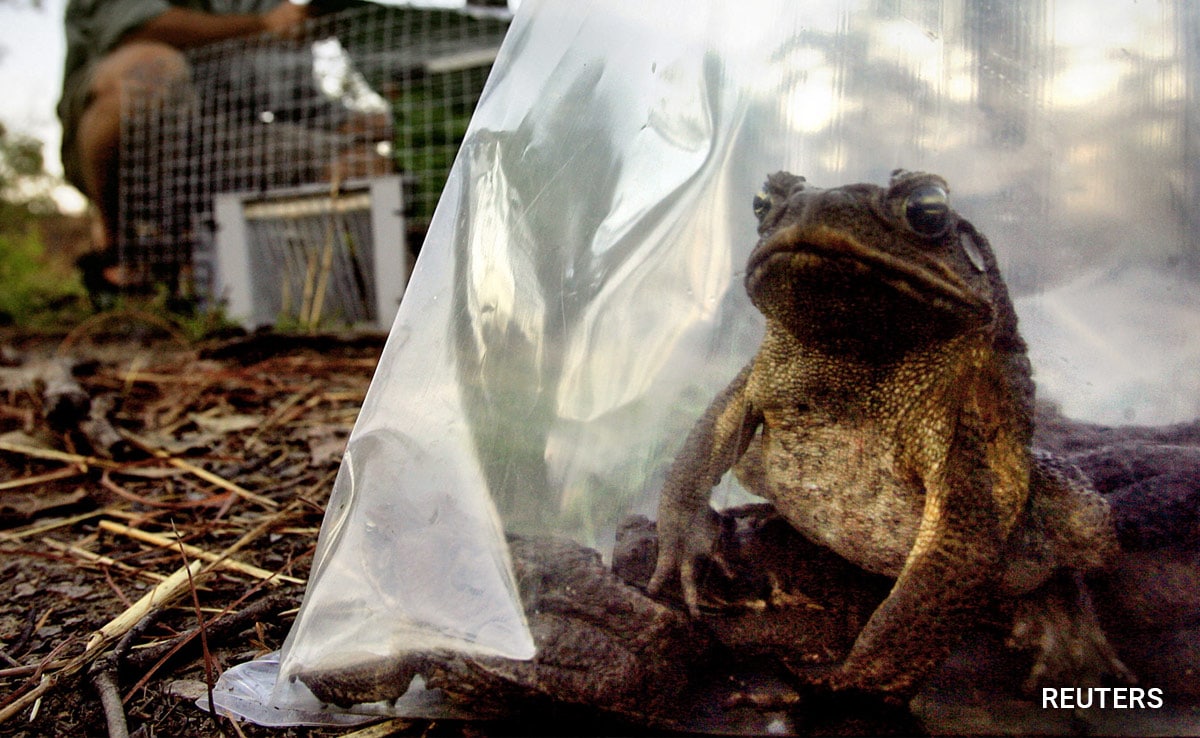
The number is trending upward, along with the bill for damage multiplying fourfold. (Representational)

Paris:

Invasive species that wreck crops, ravage forests, spread disease, and upend ecosystems are spreading ever faster across the globe, and humanity has not been able to stem the tide, a major scientific assessment said Monday.

The failure is costing well over $400 billion dollars a year in damages and lost income — the equivalent to the GDP of Denmark or Thailand — and that is likely a “gross underestimation”, according to the intergovernmental science advisory panel for the UN Convention on Biodiversity (IPBES).

From water hyacinth choking Lake Victoria in East Africa, to rats and brown snakes wiping out bird species in the Pacific, to mosquitoes exposing new regions to Zika, yellow fever, dengue and other diseases, the report catalogued more than 37,000 so-called alien species that have taken root — often literally — far from their places of origin.

That number is trending sharply upward, along with the bill for the damage multiplying fourfold per decade, on average, since 1970.

Economic expansion, population increase and climate change “will increase the frequency and extent of biological invasions and the impacts of invasive alien species,” the report concluded.

Only 17 percent of countries have laws or regulations to manage this onslaught, it said.

Whether by accident or on purpose, when non-native species wind up on the other side of the world, humans are to blame.

The spread of species is hard evidence that the rapid expansion of human activity has so radically altered natural systems as to tip the Earth into a new geological epoch, the Anthropocene, scientists say.

Hitchhikers

The hyacinth that at one point covered 90 percent of Lake Victoria — crippling transport, smothering aquatic life, blocking hydroelectric dam intake and breeding mosquitoes — is thought to have been introduced by Belgian colonial officials in Rwanda as an ornamental garden flower before making its way down the Kagera River in the 1980s.

The Florida Everglades is teeming with the destructive offspring of erstwhile pets and house plants, from five-metre (16-foot) Burmese pythons and walking catfish to Old World climbing fern and Brazilian pepper.

In the 19th century English settlers brought rabbits to New Zealand to hunt and for food. When they multiplied like, well, rabbits, officials imported ferocious little carnivores called stoats to reduce their numbers.

But the stoats went after easier prey: dozens of endemic bird species that were soon decimated, from baby Kiwis to wrybills.

New Zealand and Australia — where a similar bad-to-worse saga involving rabbits unfolded — are “case studies” of how not to control one imported pest with another, Elaine Murphy, a scientist at New Zealand’s Department of Conservation, told AFP.

More often, however, invasive species are accidental arrivals, hitching rides in the ballast water of cargo ships, the containers in their holds, or in a tourist’s suitcase.

The Mediterranean Sea is full of non-native fish and plants, such as lionfish and killer alga, that journeyed from the Red Sea through the Suez Canal.

Vulnerable small islands

Murder hornets capable of wiping out entire bee colonies in a single attack are thought to have arrived in the US from Asia as stowaways in freight.

Largely due to huge volumes of trade, Europe and North America have the world’s largest concentrations of invasive species, defined as those that are non-native and cause harm and have relocated due to human activity, the IPBES report shows.

Invasive species are a significant cause in 60 percent of all documented plant or animal extinctions, one of five main drivers along with habitat loss, global warming and pollution, according to the findings.

These drivers interact: climate change has pushed alien species into newly warmed waters or lands where native species are often vulnerable to intruders they have never encountered.

The deadly fire that reduced the Hawaiian town of Lahaina on Maui to ashes last month was fuelled in part by bone-dry grasses — imported decades ago to feed livestock — that has spread across abandoned sugar plantations.

A global treaty to protect biodiversity hammered out in Montreal last December sets a target of reducing the rate at which invasive alien species spread by half by 2030.

The IPBES report lays out general strategies for achieving this goal, but does not assess the chances of it being met.

There are basically three lines of defence, according to the report — prevention, eradication and then, failing that, containment.

Attempts at eradication have generally failed in large bodies of water and open waterways, as well as on large tracts of contiguous land. The places with the highest rate of success in removing unwanted guests — especially rats and other vertebrates — are also the ones that have proved most vulnerable: small islands.

(This story has not been edited by NDTV staff and is auto-generated from a syndicated feed.)

Waiting for response to load…



Source link

World Tags:alien species, invasive species

Post navigation

Previous Post: SpiceJet Gives Lessors 4.8 Crore Shares To Clear Over Rs 230 Crore Dues
Next Post: Russia Says ‘Thwarts’ Attempt By Ukrainian Incursion Trying To Cross Border

Related Posts

  • Ahead of Misri’s expected Nepal visit, Kathmandu expresses concern to India, China on Kailash yatra over Lipulekh
    Ahead of Misri’s expected Nepal visit, Kathmandu expresses concern to India, China on Kailash yatra over Lipulekh World
  • The United States’ history of intervening in Latin America
    The United States’ history of intervening in Latin America World
  • 11 killed, 2 injured in train accident in China
    11 killed, 2 injured in train accident in China World
  • 2 French Rafale Jets Collide Mid-Air, Instructor, Pilot Missing
    2 French Rafale Jets Collide Mid-Air, Instructor, Pilot Missing World
  • Access Denied World
  • French court frees Sarkozy from jail pending appeal
    French court frees Sarkozy from jail pending appeal World

More Related Articles

Scores of homes razed, one dead in Australian bushfires Scores of homes razed, one dead in Australian bushfires World
Access Denied World
Tree That Went Extinct In 1838 Resprouts In Brazil City 200 Years Later Tree That Went Extinct In 1838 Resprouts In Brazil City 200 Years Later World
Yemen separatists launch two-year independence transition as strikes kill 20 Yemen separatists launch two-year independence transition as strikes kill 20 World
Assad’s Exit Shatters Iran’s Influence But Risks Islamists’ Rise In Syria Assad’s Exit Shatters Iran’s Influence But Risks Islamists’ Rise In Syria World
I Know It’s a Cliche I Know It’s a Cliche World
SiteLock

Archives

  • May 2026
  • April 2026
  • March 2026
  • February 2026
  • January 2026
  • December 2025
  • November 2025
  • October 2025
  • September 2025
  • August 2025
  • July 2025
  • June 2025
  • May 2025
  • April 2025
  • March 2025
  • February 2025
  • January 2025
  • December 2024
  • November 2024
  • October 2024
  • September 2024
  • August 2024
  • July 2024
  • June 2024
  • May 2024
  • April 2024
  • March 2024
  • February 2024
  • January 2024
  • December 2023
  • November 2023
  • October 2023
  • September 2023
  • August 2023
  • July 2023
  • June 2023
  • May 2023
  • April 2023
  • March 2023
  • February 2023
  • January 2023
  • December 2022
  • November 2022
  • October 2022
  • September 2022
  • August 2022
  • July 2022
  • June 2022
  • May 2022

Categories

  • Business
  • Nation
  • Science
  • Sports
  • World

Recent Posts

  • Maruti Suzuki crosses 3 million vehicle dispatches through railways, eyes 35% share by rail
  • Delhi High Court refuses to entertain PIL to prevent suicides
  • Gold ETF prices revive as investors flock on higher import duties on yellow metal
  • Kashmir MLA ‘boycotts’ L-G’s drug campaign after demolition drive in his constituency
  • Assam ships first legal agarwood chips to West Asia

Recent Comments

  1. Jeffreyroure on UP Teacher Who Asked Students To Slap Muslim Classmate
  2. Stevemonge on UP Teacher Who Asked Students To Slap Muslim Classmate
  3. RichardClage on UP Teacher Who Asked Students To Slap Muslim Classmate
  4. StevenLek on UP Teacher Who Asked Students To Slap Muslim Classmate
  5. Leonardren on UP Teacher Who Asked Students To Slap Muslim Classmate
  • Who Will Replace Arvind Kejriwal? Massive Leadership Crisis Before AAP After Arvind Kejriwal Arrested
    Who Will Replace Arvind Kejriwal? Massive Leadership Crisis Before AAP After Arvind Kejriwal Arrested Nation
  • Access Denied Sports
  • Discussions On Budget To Continue In Both Houses Today
    Discussions On Budget To Continue In Both Houses Today Nation
  • IPL 2026 | Nitish Reddy: one who brings balance to the SRH line-up
    IPL 2026 | Nitish Reddy: one who brings balance to the SRH line-up Sports
  • Access Denied Business
  • Access Denied
    Access Denied Nation
  • Words In Emails, Online Posts Lowering Woman’s Dignity An Offence: Bombay High Court
    Words In Emails, Online Posts Lowering Woman’s Dignity An Offence: Bombay High Court Nation
  • Access Denied Sports

Editor-in-Chief:
Mohammad Ariff,
MSW, MAJMC, BSW, DTL, CTS, CNM, CCR, CAL, RSL, ASOC.
editor@artifex.news

Associate Editors:
1. Zenellis R. Tuba,
zenelis@artifex.news
2. Haris Daniyel
daniyel@artifex.news

Photograher:
Rohan Das
rohan@artifex.news

Artifex.News offers Online Paid Internships to college students from India and Abroad. Interns will get a PRESS CARD and other online offers.
Send your CV (Subjectline: Paid Internship) to internship@artifex.news

Links:
Associate Journalism
About Us
Privacy Policy

News Links:
Breaking News
World
Nation
Sports
Business
Entertainment
Lifestyle

Registered Office:
72/A, Elliot Road, Kolkata - 700016
Tel: 033-22277777, 033-22172217
Email: office@artifex.news

Editorial Office / News Desk:
No. 13, Mezzanine Floor, Esplanade Metro Rail Station,
12 J. L. Nehru Road, Kolkata - 700069.
(Entry from Gate No. 5)
Tel: 033-46011099, 033-46046046
Email: editor@artifex.news

Copyright © 2023 Artifex.News Newsportal designed by Artifex Infotech.