
Skip to content
  • Facebook
  • X
  • Linkedin
  • WhatsApp
  • Associate Journalism
  • About Us
  • Privacy Policy
  • 033-46046046
  • editor@artifex.news
Artifex.News

Artifex.News

Stay Connected. Stay Informed.

  • Breaking News
  • World
  • Nation
  • Sports
  • Business
  • Science
  • Entertainment
  • Lifestyle
  • Toggle search form
  • Tata Steel Q4 PAT slides 64% to Rs 611 crore Business
  • 2 Wagons Of Goods Train Derail Near Jammu, Traffic Hit For Over An Hour Nation
  • Lawrence Bishnoi Gang Wanted To Kill Me And My Family: Salman Khan To Cops Nation
  • “I Am Not Sure”: India Coach Provides Major Injury Update On KL Rahul Sports
  • Claudia Goldin | The detective of economics World
  • EU’s Borrell Calls for ‘humanitarian pause’ to Israel-Hamas war World
  • Saudi King Suffering From “High Fever”, To Undergo Medical Tests: Report World
  • “If He Needed…”: Jasprit Bumrah Breaks Silence On Hardik Pandya Getting Booed In IPL Sports

Who Should Get Paid For Nature’s Sequenced Genes?

Posted on October 30, 2024 By admin


Cali, Colombia:

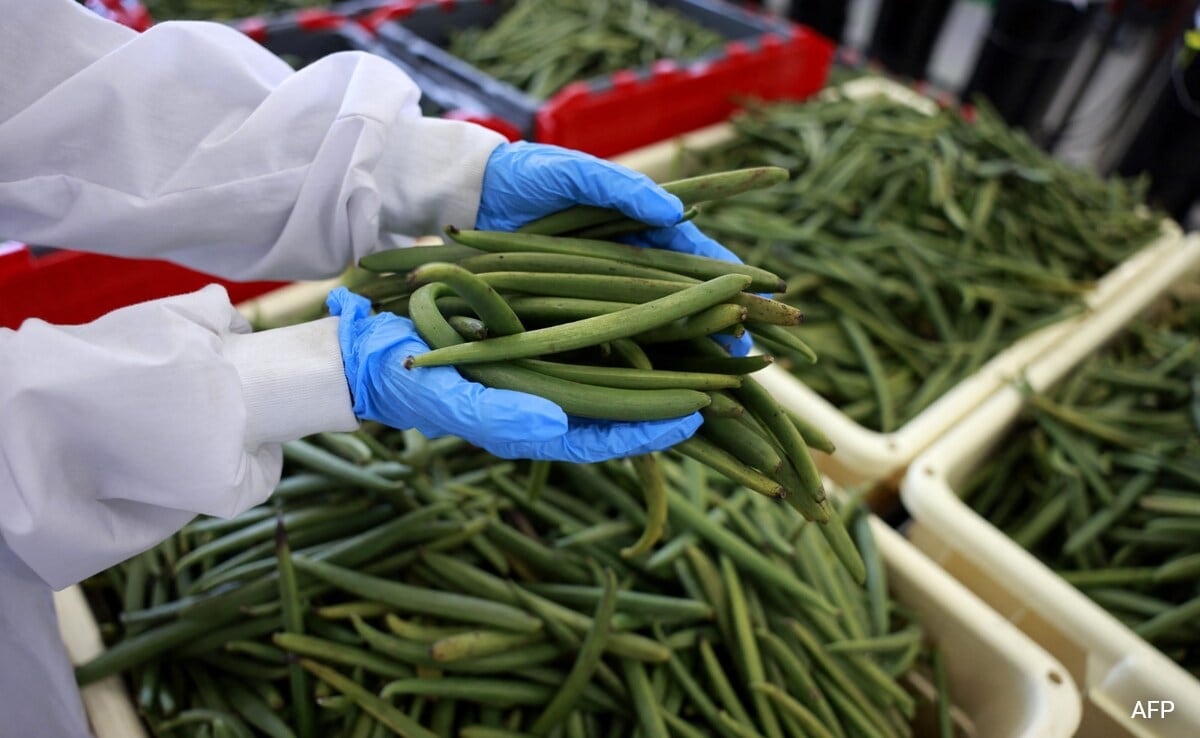
Much of the vanilla that flavors our ice cream today is artificial, derived from the genetic signature of a plant that hundreds of years ago was known only to an Indigenous Mexican tribe. The plant’s sequenced genomic information, available on public databases, was used as the basis for a synthetic flavoring that today competes with vanilla grown in several countries, mainly by small-scale farmers.

Few, if any, benefits of the lucrative scientific advance have trickled down to the communities that gave us vanilla in the first place.

“Wild genetic resources and pharmaceuticals …are multi-multi-billion dollar businesses. They clearly are profitable… that’s not in dispute,” Charles Barber of the World Resources Institute think tank told AFP.

“A great deal of really valuable information has fed into the system from research and utilization of wild genetic resources. And there is no mechanism currently to compensate the people where this information is coming from” in the form of digitally sequenced data, he added.

Much of the information comes from poor countries.

Fair sharing of the gains derived from digitally-stored genetic sequencing data has been a headache for negotiators at the COP16 biodiversity summit into its second week in Cali, Colombia.

At the last conference, in Montreal in 2022, 196 country parties to the UN’s Convention on Biological Diversity (CBD) agreed to create a benefit-sharing mechanism for the use of digital sequence information (DSI).

Two years later, they still need to resolve such basic questions as who pays, how much, into which fund, and to whom does the money go?

‘Cheap and very fast’

The issue is a complex one.

There is little debate that genetic data-sharing on mostly free-access platforms is crucial for human advancement through medicine and vaccine development, for example.

But how to quantify the value of the sequenced information itself? And should the first people to discover a plant’s particular usefulness be compensated?

“Sequencing technology has become so advanced that you can go with a… handheld device a little bit bigger than a cell phone and you can literally sequence a genome in an hour or two and upload it as you sequence it,” Pierre du Plessis, a DSI expert and former negotiator for African countries at the CBD told AFP.

These gene sequences are then uploaded to databases which artificial intelligence can mine for potential leads for product development.

DSI is worth an estimated hundreds of billions of dollars a year. And there is a lot of it out there.

“Once the sequence is put into a public database, generally, no benefit-sharing obligations apply,” Nithin Ramakrishnan, a researcher with the Third World Network, an advocacy NGO for developing countries, told AFP in Cali.

“Like when the sandalwood sequence information is available in the database whether India wants to share its sandalwood… with a cosmetic company or not, doesn’t matter.

Mandatory

A point of contention in Cali is a demand from developing countries that payment for DSI use be mandatory, perhaps through a one-percent levy on profits from drugs, cosmetics or other products.

They also want guarantees of non-monetary benefits such as access to vaccines produced from genetic information sequenced from viruses and other pathogens.

“We want real understanding, sector-specific understanding of what non-monetary benefits will be shared and we want the system to be obligatory — the users should have some form of obligation to share benefits,” said Ramakrishnan.

Another sticking point is access for Indigenous people and local communities to DSI funds.

Developing countries want the information on genetic databases to be traceable and “answerable to governments” of the countries where it comes from, said Ramakrishnan.

But rich nations and many researchers oppose such a model which they fear will be too onerous, potentially putting the brakes on scientific pursuits that could benefit all humankind.

With such divergent points of view, observers are doubtful the Cali COP will emerge with any firm decisions on the outstanding questions by closing time on Friday.

The World Wildlife Fund has said “many more rounds of negotiations appear necessary” on DSI.

Added Barber: “I think it’s not going to all get solved here.”

(This story has not been edited by NDTV staff and is auto-generated from a syndicated feed.)



Source link

World Tags:Cali, COP16 biodiversity summit, digital sequence information, Nature, nature sequenced genes, vanilla

Post navigation

Previous Post: Will Actor Darshan Get Interim Bail? High Court Verdict Likely Today
Next Post: Borussia Dortmund’s Woes Continue With German Cup Exit At Wolfsburg

Related Posts

  • Israel Must Protect Gazans, Distinguish Between Hamas, Civilians, Says US World
  • Australia Woman Arrested For Faking Own Death To Claim Nearly $500,000 Insurance Payout World
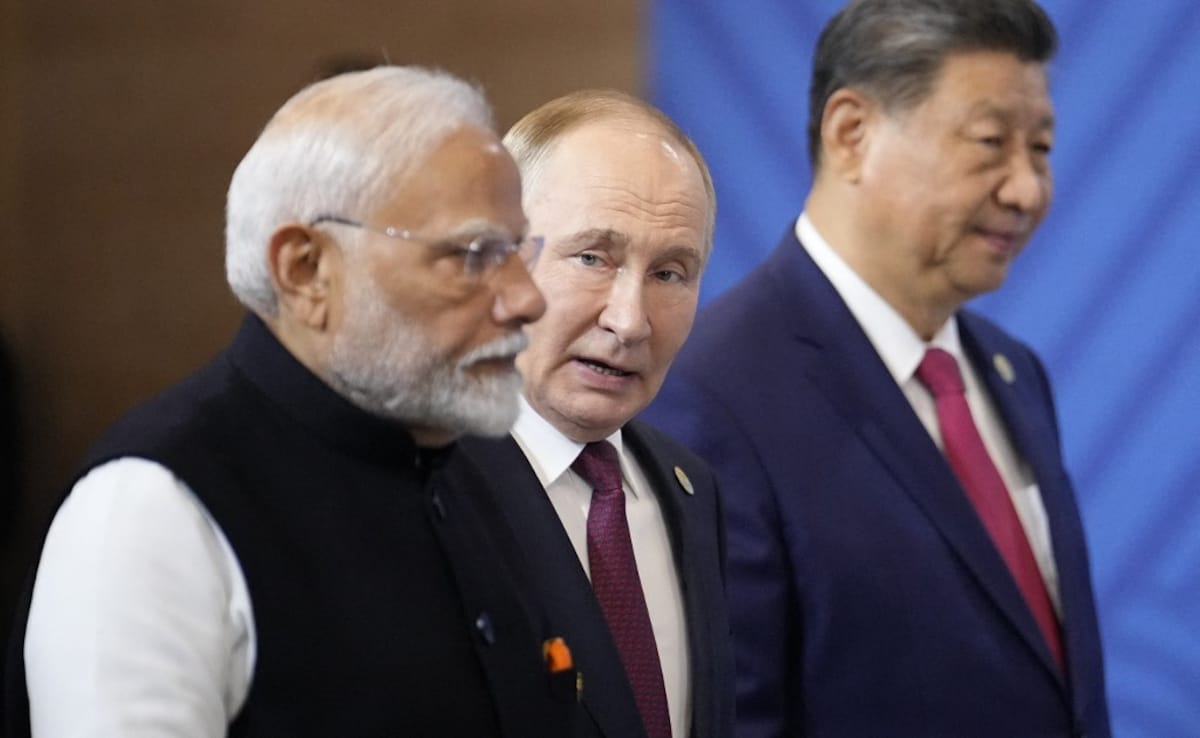
  • PM’s Modi Full Speech At 16th BRICS Summit In Russia World
  • UN Security Council Backs Antonio Guterres After Israel Denies Entry World
  • Lebanon PM Calls For Ceasefire With Israel As Strikes Intensify World
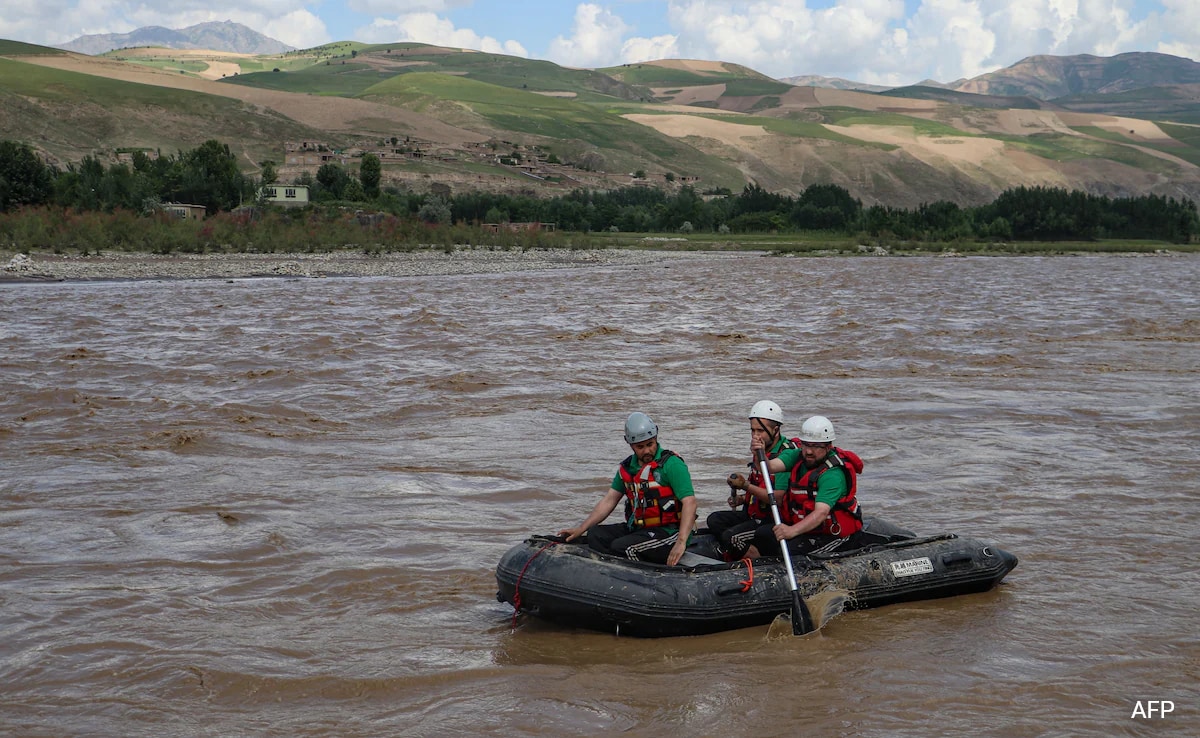
  • 16 People Killed In Floods In Afghanistan: Report World

More Related Articles

Family of Indian-American Jasmer Singh killed in attack in Queens want hate crime charge against accused World
Israel-Hamas war, day 7 LIVE updates | First charter flight carrying 212 Indians departs from Israel World
Pentagon says Russia launched space weapon in path of U.S. satellite World
Morning Digest | New Parliament to host session from September 19; Army jawan abducted and murdered in Manipur, and more World
Germany To Try Ex-Stasi Officer For Pole Murder Nearly 50 Years Ago World
French Man Accused Of Drugging Wife, Recruiting Over 50 People To Rape Her World
SiteLock

Archives

  • October 2024
  • September 2024
  • August 2024
  • July 2024
  • June 2024
  • May 2024
  • April 2024
  • March 2024
  • February 2024
  • January 2024
  • December 2023
  • November 2023
  • October 2023
  • September 2023
  • August 2023
  • July 2023
  • June 2023
  • May 2023
  • April 2023
  • March 2023
  • February 2023
  • January 2023
  • December 2022
  • November 2022
  • October 2022
  • September 2022
  • August 2022
  • July 2022
  • June 2022
  • May 2022

Categories

  • Business
  • Nation
  • Science
  • Sports
  • World

Recent Posts

  • North Korea launches a new intercontinental ballistic missile designed to threaten U.S.
  • "Not Going To Sugarcoat…": Gambhir's 'Hurting' Message Ahead Of 3rd NZ Test
  • 7 Changes Coming Into Effect From November 1
  • Donald Trump boards a garbage truck to draw attention to Biden remark
  • Journalist Dilip Saini Stabbed To Death In UP’s Fatehpur, His BJP Leader Friend Injured

Recent Comments

  1. dfb{{98991*97996}}xca on UP Teacher Who Asked Students To Slap Muslim Classmate
  2. "dfbzzzzzzzzbbbccccdddeeexca".replace("z","o") on UP Teacher Who Asked Students To Slap Muslim Classmate
  3. 1}}"}}'}}1%>"%>'%> on UP Teacher Who Asked Students To Slap Muslim Classmate
  4. bfg6520<s1﹥s2ʺs3ʹhjl6520 on UP Teacher Who Asked Students To Slap Muslim Classmate
  5. pHqghUme9356321 on UP Teacher Who Asked Students To Slap Muslim Classmate
  • MS Dhoni, Ruturaj Gaikwad Leading CSK Together? Deepak Chahar Admits ‘Captaincy Confusion’ Sports
  • 2 Women Climbers, Stuck At 6,000 Metres In Uttarakhand For 3 Days, Rescued Nation
  • “Huge Difference”: Ex-Australia Skipper On Mohammed Shami’s Absence From Upcoming Border-Gavaskar Trophy Sports
  • Amit Shah’s Counter-Strike Amid Opposition Protests Over Citizenship Law Nation
  • Debate Over Having Mega Auction Dominates IPL Owners’ Meeting With BCCI: Report Sports
  • Bancassurance channel | IRDAI constitutes taskforce to review model, carry out modifications Business
  • Bharti Airtel Q1 net profit jumps 2.5 times to ₹4,160 crore Business
  • QIA to invest $1 billion in India’s Reliance Retail Ventures Business

Editor-in-Chief:
Mohammad Ariff,
MSW, MAJMC, BSW, DTL, CTS, CNM, CCR, CAL, RSL, ASOC.
editor@artifex.news

Associate Editors:
1. Zenellis R. Tuba,
zenelis@artifex.news
2. Haris Daniyel
daniyel@artifex.news

Photograher:
Rohan Das
rohan@artifex.news

Artifex.News offers Online Paid Internships to college students from India and Abroad. Interns will get a PRESS CARD and other online offers.
Send your CV (Subjectline: Paid Internship) to internship@artifex.news

Links:
Associate Journalism
About Us
Privacy Policy

News Links:
Breaking News
World
Nation
Sports
Business
Entertainment
Lifestyle

Registered Office:
72/A, Elliot Road, Kolkata - 700016
Tel: 033-22277777, 033-22172217
Email: office@artifex.news

Editorial Office / News Desk:
No. 13, Mezzanine Floor, Esplanade Metro Rail Station,
12 J. L. Nehru Road, Kolkata - 700069.
(Entry from Gate No. 5)
Tel: 033-46011099, 033-46046046
Email: editor@artifex.news

Copyright © 2023 Artifex.News Newsportal designed by Artifex Infotech.