




Skip to content
  • Facebook
  • X
  • Linkedin
  • WhatsApp
  • Associate Journalism
  • About Us
  • Privacy Policy
  • 033-46046046
  • editor@artifex.news
Artifex.News

Artifex.News

Stay Connected. Stay Informed.

  • Breaking News
  • World
  • Nation
  • Sports
  • Business
  • Science
  • Entertainment
  • Lifestyle
  • Toggle search form
  • US Deepening Its Relationship With India In Several Areas: Official World
  • The birth and growth of music Science
  • For Table Tennis Great Sharath Kamal, Running Into Roger Federer Tops Favourite Olympic Memories Sports
  • Prison Cell Or Ankle Bracelet? How Countries Incarcerate Former Leaders World
  • Taiwan MP Tries To Run Away With Bill To Stop It From Being Passed World
  • Rochester park shooting: 1 dead, 6 injured in mass shooting at upstate New York park World
  • In prime-time address, Biden warns of election-year rhetoric, saying ’it’s time to cool it down’ World
  • Rohit Sharma Skips Practice Game Ahead Of Mumbai Indians’ IPL 2024 Opener. Here’s Why Sports

Ukraine’s ‘Dragon Drone’ Rains Molten Metal On Russian Positions

Posted on September 7, 2024 By admin


The use of incendiary bombs – munitions that are designed to cause fire.

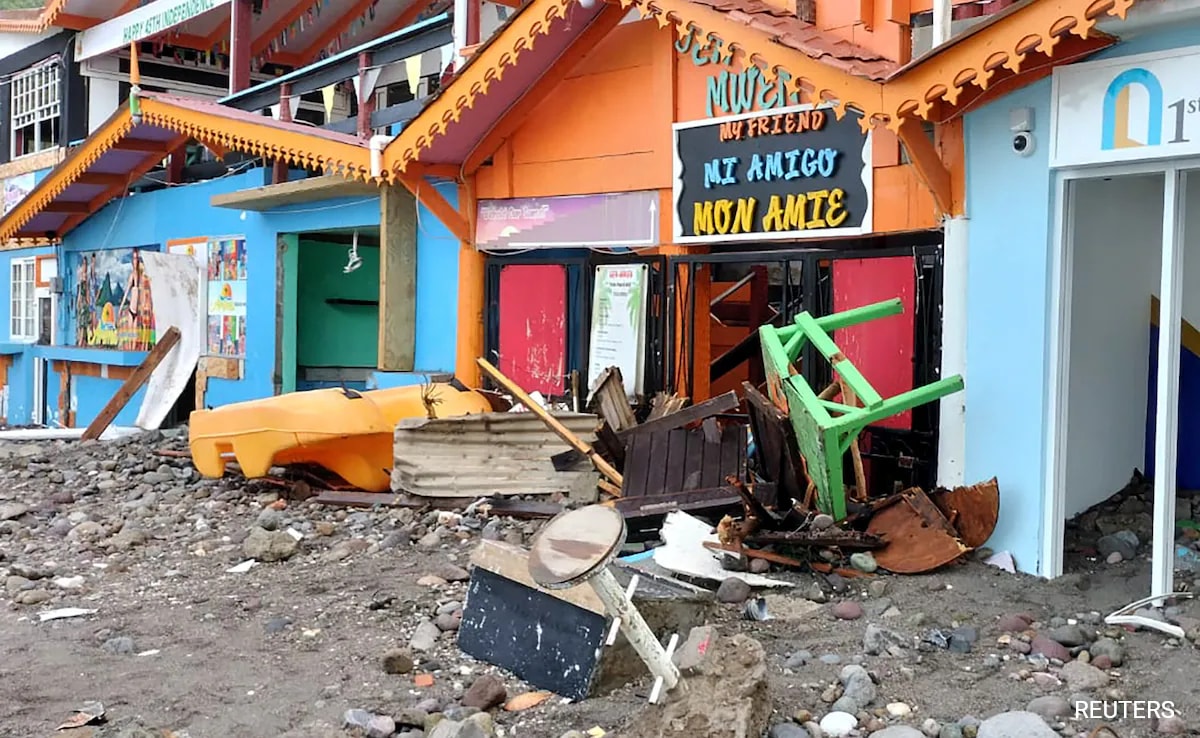
Fire rained on Russian-held positions in the occupied Kharkiv region when Ukrainian drones dropped thermite incendiary bombs, burning trees and reportedly some Russian military vehicles. Footages of fire-spewing ‘Dragon Drone’ have emerged on various Telegram channels.

A Telegram channel named Khorne Group shared the undated footage of a low-flying drone dropping thermite – A mixture of aluminium powder and iron oxide that burns at a very high temperature. The molten metal can quickly burn trees, fortifications and metals, rendering military vehicles, and armour useless.

The 60th Mechanized Brigade of Ukraine shared drone footage of the thermite bombing and said, “Strike Drones are our wings of vengeance, bringing fire straight from the sky! They become a real threat to the enemy, burning his positions with an accuracy that no other weapon can achieve. When our “Vidar” works – the Russian woman will never sleep.” These weapons are considered one the most dangerous in the world.

Vidar is associated with the god of vengeance in Scandinavian mythology.

The Ukrainian military began using the Dragon drone, which burns the area underneath with thermite 🥰🥰🥰 Thermite is a mixture of burning granules of iron oxide and aluminum. About 500 grams of thermite mixture can be placed under a standard FPV drone. The chemical reaction is… pic.twitter.com/3XIzc3LLHN

— Anastasia (@Nastushichek) September 5, 2024

The use of incendiary bombs – munitions that are designed to cause fire – has brought focus on their potential use on civilian populations, and establishments apart from the military. In 2023, Russia used thermite bombs over the eastern Ukrainian town of Vuhledar after the defeat in a tank battle. The Russians spew thermite over the border town.

The Russians reportedly used 122mm Grad 9M22S rockets launched from the Soviet-era B-21 multi-rocket launcher system with a thermit warhead.

Several videos have emerged where Russian and Ukrainian troops have used such weapons on the frontline. Thermite, unlike conventional bombs that rely on a blast effect, generated intense heat. It is widely used in welding steel, iron, and railway tracks.

“The widespread use of thermite bombs increases the likelihood of these weapons being deployed in populated areas. The result could be catastrophic, with horrific injuries and loss of life among civilians,” Dr Iain Overton, Executive Director of Action on Armed Violence (AOAV), a British advocacy group, said.

Ignition of thermite is slow and it requires very high temperature to ignite. These temperatures cannot be reached with conventional black powder fuses or nitrocellulose rods. They are often achieved by Magnesium metal strips that are used as fuses.

Use Of Incendiary Bombs In The Past

World War I was witness to incendiary weapons when Germans and the Allied troops used such munitions against their adversary. The American Thermite Hand Grenade Mark I and the French Model 1916 incendiary grenades were weapons used during World War 1.

The Germans developed B1.3E, 1938, incendiary bombs just before World War 2. The Luftwaffe (German Air Force) used it extensively to bomb British cities. The Imperial War Museum said, “During 1940-41, the Luftwaffe caused serious damage by dropping large quantities of incendiary bombs on British towns and cities, either using containers that were carried on bomb racks and released to open at a predetermined point, or from very large containers holding up to 700 bombs that remained on the aircraft.”

A German B1E 1 kg incendiary aircraft bomb

A German B1E 1 kg incendiary aircraft bomb
Photo Credit: Image credit: Imperial War Museum © IWM (MUN 3291)

The Allied troops used Napalm – a flammable mixture of gasoline and a gelling agent – for bombings and throwing flames. The US used Napalm to target Japanese cities. Almost 60% of Tokyo was burnt during the Napalm bombings. It has been massively used since its creation in 1942.

During the Vietnam War, the use of Napalm and The Dow Chemical Company which produced it, caught the world’s attention on how dangerous such weapons when unleashed on civilians which caused severe burns.

International Regulations On Use Of Incendiary Weapons

Efforts to address the issue of incendiary weapons started in the 1970s, notably with a growing concern over the use of napalm. In 1972, the UN General Assembly adopted a resolution referring to incendiary weapons as ‘a category of arms viewed with horror’.

In 1980, the Convention on Prohibitions or Restrictions on the Use of Certain Conventional Weapons Which May Be Deemed to Be Excessively Injurious or to Have Indiscriminate Effects was adopted with the aim to ban or restrict the use of certain types of weapons considered to cause unnecessary or unjustifiable suffering to combatants or to indiscriminately affects civilians.

The Protocol on prohibitions or restrictions on the use of incendiary weapons (Protocol III) aims at protecting civilians and civilian objects from the use of this type of weapons. It prohibits targeting civilians and restricts targeting military objects located within populated areas. The Protocol also prohibits the use of incendiary weapons on forest or other plants unless the vegetation is used to conceal military objects.

Waiting for response to load…


Source link

World Tags:Kharkiv Russia Ukraine War, Russia -Ukraine war, Thermite bomb, Thermite Bomb Ukraine

Post navigation

Previous Post: “I Worked On…”: Shubman Gill Reveals Strategy In Order To Improve In Test Cricket
Next Post: Actor Darshan Gets TV In Jail, Was “Curious” To Know What Was Happening

Related Posts

  • Hurricane Beryl Wreaks Havoc, Turns To Jamaica, Haiti, Dominican Republic World
  • Morning Digest | Noida residents’ body to move SC against Allahabad HC order on Nithari Killings; Pentagon rushes defences and advisers to Israel, and more World
  • U.S. Supreme Court upholds a gun control law intended to protect domestic violence victims World
  • Russian, Chinese bombers stage joint patrol near Alaska World
  • Afghan women’s rights an internal issue, Taliban says before U.N.-led talks World
  • COVID-19 second-leading cause of death globally in 2021; slashed life expectancy: Lancet study World

More Related Articles

Sunita Williams Could Have Returned On Starliner. Why She Didn’t World
Over 300 Million Children A Year Face Sexual Abuse Online: Study World
Greta Thunberg Fined For Disobeying Police Orders During Climate Protest World
At least 52 dead in fire at a building in Johannesburg World
Massive Alligator Blocks Plane At Florida Air Force Base, Captured And Released Into River World
“Looking forward to productive discussions…”: Maldives Foreign Minister Moosa Zameer arrives in India World
SiteLock

Archives

  • September 2024
  • August 2024
  • July 2024
  • June 2024
  • May 2024
  • April 2024
  • March 2024
  • February 2024
  • January 2024
  • December 2023
  • November 2023
  • October 2023
  • September 2023
  • August 2023
  • July 2023
  • June 2023
  • May 2023
  • April 2023
  • March 2023
  • February 2023
  • January 2023
  • December 2022
  • November 2022
  • October 2022
  • September 2022
  • August 2022
  • July 2022
  • June 2022
  • May 2022

Categories

  • Business
  • Nation
  • Science
  • Sports
  • World

Recent Posts

  • Adani Group says press release in circulation on its Kenya projects is fake
  • Rosie, The World’s Oldest Cat, Dies At 33
  • “Very Strategic, Always Has A Plan”: Usman Khawaja’s Special Praise For India Star
  • India vs South Korea Hockey Live Streaming, Asian Champions Trophy Semi-Final Live Telecast: Where To Watch
  • Explosion In Germany’s Cologne, “Major Police Operation” Going On

Recent Comments

  1. TpeEoPQa on UP Teacher Who Asked Students To Slap Muslim Classmate
  2. xULDsgPuBe on UP Teacher Who Asked Students To Slap Muslim Classmate
  3. KyJtkhneiLmcq on UP Teacher Who Asked Students To Slap Muslim Classmate
  4. mOyehudovB on UP Teacher Who Asked Students To Slap Muslim Classmate
  5. GFBvgSrWPcsp on UP Teacher Who Asked Students To Slap Muslim Classmate
  • China prepares for Belt and Road summit under shadow of Israel-Gaza war World
  • Asian Games: Dipika-Harinder Clinch Mixed Pair Gold In Squash Sports
  • Rajasthan Royals Add Keshav Maharaj In Place Of Prasidh Krishna, KKR Get New Spinner Sports
  • Rising number of ‘predatory’ academic journals undermines research and public trust in scholarship Science
  • Hardik Pandya’s T20 World Cup Selection Done Under Pressure? Jay Shah’s Remark A ‘Hint’ Sports
  • “Gonna Be Fun”: Ravindra Jadeja On Playing In New York For First Time Sports
  • Bridge In Bihar’s Thakurganj Sinks, Sixth In 10 Days Nation
  • Amid Water Shortage In Bengaluru, Karnataka’s Latest Move To Manage Crisis Nation

Editor-in-Chief:
Mohammad Ariff,
MSW, MAJMC, BSW, DTL, CTS, CNM, CCR, CAL, RSL, ASOC.
editor@artifex.news

Associate Editors:
1. Zenellis R. Tuba,
zenelis@artifex.news
2. Haris Daniyel
daniyel@artifex.news

Photograher:
Rohan Das
rohan@artifex.news

Artifex.News offers Online Paid Internships to college students from India and Abroad. Interns will get a PRESS CARD and other online offers.
Send your CV (Subjectline: Paid Internship) to internship@artifex.news

Links:
Associate Journalism
About Us
Privacy Policy

News Links:
Breaking News
World
Nation
Sports
Business
Entertainment
Lifestyle

Registered Office:
72/A, Elliot Road, Kolkata - 700016
Tel: 033-22277777, 033-22172217
Email: office@artifex.news

Editorial Office / News Desk:
No. 13, Mezzanine Floor, Esplanade Metro Rail Station,
12 J. L. Nehru Road, Kolkata - 700069.
(Entry from Gate No. 5)
Tel: 033-46011099, 033-46046046
Email: editor@artifex.news

Copyright © 2023 Artifex.News Newsportal designed by Artifex Infotech.