

Skip to content
  • Facebook
  • X
  • Linkedin
  • WhatsApp
  • Associate Journalism
  • About Us
  • Privacy Policy
  • 033-46046046
  • editor@artifex.news
Artifex.News

Artifex.News

Stay Connected. Stay Informed.

  • Breaking News
  • World
  • Nation
  • Sports
  • Business
  • Science
  • Entertainment
  • Lifestyle
  • Toggle search form
  • Uddhav Thackeray On BJP Victory
    Uddhav Thackeray On BJP Victory Nation
  • “Virat Kohli’s Going To Have…”: Australia Star Straight Take Ahead Of 1st Border Gavaskar Trophy Test
    “Virat Kohli’s Going To Have…”: Australia Star Straight Take Ahead Of 1st Border Gavaskar Trophy Test Sports
  • Chhota Rajan Gets Bail In 2001 Hotelier Murder Case, But To Remain In Jail
    Chhota Rajan Gets Bail In 2001 Hotelier Murder Case, But To Remain In Jail Nation
  • Access Denied
    Access Denied Nation
  • Golf Industry Association Announces Annual Golf And Turf Summit 2023
    Golf Industry Association Announces Annual Golf And Turf Summit 2023 Sports
  • Fix Your FASTag On Windshield Else Pay Double. See New SOPs
    Fix Your FASTag On Windshield Else Pay Double. See New SOPs Nation
  • Moon’s Seismic Activity Likely Linked To Past Meteorite Impacts, Says ISRO
    Moon’s Seismic Activity Likely Linked To Past Meteorite Impacts, Says ISRO Nation
  • Steel truss bridges have ‘secret’ defences against collapse
    Steel truss bridges have ‘secret’ defences against collapse Science
Oil, power, and politics of disruption

Oil, power, and politics of disruption

Posted on March 19, 2026 By admin


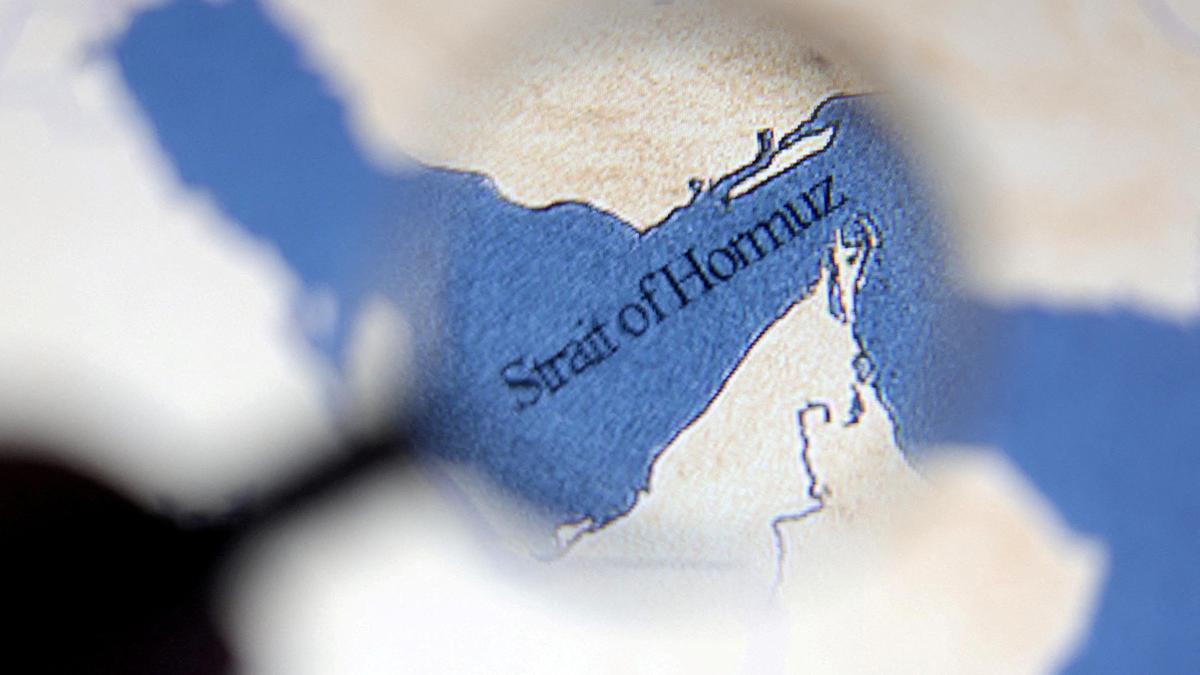
The blue waters of the Strait of Hormuz, connecting the Persian Gulf to the Arabian Sea, form a vital artery of the global economy. Through this narrow gateway — stretching just 33 km at some points — pass ships carrying nearly a fifth of the oil that is traded worldwide. After the U.S. and Israel launched a military campaign against Iran on February 28, Iran blocked ships passing through the Strait, leading to price increases and turmoil in energy markets.

Oil and natural gas account for a little over half of the global energy supply (with coal, renewables, and other sources accounting for the rest, according to IEA data for 2024). They fuel vehicles from trucks to aeroplanes, produce electricity and cooking gas, and provide critical raw materials for industries.

West Asian countries around the Persian Gulf, notably Saudi Arabia, the UAE, and Iran, are among the largest producers of crude oil and natural gas. At the same time, some of the largest energy consumers are in East and South Asia, particularly China, India, and Japan. Still, these countries have limited domestic oil reserves to power their growing economies (though China is a major natural gas producer) (Chart 1). They depend on crude and natural gas imports from West Asia, much of which passes through the Strait of Hormuz.

America and West Asia

The concentration of energy reserves, especially oil, in a few regions has been the primary trigger for some of the long-standing and intense contests between global powers. Aside from the Persian Gulf countries, only a few nations — the U.S., Russia, Venezuela, and Canada — have large oil and natural gas reserves.

The U.S. has been a principal player in the geopolitics of energy, both a major producer and consumer. Given the gas-guzzling sectors driving its economy, the U.S. has an average energy supply per person that is 10 times that of India and 2.4 times that of China. The hunt for more energy has been one of the primary motives of the U.S. international policies.

Control over oil in West Asia shifted from large American and European firms to state-owned national oil companies since the 1950s. Oil prices increased sharply in the 1970s, with Arab members exerting greater influence within the Organization of the Petroleum Exporting Countries. The U.S. response has been twofold: it increased domestic production by drilling more shale oil, especially since the mid-2000s, making it the world’s largest oil producer, and it tried to mould the geopolitics of oil in its favour through strategic interventions, including the Gulf War (1990-91), the Iraq War (2003-11), recent action in Venezuela (2026), and the ongoing U.S.-Israel war with Iran.

Although current production levels are modest, Venezuela and Iran together account for 39% of the world’s proven oil reserves. The promise of future oil is what makes these countries strategically important, especially in the profit projections of U.S. President Donald Trump. However, the closure of the Strait of Hormuz has, at least in the short term, upset Mr. Trump’s calculations and made Russia an unintended beneficiary of the energy turmoil. Following the Russia-Ukraine war in 2022, Russia became a pariah in the West, especially Europe, and trade sanctions have long stymied its oil trade. But suddenly, as oil production capabilities in West Asia take a hit, Russian oil has become crucial for stabilising energy prices. Outside West Asia, Russia is the only country with a large tradable oil surplus (Table 1).

Russian oil and India

The oil markets are deeply interlinked. Even a ripple in a corner of the market can gather itself into a tumultuous wave. India is the world’s second-largest importer of crude oil and the third-largest consumer. Supply disruptions result in higher prices for essential goods and services in India. At the same time, India’s actions in the oil market significantly impact global oil prices.

European countries, with limited domestic oil and natural gas reserves, have traditionally relied on energy imports, mainly from Russia, to withstand the frosty winters. But with sanctions on Russian products imposed since 2022, Europe has had to seek new energy sources, mainly in West Asia.

In this context, India began purchasing Russian oil at discounted prices. The share of Russian imports in India’s oil purchases increased dramatically — from 2.5% in 2021 to 39.0% in 2023. Notice that crude oil is processed in refineries to convert it into a range of products, including petrol, diesel, LPG, and petrochemicals. While dependent on imported crude, China and India have built large refining capacity and export a portion of their refined oil products. Some Indian refiners have made large profits by exporting products processed from discounted crude.

Despite their protestations, Western leaders quietly welcomed the stability in oil prices that resulted when demand from India was partly diverted to sanctioned Russian oil since 2022 (Chart 2).

Today, with the Strait of Hormuz closed and oil prices crossing $110 a barrel, the U.S. is desperate to see greater purchases of sanctioned Russian oil, which has long been marooned at sea, to calm the markets.

A week, indeed, can be a long time in international politics. As tensions prolong in West Asia, the global energy order could be reshaped.

(Jayan Jose Thomas is a Professor of Economics at the Indian Institute of Technology, Delhi)

Published – March 19, 2026 11:05 pm IST



Source link

World

Post navigation

Previous Post: Access Denied
Next Post: Access Denied

Related Posts

  • In Viral Pak Army Mock Interview, Bizarre ‘Katrina Kaif’ Question
    In Viral Pak Army Mock Interview, Bizarre ‘Katrina Kaif’ Question World
  • South Korea’s Yoon practises golf to prepare for future Trump meets
    South Korea’s Yoon practises golf to prepare for future Trump meets World
  • Korean Air Plane Drops 26,900 Feet Mid-Flight, Passengers Forced To Use Oxygen Masks
    Korean Air Plane Drops 26,900 Feet Mid-Flight, Passengers Forced To Use Oxygen Masks World
  • Brazil calls for reform of United Nations as it starts its G-20 presidency
    Brazil calls for reform of United Nations as it starts its G-20 presidency World
  • Pakistan’s Punjab to ban social media platforms for 6 days during Muharram to control ‘hate material’
    Pakistan’s Punjab to ban social media platforms for 6 days during Muharram to control ‘hate material’ World
  • UNGA Trump address LIVE: U.S. President to take aim at ‘globalist institutions,’ make case for his foreign policy record
    UNGA Trump address LIVE: U.S. President to take aim at ‘globalist institutions,’ make case for his foreign policy record World

More Related Articles

Access Denied World
Apple Becomes 1st Company Charged With Violating EU’s Digital Markets Act Rules Apple Becomes 1st Company Charged With Violating EU’s Digital Markets Act Rules World
Pentagon chief slams China’s ‘coercive behaviour’ Pentagon chief slams China’s ‘coercive behaviour’ World
Access Denied World
Trump’s Message For China On “Trade Deficit” Trump’s Message For China On “Trade Deficit” World
India Plans Vertical Take-Off Air Ambulances, IIT Startup Gets  Billion Deal India Plans Vertical Take-Off Air Ambulances, IIT Startup Gets $1 Billion Deal World
SiteLock

Archives

  • March 2026
  • February 2026
  • January 2026
  • December 2025
  • November 2025
  • October 2025
  • September 2025
  • August 2025
  • July 2025
  • June 2025
  • May 2025
  • April 2025
  • March 2025
  • February 2025
  • January 2025
  • December 2024
  • November 2024
  • October 2024
  • September 2024
  • August 2024
  • July 2024
  • June 2024
  • May 2024
  • April 2024
  • March 2024
  • February 2024
  • January 2024
  • December 2023
  • November 2023
  • October 2023
  • September 2023
  • August 2023
  • July 2023
  • June 2023
  • May 2023
  • April 2023
  • March 2023
  • February 2023
  • January 2023
  • December 2022
  • November 2022
  • October 2022
  • September 2022
  • August 2022
  • July 2022
  • June 2022
  • May 2022

Categories

  • Business
  • Nation
  • Science
  • Sports
  • World

Recent Posts

  • Access Denied
  • Access Denied
  • Access Denied
  • Access Denied
  • Access Denied

Recent Comments

  1. KeithCaf on UP Teacher Who Asked Students To Slap Muslim Classmate
  2. Jerrybed on UP Teacher Who Asked Students To Slap Muslim Classmate
  3. Jerrybed on UP Teacher Who Asked Students To Slap Muslim Classmate
  4. Ronaldnok on UP Teacher Who Asked Students To Slap Muslim Classmate
  5. Charlessix on UP Teacher Who Asked Students To Slap Muslim Classmate
  • Access Denied
    Access Denied Nation
  • India’s imports rises to 27%, touches to record high of almost  billion
    India’s imports rises to 27%, touches to record high of almost $70 billion Business
  • Before Olympics, India Keen To Host U20 World Athletics Championship In 2028
    Before Olympics, India Keen To Host U20 World Athletics Championship In 2028 Sports
  • 100 years of electroencephalography (EEG) in human medicine
    100 years of electroencephalography (EEG) in human medicine Science
  • Access Denied Sports
  • Knock, knock. Who’s there? The World Cup, we are back in your city Pune
    Knock, knock. Who’s there? The World Cup, we are back in your city Pune Sports
  • Paris Olympics: The long road to equal participation at the Games
    Paris Olympics: The long road to equal participation at the Games Sports
  • LTTS to acquire California firm Intelliswift for an aggregate consideration of 0 million
    LTTS to acquire California firm Intelliswift for an aggregate consideration of $110 million Business

Editor-in-Chief:
Mohammad Ariff,
MSW, MAJMC, BSW, DTL, CTS, CNM, CCR, CAL, RSL, ASOC.
editor@artifex.news

Associate Editors:
1. Zenellis R. Tuba,
zenelis@artifex.news
2. Haris Daniyel
daniyel@artifex.news

Photograher:
Rohan Das
rohan@artifex.news

Artifex.News offers Online Paid Internships to college students from India and Abroad. Interns will get a PRESS CARD and other online offers.
Send your CV (Subjectline: Paid Internship) to internship@artifex.news

Links:
Associate Journalism
About Us
Privacy Policy

News Links:
Breaking News
World
Nation
Sports
Business
Entertainment
Lifestyle

Registered Office:
72/A, Elliot Road, Kolkata - 700016
Tel: 033-22277777, 033-22172217
Email: office@artifex.news

Editorial Office / News Desk:
No. 13, Mezzanine Floor, Esplanade Metro Rail Station,
12 J. L. Nehru Road, Kolkata - 700069.
(Entry from Gate No. 5)
Tel: 033-46011099, 033-46046046
Email: editor@artifex.news

Copyright © 2023 Artifex.News Newsportal designed by Artifex Infotech.