




Skip to content
  • Facebook
  • X
  • Linkedin
  • WhatsApp
  • Associate Journalism
  • About Us
  • Privacy Policy
  • 033-46046046
  • editor@artifex.news
Artifex.News

Artifex.News

Stay Connected. Stay Informed.

  • Breaking News
  • World
  • Nation
  • Sports
  • Business
  • Science
  • Entertainment
  • Lifestyle
  • Toggle search form
  • Mohammad Rizwan To Replace Babar Azam As Pakistan White-Ball Captain. Vice Captain Is…
    Mohammad Rizwan To Replace Babar Azam As Pakistan White-Ball Captain. Vice Captain Is… Sports
  • Access Denied Business
  • Baisakhi celebrations to continue in Hyderabad with a carnival on April 21 
    Baisakhi celebrations to continue in Hyderabad with a carnival on April 21  Nation
  • How do monkeys recognise snakes so fast?
    How do monkeys recognise snakes so fast? Science
  • Left Naked, Reality Show Contestant Survived For 15 Months Eating Dog Food. Read His Story
    Left Naked, Reality Show Contestant Survived For 15 Months Eating Dog Food. Read His Story World
  • Rithik, Tanay sizzle as President’s XI and Hyderabad wrestle for supremacy
    Rithik, Tanay sizzle as President’s XI and Hyderabad wrestle for supremacy Sports
  • Why did the Centre alter its pension plan?
    Why did the Centre alter its pension plan? Nation
  • What causes the seas to foam?
    What causes the seas to foam? Science
Can the Strait of Hormuz blockade break the Internet?

Can the Strait of Hormuz blockade break the Internet?

Posted on March 18, 2026 By admin


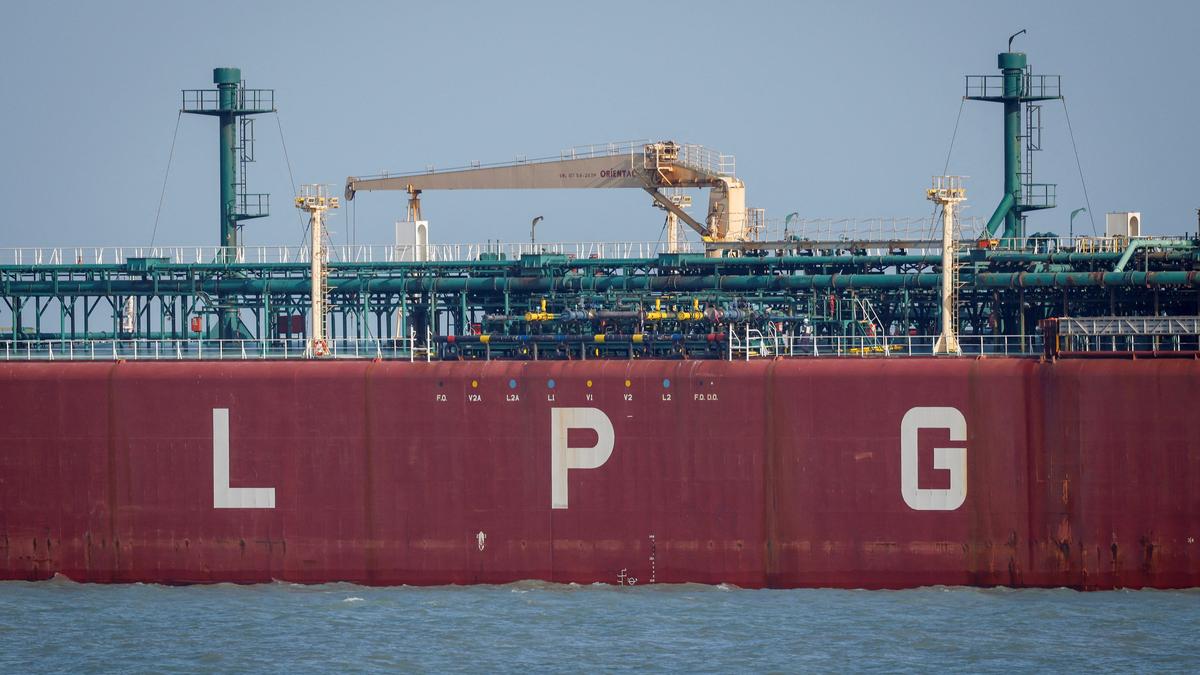
Beneath surface-level concerns lies a far quieter and potentially more devastating crisis [File]
| Photo Credit: REUTERS

When the United States and Israel launched major strikes against Iran on February 28, 2026, global markets immediately focused on oil prices. The strikes, which killed Iran’s supreme leader in what became known as Operation Epic Fury, triggered swift retaliation. By early March, Iran’s military effectively shut down the Strait of Hormuz, and within days, commercial shipping through this critical waterway had virtually ceased. Brent crude, which had hovered around $65 before the conflict, climbed above $100 a barrel, sending ripple effects across the global economy.

But beneath those surface-level concerns lies a far quieter and potentially more devastating crisis. Few people realise that the ocean floor beneath the Persian Gulf and Red Sea is crisscrossed with thousands of kilometres of fibre-optic cable. These subsea cables threading through both maritime chokepoints form the literal backbone of the global digital world. When you send an email to someone across the world, you’re almost certainly relying on these fragile underwater lines.

How will it affect digital communication?

For nations with heavy digital economies, the situation looks genuinely alarming. Countries across Asia, Africa, and Europe depend on data flowing freely through the Red Sea and the Strait of Hormuz to reach each other. India, which has been rapidly building out its cloud and artificial intelligence infrastructure, is particularly vulnerable. The country’s AI ambitions, built on massive data centres in the Gulf, now sit squarely in an active war zone with their digital lifelines passing through contested waters.

Why is this blockade historically unprecedented?

What makes this moment historically unprecedented is that both of the world’s critical maritime data corridors have effectively closed simultaneously for the first time. While Iran’s blockade has shut down the Strait of Hormuz, the situation in the Red Sea has also deteriorated, with the Houthis threatening to resume their attacks on shipping in solidarity with Iran. Before the Internet era, this might have been merely an energy crisis. Now it’s something far more complex. The redundancy that keeps global networks functioning, the assumption that if one cable fails, data can reroute through another, is disappearing rapidly.

What is the actual danger?

The actual danger to these cables isn’t necessarily from deliberate military strikes, though that remains a possibility. Instead, the risk comes from the chaos of warfare itself. When merchant vessels are attacked or forced to take evasive action to avoid missiles and drones, their anchors drag across the seafloor. Those dragging anchors can sever cables in seconds, and historically this collateral damage has been the leading cause of subsea cable failures during conflicts. It gives state actors convenient plausible deniability when cables mysteriously go down.

The real nightmare scenario that might keep telecommunication providers awake is far worse than cable severance. During peacetime, specialised repair vessels can locate and fix a damaged cable in a matter of days. Now, those ships sit idle on the dock. Iran’s military has made it clear that sending slow-moving, stationary repair vessels into the strait is suicidal. What would normally be a brief interruption in service could now stretch into months of severe internet slowdowns and digital blackouts for entire nations.

What will be the economic fallout from this situation?

The economic fallout extends well beyond buffering video or delayed emails. Amazon Web Services, Microsoft, and Google have collectively poured billions of dollars into building massive data centres across the UAE and Saudi Arabia. These companies bet that the Gulf would become the world’s next great artificial intelligence hub, serving clients across Asia, Africa, and Europe. If the physical cables connecting these billion-dollar facilities to the rest of the world are severed, they become isolated data islands. Global AI operations would stall. Cloud services would degrade. Supply chains that now depend on real-time data processing would fracture.

As the conflict intensifies and the diplomatic outlook grows bleaker by the day, the world scrambles for solutions that don’t exist yet. The US has called for an international coalition to secure the strait, though most allies have shown little enthusiasm for joining. The military standoff shows no signs of resolution. While governments work frantically to secure alternative oil supplies, the vulnerability of the digital infrastructure remains almost completely exposed. The Strait of Hormuz blockade serves as a stark reminder that, despite all our talk of wireless networks and cloud computing, the global economy still rests heavily on fragile fibre-optic cables lying on contested ocean floors.

Published – March 18, 2026 08:19 am IST


Source link

World Tags:iran israel war, iran strait of hormuz blockade, Strait of Hormuz blockade, Strait of Hormuz importance, west asia conflict

Post navigation

Previous Post: Access Denied
Next Post: Access Denied

Related Posts

  • Top leaders of Imran Khan’s PTI arrested outside parliament in Islamabad
    Top leaders of Imran Khan’s PTI arrested outside parliament in Islamabad World
  • As Voting Begins, What Harris And Trump Need To Win The Presidency
    As Voting Begins, What Harris And Trump Need To Win The Presidency World
  • White House insists it is making progress on Gaza ceasefire as talks continue over the weekend
    White House insists it is making progress on Gaza ceasefire as talks continue over the weekend World
  • ‘Clog the toilet’ trolls hit Indian visa holders rushing to U.S.
    ‘Clog the toilet’ trolls hit Indian visa holders rushing to U.S. World
  • Bells toll as the U.S. marks 22 years since 9/11, from ground zero to Alaska
    Bells toll as the U.S. marks 22 years since 9/11, from ground zero to Alaska World
  • Access Denied World

More Related Articles

Who is Sushila Karki, Nepal’s new interim head Who is Sushila Karki, Nepal’s new interim head World
Thailand’s disbanded Opposition Move Forward Party regroups under new anti-establishment party Thailand’s disbanded Opposition Move Forward Party regroups under new anti-establishment party World
Salaries Likely To Shrink In 2024 As Companies Trim Their Budget Salaries Likely To Shrink In 2024 As Companies Trim Their Budget World
Access Denied World
Access Denied World
U.S. stocks erase big early loss and rise after oil prices whip back below U.S. stocks erase big early loss and rise after oil prices whip back below $90 World
SiteLock

Archives

  • March 2026
  • February 2026
  • January 2026
  • December 2025
  • November 2025
  • October 2025
  • September 2025
  • August 2025
  • July 2025
  • June 2025
  • May 2025
  • April 2025
  • March 2025
  • February 2025
  • January 2025
  • December 2024
  • November 2024
  • October 2024
  • September 2024
  • August 2024
  • July 2024
  • June 2024
  • May 2024
  • April 2024
  • March 2024
  • February 2024
  • January 2024
  • December 2023
  • November 2023
  • October 2023
  • September 2023
  • August 2023
  • July 2023
  • June 2023
  • May 2023
  • April 2023
  • March 2023
  • February 2023
  • January 2023
  • December 2022
  • November 2022
  • October 2022
  • September 2022
  • August 2022
  • July 2022
  • June 2022
  • May 2022

Categories

  • Business
  • Nation
  • Science
  • Sports
  • World

Recent Posts

  • Trump administration defends Anthropic blacklisting in US court
  • Access Denied
  • Can the Strait of Hormuz blockade break the Internet?
  • Access Denied
  • Access Denied

Recent Comments

  1. Jerrybed on UP Teacher Who Asked Students To Slap Muslim Classmate
  2. Jerrybed on UP Teacher Who Asked Students To Slap Muslim Classmate
  3. Jerrybed on UP Teacher Who Asked Students To Slap Muslim Classmate
  4. Thomasscugs on UP Teacher Who Asked Students To Slap Muslim Classmate
  5. Davidzeply on UP Teacher Who Asked Students To Slap Muslim Classmate
  • Access Denied
    Access Denied Nation
  • Access Denied World
  • Govt. reopens PLI scheme for white goods till October 12
    Govt. reopens PLI scheme for white goods till October 12 Business
  • US Open: Daniil Medvedev Powers Into Second Round, Ailing Ons Jabeur Advances
    US Open: Daniil Medvedev Powers Into Second Round, Ailing Ons Jabeur Advances Sports
  • Access Denied Sports
  • Cloudy weather delays SpaceX Starship’s latest launch to overcome testing troubles
    Cloudy weather delays SpaceX Starship’s latest launch to overcome testing troubles Science
  • Ship That Hit Baltimore Bridge To Move On Monday, Indian Crew Still Onboard
    Ship That Hit Baltimore Bridge To Move On Monday, Indian Crew Still Onboard Nation
  • Access Denied Sports

Editor-in-Chief:
Mohammad Ariff,
MSW, MAJMC, BSW, DTL, CTS, CNM, CCR, CAL, RSL, ASOC.
editor@artifex.news

Associate Editors:
1. Zenellis R. Tuba,
zenelis@artifex.news
2. Haris Daniyel
daniyel@artifex.news

Photograher:
Rohan Das
rohan@artifex.news

Artifex.News offers Online Paid Internships to college students from India and Abroad. Interns will get a PRESS CARD and other online offers.
Send your CV (Subjectline: Paid Internship) to internship@artifex.news

Links:
Associate Journalism
About Us
Privacy Policy

News Links:
Breaking News
World
Nation
Sports
Business
Entertainment
Lifestyle

Registered Office:
72/A, Elliot Road, Kolkata - 700016
Tel: 033-22277777, 033-22172217
Email: office@artifex.news

Editorial Office / News Desk:
No. 13, Mezzanine Floor, Esplanade Metro Rail Station,
12 J. L. Nehru Road, Kolkata - 700069.
(Entry from Gate No. 5)
Tel: 033-46011099, 033-46046046
Email: editor@artifex.news

Copyright © 2023 Artifex.News Newsportal designed by Artifex Infotech.