



Skip to content
  • Facebook
  • X
  • Linkedin
  • WhatsApp
  • Associate Journalism
  • About Us
  • Privacy Policy
  • 033-46046046
  • editor@artifex.news
Artifex.News

Artifex.News

Stay Connected. Stay Informed.

  • Breaking News
  • World
  • Nation
  • Sports
  • Business
  • Science
  • Entertainment
  • Lifestyle
  • Toggle search form
  • EAM Jaishankar: ‘India isn’t trying to control every political move of every neighbour’
    EAM Jaishankar: ‘India isn’t trying to control every political move of every neighbour’ World
  • Access Denied Sports
  • Access Denied
    Access Denied Nation
  • India-U.S. ‘very close’ to finalising initial framework deal on reciprocal tariffs: Commerce Secretary
    India-U.S. ‘very close’ to finalising initial framework deal on reciprocal tariffs: Commerce Secretary Business
  • “Players Do Captaincy For Themselves But Rohit Sharma…”: Kapil Dev’s Bold Remark
    “Players Do Captaincy For Themselves But Rohit Sharma…”: Kapil Dev’s Bold Remark Sports
  • Access Denied
    Access Denied Nation
  • 56 Years After Air Force Plane Crash Over Rohtang Pass, 4 More Bodies Found
    56 Years After Air Force Plane Crash Over Rohtang Pass, 4 More Bodies Found Nation
  • Access Denied
    Access Denied Nation
Mosquitoes began biting hominins 1.8 million years ago, study says

Mosquitoes began biting hominins 1.8 million years ago, study says

Posted on February 27, 2026 By admin


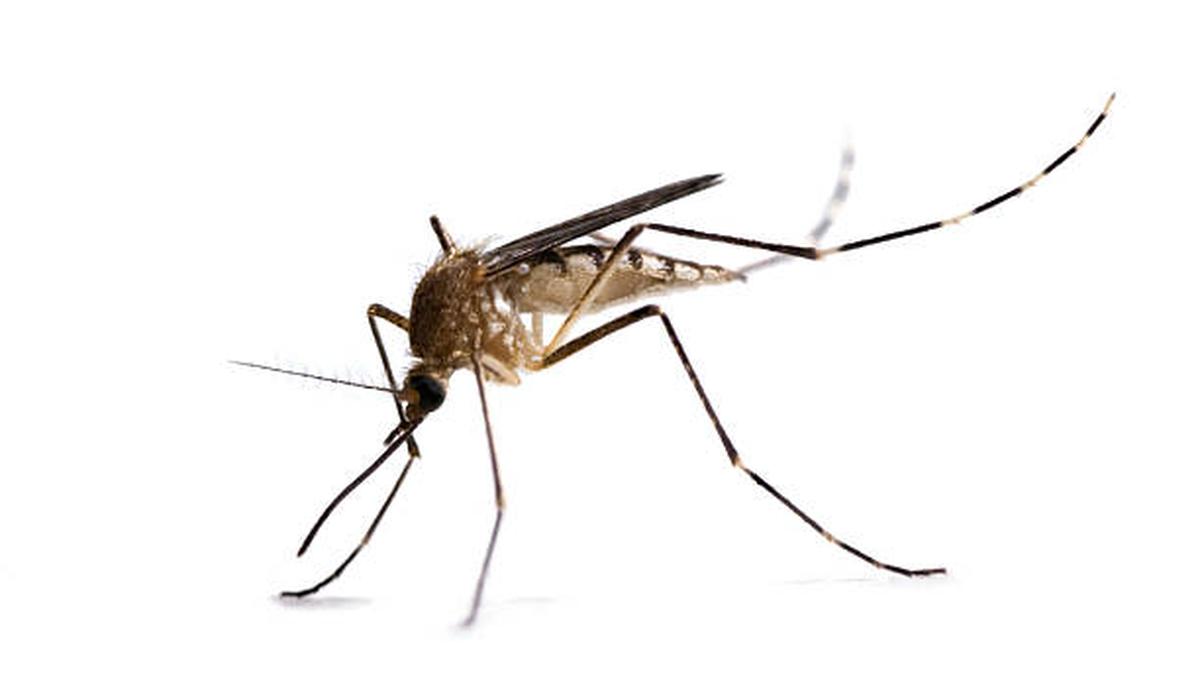
Every year, mosquito-borne diseases kill more than 6 lakh people worldwide, according to the World Health Organization.
| Photo Credit: Getty Images

Between 1992 and 2020, a group of intrepid scientists walked deep into the forests of Sundaland, across the Malay Peninsula, Sumatra, Java, and Borneo, to collect mosquito larvae of 11 species to understand the evolutionary origins of anthropophily, or the affinity for humans.

This effort, the researchers have written in a new paper in Scientific Reports, “can provide critical insights into mitigating the impacts of novel diseases due to mosquito-borne pathogens.”

Every year, mosquito-borne diseases kill more than 6 lakh people worldwide, according to the World Health Organization. But this is hardly new: according to the new study, mosquitoes first began to ‘feed’ on humans, thus transferring disease-causing microbes into their blood in exchange, in the Pleistocene epoch around 1.8 million years ago in Southeast Asia.

Today, several species of mosquitos are highly anthropophilic as well as very efficient vectors of human malaria parasites.

The malaria-causing Anopheles Leucosphyrusgroup of mosquitoes encompasses around 20 species in Southeast Asia, including in Northeast India, and each species has different host preferences. While some feed on non-human animals in forest canopies, such as on monkeys, gibbons, and orangutans, others feed on humans on the ground, and some on both, according to the study paper.

“The establishment of anthropophily in multiple species of the … group could be attributed to the trait evolving independently multiple times following the arrival of anatomically modern humans in [Southeast] Asia 76,000-63,000 years ago,” the paper read.

“Alternatively, anthropophily may have evolved once in an ancestral species, possibly in response to the colonisation of Southeast Asia by early hominins. Conservative estimates place Homo erectus in China at least 1.6-1.7 million years ago (Mya), and possibly as long ago as 2.4 Mya. However, the timeline of hominin colonisation southwards into Southeast Asia remains contentious.”

Sniffing humans out

Later in the Pliocene epoch, open forests transitioned to savannah, forcing terrestrial mammals to adapt to new habitats. Now, the abundance of ground-dwelling host species could have triggered an “adaptive evolutionary innovation” in the way mosquitoes sought their hosts – and this shift, per the paper, could have paved the way to ‘feed’ on humans.

The researchers used phylogenomic tools to analyse the evolution of mosquitoes and their preferred hosts.

Several smell-producing volatile compounds and smell-related genes determine which hosts the mosquitoes pick to bite, and evolutionary changes in the insects’ olfactory genes were critical to their developing a preference for human blood, the team added.

Published – February 28, 2026 07:00 am IST



Source link

Science

Post navigation

Previous Post: Access Denied
Next Post: Access Denied

Related Posts

  • India space strategy: harness data, tiny satellites to capture market beyond SpaceX
    India space strategy: harness data, tiny satellites to capture market beyond SpaceX Science
  • ‘Fly me to the moon’ seems to be global ambition in 2023
    ‘Fly me to the moon’ seems to be global ambition in 2023 Science
  • Apollo 13 moon mission leader James Lovell dies at 97
    Apollo 13 moon mission leader James Lovell dies at 97 Science
  • Sci five | The Hindu Science Quiz: on bones
    Sci five | The Hindu Science Quiz: on bones Science
  • Why do we not hear sounds while sleeping?
    Why do we not hear sounds while sleeping? Science
  • SpaDeX Mission | Two satellites just 50 feet away for an exciting handshake says ISRO
    SpaDeX Mission | Two satellites just 50 feet away for an exciting handshake says ISRO Science

More Related Articles

South Africa petrochem unit world’s single largest greenhouse gas source South Africa petrochem unit world’s single largest greenhouse gas source Science
Micrographia: Hooke’s monumental masterpiece – The Hindu Micrographia: Hooke’s monumental masterpiece – The Hindu Science
India’s next moon mission will be precursor to the country’s ambitious lunar sample return mission: PRL Director  India’s next moon mission will be precursor to the country’s ambitious lunar sample return mission: PRL Director  Science
ISRO successfully launches NVS-02 satellite; creates history with the 100th launch from Sriharikota ISRO successfully launches NVS-02 satellite; creates history with the 100th launch from Sriharikota Science
A Konkan secret, the sada needs more light A Konkan secret, the sada needs more light Science
The Hindu Daily Quiz | On rare diseases – March 4, 2024 The Hindu Daily Quiz | On rare diseases – March 4, 2024 Science
SiteLock

Archives

  • March 2026
  • February 2026
  • January 2026
  • December 2025
  • November 2025
  • October 2025
  • September 2025
  • August 2025
  • July 2025
  • June 2025
  • May 2025
  • April 2025
  • March 2025
  • February 2025
  • January 2025
  • December 2024
  • November 2024
  • October 2024
  • September 2024
  • August 2024
  • July 2024
  • June 2024
  • May 2024
  • April 2024
  • March 2024
  • February 2024
  • January 2024
  • December 2023
  • November 2023
  • October 2023
  • September 2023
  • August 2023
  • July 2023
  • June 2023
  • May 2023
  • April 2023
  • March 2023
  • February 2023
  • January 2023
  • December 2022
  • November 2022
  • October 2022
  • September 2022
  • August 2022
  • July 2022
  • June 2022
  • May 2022

Categories

  • Business
  • Nation
  • Science
  • Sports
  • World

Recent Posts

  • Trump says ‘there will likely be more’ U.S. service members killed in Israel-Iran conflict before it ends
  • France, Germany, U.K. ready to take ‘defensive action’ against Iran
  • Access Denied
  • DMK’s offer of 25 seats not acceptable, says Congress leader
  • PM Modi chairs CCS meeting; West Asia situation, stranded Indians discussed

Recent Comments

  1. BryanCoest on UP Teacher Who Asked Students To Slap Muslim Classmate
  2. Williamspeax on UP Teacher Who Asked Students To Slap Muslim Classmate
  3. BryanCoest on UP Teacher Who Asked Students To Slap Muslim Classmate
  4. Timothynof on UP Teacher Who Asked Students To Slap Muslim Classmate
  5. Frankmuh on UP Teacher Who Asked Students To Slap Muslim Classmate
  • Analysing the Gender Budget of 2024-25 | Explained
    Analysing the Gender Budget of 2024-25 | Explained Business
  • Access Denied
    Access Denied Nation
  • Kerala Court On AAP Petition
    Kerala Court On AAP Petition Nation
  • East Bengal Suffer Shock Durand Cup Quarter-Final Exit To Shillong Lajong FC
    East Bengal Suffer Shock Durand Cup Quarter-Final Exit To Shillong Lajong FC Sports
  • Over 700 People Stranded On Kedarnath Route Evacuated
    Over 700 People Stranded On Kedarnath Route Evacuated Nation
  • Women’s T20 WC: Upbeat West Indies meets NZ, eyes a berth in the final
    Women’s T20 WC: Upbeat West Indies meets NZ, eyes a berth in the final Sports
  • Access Denied World
  • Access Denied World

Editor-in-Chief:
Mohammad Ariff,
MSW, MAJMC, BSW, DTL, CTS, CNM, CCR, CAL, RSL, ASOC.
editor@artifex.news

Associate Editors:
1. Zenellis R. Tuba,
zenelis@artifex.news
2. Haris Daniyel
daniyel@artifex.news

Photograher:
Rohan Das
rohan@artifex.news

Artifex.News offers Online Paid Internships to college students from India and Abroad. Interns will get a PRESS CARD and other online offers.
Send your CV (Subjectline: Paid Internship) to internship@artifex.news

Links:
Associate Journalism
About Us
Privacy Policy

News Links:
Breaking News
World
Nation
Sports
Business
Entertainment
Lifestyle

Registered Office:
72/A, Elliot Road, Kolkata - 700016
Tel: 033-22277777, 033-22172217
Email: office@artifex.news

Editorial Office / News Desk:
No. 13, Mezzanine Floor, Esplanade Metro Rail Station,
12 J. L. Nehru Road, Kolkata - 700069.
(Entry from Gate No. 5)
Tel: 033-46011099, 033-46046046
Email: editor@artifex.news

Copyright © 2023 Artifex.News Newsportal designed by Artifex Infotech.