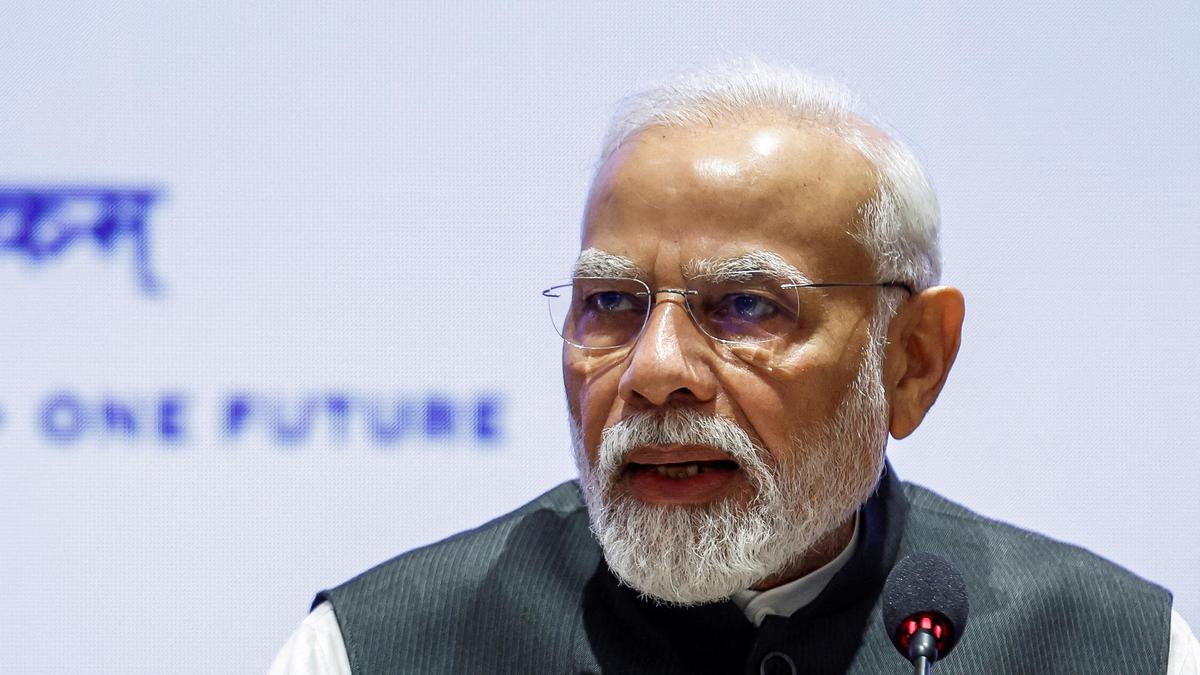


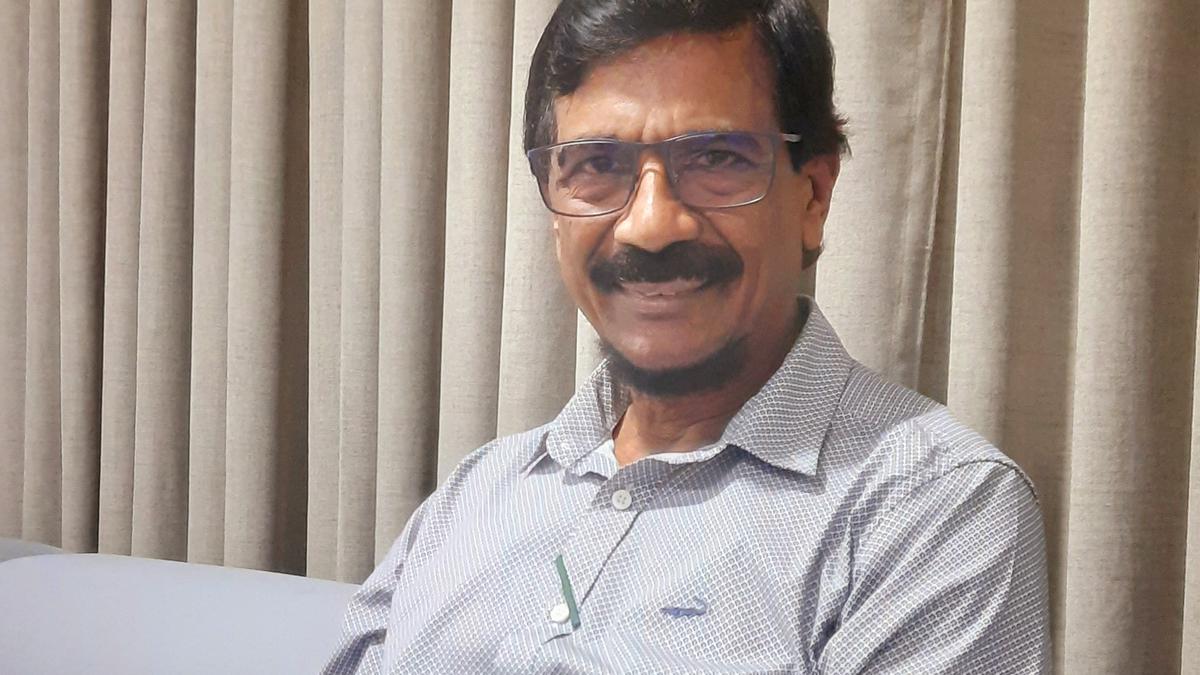
Following a recent visit (February 5-12, 2026) to India, Tilvin Silva, General Secretary of the Janatha Vimukthi Peramuna [JVP or People’s Liberation Front] — the chief constituent of Sri Lanka’s ruling National People’s Power [NPP] coalition — shares his impressions of development and technological advancement in India, scope for partnership, and speaks of a shift in the stance of the party that once vehemently resisted India. Excerpts from his recent interview with The Hindu at the party’s headquarters in Battaramulla, a suburb of Colombo.
This was your first visit to India. You met External Affairs Minister S. Jaishankar in New Delhi before visiting Gujarat and Kerala. What are the key takeaways?

Yes, this was my first visit, and we spent about a week in India. We were invited by the Indian Council for Cultural Relations [ICCR], which is affiliated with the Ministry of External Affairs. During this visit, we got an opportunity to see how technology has been utilised in the fields of agriculture and the dairy industry. We also had a chance to see how the country has progressed in space technology. A highlight was the meetings with the External Affairs Minister, as well as the Chief Ministers of Gujarat and Kerala.

What was the focus of your interaction with Mr. Jaishankar?
It was a very amicable and friendly discussion. The External Affairs Minister emphasised that India will be a friend and a very trustworthy partner to Sri Lanka. We too conveyed our desire to maintain friendly relations and thanked him for India’s contribution and assistance towards Sri Lanka’s recovery from Cyclone Ditwah.

You visited Gujarat and Kerala. Kerala’s economy is comparable to Sri Lanka’s, with worker remittances, tourism and exports playing a crucial role. What were your impressions of these two states?
We spent just two days in Gujarat and one day in Kerala. You can’t make a comprehensive comparison based on such a short visit. On the face of it, we see that a lot of development has taken off in Gujarat – especially in infrastructure, like highways, railways and so on. We also had a chance to visit AMUL in Gujarat. It struck us as a very interesting cooperative model. In the agriculture sector, too, we saw attempts to cultivate in a limited space, such as rooftops and balconies; it was very interesting to see that.
When we talk about Kerala, the state has development standards similar to those of Sri Lanka. We could see that the revenue generated by the state has been used for the betterment of people’s lives and living standards. The State’s welfare initiatives are reaching the people. We visited the Vikram Sarabhai Space Centre and the deep-water container trans-shipment port at Vizhinjam.
The port was built on a Public Private Partnership with Adani Ports, just like the West Container Terminal at the Colombo Port. What did you observe there?
The work to expand the port is ongoing. There is a lot of automation and technology being used in the port to ensure effective operations.
This visit to India comes after the visit to China last year. What did you find similar or different in these two countries, both important partners for the NPP Government?
It is very difficult to compare India and China. One of the similarities is that both countries have adapted to technology effectively to improve the lives of people as well as to increase production. When it comes to India, we see that though there are efforts to introduce new technology, there have been some obstacles in implementing these initiatives because there are religious and cultural practices and traditions that have to be navigated. In China, it is not like that.
Also Read | Janatha Vimukthi Peramuna: From underground to government
The NPP Government led by your party has stated its position of a neutral foreign policy, and President Dissanayake has assured New Delhi that Colombo will be sensitive to India’s security concerns. But does the JVP, given its historic resistance to India, have any discomfort or concern with Indian projects, especially in strategic locations like Trincomalee or Kankesanthurai [Jaffna], as is perceived by many?
Our position on big projects is not India-specific but rather has to do with India. In every project, regardless of who is involved, we have to see how it can be implemented effectively and whether the project costs and terms are fair. We have to ensure that such projects are executed in the best interests of the Sri Lankan people and of both countries. That is really our approach.
Does this mean that the JVP’s position on India has changed? Do you still have the five classes in the political education modules for your cadre, which included Indian expansionism in the past?
Even ahead of my visit to India, I explained to officials at the Indian High Commission that this opinion needs to change.
We still have the ‘five classes’ [in our political education], but there is none about India specifically.
What are the five classes that are taught to cadre now?
The first is the economic crisis. Then, our national question or the ethnic question; the history of the left movement in Sri Lanka; the path to socialism; and the building of a Bolshevik party. We also teach our own party’s history. The five classes were originally introduced in December 1968. The aim was to teach Marxism to party cadre and, more broadly, to impart political education to build awareness about contemporary political and economic issues. The content and the topics of discussion have changed from time to time.
So, this is the more recently revised syllabus?
Yes. For example, the national question was not part of it before the 1980s.
In your interview to us in November 2024, on the day of the NPP’s big victory in the general elections, you said Marxism is not a set philosophy and that it is really about providing answers to people’s problems at a particular time and context. Given that orientation, how do you assess the NPP’s performance in its first year? Has the government been able to solve people’s problems?
When we came to power, the biggest challenge we had was to rescue the country’s economy, which had been destroyed and pushed into bankruptcy. We have stabilised the economy faster than we anticipated. The country’s revenue has gone up. There is fiscal discipline. Corruption and bribery have been eliminated. We are happy about that.
Which areas need more work in your view?
When it comes to the economy, there are many areas that need to be developed. Especially when it comes to rural areas, there is more work to be done to eradicate poverty and improve areas of health care and education. While economic development is important, we need economic democracy as well. There should be (economic) justice, and the country’s economic gains must reach all our people. The other important area is building national unity. We are putting in a lot of effort towards that.
Yet another area is the prevention and elimination of the underworld and drug mafia.
You speak about economic democracy and justice. Is there enough space to pursue those goals in Sri Lanka amid austerity measures of the ongoing International Monetary Fund (IMF) programme?
There are some challenges that come with an IMF programme. But we have managed to negotiate with them and discuss our positions openly, in order to come up with solutions. The IMF is not obstructing moves aimed at the welfare of the people. Actually, there are some clauses in their programme that encourage the welfare of the people. However, there are challenges if we are to increase the salaries for the people or provide more finances to state entities. A certain percentage of the GDP is allocated to welfare programmes and salary hikes. It is only when the GDP goes up that the percentage can also go up. As the economy develops, that allocation will certainly increase. The IMF has not specifically said that we should not increase the salaries. Even now, within the IMF framework, we have tried to give salary raises whenever possible.
The second point you made was about building national unity. During your visit to India, did the Tamil question or the conduct of Provincial Council elections — which New Delhi often comments on — come up?
Firstly, we went to India as the JVP (and not as the government), and I went as the General Secretary of the party. There was no discussion or questions in India about the conduct of the Provincial Council elections, the national question, or power devolution. So no problem was raised in that regard. The focus was on development cooperation. What was clear from our visit was that everywhere we went, experts and practitioners from different sectors were willing to partner with us.
You said you went to India as the political party. Within Sri Lanka, critics of your government and some in the political opposition say it is your party that controls the government and that there is some tension between the JVP [the main party] and the NPP alliance. How would you respond to that?
From the day the NPP came together as a formation, political parties in the current opposition have been having a nightmare. They are hoping this will collapse. So we should just let them be. The JVP and the NPP are not two separate entities, they are one people’s movement. Members of both JVP and NPP are working very amicably, with a shared understanding of our principles and objectives. There are no hierarchies within the alliance, only a good understanding and humanity.
Finally, what do you think is Sri Lanka’s role in the current global context of trade wars, what we see in Gaza, Ukraine, and now Iran? The rules-based liberal world order is unraveling, and there is a growing call, especially from the left, for the Global South to come together and collaborate more.
This is a complex question. Earlier in history, the world was divided between two clear camps. When the Soviet Union and the socialist camp of the world collapsed, the U.S.-led Western bloc leveraged power. Very soon, China rose to become a world power. Russia too emerged a big power. India, too, with its progressive economic agenda has achieved considerable development very fast. The U.S. and countries led by it have weakened now. So, the U.S. is vying for dominance over countries, especially those with oil resources. These circumstances have given developing countries in Asia an opportunity to get together to try for a better world, without necessarily taking sides.
Published – February 18, 2026 09:32 pm IST