




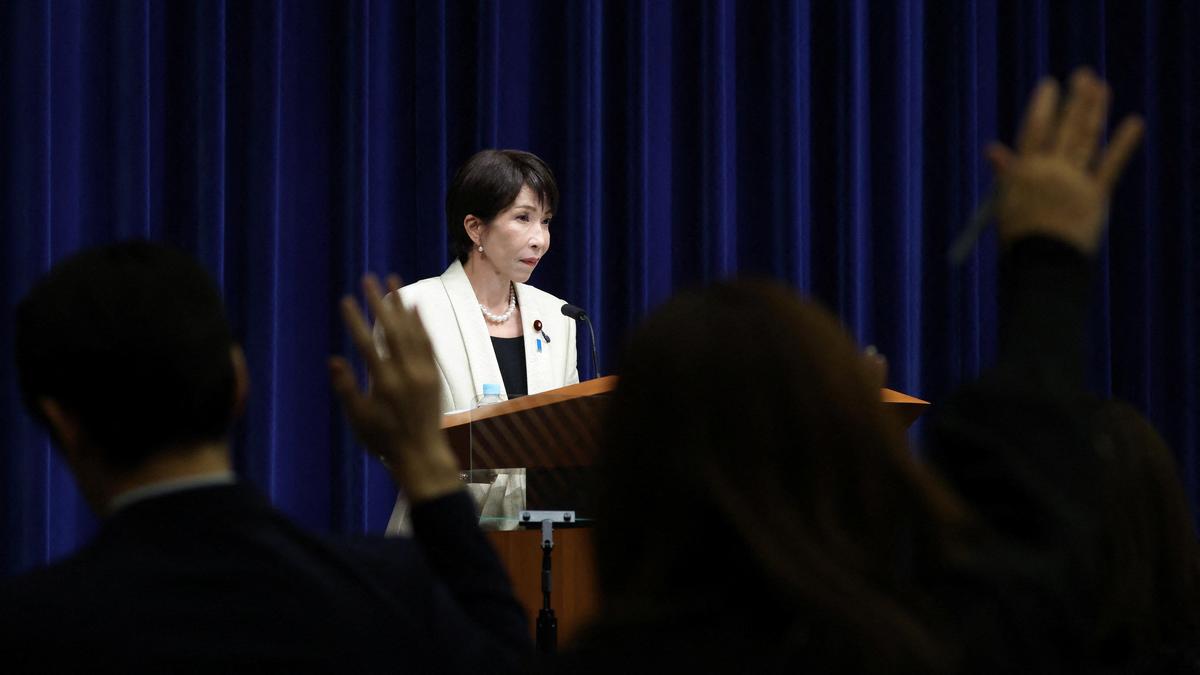
Japan’s strategic identity appears to be entering a decisive phase. With Sanae Takaichisecuring a two-thirds parliamentary majority and becoming the country’s first woman Prime Minister, Tokyo seems poised for a more assertive turn economically, politically and militarily. Her rise comes at a time of intensifying U.S.-China rivalry, uncertainty in global trade, and renewed debates within Japan about defence and constitutional limits.
Is Ms. Takaichi merely extending the transformation initiated by Shinzo Abe, or does her mandate mark something more consequential? How will Japan position itself between Washington and Beijing? And what does this mean for India, which sees Japan as a central partner in the Indo-Pacific?
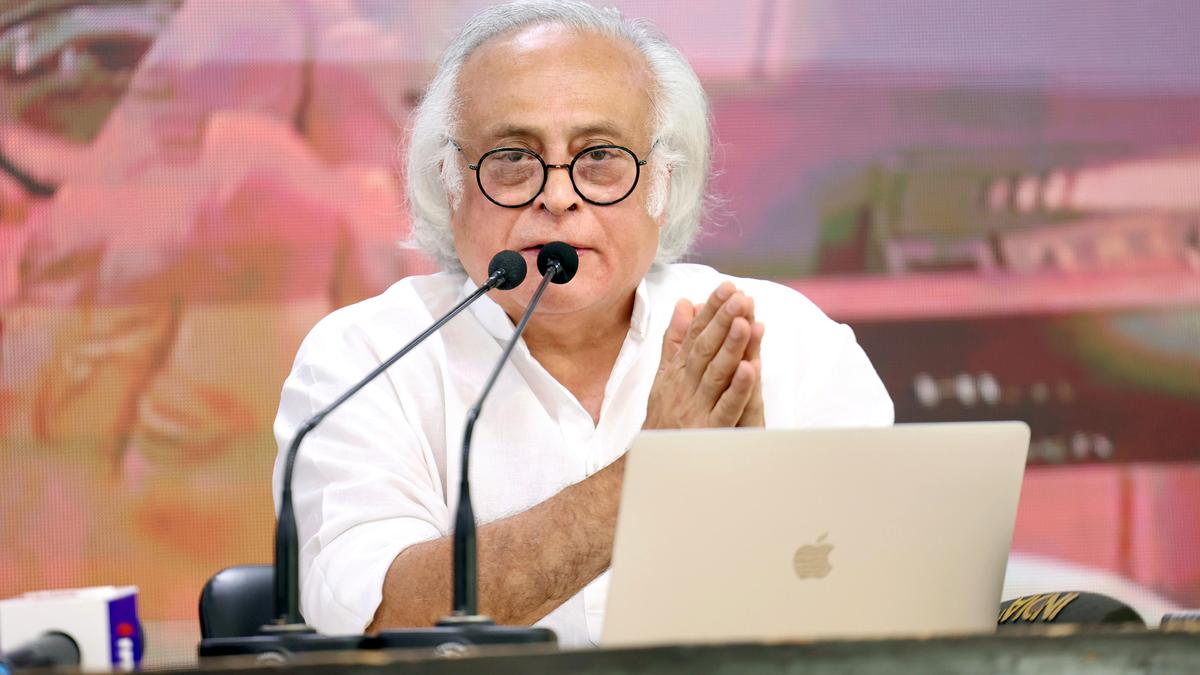
In an interview with The Hindu, public policy analyst and former adviser to Prime Minister Manmohan Singh, Sanjaya Baru, discusses Ms. Takaichi’smandate, the legacy of Shinzo Abe, Japan’s evolving defence posture, and the future of India-Japan ties. Edited excerpts.
Japan has gone through years of short-lived Prime Ministers and cautious leadership. Who is Sanae Takaichi, and why does her rise matter at this moment?

It is historic that she is Japan’s first woman Prime Minister and that she has secured an absolute majority. But beyond symbolism, her rise is significant because Japan’s political trajectory over the past quarter century has alternated between transformative leadership and periods of drift.
The early 2000s saw leaders such as Yoshiro Mori, Junichiro Koizumi and Shinzo Abe shape Japan’s direction. After Abe’s resignation due to ill-health and later his assassination, Japan experienced a succession of less decisive Prime Ministers. Takaichi clearly belongs to the Abe lineage. She represents continuity with his twin emphasis on restoring Japan’s economic competitiveness and enhancing its strategic relevance.
Her mandate suggests that the Japanese electorate is once again willing to back a leader who offers clarity in a period of global turbulence.

She called a snap election soon after taking office and secured a two-thirds majority. How significant is that parliamentary strength?
A two-thirds majority is extremely significant in Japan’s political system. It gives her the numbers to pursue structural reforms and potentially even constitutional changes that would otherwise face resistance.
Many see this as an endorsement of the strategic direction set by Abe. He was instrumental in redefining Japan’s role in the Indo-Pacific and situating the India-Japan partnership at its core. The Quadrilateral Security Dialogue, comprising the United States, Japan, Australia and India, was originally his initiative. At the heart of that framework was the idea that Japan should be a proactive shaper of regional order, not a passive bystander.
Takaichi’s majority removes many of the constraints that limited previous governments. The real question now is how far she is prepared to go.
Snap elections in Japan have sometimes misfired. What did Takaichi understand about the political mood that her predecessors did not?
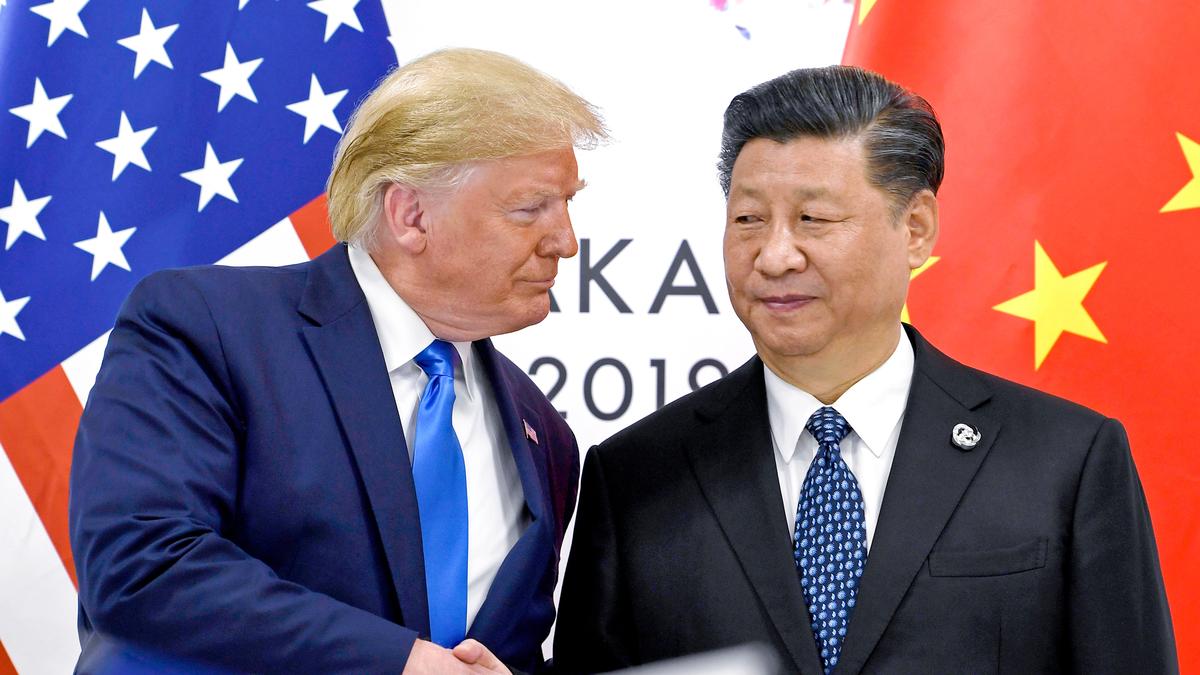
Her predecessors were largely transitional figures. Takaichi appears to have understood that the global environment has fundamentally shifted. U.S. President Donald Trump’s disruptive approach unsettled many American allies, including Japan. There is now widespread recognition that the era of comfortable reliance on the U.S. security umbrella may be ending.
Her emphasis on strengthening Japan’s defence capabilities, articulating a firmer approach to China, and projecting strategic confidence resonated with voters. In a period marked by uncertainty and power politics, decisiveness becomes an asset.
She has conveyed the image of a leader who understands that Japan cannot afford complacency in a changing Indo-Pacific.
She has also attracted strong support among younger voters. Why has she connected with a generation often skeptical of conservative politics?
Japan has not seen a visibly charismatic leader since Junichiro Koizumi. While Abe commanded respect and longevity, Koizumi generated public enthusiasm. Takaichi appears to have reintroduced certain political energy.
Her assertive style, combined with the novelty of being Japan’s first woman Prime Minister, has drawn attention from younger voters. At the same time, Japan faces a deep generational divide. It is a rapidly ageing society, yet younger citizens have more liberal social attitudes and different economic expectations.
Whether she can bridge that divide will depend not only on rhetoric but on policy outcomes, particularly in areas such as employment, taxation and social reform.
Economically, she has promised tax cuts alongside increased spending. How does this fit into Japan’s long-running debates about growth and debt?
Japan faces structural challenges, slow growth, high public debt, inflationary pressures and demographic decline. When Abe returned to office, he introduced the so-called “three arrows” of fiscal stimulus, structural reform and monetary easing. That provided momentum for a period.
Today, the environment is more difficult. Public debt remains elevated, inflation has eroded purchasing power, and Japan faces stiff competition from China and emerging export-oriented economies such as Vietnam. Tax cuts may provide short-term relief, but fiscal stabilisation remains essential.
Her economic stewardship will be tested by both domestic constraints and external pressures. The global trading environment is not particularly favourable for an export-dependent economy like Japan.
Her language on China and Taiwan has been more direct than that of previous leaders. Does this signal a substantive shift?
It may. For several years, Beijing dealt with a relatively cautious Japanese leadership. Takaichi is more assertive, and that changes the tone.
A longstanding concern across Asia has been Japan’s perceived subservience to the United States. Japan remains under the American security umbrella, with U.S. troops stationed on its soil. If Takaichi strengthens Japan’s autonomous defence capabilities and demonstrates greater independence in strategic decision-making, it could alter regional perceptions.
China tends to respect leaders who assert national autonomy. A Japan that stands on its own feet rather than appearing overly dependent on Washington may be taken more seriously by both Beijing and Washington.
Are we witnessing a departure from Japan’s post-war pacifist framework?
There is certainly a greater willingness to debate autonomous defence capabilities. Defence expenditure has risen, strategic planning has become more explicit, and security white papers outline clearer threat perceptions.
The ultimate question is whether Japan moves toward fully normalising its armed forces and reconsidering its reliance on the American nuclear umbrella. We are in an era of hard power politics. Public opinion in Japan appears more receptive to strengthening national defence than in previous decades.
However, neither the United States nor China would necessarily welcome a fully independent and militarily autonomous Japan. External pressures will therefore shape the limits of change.
What does Takaichi’s leadership mean for India-Japan relations?
India views Japan as a critical partner, both strategically and economically. Successive leaders from Mori and Koizumi to Abe deepened the partnership. However, the relationship has experienced fluctuations, particularly in terms of investment flows, which have sometimes fallen short of expectations.
There is a clear mutual need. Japan seeks reliable partners amid regional uncertainty, while India seeks capital, technology and strategic coordination in the Indo-Pacific. A renewed push, including early high-level visits, could inject fresh momentum.
Much will depend on whether Takaichi prioritises India early in her tenure and whether both sides can address practical irritants in trade and investment.
How might developments in U.S.-India ties affect the Quad and Japan’s calculations?
The unpredictability of President Trump has complicated diplomacy for many countries. Trade frictions and public rhetoric create uncertainty. Hosting high-level multilateral summits such as the Quad involves political calculations about domestic stability and bilateral equations.
Japan will watch how India navigates its ties with Washington. The strength of the Quad depends not only on shared concerns about China but also on the durability of each member’s relationship with the United States.
Looking ahead, will this period be remembered for Takaichi herself or for the broader structural shifts underway?
Leadership matters, especially when backed by a two-thirds majority. That parliamentary strength gives her room to pursue a more ambitious agenda than many predecessors.
But structural forces, intensifying U.S.-China rivalry, economic competition, demographic pressures will shape outcomes as much as personality. If she uses her mandate to move Japan toward greater strategic autonomy while maintaining economic resilience, this could be remembered as a turning point.
Whether that transformation fully materialises remains to be seen. The opportunity is certainly present. The constraints are equally real.