


Skip to content
  • Facebook
  • X
  • Linkedin
  • WhatsApp
  • Associate Journalism
  • About Us
  • Privacy Policy
  • 033-46046046
  • editor@artifex.news
Artifex.News

Artifex.News

Stay Connected. Stay Informed.

  • Breaking News
  • World
  • Nation
  • Sports
  • Business
  • Science
  • Entertainment
  • Lifestyle
  • Toggle search form
  • “Grilling Me…”: Gautam Gambhir Blunt Response On India Coach Appointment Talks
    “Grilling Me…”: Gautam Gambhir Blunt Response On India Coach Appointment Talks Sports
  • Contamination of crude oil to HPCL being “examined”, no damage or claim attributable says supplier
    Contamination of crude oil to HPCL being “examined”, no damage or claim attributable says supplier Business
  • About 10 million people at risk of slipping into poverty in Pakistan: World Bank
    About 10 million people at risk of slipping into poverty in Pakistan: World Bank World
  • Access Denied
    Access Denied Nation
  • Making Gill ODI captain fair: Ganguly
    Making Gill ODI captain fair: Ganguly Sports
  • As India and U.S. agree to swap turns, Biden to host Quad Summit at his home State
    As India and U.S. agree to swap turns, Biden to host Quad Summit at his home State World
  • US National Guard Called In, Survivors Survey Wreckage
    US National Guard Called In, Survivors Survey Wreckage World
  • ‘Job-eater BJP’, says Mamata after court scraps recruitment
    ‘Job-eater BJP’, says Mamata after court scraps recruitment Nation
The 27th amendment, Pakistan’s democratic dilemma

The 27th amendment, Pakistan’s democratic dilemma

Posted on January 30, 2026 By admin


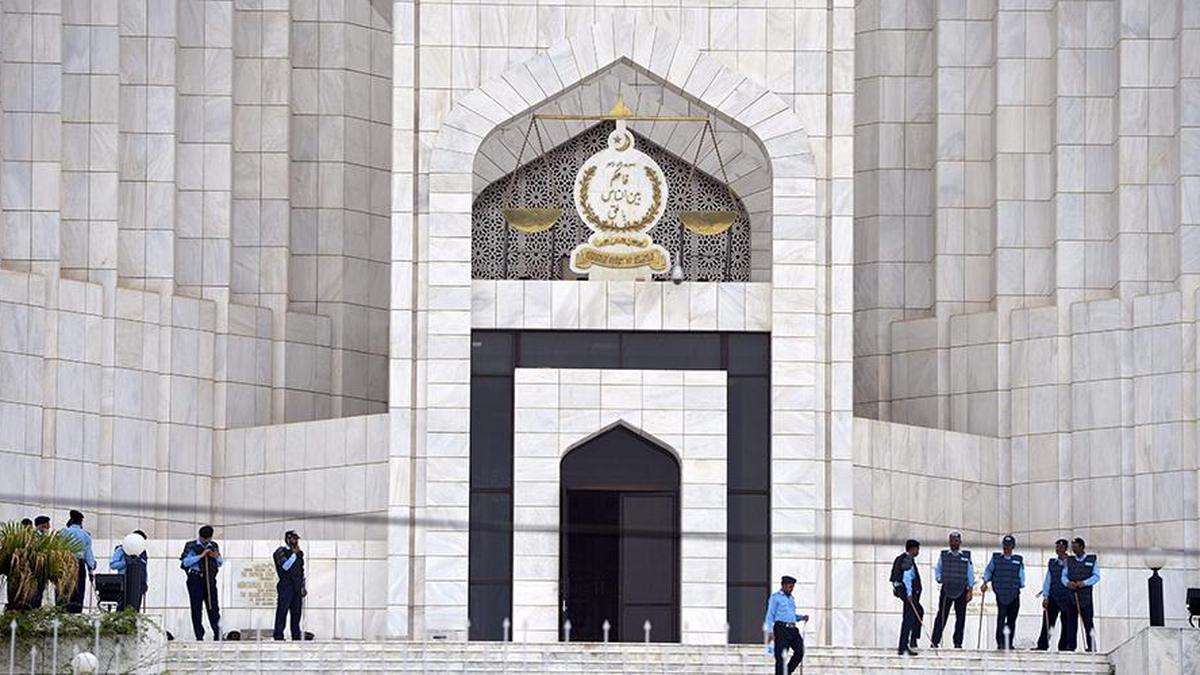
Last year, between November 12 and 13, Pakistan’s legislature passed the 27th Amendment, or PCA, which subsequently received presidential assent. Presented as a measure to reorganise aspects of the military command structure, the amendment has consequences that reach far deeper into the constitutional order. The PCA significantly diminishes the central role of the Supreme Court in Pakistan’s constitutional order. By transferring original jurisdiction over constitutional interpretation, fundamental rights and federal-provincial disputes to a newly created Federal Constitutional Court, or FCC, the amendment sidelines the Supreme Court from the most consequential questions of governance.

In recent years, it was precisely this jurisdiction that enabled the top court to adjudicate landmark political cases, including the Panama Papers case and the Memogate controversy. Stripping the top court of this authority not only fragments constitutional adjudication but also weakens its position as the final guardian of the Constitution, leaving it vulnerable to institutional marginalisation under executive influence.

Strains in the region

The passage of the PCA must be viewed against a broader regional backdrop. South Asia is navigating a period marked by political instability, security concerns and institutional strain. These pressures are not confined to national borders. For countries in the Global South, where institutions are often tested by competing imperatives of security and governance, constitutional choices carry long-term consequences.


Editorial | Power grab: On Pakistan’s General Asim Munir

For India, examining such developments in its neighbourhood is neither voyeuristic nor adversarial. As the region’s largest constitutional democracy, India has a direct interest in how constitutional norms evolve — or erode — around it. The weakening of judicial independence or the normalisation of executive dominance elsewhere in South Asia carries cautionary lessons.

At the core of constitutional governance lies what English jurist A.V. Dicey famously described as the rule of law, a doctrine premised on the absence of arbitrary power, equality before the law, and the central role of independent courts as sentinels of rights. In Dicey’s conception, the law exists to restrain authority, with courts serving as the institutional bridge between power and liberty. It is precisely this equilibrium that the PCA unsettles.

By diluting the Supreme Court’s position as the final arbiter of constitutional questions and vesting that authority in a newly-constituted FCC, the PCA risks weakening institutional independence. Courts, in Dicey’s framework, are not mere forums for adjudication but constitutional guardians tasked with keeping executive power within bounds.

The federal constitutional court question

It is in this constitutional light that Pakistan’s creation of the FCC warrants scrutiny. While specialised courts are not inherently problematic, removing constitutional adjudication from the Supreme Court unsettles a balance that was carefully restored by the 18th Constitutional Amendment. It sought to depoliticise judicial appointments by strengthening the Judicial Commission of Pakistan and also insulated the judiciary from executive dominance.

What is more troubling is the scope that it creates for executive influence over the FCC’s composition and functioning. Constitutional courts derive legitimacy from independence, not mere existence. When constitutional interpretation is shifted to a newly constituted forum that is vulnerable to executive preferences, judicial review risks becoming an extension of power.

In early 17th century England, King James I asserted that, as sovereign, he could personally adjudicate disputes. This claim was firmly resisted by Sir Edward Coke, then Chief Justice, who declared that the king was subject to the law and could not sit in judgment. Coke’s refusal to allow royal intrusion into judicial proceedings marked a defining moment in constitutional history.

This episode established a principle that continues to animate modern constitutional democracies, that is judicial authority must remain independent of executive will. Courts cannot function as neutral arbiters if they operate under the shadow of political power. The struggle between Coke and James I was not merely personal. It was foundational, affirming that the rule of law requires courts to be insulated, even from well-intentioned rulers.

Why it matters for India

The latter half of the 20th century marked the birth of new nations, as societies emerging from colonial and monarchical pasts embraced written constitutions and republican governance. Constitutional texts became instruments of restraint, designed to bind power. The 21st century, however, presents a more unsettling picture. Across regions, republics are increasingly reshaping their constitutions not to deepen democratic guarantees but to legitimise concentration of power.

The PCA reflects this troubling shift. By reconfiguring judicial authority under the shadow of executive influence, it risks transforming the Constitution from a shield into a tool of governance. In inter-war Europe of the 1930s, democratic breakdown did not occur through abrupt coups but through formally valid legal changes that steadily hollowed out institutions. Power was acquired electorally, and then consolidated by rewriting constitutional checks in the name of stability and necessity.

For India, the lesson is not one of comparison, but of caution. Constitutional democracy does not survive on text alone but on the continued independence of courts, respect for institutional boundaries, and a shared commitment to restraint. How republics treat their Constitutions today will determine whether this century is remembered for democratic renewal, or for the quiet dismantling of the spirit of constitution from within.

Vanshaj Azad is an advocate, currently working as Law Clerk-cum-Research Associate in the Supreme Court of India

Published – January 31, 2026 12:08 am IST


Source link

World Tags:27th Amendment or PCA, A.V. Dicey and rule of law, Federal Constitutional Court, Judicial Commission of Pakistan, judiciary and executive dominance, modern constitutional democracies, Pakistan’s legislature, Panama Papers case and Memogate controversy, presidential assent, region’s largest constitutional democracy

Post navigation

Previous Post: Access Denied
Next Post: Sun Pharma, CDSL, IDFC First Bank, Delhivery — Check Estimates

Related Posts

  • PM Modi voices ‘deep concern’ over conflicts in Ukraine & West Asia, says no problem can be solved on battlefield
    PM Modi voices ‘deep concern’ over conflicts in Ukraine & West Asia, says no problem can be solved on battlefield World
  • China censors Li praise as it bids farewell to former premier
    China censors Li praise as it bids farewell to former premier World
  • Philippines Summons Chinese Envoy Over “Aggressive Actions” By China Coast Guard In South China Sea
    Philippines Summons Chinese Envoy Over “Aggressive Actions” By China Coast Guard In South China Sea World
  • New Queen Elizabeth II Statue Draws Mixed Reactions In UK, Compared To Market Shopper
    New Queen Elizabeth II Statue Draws Mixed Reactions In UK, Compared To Market Shopper World
  • The Hindu Morning Digest, February 18, 2025
    The Hindu Morning Digest, February 18, 2025 World
  • Access Denied World

More Related Articles

French-Israeli nationals among first hostages to be released under deal: Macron French-Israeli nationals among first hostages to be released under deal: Macron World
Access Denied World
North Korea’s New Weapon Drives South Koreans “Crazy” North Korea’s New Weapon Drives South Koreans “Crazy” World
Access Denied World
China’s ‘no’ to international water treaties worrying: Arunachal Pradesh CM China’s ‘no’ to international water treaties worrying: Arunachal Pradesh CM World
The South at the centre The South at the centre World
SiteLock

Archives

  • January 2026
  • December 2025
  • November 2025
  • October 2025
  • September 2025
  • August 2025
  • July 2025
  • June 2025
  • May 2025
  • April 2025
  • March 2025
  • February 2025
  • January 2025
  • December 2024
  • November 2024
  • October 2024
  • September 2024
  • August 2024
  • July 2024
  • June 2024
  • May 2024
  • April 2024
  • March 2024
  • February 2024
  • January 2024
  • December 2023
  • November 2023
  • October 2023
  • September 2023
  • August 2023
  • July 2023
  • June 2023
  • May 2023
  • April 2023
  • March 2023
  • February 2023
  • January 2023
  • December 2022
  • November 2022
  • October 2022
  • September 2022
  • August 2022
  • July 2022
  • June 2022
  • May 2022

Categories

  • Business
  • Nation
  • Science
  • Sports
  • World

Recent Posts

  • Access Denied
  • Sun Pharma, CDSL, IDFC First Bank, Delhivery — Check Estimates
  • The 27th amendment, Pakistan’s democratic dilemma
  • Access Denied
  • Access Denied

Recent Comments

  1. GeorgeBline on UP Teacher Who Asked Students To Slap Muslim Classmate
  2. MichaelRob on UP Teacher Who Asked Students To Slap Muslim Classmate
  3. Elvinweith on UP Teacher Who Asked Students To Slap Muslim Classmate
  4. MichaelWhath on UP Teacher Who Asked Students To Slap Muslim Classmate
  5. MichaelWhath on UP Teacher Who Asked Students To Slap Muslim Classmate
  • Turkey Blocks Access To Instagram Without Stating Reason Or Duration
    Turkey Blocks Access To Instagram Without Stating Reason Or Duration World
  • Biden Posts Pics Of Meeting PM Modi
    Biden Posts Pics Of Meeting PM Modi World
  • Who Is Winning The US Election Right Now?
    Who Is Winning The US Election Right Now? World
  • Why did Hamas launch a surprise attack on Israel? | Analysis
    Why did Hamas launch a surprise attack on Israel? | Analysis World
  • Grand Alliance Agree On Seat Sharing, Big Meet In Delhi Tomorrow For Final Touch
    Grand Alliance Agree On Seat Sharing, Big Meet In Delhi Tomorrow For Final Touch Nation
  • Tottenham Teen Mikey Moore Compared To Neymar After Europa League Starring Role
    Tottenham Teen Mikey Moore Compared To Neymar After Europa League Starring Role Sports
  • Access Denied Sports
  • It’s time skipper Suryakumarlet his bat do the talking
    It’s time skipper Suryakumarlet his bat do the talking Sports

Editor-in-Chief:
Mohammad Ariff,
MSW, MAJMC, BSW, DTL, CTS, CNM, CCR, CAL, RSL, ASOC.
editor@artifex.news

Associate Editors:
1. Zenellis R. Tuba,
zenelis@artifex.news
2. Haris Daniyel
daniyel@artifex.news

Photograher:
Rohan Das
rohan@artifex.news

Artifex.News offers Online Paid Internships to college students from India and Abroad. Interns will get a PRESS CARD and other online offers.
Send your CV (Subjectline: Paid Internship) to internship@artifex.news

Links:
Associate Journalism
About Us
Privacy Policy

News Links:
Breaking News
World
Nation
Sports
Business
Entertainment
Lifestyle

Registered Office:
72/A, Elliot Road, Kolkata - 700016
Tel: 033-22277777, 033-22172217
Email: office@artifex.news

Editorial Office / News Desk:
No. 13, Mezzanine Floor, Esplanade Metro Rail Station,
12 J. L. Nehru Road, Kolkata - 700069.
(Entry from Gate No. 5)
Tel: 033-46011099, 033-46046046
Email: editor@artifex.news

Copyright © 2023 Artifex.News Newsportal designed by Artifex Infotech.