






Skip to content
  • Facebook
  • X
  • Linkedin
  • WhatsApp
  • Associate Journalism
  • About Us
  • Privacy Policy
  • 033-46046046
  • editor@artifex.news
Artifex.News

Artifex.News

Stay Connected. Stay Informed.

  • Breaking News
  • World
  • Nation
  • Sports
  • Business
  • Science
  • Entertainment
  • Lifestyle
  • Toggle search form
  • Access Denied World
  • ‘Rohit Sharma Finished Jasprit Bumrah’s Overs, People Must’ve Questioned”: Ex-India Coach On T20 World Cup Final
    ‘Rohit Sharma Finished Jasprit Bumrah’s Overs, People Must’ve Questioned”: Ex-India Coach On T20 World Cup Final Sports
  • India vs England, Cricket World Cup 2023: Ekana Cricket Stadium Records, Average Score, Lowest Total
    India vs England, Cricket World Cup 2023: Ekana Cricket Stadium Records, Average Score, Lowest Total Sports
  • Data from all-civilian crew details health effects of space travel
    Data from all-civilian crew details health effects of space travel Science
  • Young Spinner Himanshu Singh, With Similar Action As R Ashwin, Called Up For Team India Camp: Report
    Young Spinner Himanshu Singh, With Similar Action As R Ashwin, Called Up For Team India Camp: Report Sports
  • American consumers are pushing back against high inflation — and they are winning
    American consumers are pushing back against high inflation — and they are winning World
  • “Haven’t Received Any Call”: KKR Star Nitish Rana Sends Loud Retention Message To Team
    “Haven’t Received Any Call”: KKR Star Nitish Rana Sends Loud Retention Message To Team Sports
  • What Option Does Kerala Nurse On Death Row In Yemen Have? Lawyer Tells NDTV
    What Option Does Kerala Nurse On Death Row In Yemen Have? Lawyer Tells NDTV World
Why manufacturing has lagged in India

Why manufacturing has lagged in India

Posted on December 24, 2025 By admin


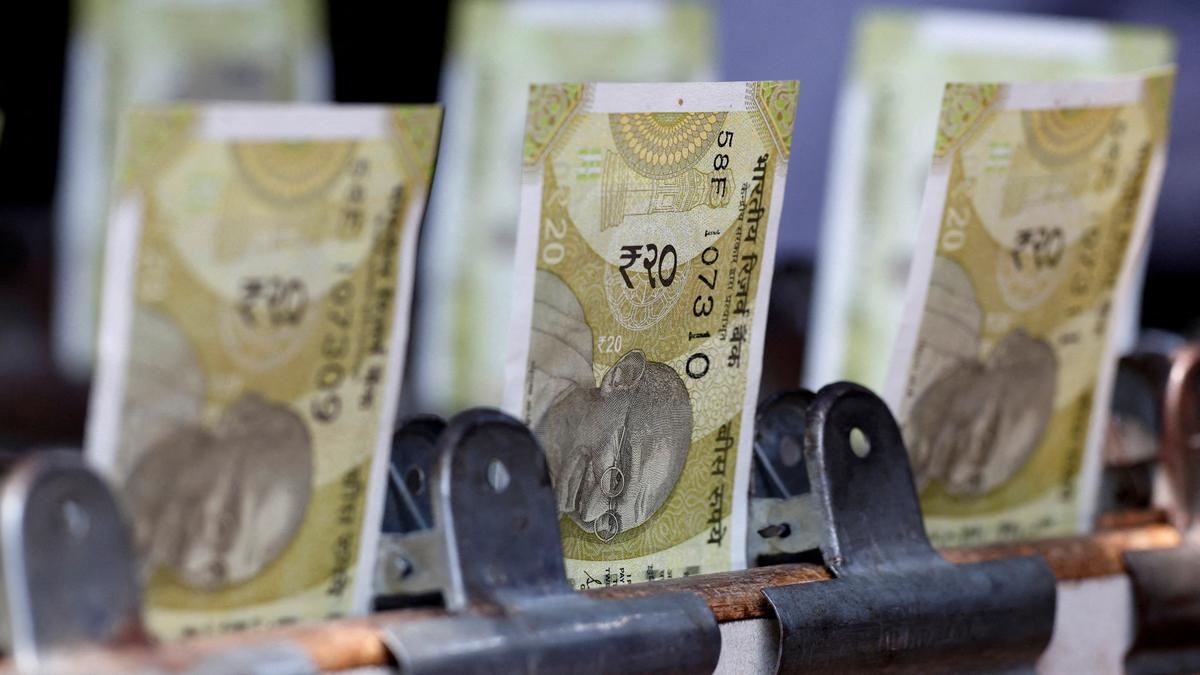
For representative purposes.
| Photo Credit: Getty Images

A reason why India has lagged behind certain non-Western economies — such as China and South Korea — despite starting from roughly equivalent positions early in the 20th century is the relative underperformance of its manufacturing sector. While China and South Korea have seen significant increases in manufacturing, the share of manufacturing in India’s GDP has remained relatively constant over time and has recently lost ground to services.

In a recent discussion of his book A Sixth of Humanity, economist Arvind Subramanian explained why India has been unable to industrialise to the extent of China or South Korea. In his view, high government salaries drew workers away from manufacturing, raising prices and making it difficult for the sector to remain competitive, thus hindering its expansion. Mr. Subramanian used a theoretical framework known as the ‘Dutch disease’ to examine this outcome.

What is the Dutch disease?

The Dutch disease refers to a phenomenon where an economic windfall can often translate into negative outcomes in other sectors, such as manufacturing. It was initially coined to explain how the discovery of the Groningen gas fields in 1959 affected Dutch manufacturing.

The theory goes as follows: imagine an economy where a substantial holding of some natural resource — such as oil or another important mineral — is discovered. This would lead to a rise in wages as the sector bids away labour from other sectors, raising the economy-wide wage rate. Moreover, exports of the resource would lead to an appreciation of the currency, increasing imports and decreasing other price-sensitive exports. These effects would hurt domestic manufacturing, which would be outcompeted by cheap imports from abroad and, at the same time, become relatively expensive in foreign markets.

But how would the Dutch disease apply to non-tradeable goods, such as government services? Suppose an economy expands its government sector and sets high wages for its workers. Manufacturing would then find it hard to meet these wages at its given level of productivity. Increased demand from government employees — due to higher incomes — would raise prices of domestic goods. Under a regime of free trade, this would boost demand for cheaper imports, reducing demand for domestically manufactured goods even if the nominal exchange rate does not change. The real exchange rate would appreciate due to higher domestic prices.

The Dutch disease model can be used to outline such a process in which the expansion of one sector leads to reduced outcomes for other sectors through price movements. In this model, the Indian State’s policy choices to raise salaries in the public sector negatively affected manufacturing and can be seen as one of the reasons why the process of structural transformation in India has stagnated.

Question of technology

One problem is that the framework was initially used to analyse the effects of a windfall discovery, not the effects of policy. The relatively higher salaries cannot easily be compared to the discovery of an oil field, because one is a conscious political decision undertaken by a democratically elected government, while the other is a natural endowment.

One could argue that while the nature of the economies — one with a strong public sector and one with a natural resource endowment — is drastically different, the effects are the same and operate through the same channel of a real exchange rate appreciation. But turning the question around offers another way to view the problem. If high government salaries were initially a problem, why did technological growth not occur over the long run to make manufacturing more productive to sustain higher wages?

The theory of ‘induced innovation’ holds that labour scarcity and high wages can induce technological and capital-biased growth. The economist Sir John Habakkuk hypothesised that 19th-century Britain grew faster than the U.S. because of its relative scarcity of land and labour. Economic historian Robert C. Allen states that Britain’s high wages ensured the need for technological innovation, which led to the Industrial Revolution occurring there rather than on the continent. In more contemporary times, Nobel laureate Daron Acemoglu used this to explain why automation led to faster productivity and wage growth in economies like Germany, Japan and South Korea — with an ageing labour force — while automation restricts wages in countries like the U.S., with a larger labour force.

Limits of wages

An analysis of India’s development story must focus on the nature of technological change and on why the private sector growth has not translated into rising wages. The question is stark in India’s fast-growing services and software industries. Entry-level salaries at major Indian software giants have shown little growth since the 2000s, despite the retreat of the State, the proliferation of markets and the rise of private sector billionaires.

A case can be made that India’s modern software unicorns — such as Swiggy, Zomato, Blinkit and Ola — rely on India’s abundant labour reserves rather than representing genuine technological upgradation.

The Indian private sector has undoubtedly shown significant levels of dynamism and growth. But this growth has been lop-sided, as the rapid increase in inequality has shown us. If public sector salaries kept wages higher earlier, it is legitimate to ask why manufacturing has not responded with an adequate level of technological change to ensure productivity growth. Did government intervention prevent the ability to adopt new technology? Or did manufacturing become addicted to the reserves of cheap labour and not invest in technological upgradation, leading to a relative stagnation over time?

Rahul Menon is associate professor at O.P. Jindal Global University

Published – December 24, 2025 10:54 pm IST


Source link

Business

Post navigation

Previous Post: Awami League will not be allowed to participate in Bangladesh election: interim government
Next Post: Access Denied

Related Posts

  • Parboiled idli rice exports take a hit 
    Parboiled idli rice exports take a hit  Business
  • IndiGo crisis: Supreme Court refuses urgent hearing on plea over flight cancellations
    IndiGo crisis: Supreme Court refuses urgent hearing on plea over flight cancellations Business
  • Dr. Reddy’s Q1 net inches up amid decline in generics sales to U.S. 
    Dr. Reddy’s Q1 net inches up amid decline in generics sales to U.S.  Business
  • Indian economy to grow at 6.7% between fiscals 2024 to 2031: CRISIL
    Indian economy to grow at 6.7% between fiscals 2024 to 2031: CRISIL Business
  • NCLT approves merger of Viacom 18, Star India
    NCLT approves merger of Viacom 18, Star India Business
  • Stock markets extend winning run to 6th day, Nifty scales fresh lifetime high
    Stock markets extend winning run to 6th day, Nifty scales fresh lifetime high Business

More Related Articles

JPMorgan Chase begins planned layoffs for 2025, source says JPMorgan Chase begins planned layoffs for 2025, source says Business
Welspun One Logistics Parks inks pact with Murugappa Group’s EV arm to develop build-to-suit facility Welspun One Logistics Parks inks pact with Murugappa Group’s EV arm to develop build-to-suit facility Business
Rupee rises 10 paise to 83.53 against U.S. dollar in early trade Rupee rises 10 paise to 83.53 against U.S. dollar in early trade Business
UltraTech Cement to pick up 23% stake in India Cements UltraTech Cement to pick up 23% stake in India Cements Business
Core sectors’ output grew at four-month high pace of 4.3% in November Core sectors’ output grew at four-month high pace of 4.3% in November Business
Paying for Russian crude in Yuan an insult to martyrs: Congress Paying for Russian crude in Yuan an insult to martyrs: Congress Business
SiteLock

Archives

  • December 2025
  • November 2025
  • October 2025
  • September 2025
  • August 2025
  • July 2025
  • June 2025
  • May 2025
  • April 2025
  • March 2025
  • February 2025
  • January 2025
  • December 2024
  • November 2024
  • October 2024
  • September 2024
  • August 2024
  • July 2024
  • June 2024
  • May 2024
  • April 2024
  • March 2024
  • February 2024
  • January 2024
  • December 2023
  • November 2023
  • October 2023
  • September 2023
  • August 2023
  • July 2023
  • June 2023
  • May 2023
  • April 2023
  • March 2023
  • February 2023
  • January 2023
  • December 2022
  • November 2022
  • October 2022
  • September 2022
  • August 2022
  • July 2022
  • June 2022
  • May 2022

Categories

  • Business
  • Nation
  • Science
  • Sports
  • World

Recent Posts

  • Access Denied
  • Dhaka braces for return of BNP leader ahead of polls
  • Access Denied
  • Why manufacturing has lagged in India
  • Awami League will not be allowed to participate in Bangladesh election: interim government

Recent Comments

  1. CurtisFrach on UP Teacher Who Asked Students To Slap Muslim Classmate
  2. dfb{{98991*97996}}xca on UP Teacher Who Asked Students To Slap Muslim Classmate
  3. "dfbzzzzzzzzbbbccccdddeeexca".replace("z","o") on UP Teacher Who Asked Students To Slap Muslim Classmate
  4. 1}}"}}'}}1%>"%>'%> on UP Teacher Who Asked Students To Slap Muslim Classmate
  5. bfg6520<s1﹥s2ʺs3ʹhjl6520 on UP Teacher Who Asked Students To Slap Muslim Classmate
  • Stock broking firms tumble on Sebi order; Angel One tanks nearly 9%
    Stock broking firms tumble on Sebi order; Angel One tanks nearly 9% Business
  • Virat Kohli’s ‘Discipline’ Comes Under Question After Costly ‘Mistakes’ Let India Down vs Australia
    Virat Kohli’s ‘Discipline’ Comes Under Question After Costly ‘Mistakes’ Let India Down vs Australia Sports
  • Venkatesh Iyer Joins Lancashire For A Short Stint
    Venkatesh Iyer Joins Lancashire For A Short Stint Sports
  • UltraTech Cement to pick up 23% stake in India Cements
    UltraTech Cement to pick up 23% stake in India Cements Business
  • Access Denied
    Access Denied Nation
  • Gender Reveal Party Turns Deadly As Plane Crashes In Front Of Guests In Mexico
    Gender Reveal Party Turns Deadly As Plane Crashes In Front Of Guests In Mexico World
  • Rupee falls 14 paise to hit record low of 87.57 against U.S. dollar in early trade
    Rupee falls 14 paise to hit record low of 87.57 against U.S. dollar in early trade Business
  • WHO Declares Mpox Global Health Emergency For Second Time In 2 Years
    WHO Declares Mpox Global Health Emergency For Second Time In 2 Years World

Editor-in-Chief:
Mohammad Ariff,
MSW, MAJMC, BSW, DTL, CTS, CNM, CCR, CAL, RSL, ASOC.
editor@artifex.news

Associate Editors:
1. Zenellis R. Tuba,
zenelis@artifex.news
2. Haris Daniyel
daniyel@artifex.news

Photograher:
Rohan Das
rohan@artifex.news

Artifex.News offers Online Paid Internships to college students from India and Abroad. Interns will get a PRESS CARD and other online offers.
Send your CV (Subjectline: Paid Internship) to internship@artifex.news

Links:
Associate Journalism
About Us
Privacy Policy

News Links:
Breaking News
World
Nation
Sports
Business
Entertainment
Lifestyle

Registered Office:
72/A, Elliot Road, Kolkata - 700016
Tel: 033-22277777, 033-22172217
Email: office@artifex.news

Editorial Office / News Desk:
No. 13, Mezzanine Floor, Esplanade Metro Rail Station,
12 J. L. Nehru Road, Kolkata - 700069.
(Entry from Gate No. 5)
Tel: 033-46011099, 033-46046046
Email: editor@artifex.news

Copyright © 2023 Artifex.News Newsportal designed by Artifex Infotech.