




Does the sight, or even the thought, of blood scare you? In that case, this one might not be for you. If it doesn’t or if you wish to brave on, you’ll find out more about blood and the means to handle it by the end of this one.
Components of blood
Human blood takes up the role of transporting oxygen and nutrients in the body and helps fight infections and regulate our temperature. Making up 7-8% of a person’s body weight, an average adult carries approximately 5 to 6 litres of blood in their body. It has four main components: plasma, which is the liquid part; red blood cells, which carries nutrients; white blood cells, which fights infection; and platelets, which helps clotting.
When blood is spun in a centrifuge, it separates into three distinct layers based on density: Plasma (lightest, top yellow liquid), the thin Buffy Coat (middle layer of white blood cells and platelets), and dense Red Blood Cells (heaviest, bottom layer).
| Photo Credit:
Alan Sved / Wikimedia Commons
If there’s someone in your circle who donates blood, or any of its components for that matter, they might have told you what the shelf life which varies by component. While red blood cells last up to 42 days when refrigerated, plasma can be stored for up to a year, or even longer. Platelets, however, are stored at room temperature and have to be used within 5-7 days, hence requiring frequent donations from willing volunteers.
If not for the research of biochemists Stuart Mudd and Earl Flosdorf, the science surrounding blood transfusion — the medical procedure wherein blood or its components are given directly into a patient’s bloodstream — might not be where it is today. For it was their efforts that resulted in a process to produce dried human blood serum — a technique that was first exhaustively used during World War II.
Their collaboration
A native of Pennsylvania, U.S., Mudd hailed from a medical family. His father was a surgeon and he earned his M.D. from Harvard Medical School in 1920. Having joined the University of Pennsylvania faculty in 1929, he founded and chaired the Department of Microbiology from 1931 up until his retirement in 1959.
Flosdorf, meanwhile, was a skilled research assistant and refrigeration engineer. In his collaboration with Mudd, Flosdorf brought his practical technical expertise to the table. The duo got to work on the problem of handling blood more effectively.
Up until the 1930s, there was no efficient commercial drying techniques available for blood. As blood is composed of a number of proteins, they break down under normal environmental conditions. Outside living organisms, biological proteins aggregate and become insoluble through a sequence of events known as denaturation, which is influenced both by time and temperature. The commercial drying methods of the time depended on heat, thereby destroying crucial proteins in blood.
Removing water
Flosdorf and Mudd came up with a method that relied on removing nearly 99.9% of the water content in blood. They achieved this by high speed vertical spin freezing, drying by sublimation, followed by a secondary dessication. In simpler terms, their process involved separating the blood into its components, before they were frozen and dried twice such that the resultant sample had less than 0.5% of water in it.
On December 21, 1933, the duo succeeded in preparing dried human blood serum for the first time in the U.S. at the school of Medicine, University of Pennsylvania. As it didn’t involve multiple transitions in temperature, degradation to the proteins in blood were kept to a minimum. On March 28, 1934, Flosdorf reported their results, reading out their paper before the division of biological chemistry of the American Chemical Society. In addition to Flosdorf and Mudd, Dr. John Reichel and Dr. Harry Eagle also contributed to the process.
When it was time to use the dried human blood serum, all that was needed was to inject sterile, distilled water through the rubber stopper with a needle and syringe. Once the serum dissolves rapidly, it can then be drawn back into the syringe, ready for injection into a body.
War-time push
Despite their breakthrough, their process remained merely a curiosity in the years that followed. It was only the advent of World War II that hastened their push for their process to become a workable procedure.
When the war broke out in 1939, it was obvious to everyone involved that blood transfusion would be playing a crucial role in the treatment of countless casualties. Whole blood had to be refrigerated unless given freshly, and even when refrigerated had a limited shelf life. Add to this the necessity of cold storage in a war-field, and the use of whole blood for transfusion was limited.
Suddenly, the method that Mudd and Flosdorf had come up with became all the more relevant. It was soon perfected with two stages involved in the technique to carry out the high vacuum drying by sublimation, with two common methods employed for the first stage.
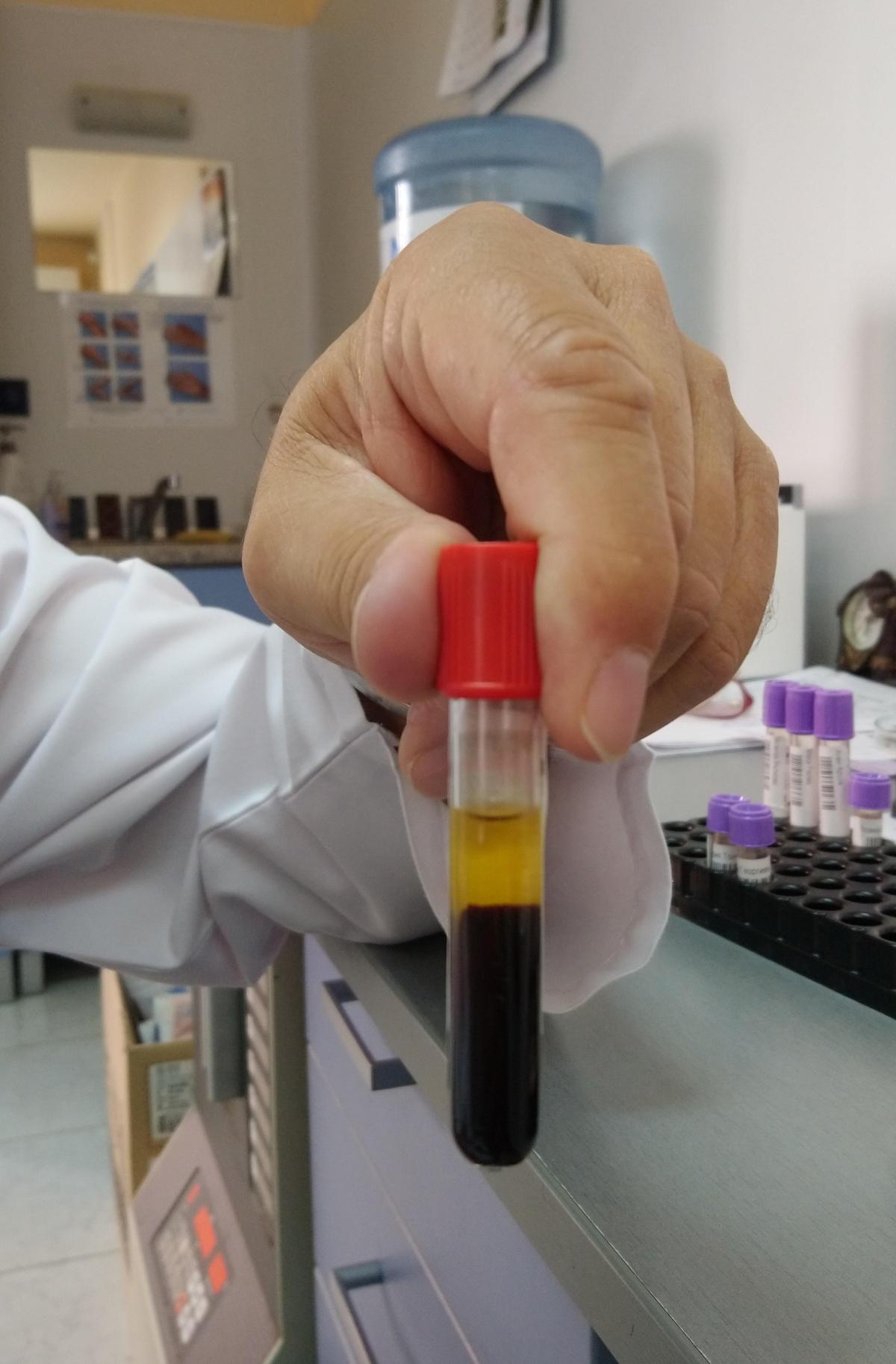
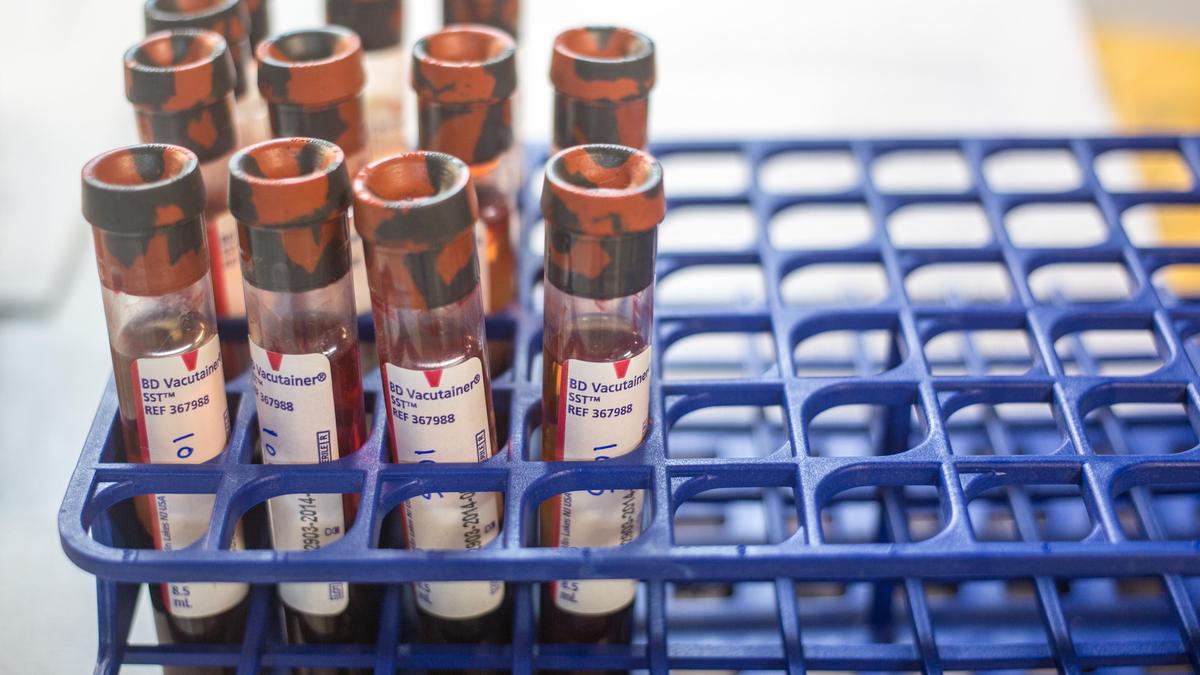
Blood testing tube with separated blood serum (yellow) and erythrocytes (dark red).
| Photo Credit:
Spiritia / Wikimedia Commons
Not the only ones
While Mudd and Flosdorf made important contributions to this process, they weren’t the only ones working on it. In the Blood Drying Unit in Cambridge, England, physician Ronald Greaves was also working tirelessly to perfect the process of blood drying. While his basic methods were nearly identical to that of Mudd and Flosdorf, there were some differences.
One of the minor differences factored in costs, using an alcohol bath rather than dry ice for the sake of chilling the condenser. The bigger difference lay in the emphasis of centrifugal vacuum spin-freezing that had been developed by Greaves along with his colleagues. This involved freezing the plasma by spinning bottles at high speed in sub-freezing condition, thereby ensuring that the plasma on the inner walls of the container spreads evenly until frozen, a technique that has since gone on to become the industry standard.
The standards for freeze drying methods that were crucial for the blood and transfusion programmes during the war rested on the work done by these three men. While the method championed by Greaves was widely used in Canada and England, the process that Mudd and Flosdorf came up with was used largely by the Americans.
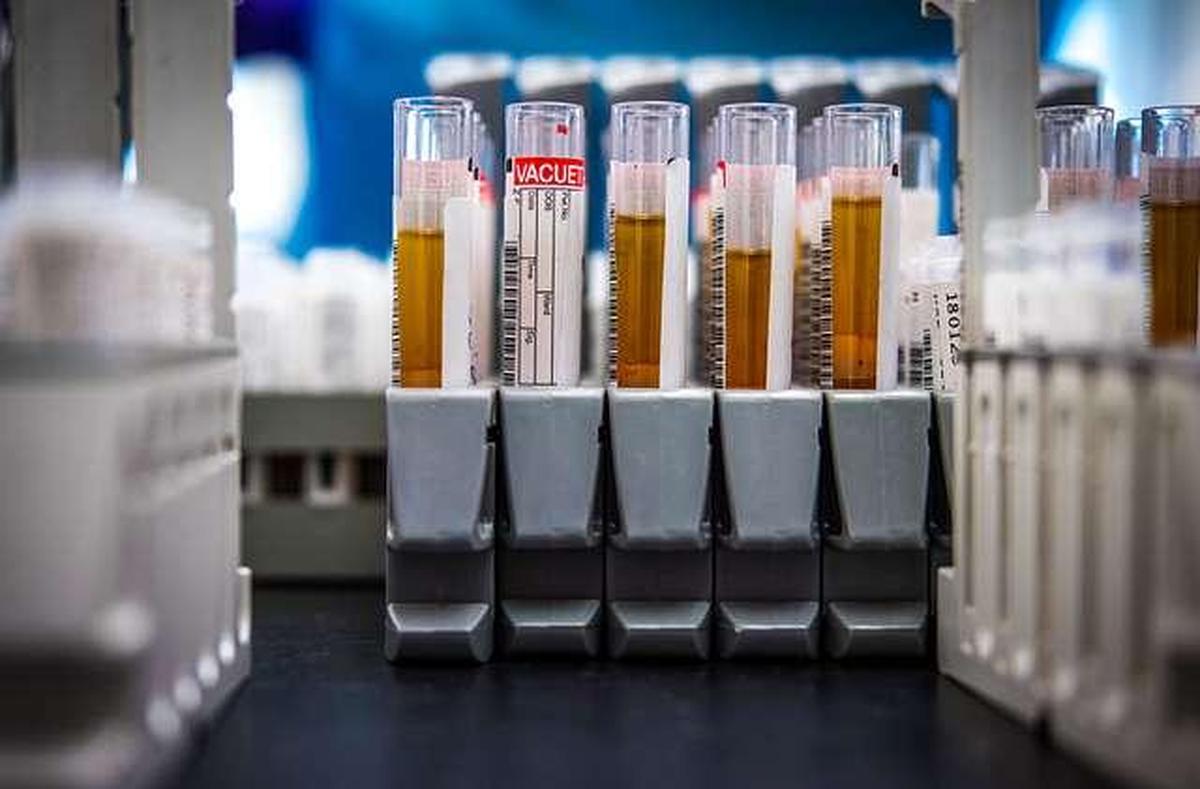
Part of 5,000 and 8,000 blood serum, fecal, urine, viral and respiratory samples that arrive six days a week for analysis at the Epidemiology Laboratory Service.
| Photo Credit:
Defense Visual Information Distribution Service / NARA
Study of blood
In addition to these techniques themselves being useful, they also paved the way for further understanding of the subject when it was put into action. For one, when some blood transfusions led to rejections in soldiers, the problem was found to be in the blood typing. Research that followed enabled us to better understand the components of blood and also how different bodies might react when a transfusion is performed.
What started in the battlefields eventually seeped into civilian society as well and blood transfusions have saved millions of lives worldwide in the decades since. Even though Mudd and Flosdorf might not have thought of it themselves, the development of drying blood has led to this process being employed to preserve a range of biological products. These include live viruses in use for vaccines, living bacteria, hormones, antibiotics, and even cancer therapy drugs. The techniques are not only limited to this field, but are also used in the food industry, mainly for fruits, vegetables, milk, meat and eggs.