Skip to content
  • Facebook
  • X
  • Linkedin
  • WhatsApp
  • Associate Journalism
  • About Us
  • Privacy Policy
  • 033-46046046
  • editor@artifex.news
Artifex.News

Artifex.News

Stay Connected. Stay Informed.

  • Breaking News
  • World
  • Nation
  • Sports
  • Business
  • Science
  • Entertainment
  • Lifestyle
  • Toggle search form
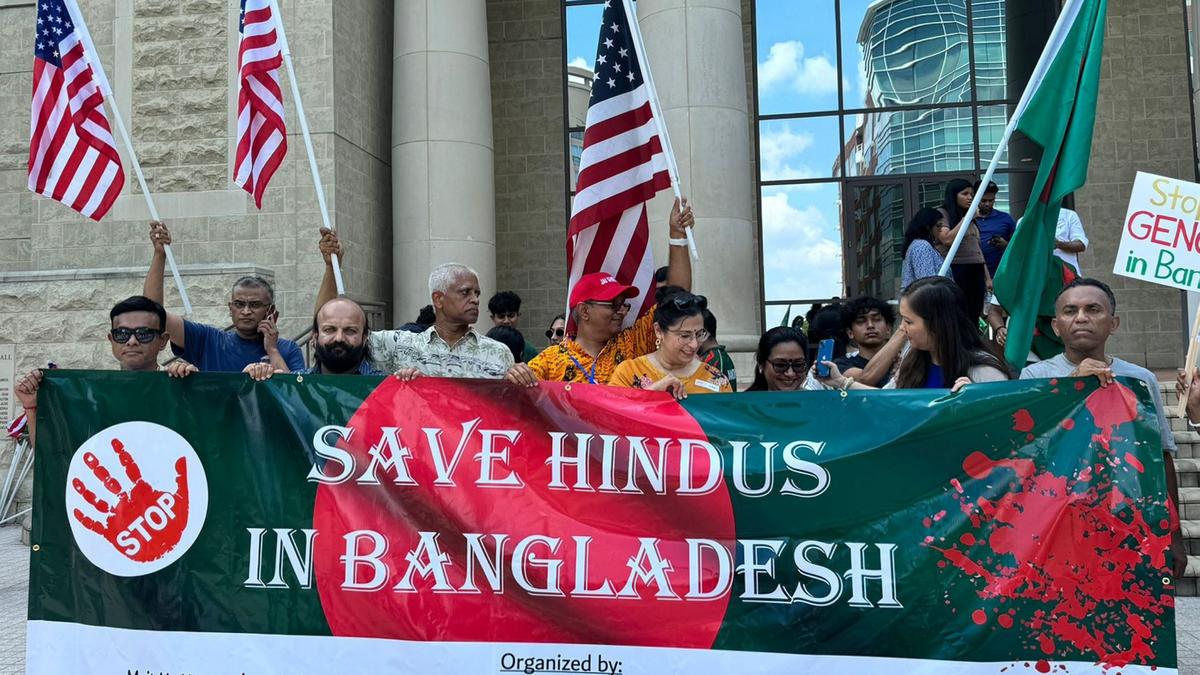
  • Hundreds Join Indian Americans Vigil, ‘Save Hindus in Bangladesh’ in Houston
    Hundreds Join Indian Americans Vigil, ‘Save Hindus in Bangladesh’ in Houston World
  • 3-Member Panel Formed After 2 Doctors, 1 Staffer Arrested In Porsche Case
    3-Member Panel Formed After 2 Doctors, 1 Staffer Arrested In Porsche Case Nation
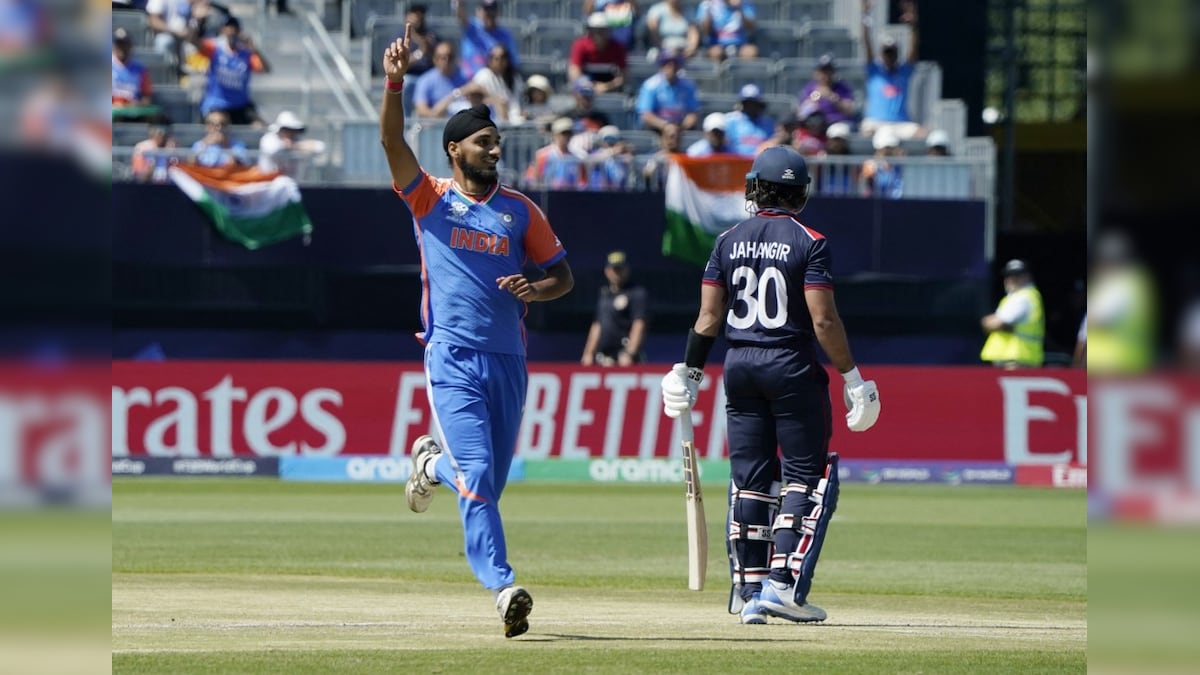
  • India vs Bangladesh, T20 World Cup 2024 Super 8: Players To Watch Out For
    India vs Bangladesh, T20 World Cup 2024 Super 8: Players To Watch Out For Sports
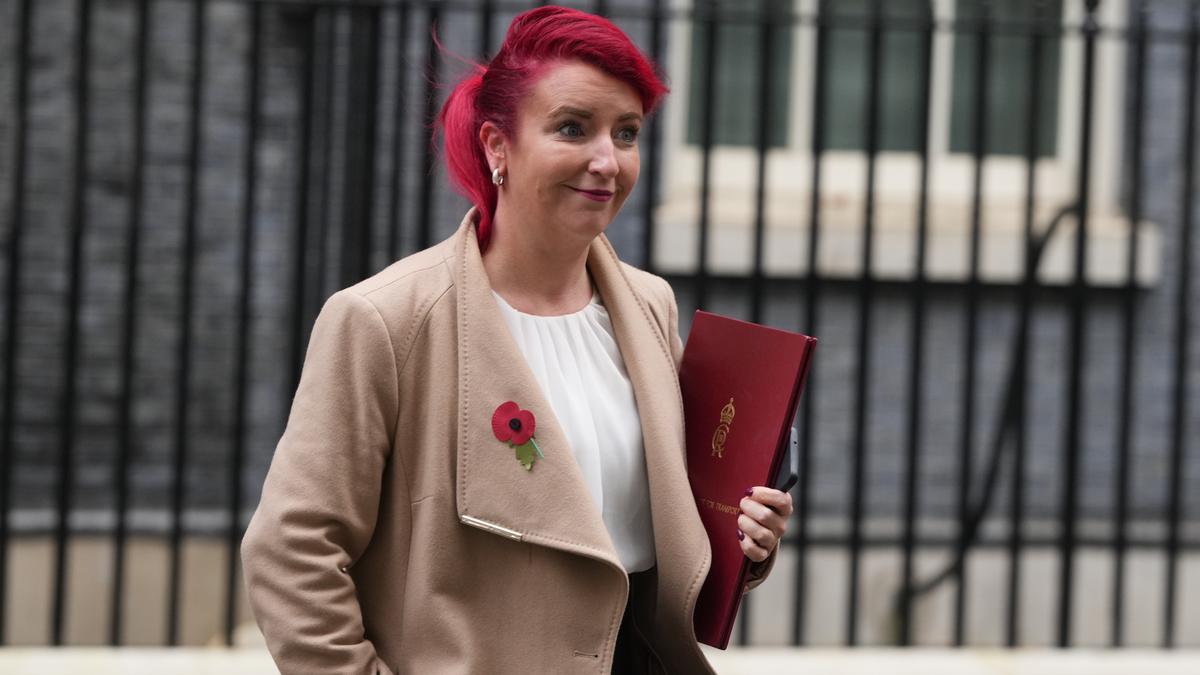
  • U.K. Transport Secretary Louise Haigh quits over decade-old cellphone fraud case
    U.K. Transport Secretary Louise Haigh quits over decade-old cellphone fraud case World
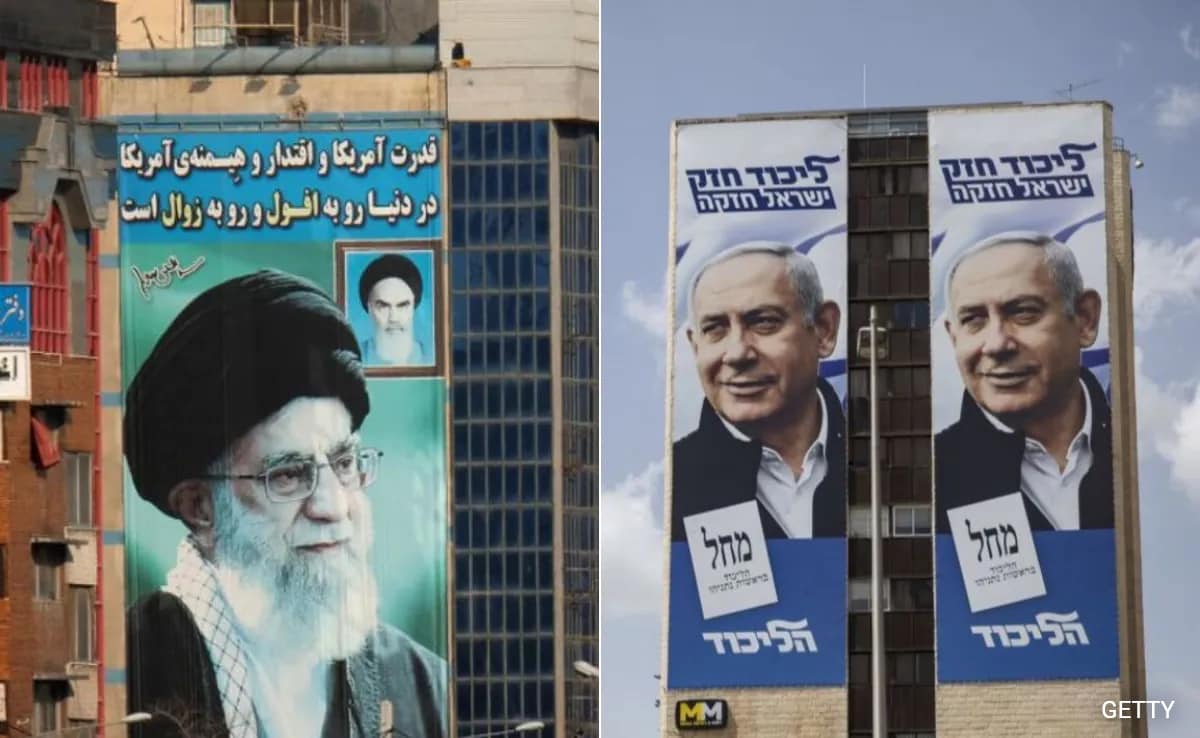
  • Ayatollah Khamenei Warns Of “Divine Wrath” If Iran Backs Down Against Israel
    Ayatollah Khamenei Warns Of “Divine Wrath” If Iran Backs Down Against Israel World
  • Police Wait For Actor Govinda To Give Statement On Gun Accident
    Police Wait For Actor Govinda To Give Statement On Gun Accident Nation
  • PM Modi, President Murmu To Pay Separate Visits To Bageshwar Dham In Madhya Pradesh
    PM Modi, President Murmu To Pay Separate Visits To Bageshwar Dham In Madhya Pradesh Nation
  • Why is there a row over border fencing? | Explained
    Why is there a row over border fencing? | Explained Nation
How will new codes change labour laws? | Explained

How will new codes change labour laws? | Explained

Posted on November 29, 2025 By admin


The story so far: On November 21, Union Labour Minister Mansukh Mandaviya announced the implementation of four Labour Codes — the Code on Wages, 2019, Industrial Relations Code, 2020, Code on Social Security, 2020 and the Occupational Safety, Health and Working Conditions (OSHWC) Code, 2020. Parliament had passed these codes between 2019 and 2020.

Why is the process taking time?

As labour is in the concurrent list, both the States and Centre have the power to makes Rules. The Centre published draft Rules for each code between July 7, 2020 and November 19, 2020; and as on July 2025, 32 States and Union Territories have also pre-published draft Rules under the four Labour Codes. According to a statement in Parliament during the last Monsoon session, West Bengal and Lakshadweep have not pre-published draft Rules under any Labour Codes. Delhi has pre-published draft Rules only under the Code on Wages. Tamil Nadu is yet to pre-publish draft Rules under the Code on Social Security. The Centre stated that the delay in implementing the Rules was mostly because of the lag in States.


Editorial | Labour and honour: On the four Labour Codes, the path ahead

What are the key features?

The Code on Wages repeals the Payment of Wages Act, 1936, the Minimum Wages Act, 1948, the Payment of Bonus Act, 1965 and the Equal Remuneration Act, 1976. The Industrial Relations Code amalgamates the Trade Unions Act, 1926, the Industrial Employment (Standing Orders) Act, 1946 and the Industrial Disputes Act, 1947. The Code on Social Security nullifies nine Acts including the Employees’ Compensation Act, 1923, the Maternity Benefit Act, 1961 and the Unorganised Workers’ Social Security Act, 2008. The OSHWC Code repeals Acts such as the Factories Act, 1948, the Mines Act, 1952, and the Inter-State Migrant Workmen (Regulation of Employment and Conditions of Service) Act, 1979. The Government repealed and codified 29 Acts that decided the structure of labour rights from the colonial period to the first United Progressive Alliance government.

What are the major changes?

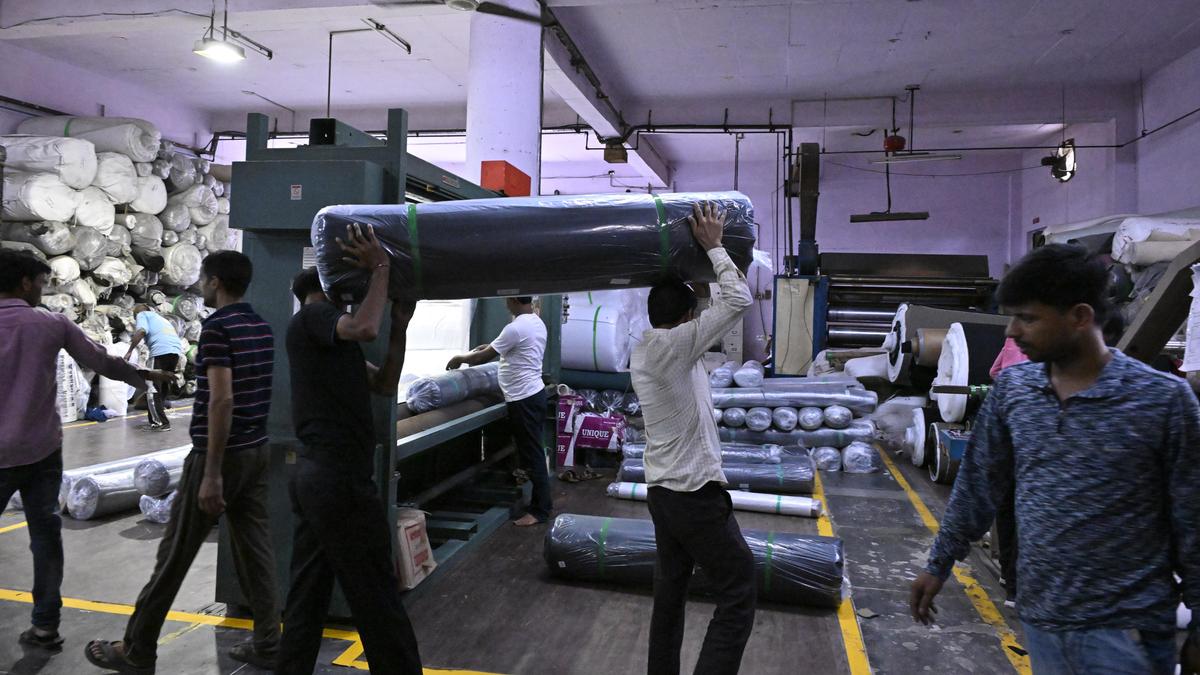
According to the Government, the Labour Codes promote formalisation of employment, expand social security coverage, ensure minimum and timely wages for more workers, provide for engaging more women in the workforce and reduce compliance burden for employers. Some of the other features include mandatory appointment letters to all workers, social security such as provident fund and State insurance for all workers including gig and platform workers, and a statutory right for minimum wage payment. Women can now work at night and in all types of work across establishments, and they will have equal opportunities in high-paying roles. A national floor wage will be set to ensure no worker receives a wage below the minimum living standard. Gender-neutral pay and job opportunities, prohibiting discrimination against transgender persons, and “shifting enforcement towards guidance, awareness and compliance support rather than punitive action,” are some of the other features.

How have employers responded?

Almost all employers’ organisations have welcomed the Codes. The president-designate of the Confederation of Indian Industries R. Mukundan told The Hindu that the labyrinthine labour law framework needed to be simplified, harmonised and modernised. “The Labour Codes do exactly that. They will create jobs, ensure social protection and maintain industrial harmony in a fast advancing economy,” he said. He argues that the uniformity across States, digital filings, reduced disputes and the emphasis on flexibility will make India a more attractive destination for doing business. However, representatives of micro, small and medium enterprises (MSMEs) are sceptical. The Association of Indian Entrepreneurs (AIE) fear that the new Labour Codes may significantly increase operating costs for MSMEs and disrupt business continuity across key sectors. “While AIE fully supports progressive labour reforms and the need for a modern workforce framework, the organisation has cautioned that the immediate impact on MSMEs could be severe unless governments provide clarity, transitional support, and flexible implementation mechanisms,” it said in a statement. It is seeking a transitional grace period with reduced penalties for MSMEs.

What are the concerns of trade unions?

Barring the Bharatiya Mazdoor Sangh (BMS), all Central Trade Unions (CTUs) are opposed to the Labour Codes. Ten CTUs and associated federations organised strikes against the proposed Labour Codes in 2019, 2020, 2022, 2023 and on July 9, 2025. The BMS has welcomed the implementation of two Labour Codes, the Code on Wages and Code on Social Security, and has questioned provisions in the Industrial Relations Code and the OSHWC Code.

The CTUs worry that the codes will take away several federal rights, including the right to decide minimum wages in the States. The floor wage, according to them, is a joke played on workers as in the past too, the Centre had failed to address the demands and realities of workers. On social security, the CTUs argue that 93% of the workers are not covered under any social security and the codes have no provision to improve the scenario. Also, the threshold of workers for factory licence has been increased and this will exclude a lot more workers from the social security and minimum wages provisions, allege trade unions.

On the Industrial Code too, they have issues as there will be “unwarranted restrictions” on the functioning of trade unions, including “limitations on membership, restrictions on outsiders serving as office-bearers, and the introduction of concepts such as the sole negotiating union and the negotiating council.” The right to strike also sees curtailments in the code. Trade unions have questioned the reduction of retrenchment notice pay, limiting the period for workers’ money claims, exclusion of house rent allowance from the definition of “wages”, the overall emphasis on contractualisation and allowing women workers in night shifts in sectors such as mines.

What lies ahead?

The Government has announced that all stakeholders will get 45 days to respond to the draft Rules of the Codes which it will again pre-publish with some modifications. Opposition-ruled States have reservations: Kerala said it will not implement the codes, while Karnataka, West Bengal and Tamil Nadu have also questioned the Centre’s “unilateral” approach. The trade unions have urged the Government to convene the Indian Labour Conference, the tripartite forum that has not met for over a decade, at the earliest. Employers also want to the government to facilitate more discussions at the factory level so that relations are not hampered at a time when businesses are facing challenges globally.

Published – November 30, 2025 02:50 am IST


Source link

Business Tags:four labour codes, new labour codes, new labour laws

Post navigation

Previous Post: Pakistan cancelled military action against Afghanistan at Qatar’s request: DPM Dar
Next Post: England’s Mark Wood sits out training and could miss second Ashes Test

Related Posts

  • FPIs withdraw ₹325 crore from Indian equities so far in April
    FPIs withdraw ₹325 crore from Indian equities so far in April Business
  • Rupee rises 4 paise to close at 83.48 against U.S. dollar
    Rupee rises 4 paise to close at 83.48 against U.S. dollar Business
  • Union Budget 2025: What’s in it for Defence sector
    Union Budget 2025: What’s in it for Defence sector Business
  • RBI says no systemic worries, action on Paytm due to “persisted non-compliance”
    RBI says no systemic worries, action on Paytm due to “persisted non-compliance” Business
  • ADB retains India’s growth forecast at 7%; govt spending, agriculture to boost economy
    ADB retains India’s growth forecast at 7%; govt spending, agriculture to boost economy Business
  • Rupee trades in narrow range against U.S. dollar in early trade
    Rupee trades in narrow range against U.S. dollar in early trade Business

More Related Articles

Govt. limits wheat stocks to control price rise, hoarding Govt. limits wheat stocks to control price rise, hoarding Business
Nittan doubles its production capacity in Sri City in Andhra Pradesh Nittan doubles its production capacity in Sri City in Andhra Pradesh Business
L&T to execute part of HSL contract for support ships L&T to execute part of HSL contract for support ships Business
Insolvency process: RBI Deputy Guv pitches for enforceable code of conduct for CoC Insolvency process: RBI Deputy Guv pitches for enforceable code of conduct for CoC Business
UAE’s NMDC Group plans to invest ₹21,000 crore at Vadhvan Port, signs MoU with JNPA UAE’s NMDC Group plans to invest ₹21,000 crore at Vadhvan Port, signs MoU with JNPA Business
India negotiating bilateral investment treaties with different countries to promote foreign inflow: FM India negotiating bilateral investment treaties with different countries to promote foreign inflow: FM Business
SiteLock

Archives

  • November 2025
  • October 2025
  • September 2025
  • August 2025
  • July 2025
  • June 2025
  • May 2025
  • April 2025
  • March 2025
  • February 2025
  • January 2025
  • December 2024
  • November 2024
  • October 2024
  • September 2024
  • August 2024
  • July 2024
  • June 2024
  • May 2024
  • April 2024
  • March 2024
  • February 2024
  • January 2024
  • December 2023
  • November 2023
  • October 2023
  • September 2023
  • August 2023
  • July 2023
  • June 2023
  • May 2023
  • April 2023
  • March 2023
  • February 2023
  • January 2023
  • December 2022
  • November 2022
  • October 2022
  • September 2022
  • August 2022
  • July 2022
  • June 2022
  • May 2022

Categories

  • Business
  • Nation
  • Science
  • Sports
  • World

Recent Posts

  • Rubio says ‘more work’ required after U.S.-Ukraine talks in Florida
  • Pakistan rejects ‘misplaced apprehensions’ of UN rights chief about 27th constitutional amendment
  • Access Denied
  • Access Denied
  • Access Denied

Recent Comments

  1. dfb{{98991*97996}}xca on UP Teacher Who Asked Students To Slap Muslim Classmate
  2. "dfbzzzzzzzzbbbccccdddeeexca".replace("z","o") on UP Teacher Who Asked Students To Slap Muslim Classmate
  3. 1}}"}}'}}1%>"%>'%> on UP Teacher Who Asked Students To Slap Muslim Classmate
  4. bfg6520<s1﹥s2ʺs3ʹhjl6520 on UP Teacher Who Asked Students To Slap Muslim Classmate
  5. pHqghUme9356321 on UP Teacher Who Asked Students To Slap Muslim Classmate
  • Indian Navy ships free hijacked Iranian fishing vessel off Somalia, rescue Pakistani nationals
    Indian Navy ships free hijacked Iranian fishing vessel off Somalia, rescue Pakistani nationals World
  • Access Denied Sports
  • Salman Khan Ex Somy Ali’s Request To Gangster
    Salman Khan Ex Somy Ali’s Request To Gangster Nation
  • Access Denied
    Access Denied Nation
  • Chandrayaan-2 makes first ever observation of Sun’s impact on Moon, says ISRO
    Chandrayaan-2 makes first ever observation of Sun’s impact on Moon, says ISRO Science
  • Russia-Ukraine war: EAM Jaishankar raises safety of Indians with Russian counterpart Lavrov
    Russia-Ukraine war: EAM Jaishankar raises safety of Indians with Russian counterpart Lavrov World
  • Access Denied Sports
  • Arizona Woman, Who Poisoned Husband’s Coffee, Strikes Plea Deal To Avoid Jail
    Arizona Woman, Who Poisoned Husband’s Coffee, Strikes Plea Deal To Avoid Jail World

Editor-in-Chief:
Mohammad Ariff,
MSW, MAJMC, BSW, DTL, CTS, CNM, CCR, CAL, RSL, ASOC.
editor@artifex.news

Associate Editors:
1. Zenellis R. Tuba,
zenelis@artifex.news
2. Haris Daniyel
daniyel@artifex.news

Photograher:
Rohan Das
rohan@artifex.news

Artifex.News offers Online Paid Internships to college students from India and Abroad. Interns will get a PRESS CARD and other online offers.
Send your CV (Subjectline: Paid Internship) to internship@artifex.news

Links:
Associate Journalism
About Us
Privacy Policy

News Links:
Breaking News
World
Nation
Sports
Business
Entertainment
Lifestyle

Registered Office:
72/A, Elliot Road, Kolkata - 700016
Tel: 033-22277777, 033-22172217
Email: office@artifex.news

Editorial Office / News Desk:
No. 13, Mezzanine Floor, Esplanade Metro Rail Station,
12 J. L. Nehru Road, Kolkata - 700069.
(Entry from Gate No. 5)
Tel: 033-46011099, 033-46046046
Email: editor@artifex.news

Copyright © 2023 Artifex.News Newsportal designed by Artifex Infotech.