


Skip to content
  • Facebook
  • X
  • Linkedin
  • WhatsApp
  • Associate Journalism
  • About Us
  • Privacy Policy
  • 033-46046046
  • editor@artifex.news
Artifex.News

Artifex.News

Stay Connected. Stay Informed.

  • Breaking News
  • World
  • Nation
  • Sports
  • Business
  • Science
  • Entertainment
  • Lifestyle
  • Toggle search form
  • Unmasking Guillain-Barré Syndrome: revelations from studies at NIMHANS
    Unmasking Guillain-Barré Syndrome: revelations from studies at NIMHANS Science
  • From Pajero culture to street protests: The struggle for accountability in Pakistan-administered Jammu & Kashmir
    From Pajero culture to street protests: The struggle for accountability in Pakistan-administered Jammu & Kashmir World
  • PM Modi Japan visit LIVE: PM Modi meets Japan’s Governors of 16 prefectures, highlights areas of collaboration
    PM Modi Japan visit LIVE: PM Modi meets Japan’s Governors of 16 prefectures, highlights areas of collaboration World
  • Disability rights activist and author Alice Wong dies at 51
    Disability rights activist and author Alice Wong dies at 51 World
  • IND vs AUS five-match Test series to begin in Perth on November 22 | Border Gavaskar Trophy
    IND vs AUS five-match Test series to begin in Perth on November 22 | Border Gavaskar Trophy Sports
  • Access Denied Business
  • Judicial Enquiry Ordered Into Assam Mine Accident, Special Probe Team Set Up
    Judicial Enquiry Ordered Into Assam Mine Accident, Special Probe Team Set Up Nation
  • Access Denied Sports
Tetrapod-shaped nanoparticles could make plastics easier to process, finds IIT study

Tetrapod-shaped nanoparticles could make plastics easier to process, finds IIT study

Posted on November 25, 2025 By admin


An image of concrete tetrapods used as wave breakers to prevent beach erosion.
| Photo Credit: Special Arrangement

A collaborative study by researchers from three Indian Institutes of Technology (IITs) has found that adding tetrapod-shaped nanoparticles to certain synthetic plastics can significantly reduce their viscosity, making them easier and less energy-intensive to process.

Plastics owe their versatility to long molecular chains called polymers, which make them moldable and stretchable. However, many synthetic plastics with heavy, long chains become extremely thick when molten—a property scientists call high viscosity—making them difficult and costly to process.

A recent collaborative study titled, ‘Nanotetrapods promote polymer flow through confinement induced packing frustration’ by researchers from IIT Bombay, IIT Madras, and IIT Kanpur demonstrated that mixing tetrapod-shaped nanoparticles, tiny particles resembling the four-armed concrete structures used as sea wave breakers, into polymers can improve their flow. The effect was tested on polystyrene (PS), a polymer whose physical and rheological properties are well understood.

The research was led by Professor Mithun Chowdhury, who heads the Lab of Soft Interfaces at IIT Bombay, with collaborations from Professors Anindya Datta (IIT Bombay), Tarak K. Patra (IIT Madras), and Sivasurender Chandran (IIT Kanpur). The experimental work and analysis were done by Jotypriya Sarkar, Mithun Madhusudanan, Harshit Yadav, Dr. Fariyad Ali from IIT Bombay, and Dr. Sachin M. B. Gautham from IIT Madras.

“This study opens a pathway to potentially lower processing energy in the future, if we can mass synthesise precisely shaped sustainable nanoparticles,” said Mr. Chowdhury, who heads the Lab of Soft Interfaces at IIT Bombay and led the research.

The idea, he said, came from a casual observation, “During a walk along Marine Drive, we saw the large concrete tetrapods used to break waves. That sparked a question: what if we used tiny versions of these shapes in thick polymer fluids?” Mr. Chowdhury thought of testing out tetrapods because of their unusual geometry. Nanoparticles of other shapes, such as spheres or rods, are known to increase viscosity rather than reduce it, he said.

Unlike spherical or rod-shaped nanoparticles, which typically increase viscosity, tetrapods reduced it. “The simulations showed that the inner curvatures of a tetrapod create regions that long polymer chains find unfavourable to enter,” he explained. “This causes the lowering of the number of polymers around the nanotetrapod and thereby lets polymer chains slide past one another more easily,” he added.
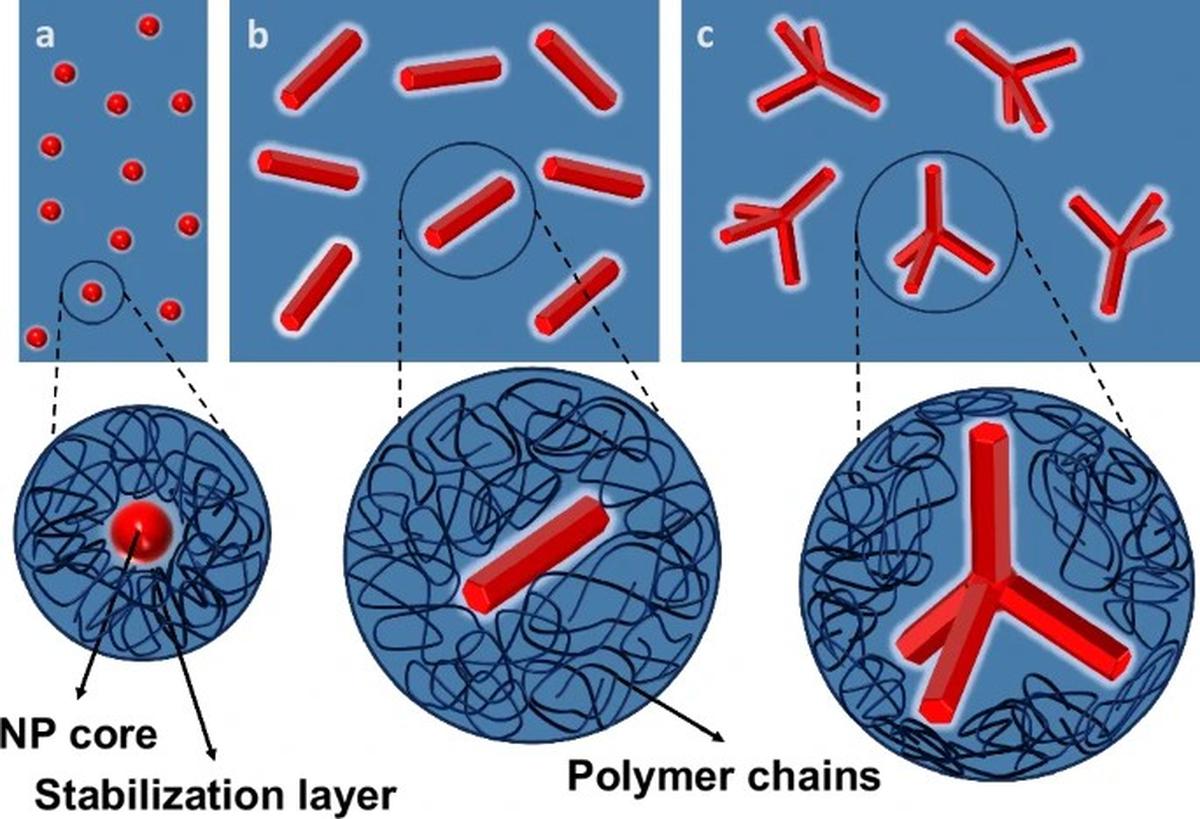
A visualisation of how polymer molecules behave differently around different nanoparticle shapes; the threads are polymer chains, and the red shapes are nanoparticles. Notice the lower density around tetrapods.

A visualisation of how polymer molecules behave differently around different nanoparticle shapes; the threads are polymer chains, and the red shapes are nanoparticles. Notice the lower density around tetrapods.
| Photo Credit:
Authors of the study

The team sourced cadmium-selenium (CdSe) tetrapods from Professor Anindya Datta’s lab at IIT Bombay and incorporated them into polystyrene. Control experiments with spherical and rod-shaped CdSe nanoparticles confirmed that only tetrapods improved flow. Importantly, the addition did not compromise the polymer’s mechanical or thermal integrity. 

The findings also suggest that nanoparticle shape could potentially be used to tune how plastics flow. “Many applications, like coatings, adhesives, or 3D printing resins, require specific viscosity for shape retention or load bearing. There are plenty of examples of nanoparticles increasing viscosity, but our study shows it can go both ways. Compact particles like spheres or roads can thicken, Mr. Chowdhury explained.

The team is currently exploring ways to scale up the process for preparing polymer-nanoparticle composites and adapt it to different types of polymers. Key challenges remain, including large-scale nanoparticle synthesis and replacing toxic materials such as cadmium with more environmentally friendly alternatives.

“Future work will extend this to other polymers and more complex nanoparticle geometries,” added Mr. Chowdhury. In the future, the group aims to develop models, using AI or machine learning techniques, to predict the behaviour and flow patterns of polymer-nanoparticle composites based on nanoparticle geometry.

Published – November 26, 2025 04:30 am IST


Source link

Science Tags:Reducing plastic viscosity, tetrapod-shaped nanoparticles

Post navigation

Previous Post: Japan scrambles aircraft over suspected China drone near Taiwan
Next Post: Access Denied

Related Posts

  • The number of rhinos is slightly up but poaching has increased too
    The number of rhinos is slightly up but poaching has increased too Science
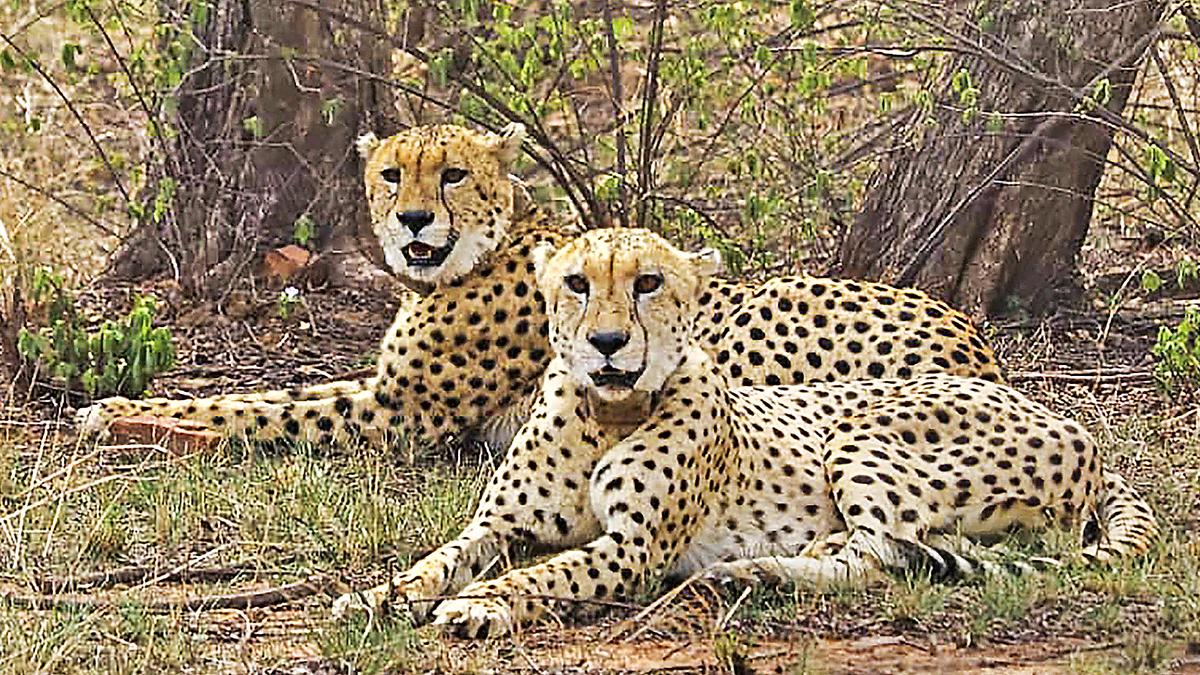
  • Neither ecologically sustainable nor ethical, says study over translocation of African cheetahs to India
    Neither ecologically sustainable nor ethical, says study over translocation of African cheetahs to India Science
  • What is the best time to take examinations?
    What is the best time to take examinations? Science
  • Payload aboard Aditya-L1 mission detects solar wind impact of Coronal Mass Ejections
    Payload aboard Aditya-L1 mission detects solar wind impact of Coronal Mass Ejections Science
  • Study finds one way statins can cause diabetes, and a solution
    Study finds one way statins can cause diabetes, and a solution Science
  • Chandrayaan-4 mission expansion gets Centre’s approval
    Chandrayaan-4 mission expansion gets Centre’s approval Science

More Related Articles

How do noise-cancelling headphones work? How do noise-cancelling headphones work? Science
Sprouting a sandalwood sapling – The Hindu Sprouting a sandalwood sapling – The Hindu Science
Clustering maize plants together can improve their insect resistance Clustering maize plants together can improve their insect resistance Science
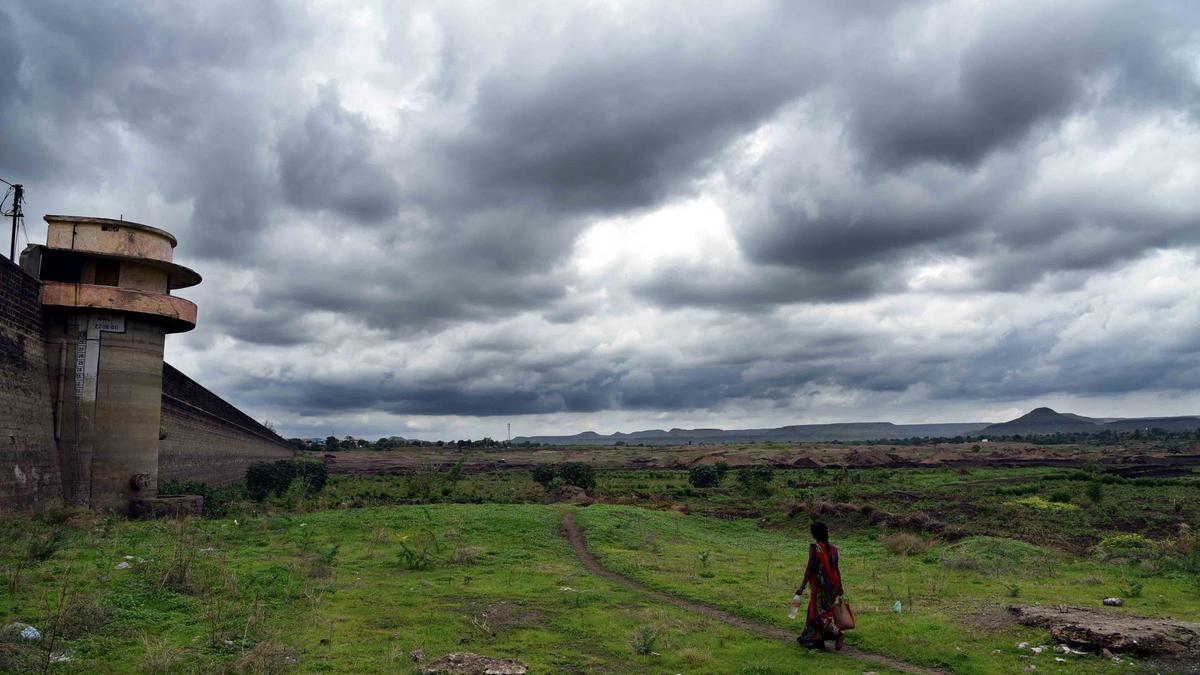
Unpredictable rainfall makes farming in Marathwada even harder Unpredictable rainfall makes farming in Marathwada even harder Science
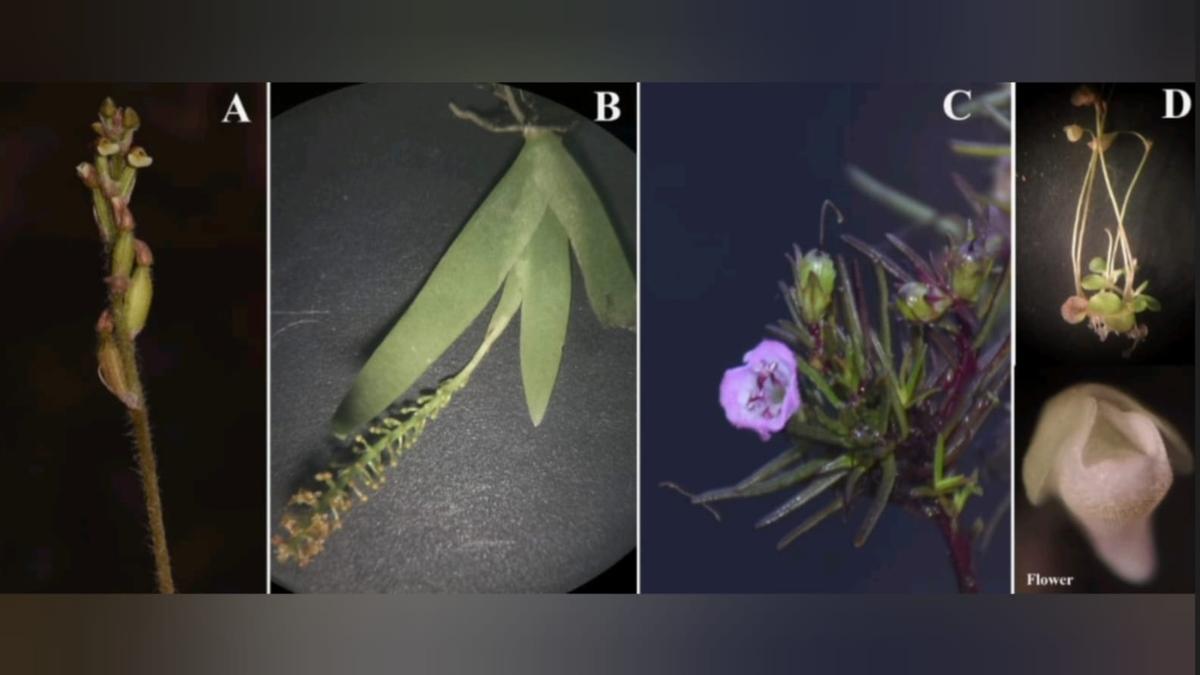
Dharwad botanists discover four new species of plants in Western Ghats Dharwad botanists discover four new species of plants in Western Ghats Science
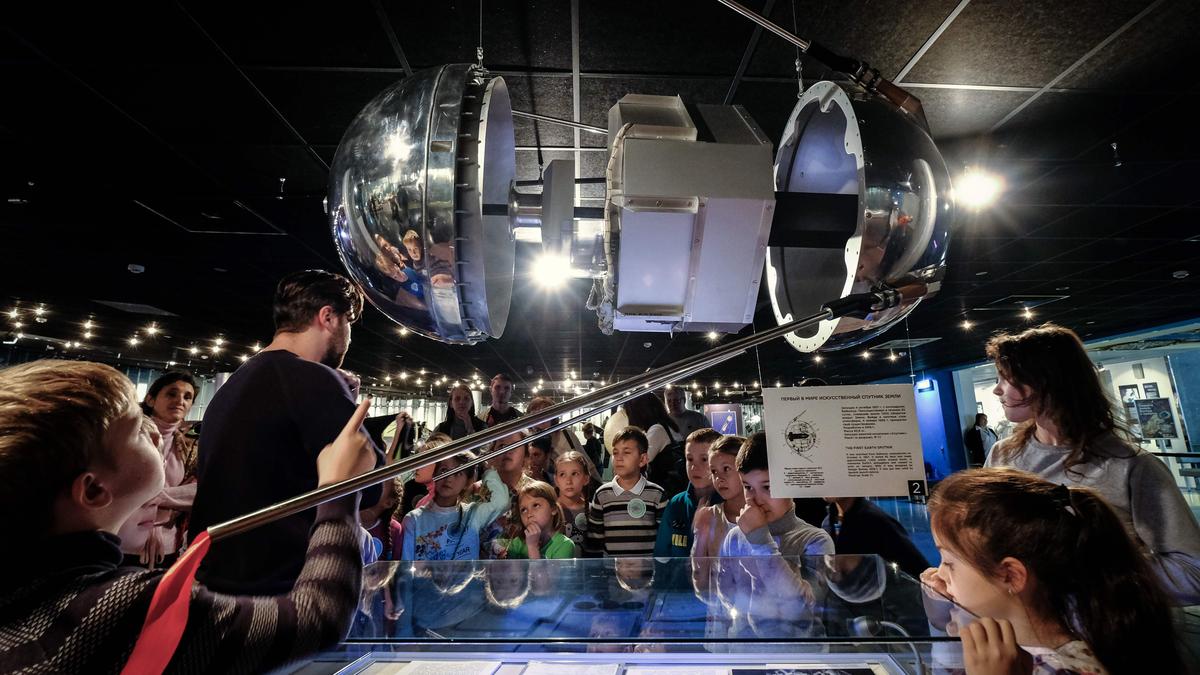
When a ‘fellow traveller’ went to space When a ‘fellow traveller’ went to space Science
SiteLock

Archives

  • November 2025
  • October 2025
  • September 2025
  • August 2025
  • July 2025
  • June 2025
  • May 2025
  • April 2025
  • March 2025
  • February 2025
  • January 2025
  • December 2024
  • November 2024
  • October 2024
  • September 2024
  • August 2024
  • July 2024
  • June 2024
  • May 2024
  • April 2024
  • March 2024
  • February 2024
  • January 2024
  • December 2023
  • November 2023
  • October 2023
  • September 2023
  • August 2023
  • July 2023
  • June 2023
  • May 2023
  • April 2023
  • March 2023
  • February 2023
  • January 2023
  • December 2022
  • November 2022
  • October 2022
  • September 2022
  • August 2022
  • July 2022
  • June 2022
  • May 2022

Categories

  • Business
  • Nation
  • Science
  • Sports
  • World

Recent Posts

  • Decathlon to hire 2,500 people in India, invest €100 million by 2030
  • Govt rejects IMF’s notion that 50% tariffs will be ‘indefinite’, says growth impact overstated
  • Indians largest non-EU group immigrating to and emigrating from U.K.
  • Access Denied
  • Access Denied

Recent Comments

  1. dfb{{98991*97996}}xca on UP Teacher Who Asked Students To Slap Muslim Classmate
  2. "dfbzzzzzzzzbbbccccdddeeexca".replace("z","o") on UP Teacher Who Asked Students To Slap Muslim Classmate
  3. 1}}"}}'}}1%>"%>'%> on UP Teacher Who Asked Students To Slap Muslim Classmate
  4. bfg6520<s1﹥s2ʺs3ʹhjl6520 on UP Teacher Who Asked Students To Slap Muslim Classmate
  5. pHqghUme9356321 on UP Teacher Who Asked Students To Slap Muslim Classmate
  • Rupee rises seven paise to 83.06 against U.S. dollar in early trade
    Rupee rises seven paise to 83.06 against U.S. dollar in early trade Business
  • Watch: New regime in Bangladesh | Lessons for India & South Asia
    Watch: New regime in Bangladesh | Lessons for India & South Asia World
  • Iran seizes oil tanker in Gulf, arrests crew
    Iran seizes oil tanker in Gulf, arrests crew World
  • “No Reason To Save Him”: Argentina Coach On Lionel Messi’s National Team Role
    “No Reason To Save Him”: Argentina Coach On Lionel Messi’s National Team Role Sports
  • Facebook, Instagram down for thousands of users
    Facebook, Instagram down for thousands of users World
  • Budget will lay strong base to build a developed India: PM
    Budget will lay strong base to build a developed India: PM Business
  • Gamma-ray bursts from black hole ‘morsels’ could expose quantum gravity
    Gamma-ray bursts from black hole ‘morsels’ could expose quantum gravity Science
  • “If India Go Over The Top…”: Australia Legend Ian Chappell’s Sharp Warning To Team India
    “If India Go Over The Top…”: Australia Legend Ian Chappell’s Sharp Warning To Team India Sports

Editor-in-Chief:
Mohammad Ariff,
MSW, MAJMC, BSW, DTL, CTS, CNM, CCR, CAL, RSL, ASOC.
editor@artifex.news

Associate Editors:
1. Zenellis R. Tuba,
zenelis@artifex.news
2. Haris Daniyel
daniyel@artifex.news

Photograher:
Rohan Das
rohan@artifex.news

Artifex.News offers Online Paid Internships to college students from India and Abroad. Interns will get a PRESS CARD and other online offers.
Send your CV (Subjectline: Paid Internship) to internship@artifex.news

Links:
Associate Journalism
About Us
Privacy Policy

News Links:
Breaking News
World
Nation
Sports
Business
Entertainment
Lifestyle

Registered Office:
72/A, Elliot Road, Kolkata - 700016
Tel: 033-22277777, 033-22172217
Email: office@artifex.news

Editorial Office / News Desk:
No. 13, Mezzanine Floor, Esplanade Metro Rail Station,
12 J. L. Nehru Road, Kolkata - 700069.
(Entry from Gate No. 5)
Tel: 033-46011099, 033-46046046
Email: editor@artifex.news

Copyright © 2023 Artifex.News Newsportal designed by Artifex Infotech.