






UNESCO issued the first global normative framework on the ethics of neurotechnology on November 5; it is set to enter into force on November 12. This recommended standard is designed to maintain a balance between innovation and human rights to protect the human brain and brain-related data from misuse.
Such misuse includes exploiting brain signals to follow persuasive messages, using brain data for political marketing, for deciding premiums in insurance or even requiring applicants or employees to submit brain data tests to screen for suitability, stress tolerance, and hidden traits in an employment setting.
The emerging field of neurotechnology has made it possible to profile people in this way — and the UNESCO framework provides guidance for anyone studying, researching, and developing applications of this technology to prevent such harms.
Defining neurotechnology
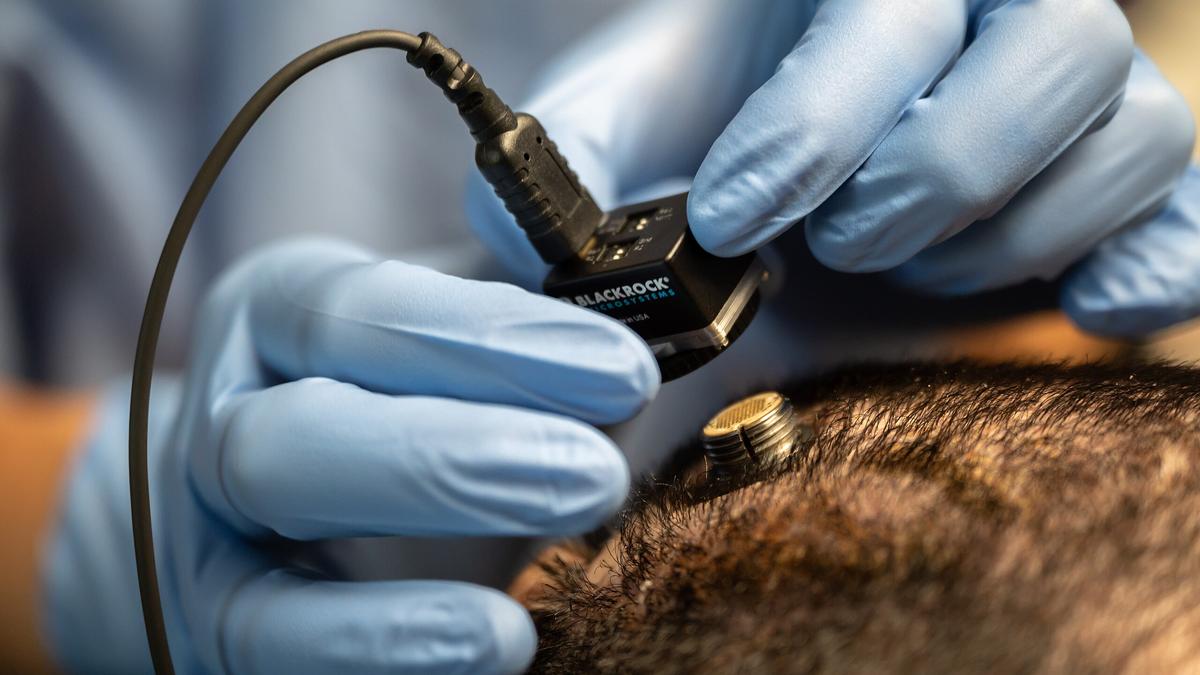
Neurotechnology refers to devices and procedures that access, assess, and act on neural systems, including the human brain. If the brain were a radio station, neurotechnology is the set of devices to help to tune in.
With advances in research and investments in projects like the US BRAIN Initiative and Elon Musk’s Neuralink, there’s significant interest today in brain-computer interfaces, particularly those driven by artificial intelligence (AI). For example, AI-assisted neuroimaging can allow doctors to precisely detect tumours and identify the possibility of stroke in people.
Broadly, neurotechnology merges advances in neuroscience, engineering, and advanced computing to evolve solutions that improve brain function and enhance human capabilities — and it has made rapid strides. According to a UNESCO study published in 2023, public investments in neurotechnology already exceeded $6 billion. Private investment had already grown to $7.3 billion by the end of 2020.
While this growth has been linked to the prospect of human enhancement and promising benefits in medicine, such as alleviation of mental illnesses, overcoming physical disabilities, and improving palliative care, it also evokes numerous concerns.
Neurotech challenges
Neurotechnology allows neurodata — a.k.a. neural or brain data — to be decoded, giving rise to concerns about user privacy, protection against misuse, and informed consent among users.
To address them, the scientific community and political bodies alike have for some time now been seeking “neurorights” and ethical standards that help innovators prioritise the moral, psychological, and emotional protection of the brain.
Some “neurorights” have been formulated to encompass mental privacy, integrity, and liberty. And while they are yet to be codified, there is a general consensus that such rights are important when it comes to users interacting with neurotechnology.
Many jurisdictions have begun recognising some neurorights as well. Chile is the first country to protect “mental integrity” in its Constitution. The state of California signed a law in 2024 that protected people’s brain data from being potentially misused by neurotechnology companies.
However, these initiatives focused on individual rights; until the late 2010s there were still significant gaps in the standards for R&D in neurotechnology research. In 2019, the Organisation for Economic Co-operation and Development (OECD) developed the first international standards on ‘Responsible Innovation in Neurotechnology Enterprises’, which focused on the “responsible development” and the “responsible use” of novel technologies via responsible technology transfer.
It also drew attention to the use of intellectual property rights, including in the form of patents to protect neurotechnological invention and the development of patent pools (which allow multiple companies and/or inventors to come together to offer one shared license so others can use the technology without negotiating many separate deals). This eases technology transfer as well as the sector’s development.
The OECD guidelines also called for free licensing to allow economically developing countries to customise technologies to their needs and evolving strategic partnerships.
Three years later, in 2022, the UNESCO International Bioethics Committee published a report on the ethical issues of neurotechnology; among other things, it called for a comprehensive framework in governing neurotechnology innovations.
UNESCO’s framework
UNESCO’s new recommendations are the result of extensive consultations since 2021. The recommendations’ framework focuses on human dignity, human rights, gender equality, social and global justice, and sustainable development — and recognises the vast potential of neurotechnology innovation for medical and assistive applications.
The recommendations are based on a three-pronged strategy: (i) defining the nature and scope of neurotechnology and neurodata; (ii) identifying the values, principles and offering directions to nations to incorporate the recommendations with a focus on particular sectors (health and education, among others); (iii) and considerations for vulnerable populations such as children and older adults.
In this light, the recommendations say the following principles ought to govern neurotechnology innovation: beneficence, proportionality, no harm, autonomy and freedom of thought, protection of all types of neural data from misuse, non-discrimination, inclusivity, accountability, trustworthiness and transparency, epistemic justice, and protection of future generations.
In advancing these principles, the recommendations explicitly prohibit any use of neural or non-neural data for manipulative or deceptive purposes, including in political, medical and commercial contexts. They also heighten attention towards the principles of autonomy, free will, and informed consent in any valid uses of neurotechnology.
Implications for innovation
As noted in its preamble, the new framework aims to facilitate responsible research and innovation (RRI) approach in neurotechnology, both in the public and the private sectors. This involves formalising a strategy to achieve ethical and sustainable outcomes by systematically weighing the benefits along with the risks involved.
An RRI approach requires researchers to think ahead about the effects of a technology they’re developing on people and the planet; involving the public and other stakeholders to join the conversation; and to shape their research to match society’s values and needs.
While acknowledging the importance of this, the framework also calls attention to the role of intellectual property rights in incentivising neurotechnology innovation even as it invokes the risks associated with the commodification of the human body.
To this end, the recommendations call for an open science model so that research outcomes are freely available to everyone. Open science models work like a public library: the data, software, technology, and methods are to be shared openly so that anyone can verify, reuse, and/or build on it.
However this approach is inimical to intellectual property rights, which prize private control and licensing. Thus, a plan to implement open science in neurotechnology development will also require strong follow-through, more so since innovation incentives have for a long time now spurred neurotechnology research.
Innovation experts like Sebastian Pfotenhauer also have noted that while effective governance for neurotechnology must focus on the private sector, they must be encouraged to self-regulate using companies’ ethics policies, ethics boards and ethics-by-design approaches to R&D.
Taken together, the recommendations framework contributes to a long-standing need for an ethical framework to govern neurotechnology innovation. However, fostering RRI within neurotechnology is less about choosing a single model and more about creating an ecosystem of innovation pluralism where different models coexist, informed by commitments to ethical principles and standards, such as the one now presented by UNESCO.
Dr. Neethu Rajam is associate professor of intellectual property and technology law, National law University Delhi.