



Skip to content
  • Facebook
  • X
  • Linkedin
  • WhatsApp
  • Associate Journalism
  • About Us
  • Privacy Policy
  • 033-46046046
  • editor@artifex.news
Artifex.News

Artifex.News

Stay Connected. Stay Informed.

  • Breaking News
  • World
  • Nation
  • Sports
  • Business
  • Science
  • Entertainment
  • Lifestyle
  • Toggle search form
  • Gautam Gambhir’s “Leading To A Division In The Team” Statement Boosted KKR: Shah Rukh Khan’s Mega Reveal
    Gautam Gambhir’s “Leading To A Division In The Team” Statement Boosted KKR: Shah Rukh Khan’s Mega Reveal Sports
  • The Hindu Morning Digest: May 31, 2024
    The Hindu Morning Digest: May 31, 2024 World
  • Pakistan Cricket Board’s Massive Role In Arshad Nadeem’s Olympic Gold, Helped Struggling Athlete With…
    Pakistan Cricket Board’s Massive Role In Arshad Nadeem’s Olympic Gold, Helped Struggling Athlete With… Sports
  • Access Denied
    Access Denied Nation
  • India On Report Of Its Ammunition In Ukraine
    India On Report Of Its Ammunition In Ukraine Nation
  • Access Denied
    Access Denied Nation
  • Access Denied
    Access Denied Nation
  • Access Denied Sports
Why access to knowledge is crucial for innovation | Explained

Why access to knowledge is crucial for innovation | Explained

Posted on November 11, 2025 By admin


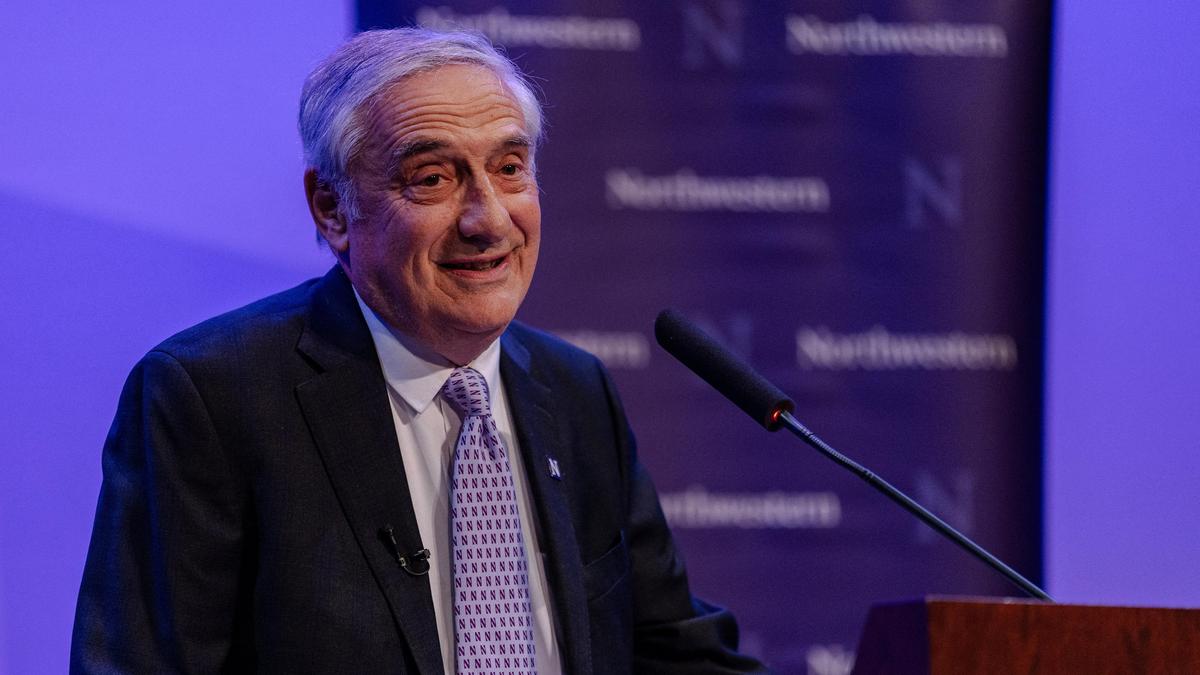
Joel Mokyr who won the 2025 Nobel economics prize alongside Peter Howitt of Brown University and Philippe Aghion of the College de France, INSEAD.
| Photo Credit: REUTERS

The current Nobel Prize in Economics has been given to three economists — Joel Mokyr, Philippe Aghion, and Peter Howitt — who have studied the role of technological change and creative destruction in economic growth. While the work of the latter two would be more readily recognisable to the modern economist, Mokyr adopts a historical lens to study the relationship between knowledge, ideas and economic growth.

What was Mokyr’s model?

Mokyr’s model makes a distinction between two kinds of knowledge: propositional and prescriptive. The former is knowledge about scientific phenomena and principles, while the latter concerns knowledge about techniques. Economic growth occurs with an increase in both kinds of knowledge, where societies possess not just scientific or theoretical knowledge, but also the knowledge of techniques to put them into use. What is important to understand is that it is not enough for society to merely possess knowledge; what matters is that a majority of members are able to access this knowledge, and that social norms promote the sharing of knowledge and free exchange of ideas. Technological progress is not merely an economic process, but a social and cultural outcome regulating the spread and sharing of knowledge amongst society.

Mokyr tells us the importance not just of generating new ideas, but of sharing and communicating these ideas. Free markets do not automatically guarantee growth, and state intervention does not ensure negative growth prospects. Instead, anything that restricts the free flow of information directly hampers innovation and growth. In that respect, one can point to certain social institutions in India that have hampered growth — such as caste — while being aware of the potentially negative effects of job polarisation and automation in restricting the spread of knowledge amongst theorists and practitioners.

Does the caste system stop growth?

The social institution of caste in India has ensured that knowledge was the preserve of an elite minority, with violence being used to restrict access. Following Independence, policy proposals such as reservations have been introduced to rectify this balance. However, access to high quality education still remains out of reach for many, while the slow retreat of the public sector ensures quality education once again remains the preserve of the elite.

Mokyr’s work shows us the dangers of not ensuring universal access to quality knowledge. What matters is not just the extent of knowledge accumulated by a society, but whether enough individuals have access to it in order to use it to tinker, experiment, and devise new techniques to introduce economic innovations. The existence of knowledge but with no meaningful access to it is as good as a society that possesses no knowledge at all. The extreme fragmentation of caste implies that not only is education restricted, but rigid conventions that ensure communities do not meaningfully interact further restricts innovations.

In this regard, one can see the importance of breaking down caste barriers, and improving educational access as well as ensuring quality education for all. This is of relevance given the slow retreat of the state in education and the rise in private universities. Much of the population may be unable to access quality education owing to high fees and lack of reservations in private universities.

What about automation?

Current labour markets have been thrown into disarray and profound uncertainty with the introduction of automation driven by AI.

The threat of job displacement is serious, but there is another, deeper question: what happens to the sharing of practical knowledge about capital and techniques when fewer individuals have access to it? Automation brings with it the problem of job polarisation, where much of routine work is performed by machines and/or AI, with humans in either highly skilled tasks or performing service occupations, such as in restaurants. This could potentially reduce the share of workforce who actually have knowledge of modern techniques. The transmission of knowledge about techniques of production requires long periods of familiarising oneself with the methods of operation, through personal contact, training and hands-on experience. Automation can have significant productivity effects, and might even prove to raise growth over time. But what happens to the sharing of knowledge of techniques if much of the labour force does not even have access to these new techniques?

If inaccessible education and restrictive social institutions keep propositional knowledge restricted, and job polarisation and automation ensure prescriptive knowledge is out to reach, economy-wide innovation is bound to suffer. The transformation of knowledge into innovations and growth depends on the cultural and social norms determining the costs of access to knowledge. Democratisation of education, far from being inimical to economic efficiency, is actually an important condition to ensure faster growth.

Rahul Menon is associate professor at O.P. Jindal Global University.

Published – November 11, 2025 08:30 am IST



Source link

Business

Post navigation

Previous Post: U.S. Senate approves bill to end shutdown, sending it to House
Next Post: Access Denied

Related Posts

  • Sensex jumps 430 points in early trade on positive global trends
    Sensex jumps 430 points in early trade on positive global trends Business
  • Indian IT saw deal recovery in May: BNP Paribas
    Indian IT saw deal recovery in May: BNP Paribas Business
  • India’s services sector growth rises in June on robust increase in new business, exports: PMI
    India’s services sector growth rises in June on robust increase in new business, exports: PMI Business
  • Government exempts LPG imports from agri cess
    Government exempts LPG imports from agri cess Business
  • India’s April manufacturing PMI sees second-best improvement in operating conditions in three-and-a-half years
    India’s April manufacturing PMI sees second-best improvement in operating conditions in three-and-a-half years Business
  • Lower Q2 GDP growth a temporary blip; economy to improve in coming quarters, says Nirmala Sitharaman
    Lower Q2 GDP growth a temporary blip; economy to improve in coming quarters, says Nirmala Sitharaman Business

More Related Articles

IndiQube Spaces files draft papers with Sebi for ₹850 crore IPO IndiQube Spaces files draft papers with Sebi for ₹850 crore IPO Business
Amid debate about inheritance tax, rising share of personal income tax and indirect tax remains a concern Amid debate about inheritance tax, rising share of personal income tax and indirect tax remains a concern Business
After Congress, AAP demands probe into Adani Power issue After Congress, AAP demands probe into Adani Power issue Business
Homegrown consulting firms seen disrupting India’s  billion advisory market Homegrown consulting firms seen disrupting India’s $10 billion advisory market Business
Market Capitalisation of nine of top-10 most valued firms jumps ₹2.89 lakh crore; Reliance biggest winner Market Capitalisation of nine of top-10 most valued firms jumps ₹2.89 lakh crore; Reliance biggest winner Business
Rupee slips 29 paise to 87.95 against U.S. dollar in early trade Rupee slips 29 paise to 87.95 against U.S. dollar in early trade Business
SiteLock

Archives

  • November 2025
  • October 2025
  • September 2025
  • August 2025
  • July 2025
  • June 2025
  • May 2025
  • April 2025
  • March 2025
  • February 2025
  • January 2025
  • December 2024
  • November 2024
  • October 2024
  • September 2024
  • August 2024
  • July 2024
  • June 2024
  • May 2024
  • April 2024
  • March 2024
  • February 2024
  • January 2024
  • December 2023
  • November 2023
  • October 2023
  • September 2023
  • August 2023
  • July 2023
  • June 2023
  • May 2023
  • April 2023
  • March 2023
  • February 2023
  • January 2023
  • December 2022
  • November 2022
  • October 2022
  • September 2022
  • August 2022
  • July 2022
  • June 2022
  • May 2022

Categories

  • Business
  • Nation
  • Science
  • Sports
  • World

Recent Posts

  • Vigilant civic society partnered with courts to drive progress in gender justice: CJI
  • Photographers from Gaza Strip, Syria, India win top honours at Gulf region’s top photography event
  • Over 600 detained in 500 search operations across Kashmir: police
  • 42 feared dead in migrant shipwreck off Libya: UN
  • Govt approves Export Promotion Mission with outlay of ₹25,060 crore for six years

Recent Comments

  1. dfb{{98991*97996}}xca on UP Teacher Who Asked Students To Slap Muslim Classmate
  2. "dfbzzzzzzzzbbbccccdddeeexca".replace("z","o") on UP Teacher Who Asked Students To Slap Muslim Classmate
  3. 1}}"}}'}}1%>"%>'%> on UP Teacher Who Asked Students To Slap Muslim Classmate
  4. bfg6520<s1﹥s2ʺs3ʹhjl6520 on UP Teacher Who Asked Students To Slap Muslim Classmate
  5. pHqghUme9356321 on UP Teacher Who Asked Students To Slap Muslim Classmate
  • Chandrababu Naidu To Visit Tirupati Today, Hold Review Meet
    Chandrababu Naidu To Visit Tirupati Today, Hold Review Meet Nation
  • Lebanon’s Shia Muslims pay high price in war between Israel and Hezbollah
    Lebanon’s Shia Muslims pay high price in war between Israel and Hezbollah World
  • Markets rebound in early trade after sharp decline in previous session
    Markets rebound in early trade after sharp decline in previous session Business
  • Trump-Harris Showdown Revives Debate On US’ Electoral College
    Trump-Harris Showdown Revives Debate On US’ Electoral College World
  • Press Freedom Must Be Balanced Against Person’s Right To Reputation: Bombay High Court
    Press Freedom Must Be Balanced Against Person’s Right To Reputation: Bombay High Court Nation
  • 8 Suffer Side Effects After Cataract Surgery, Indore Operation Room Sealed
    8 Suffer Side Effects After Cataract Surgery, Indore Operation Room Sealed Nation
  • Iran Slams Argentina’s Bid To Arrest Minister Over 1994 Bombing Attack
    Iran Slams Argentina’s Bid To Arrest Minister Over 1994 Bombing Attack World
  • Donald Trump, Elon Musk In Front-Row Seats At UFC Event
    Donald Trump, Elon Musk In Front-Row Seats At UFC Event World

Editor-in-Chief:
Mohammad Ariff,
MSW, MAJMC, BSW, DTL, CTS, CNM, CCR, CAL, RSL, ASOC.
editor@artifex.news

Associate Editors:
1. Zenellis R. Tuba,
zenelis@artifex.news
2. Haris Daniyel
daniyel@artifex.news

Photograher:
Rohan Das
rohan@artifex.news

Artifex.News offers Online Paid Internships to college students from India and Abroad. Interns will get a PRESS CARD and other online offers.
Send your CV (Subjectline: Paid Internship) to internship@artifex.news

Links:
Associate Journalism
About Us
Privacy Policy

News Links:
Breaking News
World
Nation
Sports
Business
Entertainment
Lifestyle

Registered Office:
72/A, Elliot Road, Kolkata - 700016
Tel: 033-22277777, 033-22172217
Email: office@artifex.news

Editorial Office / News Desk:
No. 13, Mezzanine Floor, Esplanade Metro Rail Station,
12 J. L. Nehru Road, Kolkata - 700069.
(Entry from Gate No. 5)
Tel: 033-46011099, 033-46046046
Email: editor@artifex.news

Copyright © 2023 Artifex.News Newsportal designed by Artifex Infotech.