
In India, there has been extensive debate about China’s growing role in South Asia, particularly its strategic partnership with Pakistan, which continues to challenge India’s foreign policy outlook. Since the Partition, Pakistan’s military establishment has defined its security posture primarily around India. To counter its relative weaknesses, the Pakistani army sought to balance India by tightening its grip over domestic politics and cultivating foreign alliances, first with the U.S. during the Cold War and increasingly with China in recent years. As India deepens its partnership with Washington, the U.S.–Pakistan relationship has lost its appeal for Indian strategists; however, recent events have again made it a topic of interest.
Trump’s shifting stance
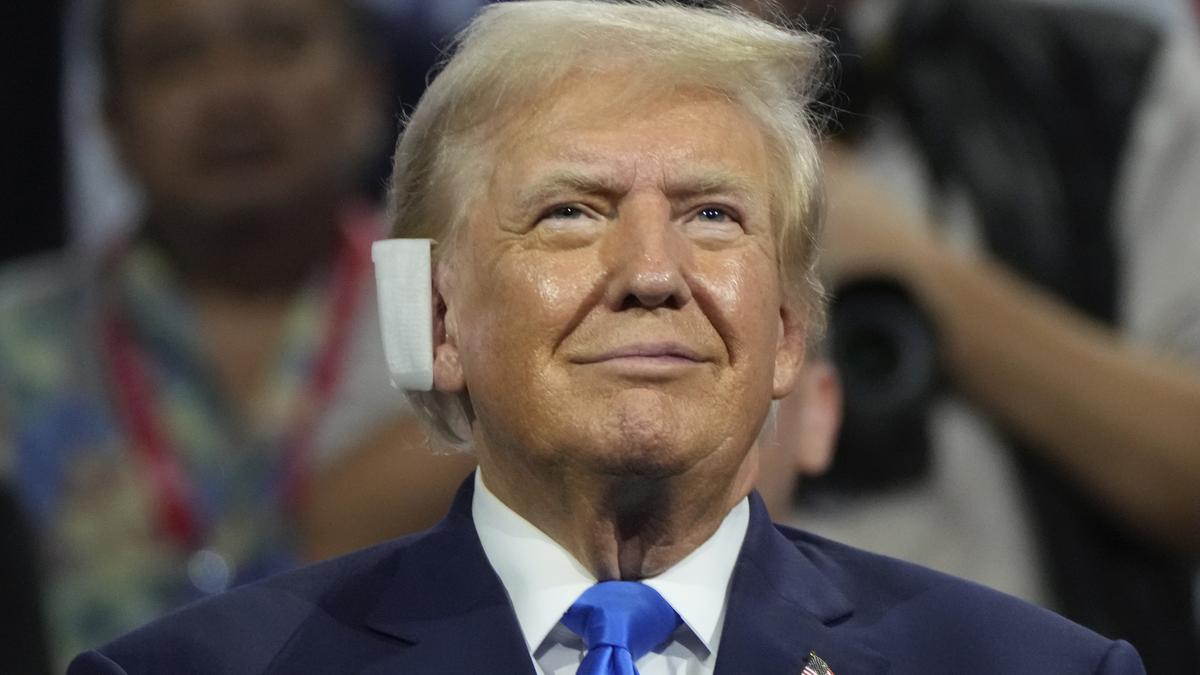
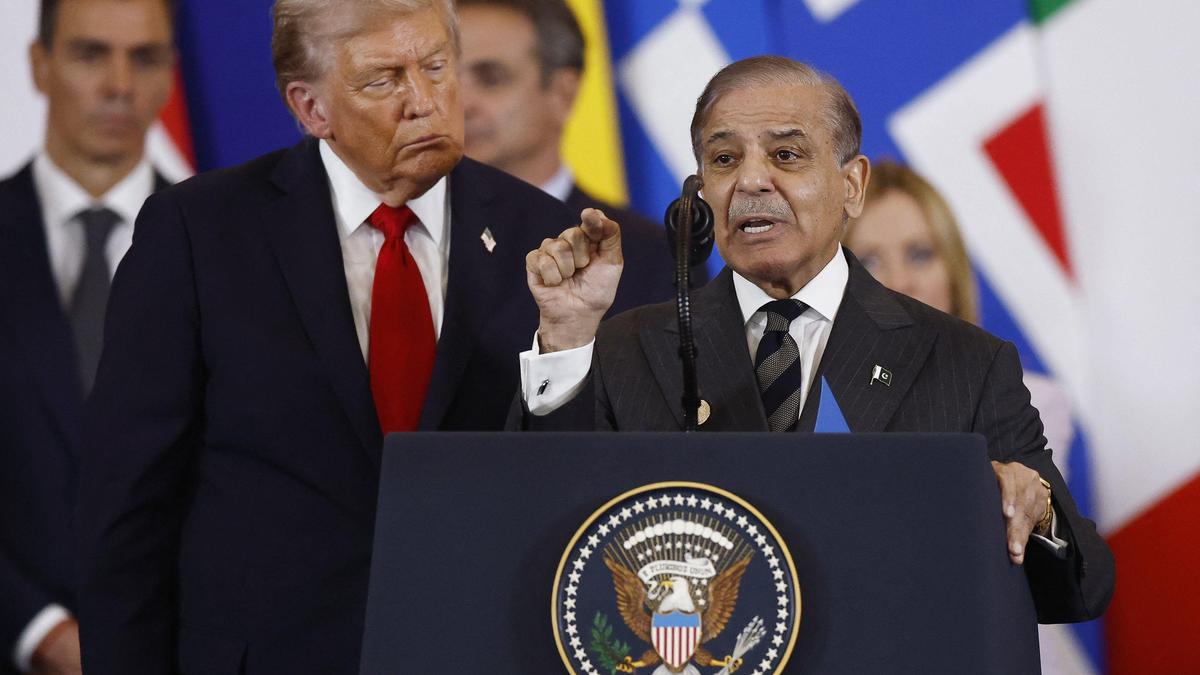
On April 2025, Pakistan’s army chief, Field Marshal Asim Munir, delivered a provocative speech invoking the two-nation theory just days before the Pahalgam terrorist attack in India. His remarks drew immediate condemnation in New Delhi. Yet, in the months that followed, Mr. Munir emerged as a surprisingly frequent visitor to Washington. He first visited the U.S. in June 2025 for a White House lunch with President Donald Trump, then again in August for high-level military meetings, and went back again in September with Pakistan Prime Minister Shehbaz Sharif for a White House meeting. Three visits in three months underscored Washington’s willingness to engage directly with Pakistan’s army chief, unsettling many in India.
The shift was striking given Mr. Trump’s earlier posture. Back in 2018, Mr. Trump had tweeted that the U.S. had given Pakistan “more than $33 billion” in aid and received “only lies and deceit” in return. Today, however, his rhetoric is notably warmer. The U.S. President has even suggested tapping “oil fields in Pakistan,” an idea met with scepticism given the absence of evidence of reserves. Recently, there have been reports of a U.S.–Pakistan deal on rare earth minerals, which is often cited as one of the reasons behind Mr. Trump’s renewed interest in Pakistan. Still, such overtures highlight how quickly Washington’s approach to Pakistan can change.
The U.S.’s ‘most allied ally’
The Pakistan–U.S. relationship has witnessed several ups and downs over the past seven decades. During the Cold War, this relationship unfolded in two distinct phases. The first began in 1954, when the two countries signed a Mutual Defence Assistance Agreement. Pakistan soon joined the Southeast Asia Treaty Organization (SEATO), and in 1956 it allowed the Central Intelligence Agency (CIA) to operate a U-2 spy base from Peshawar to monitor Soviet activity. In 1959, a Bilateral Agreement of Cooperation gave Washington access to military facilities in Pakistan. During the Ayub–Eisenhower era Pakistan was described as “America’s most allied ally in Asia.”
But the partnership had limits. In 1962, during the China-India war, the U.S. provided military aid to India while discouraging Pakistan not to exploit India’s vulnerability by opening a second front. In 1965, President Ayub Khan launched Operation Gibraltar in Kashmir, hoping to incite a local uprising against India, anticipating U.S. diplomatic and military backing. However, Washington withheld direct support and instead imposed an arms embargo on both Pakistan and India. The episode proved to be a turning point in Pakistan’s perception of the U.S., from that of a dependable strategic partner to an unreliable ally. Disillusioned by Washington’s neutrality and its reluctance to support Pakistan’s regional ambitions, Islamabad, whose military was heavily reliant on U.S. equipment, began cultivating closer defense ties with China. A similar disappointment followed in 1971, when, despite then U.S. President Nixon’s sympathy for Pakistan, U.S. help during the Bangladesh war was too little, too late. Though the USS Enterprise sailed to the Bay of Bengal, the war had already been decided.
The second phase emerged after the Soviet invasion of Afghanistan in 1979. With U.S. setbacks in Iran and Vietnam, Washington saw an opportunity to bleed Moscow by supporting the Afghan resistance. Pakistan, under General Zia-ul-Haq, became their indispensable partner. Between the 1980s and early 1990s, Islamabad received close to $5 billion in U.S. military and financial aid, along with covert funding for the Mujahideen. Zia used this leverage to wage a proxy war against India and accelerate Pakistan’s nuclear programme, moves largely tolerated by Washington so long as Soviet troops remained in Afghanistan. When the Soviets withdrew, U.S. interest waned, aid was cut, and sanctions followed, and Washington began cultivating closer ties with India.
Post 9/11
The 9/11 attacks triggered another sharp turn. As General Pervez Musharraf later acknowledged in his memoir, In the Line of Fire, Pakistan reluctantly joined the U.S.-led “War on Terror”, under intense diplomatic and military pressure from Washington. Nevertheless, the geopolitical relevance of Pakistan to start a war in Afghanistan was well realised by the U.S., and between 2002 and 2011, Congress approved some $18 billion in aid, including military hardware like F-16s. Moreover, the U.S. sanctions imposed after the 1998 nuclear tests were subsequently lifted for both India and Pakistan. Despite these developments, Washington’s mistrust of Pakistan endured. The U.S. officials doubted Pakistan’s sincerity in fighting terror, especially as the Afghan Taliban found sanctuary in its territory. The discovery of Osama bin Laden in Abbottabad in 2011 was the final blow to trust, cementing the view of Pakistan as a duplicitous partner.
Sanctions and contradictions
The U.S. has imposed sanctions on Pakistan for nearly one-third of the duration of their bilateral relationship. Each phase of engagement and dependence has ended in disillusionment and punitive measures, exposing the fragility of a partnership built on short-term strategic convenience rather than enduring trust. During the 1965 India-Pakistan War, despite Pakistan’s membership in SEATO, Washington withheld support and instead imposed an arms embargo. In 1977, the Symington Amendment was invoked against Pakistan for clandestinely pursuing its nuclear programme, resulting in both economic and military restrictions. Later, following the Soviet withdrawal from Afghanistan, the Pressler Amendment in 1990 halted the delivery of F-16 aircraft. More recently, in 2018, during Donald Trump’s first term, the U.S. withheld over $300 million in military aid, citing Pakistan’s alleged “double game” in counterterrorism. Each episode of sanctions reflects Washington’s frustration with Islamabad’s unpredictability, undependability, and strategic ambiguity, traits Pakistan has, ironically, internalised from the U.S. itself.
In response to these fluctuations, Pakistan has increasingly aligned with China, viewing this partnership as a counter to U.S. sanctions and diplomatic isolation. Since the 1960s, China has significantly supported Pakistan’s nuclear ambitions and military cooperation.
Pakistan’s army largely frames its U.S. partnership as a strategic necessity against India, yet anti-Western sentiment runs deep in society. In 1979, the U.S. embassy in Islamabad was burned by a mob inflamed by false rumours of U.S. involvement in the Mecca siege. Over the decades, numerous Pakistan-based terrorist organisations have targeted American interests, citing U.S.–Israel ties as justification. For example, Omar Saeed Sheikh, involved in financing the 9/11 plot and the brutal murder of the U.S. journalist Daniel Pearl, remains imprisoned in Pakistan. The persistence of such groups highlights Pakistan’s double game — securing U.S. aid while tolerating militant networks that oppose the West.
These paradoxes were even acknowledged recently by Pakistan’s Prime Minister in his UN General Assembly address in September 2025, where he admitted that militant groups operating from Pakistani soil posed a danger to global cities like New York and London. This candid statement reflects the dilemma at the heart of the U.S.–Pakistan relationship. While Islamabad presents itself as a partner against extremism, its territory continues to host actors fundamentally opposed to Western interests.
The way ahead
The relationship remains fraught yet there are elements that keep the two together. The U.S. continues to see value in engaging with Pakistan, whether for counterterrorism efforts, Afghan stability, or its interests in West Asia. Pakistan, meanwhile, views Washington as both a source of financial support and an occasional hedge against over-dependence on China. But contradictions abound. American policymakers remain wary of Pakistan’s internal dynamics, as a large and dominant section remained vehemently opposed to the U.S.
As Hussain Haqqani aptly put it, U.S.–Pakistan ties may be best understood as a “magnificent delusion”, a partnership built on overlapping interests but undermined by mistrust and divergent goals.
The history of these relations shows both sides drawn together by necessity, yet perpetually disappointed by the other. Whether the future brings closer cooperation or renewed estrangement, one lesson is clear — the U.S.–Pakistan relations will remain complex, fragile, and unpredictable.
Dhananjay Tripathi teaches International Relations and Tabshir Shams is pursuing his MA at South Asian University, New Delhi.