

Skip to content
  • Facebook
  • X
  • Linkedin
  • WhatsApp
  • Associate Journalism
  • About Us
  • Privacy Policy
  • 033-46046046
  • editor@artifex.news
Artifex.News

Artifex.News

Stay Connected. Stay Informed.

  • Breaking News
  • World
  • Nation
  • Sports
  • Business
  • Science
  • Entertainment
  • Lifestyle
  • Toggle search form
  • Access Denied Sports
  • Access Denied Sports
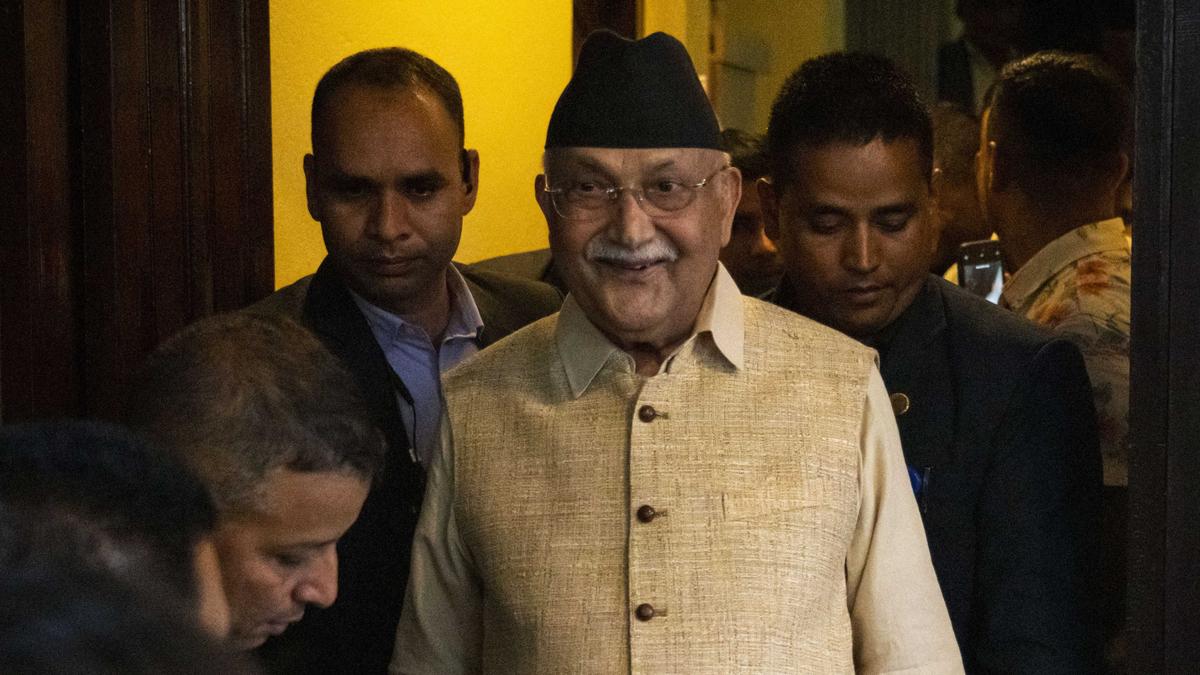
  • K.P. Sharma Oli sworn in as Nepal’s Prime Minister; PM Modi congratulates counterpart
    K.P. Sharma Oli sworn in as Nepal’s Prime Minister; PM Modi congratulates counterpart World
  • From soaps to lip balms: How demand for donkey milk has kicked off a farming revolution in Tiruchi district
    From soaps to lip balms: How demand for donkey milk has kicked off a farming revolution in Tiruchi district Business
  • “All Our Citizens Are Safe”, Says India Amid DR Congo Conflict
    “All Our Citizens Are Safe”, Says India Amid DR Congo Conflict Nation
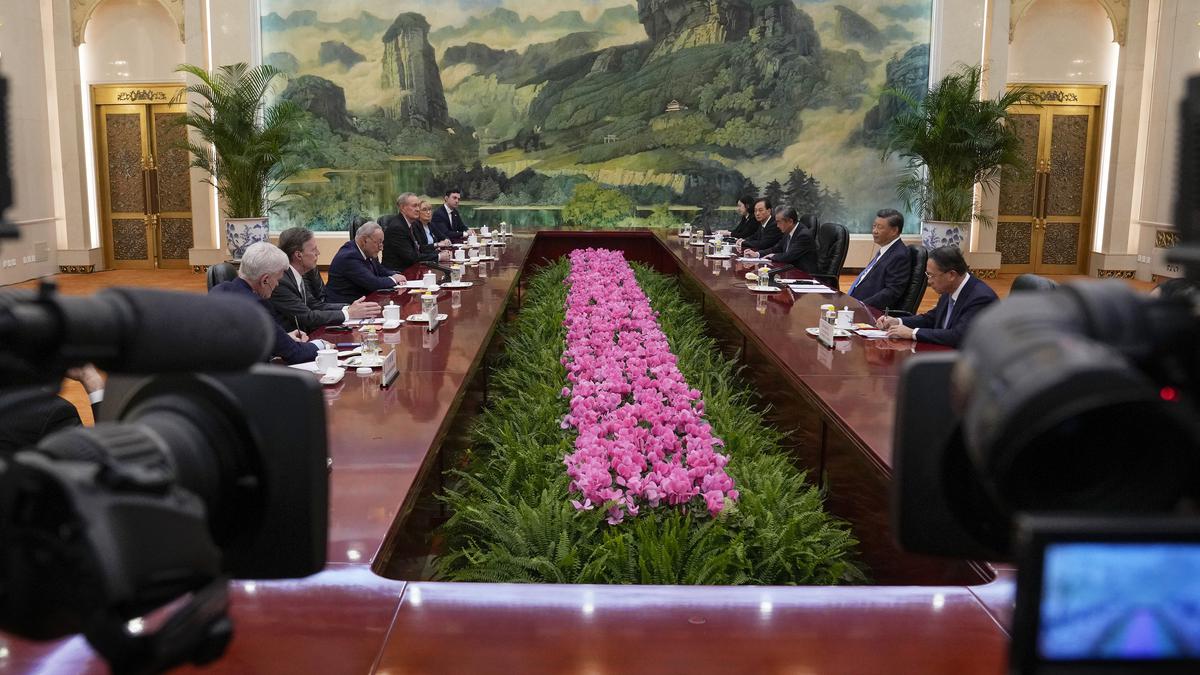
  • Xi Jinping tells top senator U.S.-China relations impact ‘destiny of mankind’
    Xi Jinping tells top senator U.S.-China relations impact ‘destiny of mankind’ World
  • As Virat Kohli Gets Clean Bowled On Ranji Trophy Return, Fans Flee From Delhi Stadium. Watch
    As Virat Kohli Gets Clean Bowled On Ranji Trophy Return, Fans Flee From Delhi Stadium. Watch Sports
  • Nawaz Sharif Accuses Imran Khan Of “Backstabbing” Him After Elections
    Nawaz Sharif Accuses Imran Khan Of “Backstabbing” Him After Elections World
Stanford/Elsevier rank list: why all that glitters is not gold

Stanford/Elsevier rank list: why all that glitters is not gold

Posted on October 27, 2025 By admin


Stanford University professor John Ioannidis recently published the latest version of the list of the world’s top 2% scientists. Its release every year causes much excitement among scientists and their institutions. And every year for a few weeks after, hardly a day passes without multiple announcements of the presence of Indian scientists on this list by many institutions, from well-known to obscure, on various media platforms. They tout the honour as recognition of their scientific excellence; indeed, many of these institutes even claim the achievement wouldn’t have been possible without their role in creating and sustaining an enabling research environment.

The 2025 list was published in September and ranked around 2.3 lakh scientists worldwide — themselves filtered out of a pool of 2.2 crore. This supposedly exalted fraction, which included several Nobel laureates, also counted 6,239 scientists from India. This number has been steadily increasing over the last few years.

Link to quality

The top 10 scientists from India in the 2025 list have been ranked 288 to 952 and are with Muthayammal Engineering College (Tamil Nadu), University of Petroleum and Energy Studies (Uttarakhand), Thapar Institute of Engineering & Technology (Punjab), Indian Institute of Toxicology Research (Uttar Pradesh), Sikkim University, National Institute of Mental Health and Neurosciences (Karnataka), Saveetha School of Engineering (Tamil Nadu), Government Degree College Pulwama (Jammu & Kashmir), and S.V. National Institute of Technology (Gujarat).

This picture was more or less the same in 2024, when the top 10 Indian scientists were ranked 163 to 1568 and lesser-known institutions dominated.

Curiously, six of the seven science Nobel laureates on the list ranked 1,373-28,782 — far lower than the lowest ranked (top 10) Indian scientist. Indeed, to say that it is pretty astounding that even the lowest Indian scientist (top 10) performed way better on this list than all but one of the Nobel laureates is an understatement.

Whether this gap is actually linked to research quality in a meaningful way is, however, a separate question — one also elicited by the fact that the top 10 scientists are not affiliated with Indian research centres generally associated with excellent R&D. To understand this disconnect, we need to understand what scientific research is and how it is routinely evaluated in the prevailing academic ecosystem.

Standing on shoulders

Scientific research begins when scientists have a question about some observation that has caught their interest. They formulate a hypothesis and test it with experiments. Depending on the needs of each experiment, they may devise tools, interact with other scientists to get different perspectives, gather evidence, and analyse them to draw conclusions. Then they write up their findings in reports, commonly known as papers, which are reviewed by their peers and published in scientific journals. These papers bear the names of the scientists, so the scientists are also called authors.

The vast majority of scientific research today builds on the work of others. So the authors of a paper cite an older paper — like an acknowledgment that also adds one more link to the chain of knowledge — where its findings are relevant in their current work. When one paper has been cited by another paper once, it’s said to have accrued one citation.

Scientists’ work is often evaluated by the number of citations their papers have garnered. But there is a catch: there has been a naïve assumption for a while now that scientists always only cite good-quality papers, which in turn has fed the notion that a paper’s citation number is indicative of its impact. But there is no need for this to always be true.

Evaluating science

Prof. Ioannidis prepares his list based on a global database of published research called Scopus. It is owned by Elsevier, a publishing company that is often accused of taking advantage of the ‘publish or perish’ culture in academia to earn profits rivalling those of Google and Microsoft.

For his analysis, Prof. Ioannidis developed a composite score, called c-score, for each scientist in Scopus and ranked them in the descending order of their c-scores.

The c-score gives equal weightage to multiple parameters including the total number of citations, the h-index (a metric that links the citation number to the numbers of papers published by a scientist), the number of papers, the order of authors in papers, co-authorship, and so on.

The ranking also includes scientists across several different fields and sub-fields. Comparing scientists in this way, across a breadth of enterprises, is generally considered problematic, like comparing apples to oranges. Also, contrary to popular perception, Stanford University neither participates in the ranking process nor endorses the list. The effort is the individual initiative of Prof. Ioannidis.

Nobel Prize v. c-score

To understand why Indian scientists from little known research centres rank above Nobel laureates on the list, the c-score is a good starting point. While Prof. Ioannidis and some others have said it provides a more comprehensive snapshot of a scientist’s impact, it has serious limitations. It gives extra weight to papers where the scientist is first, single or last author assuming that these positions imply major intellectual contribution, but this practice is not uniform across fields; it doesn’t account for differences in citation practices between fields; assumes the Scopus database covers all disciplines equally (it doesn’t); and ignores quantitative impact.

The final effect is for a scientist’s c-score to be divorced from the actual scientific content of their work, especially in terms of its quality, validity, and contribution to science and society. Indeed, despite their other flaws, the process of identifying Nobel prize-winning scientists takes into account all that the c-score misses.

As with all metrics, the c-score can also be gamed, especially by individuals who pre-agree to cite each other’s papers irrespective of the quality of their own papers or whether the citations are appropriate and warranted. This much is evident from the impossibly high levels of productivity — 1-2 papers per week — of many highly ranked Indian scientists. The rankings also don’t account for papers that are later retracted for misconduct, such as by including a penalty in the c-score formula. Indeed, the Scopus database itself includes many dubious journals and publishers with little respect for research ethics.

Without understanding the c-score in this way, one is liable to interpret Indian scientists outranking Nobel laureates in Prof. Ioannidis’ list as the former’s overlooked greatness — but one shouldn’t be forgiven for doing so. Like many other metrics that flatten the multi-dimensional enterprise that is scientific research into one-dimensional numbers, the c-score is fundamentally a vanity metric. Instead, researchers and their employers should focus on doing good research and the research establishment should focus on facilitating that — rather than chase numbers.

Swaminathan S. is retired professor, BITS Pilani – Hyderabad, and former scientist at ICGEB, New Delhi.

Published – October 27, 2025 03:05 pm IST



Source link

Science

Post navigation

Previous Post: Access Denied
Next Post: China’s heatwaves threaten to dry up supply of yummy hairy crabs

Related Posts

  • A question for the AI age: do machines and humans learn the same way?
    A question for the AI age: do machines and humans learn the same way? Science
  • Will the baby be a boy or a girl? SRY gene claims to have the answer
    Will the baby be a boy or a girl? SRY gene claims to have the answer Science
  • Frigid alien planet may offer a glimpse at Earth’s distant future
    Frigid alien planet may offer a glimpse at Earth’s distant future Science
  • CSIR-IICT Chief Scientist appointed as Director of CSIR-National Environmental Engineering Research Institute
    CSIR-IICT Chief Scientist appointed as Director of CSIR-National Environmental Engineering Research Institute Science
  • Why are space agencies racing to the moon’s south pole?
    Why are space agencies racing to the moon’s south pole? Science
  • Open Day at Institute of Astrophysics in Bengaluru on February 25
    Open Day at Institute of Astrophysics in Bengaluru on February 25 Science

More Related Articles

Sci-Five | The Hindu Science Quiz: On Ada Lovelace Sci-Five | The Hindu Science Quiz: On Ada Lovelace Science
mRNA research exemplifies the unpredictable value of basic research mRNA research exemplifies the unpredictable value of basic research Science
4-billion-year-old crystal offers oldest evidence of water on Mars 4-billion-year-old crystal offers oldest evidence of water on Mars Science
What is perpetual motion? – The Hindu What is perpetual motion? – The Hindu Science
World’s first wooden satellite built by Japan researchers World’s first wooden satellite built by Japan researchers Science
Fossil dung reveals clues to the rise of dinosaurs Fossil dung reveals clues to the rise of dinosaurs Science
SiteLock

Archives

  • October 2025
  • September 2025
  • August 2025
  • July 2025
  • June 2025
  • May 2025
  • April 2025
  • March 2025
  • February 2025
  • January 2025
  • December 2024
  • November 2024
  • October 2024
  • September 2024
  • August 2024
  • July 2024
  • June 2024
  • May 2024
  • April 2024
  • March 2024
  • February 2024
  • January 2024
  • December 2023
  • November 2023
  • October 2023
  • September 2023
  • August 2023
  • July 2023
  • June 2023
  • May 2023
  • April 2023
  • March 2023
  • February 2023
  • January 2023
  • December 2022
  • November 2022
  • October 2022
  • September 2022
  • August 2022
  • July 2022
  • June 2022
  • May 2022

Categories

  • Business
  • Nation
  • Science
  • Sports
  • World

Recent Posts

  • Access Denied
  • Access Denied
  • Rupee slumps 43 paise to close at 88.26 against U.S. dollar
  • Access Denied
  • Access Denied

Recent Comments

  1. dfb{{98991*97996}}xca on UP Teacher Who Asked Students To Slap Muslim Classmate
  2. "dfbzzzzzzzzbbbccccdddeeexca".replace("z","o") on UP Teacher Who Asked Students To Slap Muslim Classmate
  3. 1}}"}}'}}1%>"%>'%> on UP Teacher Who Asked Students To Slap Muslim Classmate
  4. bfg6520<s1﹥s2ʺs3ʹhjl6520 on UP Teacher Who Asked Students To Slap Muslim Classmate
  5. pHqghUme9356321 on UP Teacher Who Asked Students To Slap Muslim Classmate
  • Bengaluru start-up unveils satellite to operate at an ultra-low Earth orbit
    Bengaluru start-up unveils satellite to operate at an ultra-low Earth orbit Science
  • Manipur Tribal Leader Lien Gangte Canada Speech Raises NAMTA And Khalistani Links Allegations
    Manipur Tribal Leader Lien Gangte Canada Speech Raises NAMTA And Khalistani Links Allegations Nation
  • Remains of shell that exploded in Dal Lake during Operation Sindoor found during cleaning drive
    Remains of shell that exploded in Dal Lake during Operation Sindoor found during cleaning drive Nation
  • PCB Chairman Dines With 700+ Workers After Completion Of Champions Trophy Stadium, Video Viral
    PCB Chairman Dines With 700+ Workers After Completion Of Champions Trophy Stadium, Video Viral Sports
  • Watch: Is climate change driving people out of the Sunderbans?
    Watch: Is climate change driving people out of the Sunderbans? Science
  • Who Is Pragya Misra, Sam Altman-Run OpenAI’s 1st Employee In India
    Who Is Pragya Misra, Sam Altman-Run OpenAI’s 1st Employee In India Nation
  • “Thing We’ll See Mitchell Marsh Bowl” In Adelaide: Nathan Lyon Amid Star’s Injury Concerns
    “Thing We’ll See Mitchell Marsh Bowl” In Adelaide: Nathan Lyon Amid Star’s Injury Concerns Sports
  • Woman Dies By Suicide After Hearing About Husband’s Death In UP: Cops
    Woman Dies By Suicide After Hearing About Husband’s Death In UP: Cops Nation

Editor-in-Chief:
Mohammad Ariff,
MSW, MAJMC, BSW, DTL, CTS, CNM, CCR, CAL, RSL, ASOC.
editor@artifex.news

Associate Editors:
1. Zenellis R. Tuba,
zenelis@artifex.news
2. Haris Daniyel
daniyel@artifex.news

Photograher:
Rohan Das
rohan@artifex.news

Artifex.News offers Online Paid Internships to college students from India and Abroad. Interns will get a PRESS CARD and other online offers.
Send your CV (Subjectline: Paid Internship) to internship@artifex.news

Links:
Associate Journalism
About Us
Privacy Policy

News Links:
Breaking News
World
Nation
Sports
Business
Entertainment
Lifestyle

Registered Office:
72/A, Elliot Road, Kolkata - 700016
Tel: 033-22277777, 033-22172217
Email: office@artifex.news

Editorial Office / News Desk:
No. 13, Mezzanine Floor, Esplanade Metro Rail Station,
12 J. L. Nehru Road, Kolkata - 700069.
(Entry from Gate No. 5)
Tel: 033-46011099, 033-46046046
Email: editor@artifex.news

Copyright © 2023 Artifex.News Newsportal designed by Artifex Infotech.