






A central challenge for policy makers in India, at the present juncture, is to work out a balance between the long-term benefits of global trade and the short-term harms that current uncertainties pose to large sections of the population who are at risk of low wages and unemployment. Tackling this requires a change of the existing system to account for the needs of the larger masses rather than only enriching private capital’s interests.
The evolution of capital
Indian capital has an important role to play in this change by becoming more inclusive of a broader set of interests beyond individual profits and rapid accumulation. The history of capitalism shows that this is not impossible as capitalism has evolved before, and if it is to continue into the future, it can evolve again. As the economy is at risk of negative shock to external demand for its products, due to unprecedented tariffs imposed and distortions caused in the global trading system, Indian capital needs to reinvent itself and work closely with the government to mitigate the risks posed.
Historically private businesses, managed by Indian capital, have clamoured for a more active role in the economy as well as larger concessions and subsidies along with a liberal business environment. Governments have often been called on to command and control such businesses. These private enterprises used India’s protected economic environment (pre-liberalisation) to grow and accumulate by riding on inward-looking policies and reaping supernormal profits (excess of normal profit) from protected domestic markets. The accumulated surpluses gave them the confidence to cross borders, buy out businesses elsewhere and forge global links when the economy opened up in the early nineties. This phenomenon, though not widespread among Indian businesses, has created depth in Indian capital, spawning some giants who control various important sectors of Indian industry.
However, as the global economy now moves to an extended period of uncertainty, these business houses now have to work closely with the government and align with public interest to maintain the economy’s growth momentum.
Three key processes were instrumental in the emergence and subsequent development of mass markets in the contemporary global economy. First, the creation of a wage-labour class; second, the productivity-enhancing effects of industrial mass production; and third, changes in the composition of demand as personal incomes grew.
The growth of demand is an important but unrecognised ingredient in these processes. Firms require an expansion of demand if they are to realise profits from the production of additional goods and services. Most of the current macroeconomic policy frameworks simply assume that demand responds passively to supply, therefore the expansion of the latter is all that is of interest to growth.
In a globalised world, demand has two components, domestic and external. Early approaches to industrialisation focussed on the domestic component and later ones emphasised on the external side. The current turbulence in the global economy has led to shocks in external demand and hence exports are impacting aggregate demand and inducing vulnerabilities and fluctuations in external demand. In this scenario turning to domestic markets, raising the levels of domestic demand and catering to it, remains a viable option.
The importance of domestic capital
In India, domestic capital has an important role to play in stimulating domestic demand via three routes.
The first area for more active involvement of Indian capital is to enhance internal private investments. Despite India Inc. sitting on record-high profits, the willingness to invest hasn’t kept pace with such profits. During the post-COVID period, public investments did all the heavy lifting. Fiscal policy has been fine tuned to offer incentives, while monetary policy has been responding with easier access to credit. A bulk of the regulatory requirements have been simplified along with the tax regime. Infrastructure development has been accorded high priority along with a slew of benefits, such as production-linked incentives. The net effect of all these is reflected in the indicators of the business environment.
However, despite these efforts by the government, private investments have remained flat over the past few years. The Finance Ministry in its June monthly review noted that “Slow credit growth and private investment appetite may restrict acceleration in economic momentum,” underscoring the urgent need for the private sector to step up. While private capex remains subdued, public capital expenditure surged from ₹3.4 lakh crore in FY20 to ₹10.2 lakh crore in FY25, which is a compound annual growth rate (CAGR) of 25%, driven largely by railways, roads, highways, and communications. Interestingly, during a period of sluggish domestic private investments, India’s outward foreign direct investment (FDI) flows have grown at a sharp pace over the past five years, with a CAGR of 12.6%, much higher than the global average of 3.9%. This indicates that Indian capital is keener to explore foreign locations than its domestic economy. An opportune time has come for a reversal of this.
The second thrust area is to ensure that there is moderate wage growth in the economy. The Economic Survey 2024-25 flagged the trend of increasing corporate profits and lagging wage growth. In 2023-24, profits touched a 15-year high, while growth in wages stagnated. This affects distribution in the economy and dampens domestic demand. Rating agencies project that real wage growth might decline to 6.5% in FY26, down from 7% in FY25. Real wages are expected to grow faster when inflation is low. However, we find evidence contrary to it indicating worsening of distribution. The growing trend towards contratualisation within formal sectors has been eroding the collective bargaining power of workers, leading to slower wage growth within the manufacturing sector.
The third area for priority action is to invest more in Research and Development (R&D). The tendency has been to invest less and only in areas of quick returns. This paradigm has to change as fundamental research and development is crucial for long term productivity gains. The gross expenditure on R&D in India is 0.64% of the GDP, which is insufficient and remains low compared to many advanced economies. Further, R&D funding in India is primarily through the government. In the U.S., China, Japan, and South Korea, private enterprises routinely contribute more than 70% to the total national R&D expenditure. In China, R&D spending has reached 2.1% of the GDP, with the private sector complementing the funding of the government, while in India only around 36% of R&D is funded by the private sector. In India not only is the private sector investment in innovation low, but it is also concentrated in sectors such as drugs and pharmaceuticals, information technology, transport, defence, and biotechnology.
The road ahead
An uncertain global economic environment calls for unified responses from the government and the private sector.
While the government has been facilitating the creation of a favourable environment for businesses, that effort alone is not sufficient for tackling present challenges. Long term national interest needs to be protected by Indian capital by keeping it as an objective above profit maximisation. It is time for Indian capital to step in more actively.
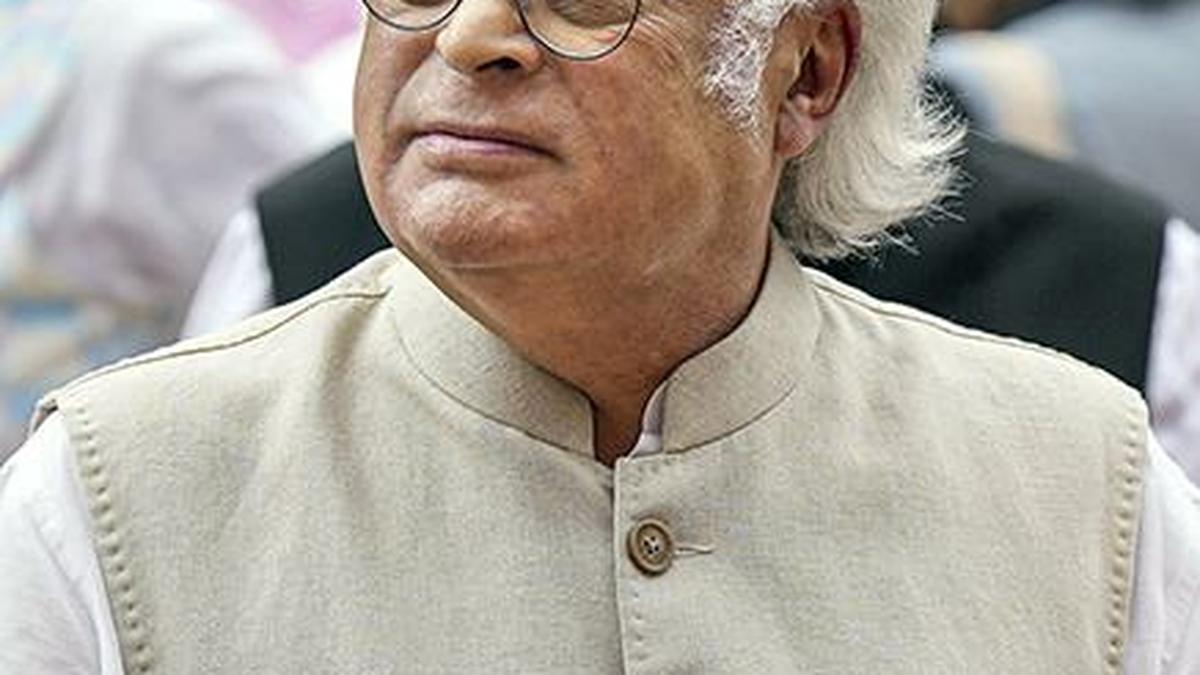
M Suresh Babu is Director, Madras Institute of Development Studies. The views expressed are personal.
Published – October 08, 2025 08:30 am IST