





India’s digital transformation has revolutionised communication, education, commerce, and governance. From smartphones to smart homes, convenience has become the cornerstone of contemporary urban living. Yet, beneath this technological leap lies a growing environmental and public health catastrophe: electronic waste (e-waste).
E-waste, the fastest-growing solid waste stream globally, is now one of India’s most pressing yet least acknowledged urban crises. Our embrace of electronics has outpaced our ability to manage their afterlife, resulting in widespread informal recycling practices that are endangering both ecosystems and human health—especially in the country’s most marginalised communities.
Escalating e-waste burden
India generated 2.2 million metric tonnes (MT) of e-waste in 2025, making it the third-largest e-waste generator globally, after China and the United States. This figure represents a 150% surge from the 0.71 million MT recorded in 2017–18. At current growth rates, India’s e-waste volume is expected to nearly double by 2030.
Urban India is the epicenter of this explosion. More than 60% of e-waste originates from just 65 cities, with key hotspots including Seelampur and Mustafabad (Delhi), Moradabad (Uttar Pradesh), and Bhiwandi (Maharashtra). Despite the existence of 322 registered formal recycling units with a combined capacity to treat over 2.2 million MT annually, more than half of the country’s e-waste is still processed informally or not at all.
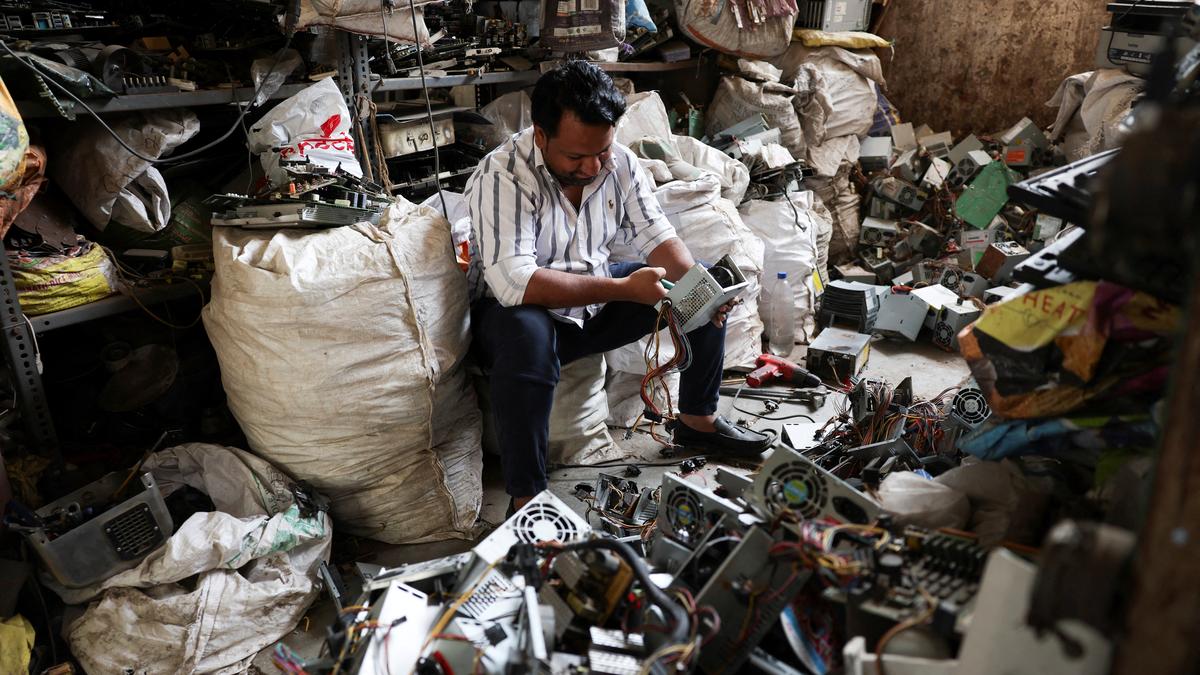
The informal ecosystem of kabadiwalas, scrap dealers, and slum-based workshops engage in manual dismantling, open-air burning, acid leaching, and unscientific dumping, often without gloves, masks, or protective clothing. These crude methods release over 1,000 toxic substances, including: heavy metals such as lead, cadmium, mercury, and chromium; persistent organic pollutants (POPs) including dioxins, furans, and brominated flame retardants and particulate matter (PM₂.₅ and PM₁₀) that is released from burning wires and circuit boards
Scientific measurements show that PM₂.₅ levels in recycling zones such as Seelampur often exceed 300 μg/m³, over 12 times higher than the World Health Organization’s 24-hour safety limit of 25 μg/m³.
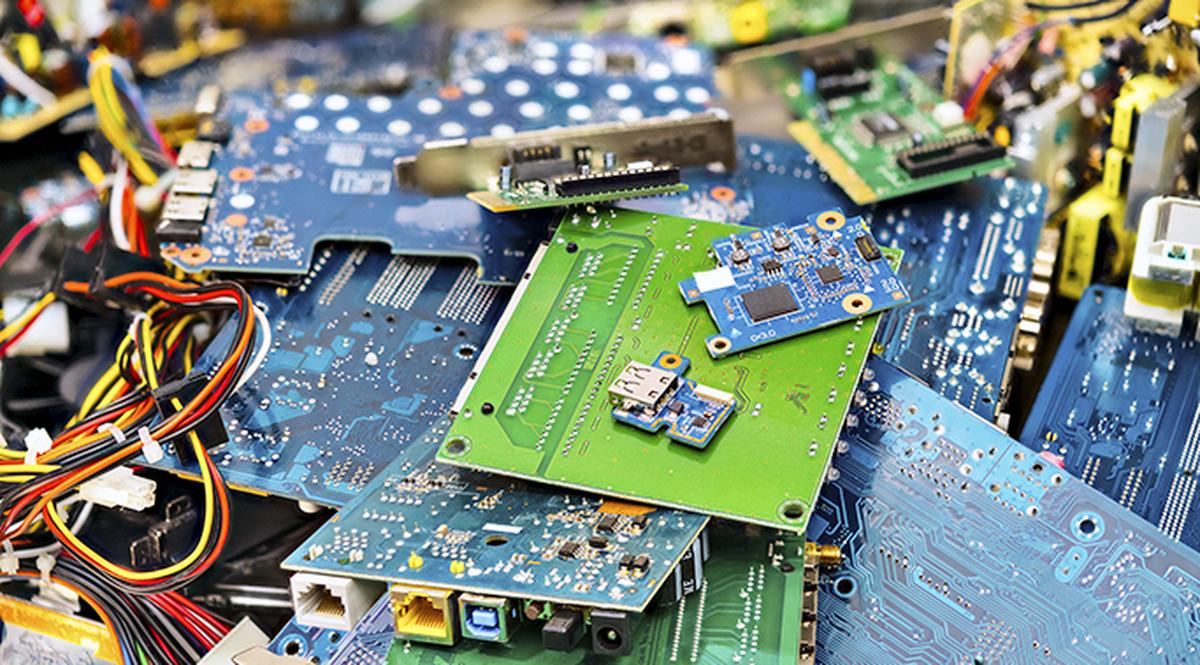
The health effects of e-waste do not exist in isolation. Rather, they intersect with pre-existing vulnerabilities—poverty, malnutrition, lack of healthcare, and unsafe housing. Photograph used for representational purposes only
| Photo Credit:
Getty Images/iStockphoto
E-waste and human health
E-waste affects human health in a number of ways. Some of these are:
Respiratory illnesses: Informal e-waste recycling releases fine particulate matter and toxic gases that can deeply infiltrate the lungs, leading to severe respiratory issues. In Benin, West Africa, a study revealed that 33.1% of e-waste workers experienced respiratory ailments such as chest tightness, wheezing, and breathlessness, significantly higher than the 21.6% observed in a non-exposed control group. Similarly, a 2025 study published in MDPI Applied Sciences reported that 76–80% of workers engaged in informal e-waste processing in India exhibited symptoms of chronic bronchitis, asthma, and persistent coughing.
Neurological damage and developmental delays:Exposure to neurotoxins such as lead, mercury, and cadmium during informal e-waste recycling poses serious risks to brain development, particularly in children. Lead, a well-known neurotoxin, affects children through contaminated air, dust, soil, and water. Even blood lead levels below 5 µg/dL are linked to cognitive impairment, reduced IQ, attention deficits, and behavioral disorders. A 2023 systematic review published in Frontiers in Public Health, which analysed 20 studies from e-waste recycling areas—mostly in China—found that blood lead levels at or above 5 µg/dL were common. Documented effects included neurological issues such as lower serum cortisol, inhibited hemoglobin synthesis, and delayed neurobehavioral development. According to the WHO, millions of children are exposed to hazardous levels of lead due to informal e-waste recycling. This exposure can impair brain development, damage lung function, disrupt endocrine systems, and potentially lead to DNA damage.
Skin and ocular disorders: Direct contact with hazardous substances during informal e-waste recycling leads to a range of skin and systemic health issues, especially in the absence of protective equipment. Workers handling electronic devices, cathode ray tubes (CRTs), and acid baths without safety gear commonly suffer from rashes, chemical burns, and dermatitis. A 2024 review found that skin-related problems affected up to 100% of informal recyclers in several studied clusters. Those dismantling screens, CRTs, and circuit boards without protection frequently experienced skin burns, eye irritation, and chemical rashes due to direct exposure to acids, barium, phosphor compounds, and heavy metals. In Guiyu, China—one of the most extensively studied informal recycling hubs—residents reported chronic health problems such as headaches, dizziness, persistent gastritis, and skin lesions. Alarmingly, there were also higher incidences of miscarriages and preterm births, correlating with significant soil contamination by lead, chromium, and other toxic substances.
Genetic and systemic impacts: Beyond surface-level injuries, research highlights DNA damage, abnormal epigenetic changes, and increased oxidative stress in those exposed to informal recycling environments. Children are especially vulnerable, presenting with more frequent immune alterations and increased markers of inflammation. Studies in recycling clusters have documented PM2.5 exposures well above safety thresholds, establishing a direct correlation with increases in neurological and respiratory disease rates.

Pollution meeting poverty
The health effects of e-waste do not exist in isolation. Rather, they intersect with pre-existing vulnerabilities—poverty, malnutrition, lack of healthcare, and unsafe housing. This creates a syndemic environment where multiple diseases interact and exacerbate each other, worsening health outcomes for the urban poor. According to WHO, 18 million children and nearly 13 million women work in or live near informal waste-handling zones globally. In India, children are often found helping parents dismantle electronics in home-based workshops, with devastating long-term health consequences.

Policy progress, gaps
India’s E-Waste (Management) Rules, 2022, introduced critical provisions such as:strengthened Extended Producer Responsibility (EPR) norms; mandatory registration for dismantlers and recyclers as well as incentives for formalisation and scientific handling. However, implementation remains weak. The informal sector still handles the majority of India’s e-waste. As of 2023–24, only 43% of e-waste was officially processed. Further, the capping of EPR credit prices has triggered legal battles, with manufacturers arguing it creates compliance hurdles. These roadblocks risk delaying unified enforcement and undermining progress.
The way forward
To break this toxic chain, India must adopt a multi-pronged strategy that includes: formalising the informal by integrating informal workers into the regulated sector through skill certification, PPE provision, safe infrastructure, and access to healthcare and social security; strengthening enforcement by empowering pollution control boards, introducing digital e-waste tracking, and mandating environmental audits to ensure compliance; expanding medical surveillance by setting up health camps and conduct long-term studies, especially focusing on children in e-waste hotspots; fostering innovation by supporting R&D for affordable, local recycling technologies and promoting decentralised treatment hubs to improve efficiency and, importantly, raising awareness through mass awareness campaigns and including e-waste education in schools to build public responsibility from an early age.

A toxic tipping point
India stands at a toxic crossroads. The digital empowerment that fuels its economy cannot come at the cost of public health and environmental degradation. As the e-waste mountain grows, so does the urgency of the need for systemic reform. The country must reject the silent normalisation of informal toxicity. It must act—guided by science, informed by justice, and driven by a vision where technology uplifts, rather than undermines, human dignity and health.
(Dr. Sudheer Kumar Shukla is an environmental scientist and sustainability expert. He currently serves as head-think tank at Mobius Foundation, New Delhi. sudheerkrshukla@gmail.com)