






On the afternoon of September 8, Riddhima Sanba, 23, and her friends scurried to a cafe, some 200 metres from the Parliament building in Kathmandu, when clashes erupted between young protesters and security forces in Nepal. Tear gas filled the cafe, and the police fired gunshots.
“We could hear shouting and screaming and clamour outside,” Sanba recalled, about the first day of Nepal’s youth-led protests against corruption, the lavish lifestyles of political elites, and misgovernance. The Himalayan country abolished the centuries-old monarchy and became a constitutional republic in 2008. Its current Constitution came into effect in 2015.
Sanba had been part of the protests since that morning, following weeks-long discussions online among Nepali youths, largely clustered under the umbrella of Gen Z, those born roughly between 1997 and 2012. “The call was for peaceful protests, but things spiralled out of control quickly,” she said.
The youth, in their school and college uniforms, gathered at Maitighar Mandala in the heart of Kathmandu. Maitighar is synonymous with protests. It is just metres away from the Supreme Court, the pinnacle of justice.
Slowly, the crowd swelled into thousands. The protesters gradually started to march towards the Parliament building, about a kilometre away, said Sanba.
“We were minding our friends and supplying water,” recalled the BBA final-year marketing student who works as a marketing head and content creator for a private company. “We had no plans to clash with the police. But as security forces charged, demonstrations flared up.”
By the evening of September 8, official figures were out — at least 19 young lives had been lost, allegedly due to excessive force used by security forces on the demonstrators.
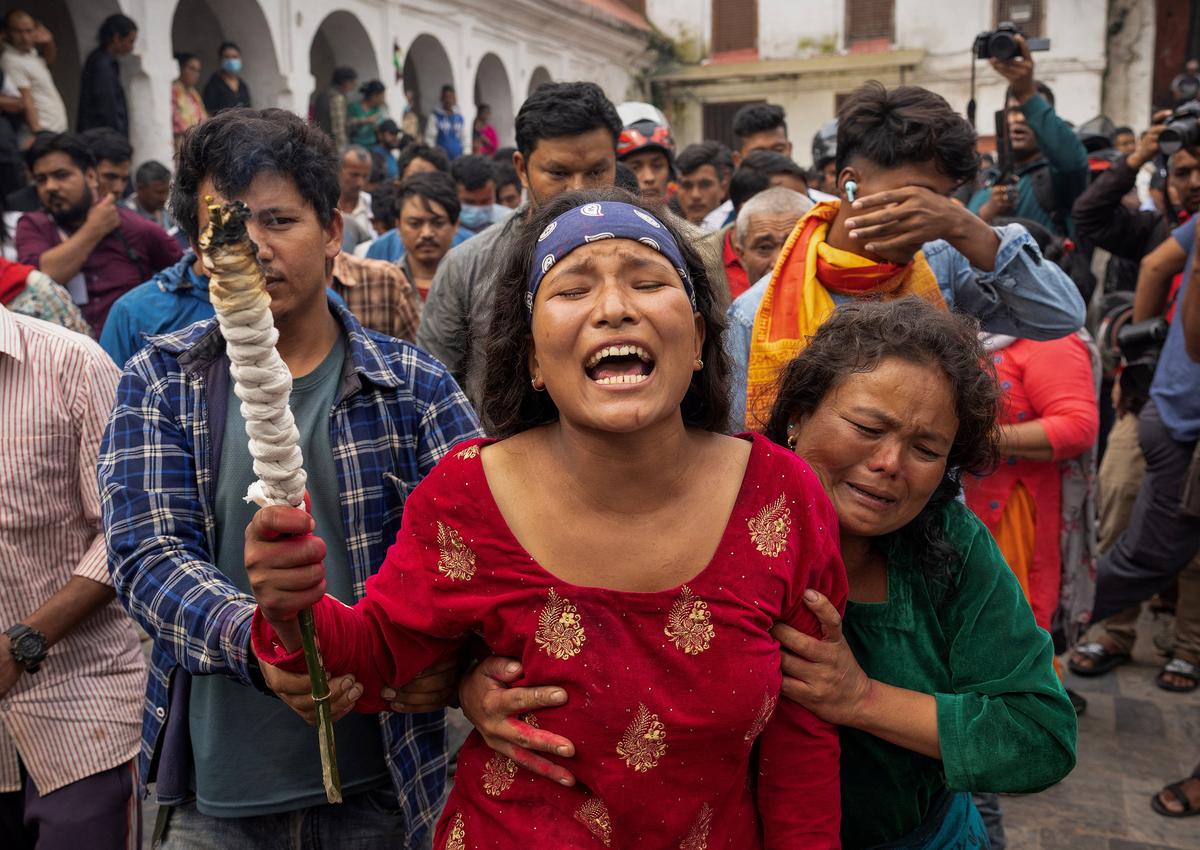
Sunita Balami, sister of Subhlal Balami, 28, who died in the protests, in Kathmandu.
| Photo Credit:
Reuters
The next day, defying the government’s curfew, demonstrators not only filled the streets, but also turned violent — attacking politicians and their homes, government infrastructure, and business properties.
“They were not only Gen Z; there were a lot of other people. The second day was chaotic. None of us could comprehend what exactly was going on,” Sanba said.
But the events of September 8 and 9 did not erupt out of the blue. Online, a storm had already been brewing in Nepal.
From a spark to a storm
On September 4, the government, led by K.P. Sharma Oli, a leader of the Communist Party of Nepal (Unified Marxist-Leninist), imposed a sweeping ban on 26 social media sites, including X, Facebook, and Instagram, citing their failure to meet the deadline to comply with registration requirements.
The youth, who had used social media to band together, took this not just as an affront, but also as a brutal attack on their civic space. “The digital space we were using just went dark suddenly,” said Sanba. “It was like being robbed of our agency, our right to speak and express ourselves.”
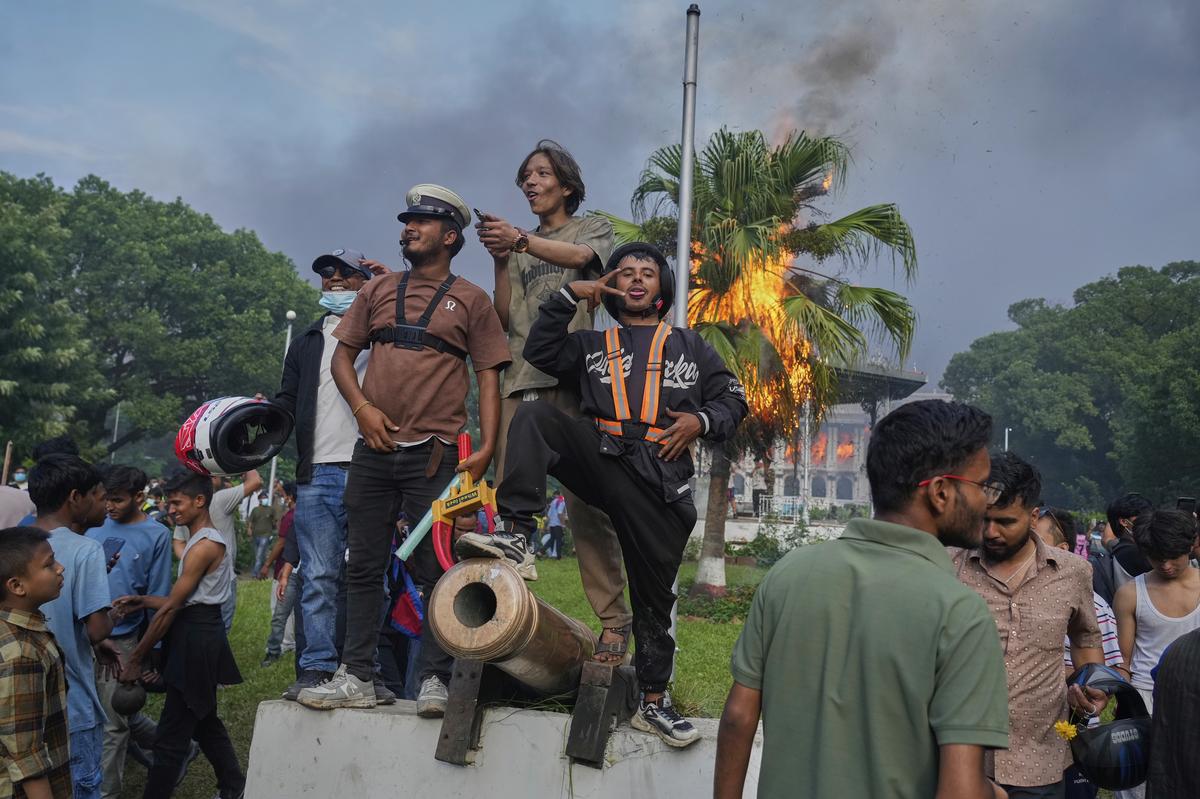
Protesters at the Singha Durbar, the seat of the Nepal government’s various ministries and offices, after it was set on fire.
| Photo Credit:
AP
There was already a lot of anger against corruption and nepotism. Videos and clips about “nepo kids” and “nepo babies” were already circulating in the digital sphere. They showed politicians’ children flaunting lavish lifestyles — travelling in luxury cars, going on foreign vacations, and throwing extravagant parties.
Anmol Ghimire, 19, who participated in the discussions online in the lead-up to the protests, said Gen Z were definitely not protesting only the social media ban. “But the government’s sudden prohibition on social media sites did light a fuse,” said the student of cybersecurity and digital forensics at the British College in Kathmandu. “All we wanted was to call for an end to corruption, and a leadership that could fix the economy, unemployment, and a system that ensured a good future for us young people.”
Transparency International, which aims “to end the injustice of corruption”, published a report earlier this year, ranking Nepal 107th among 180 countries, with a score of 34, on the Corruption Perceptions Index. According to the World Bank, one in five Nepalis aged 15-24 is unemployed. With a high unemployment rate at home, and GDP per capita just a little over $1,400, millions of Nepalis look for jobs abroad. The people believe that this demonstrates the failure of Nepal’s ruling class.
Deaths and devastation
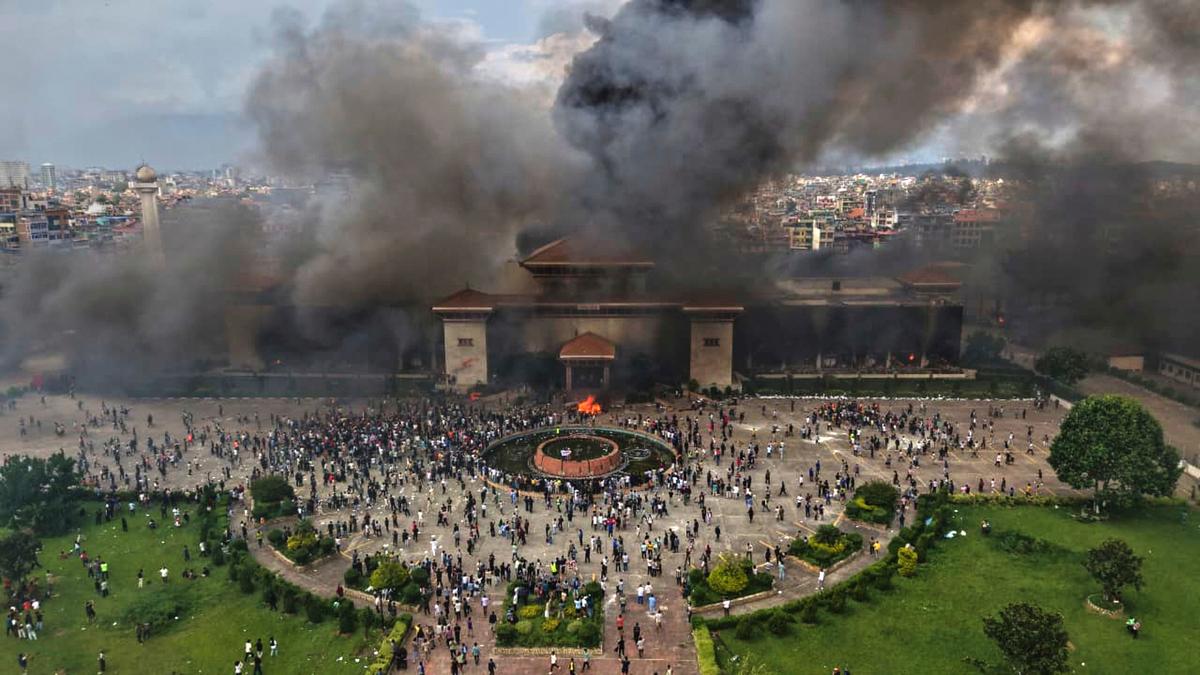
Multiple Gen Z protesters said they were taken aback by the degree of devastation on September 9, as the demonstrations descended into chaos. Several protesters burned down the Parliament and set the Supreme Court on fire. They set ablaze Singha Durbar, the main government complex, which was once a palace dating back over 100 years. They also attacked hotels and business enterprises. For several days after, the smell of charred papers and smoke filled the air. Blackened buildings and piles of soot were a common sight, and burnt vehicles could be seen across parking areas.
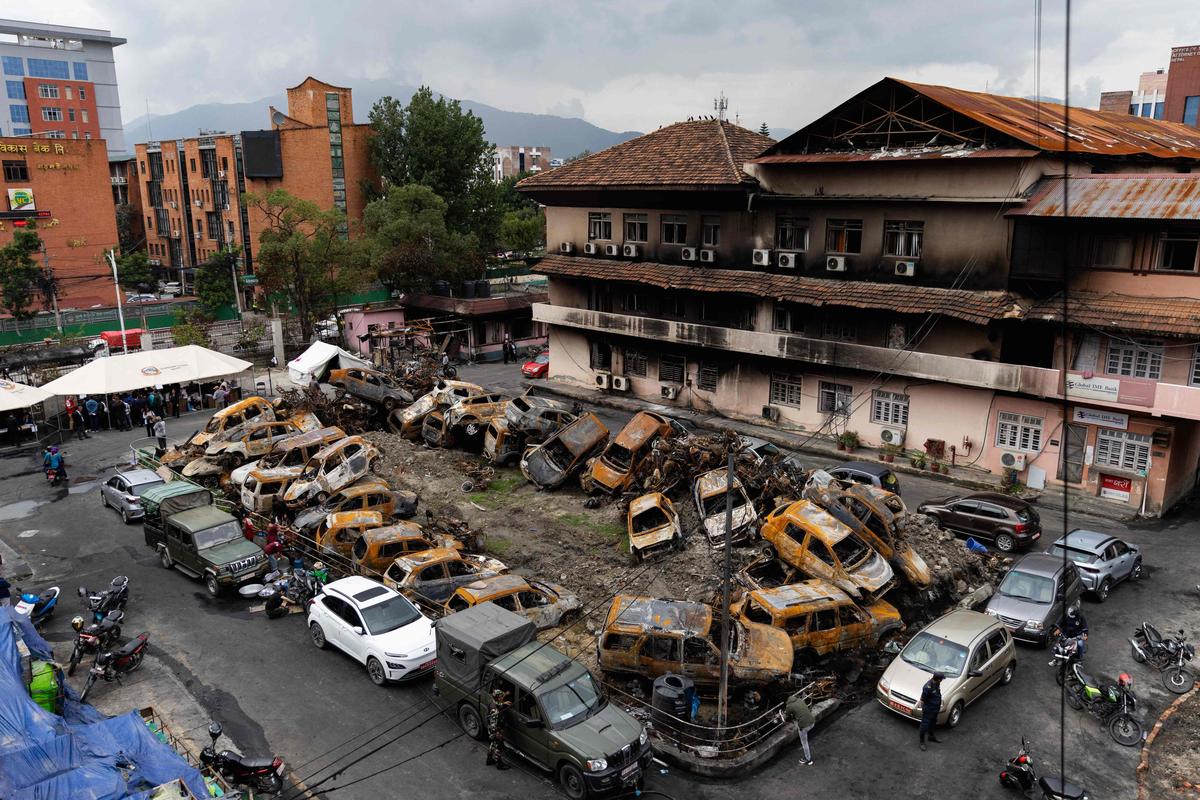
Court personnel gather under makeshift tents beside heaps of charred vehicles at the torched Supreme Court premises in Kathmandu on September 14.
| Photo Credit:
AFP
Two senior officials, who spoke on the condition of anonymity, said that security forces were in no position to contain the crowds, as protesters stormed the buildings from all sides.
On September 8, the Home Minister, Ramesh Lekhak, stepped down. On the following day, Oli resigned as Prime Minister, leaving a political vacuum. With no administration in effect, anarchy ensued. The demonstrators beat up Sher Bahadur Deuba, a five-time Prime Minister, and his wife, Arzu Deuba, a Minister in the Oli Cabinet. They set on fire former Prime Minister Jhala Nath Khanal’s home. His wife, Rajyalaxmi Chitrakar, suffered severe burn injuries.
Watch | Nepal protests force government out | Should India worry?
The official casualty figure stood at 73, with the majority being protesters. The rest included police officials and others who died from burns sustained when buildings were set on fire during the protests, according to information compiled by the government and police.
The tense situation forced the Nepal Army to step in to take charge of security. The Army airlifted Oli and other senior leaders to one of its barracks on the northern rim of Kathmandu for their safety.
Two major hospitals — the National Trauma Centre and the Civil Service Hospital — were filled with the injured, who had bullets lodged in their head, neck, arms, and legs. Doctors and nurses said they worked extra hours.
“We did not expect youngsters to be brought here with bullets even in their chests,” said a doctor at the Civil Service Hospital, a stone’s throw from the Parliament building. “Tear gas shells were fired even within the hospital premises.”
Watch | On the ground in Nepal: Empty streets under tight army watch
More than 100 people are still receiving treatment. The dead were cremated on September 16 with state honours. On September 17, the government declared a public holiday in their memory, with flags flying at half-mast. It declared all those killed ‘martyrs’.
Most of the demonstrators who lost their lives were between the ages of 19 and 24, according to hospitals. Some were in Kathmandu to study and work, while others were preparing for foreign employment or higher education abroad, family members outside the hospitals said.
Discontent turns to dissent
Analysts said a public eruption on the streets was long overdue. “It was not a matter of if, but when,” said Krishna Khanal, a professor of political science at Tribhuvan University in Kathmandu. “It was for everyone to see that the political class was failing on all fronts. Their promises of reform were turning hollow by the years.”
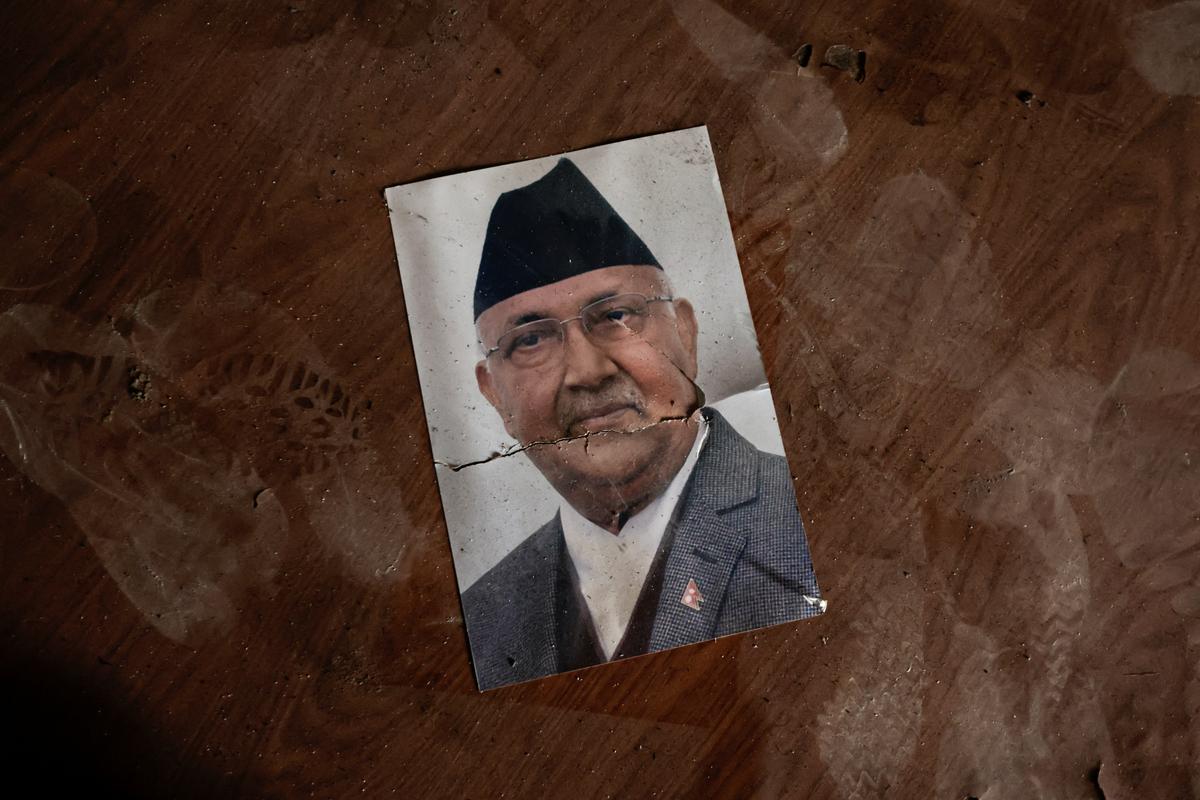
A picture of former Nepali Prime Minister, K.P. Sharma Oli, lies on the floor in the Singha Durbar office complex.
| Photo Credit:
Reuters
Since the new Constitution came into effect in 2015, Nepal has seen multiple government changes with the same three faces at the helm on a rotational basis: Oli, Deuba, and Pushpa Kamal Dahal “Prachanda”. Their role in past democratic struggles is publicly acknowledged, but the perception had been growing that they were no longer fit to run the country. Khanal said frustration at Nepal’s political parties had been growing, and “what we are calling Gen Z decided to take matters into their own hands.”
Oli began centralising power by consolidating several powerful departments under the Prime Minister’s Office. His government issued a policy, making it difficult for NGOs in Nepal to register and operate.
Watch | The rise and fall of K.P. Sharma Oli: Nepal’s embattled leader
Ajaya Bhadra Khanal, research director at the Centre for Social Innovation and Foreign Policy, said Oli’s authoritarian tendencies became evident from his first stint in 2018. “He tried to control the legislative process, policy making, and governance,” he said. “The way he bulldozed the party statute amendment to secure a third term as party chair also showed he was inclined to rule with an iron fist.” Last July, Oli inked a midnight power-sharing deal with Deuba to form a new ‘national consensus government’ to replace the coalition government led by “Prachanda.”
Further, media exposés on land grabs, corruption, gold smuggling, and the Bhutanese refugee scam, among others, were not pursued.
Semblance of calm
As the Army stepped in, President Ram Chandra Poudel called for restraint and invited the protesting groups for talks. Army Chief General Ashok Sigdel was tasked with negotiating with Gen Z protesters. But who could he talk to?
The protests had started spontaneously after discussions among various groups and subgroups, especially on the digital platform Discord. “We are not a political party, we are not an organised group. Yes, we did lack structural leadership,” said Yujan Rajbhandari, 23, one of the youth representatives who met Gen. Sigdel.
Negotiations began late on September 9 and continued, as the representatives demanded a leader with wider acceptance, who they believed was honest to head the government.
“After hours of discussions among ourselves, a majority agreed on Sushila Karki’s name,” said Rajbhandari, a civil engineering student. “Her support for our protest, her integrity, and her anti-corruption stance made us think she was the right candidate.”
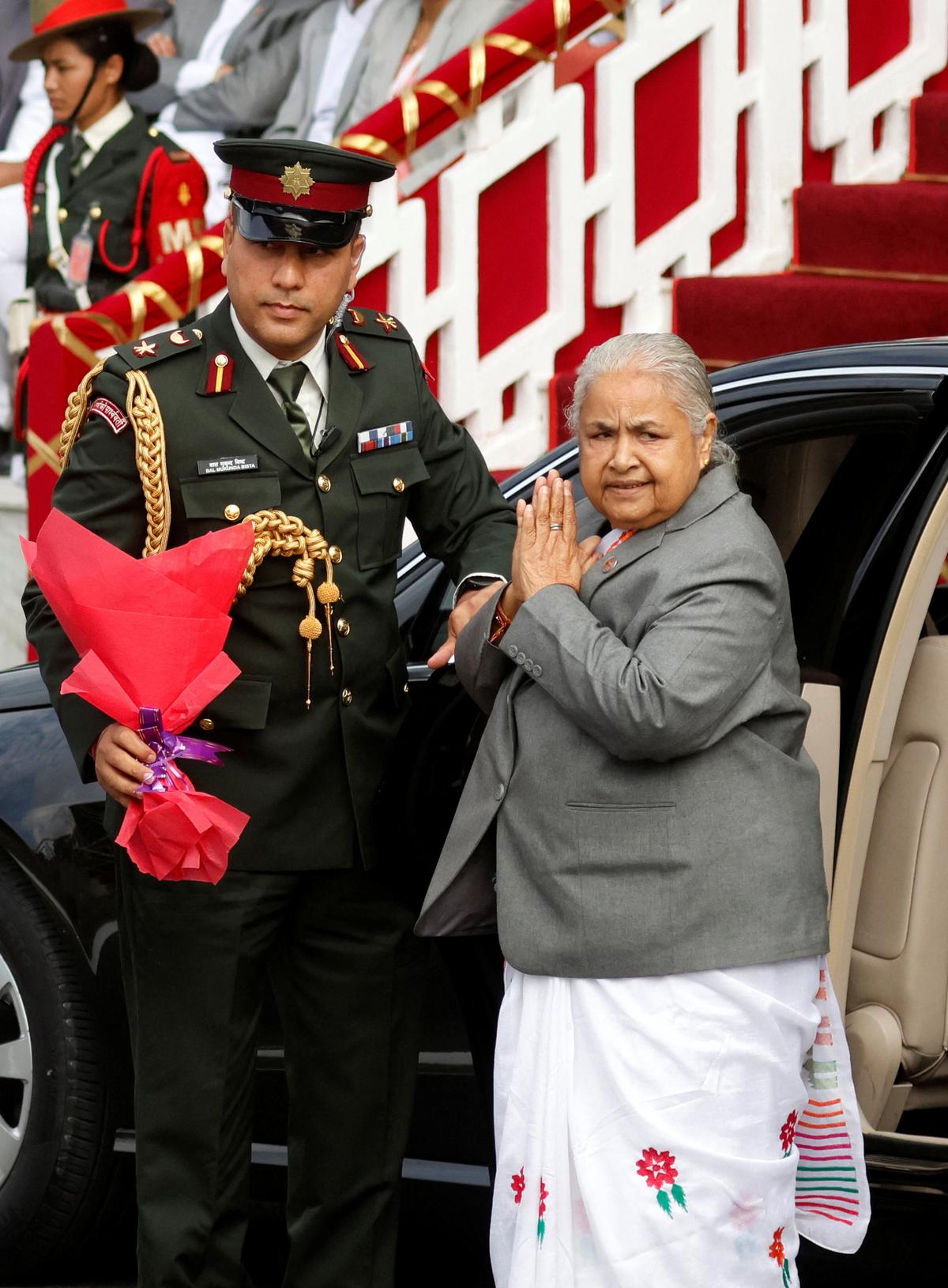
Nepal’s interim Prime Minister, Sushila Karki, at the Army Pavilion in Tundikhel, Kathmandu.
| Photo Credit:
Reuters
Ms. Karki, a former Chief Justice, who often speaks out against corruption from various public forums, was the first public figure to visit hospitals and meet the injured. She passionately supported Gen Z’s protest. She was at Kathmandu’s Civil Hospital, near the Parliament building on September 9, and said, “The way the state has responded to this youth protest is unacceptable. The protesters’ demand is justified.”
After marathon meetings, on the night of September 12, President Poudel appointed Karki, 73, as head of the interim government. Hours later, he dissolved Parliament and called for elections on March 5.
While calm has returned to Kathmandu and elsewhere, uncertainty still hangs in the air.
The road ahead
In her first public statement after assuming office on September 14, Ms. Karki said she would follow through on the protesters’ demands to end corruption. “I had no desire to come here. My name was brought from the streets,” she said. “We will not stay beyond six months under any circumstance. We will fulfil our responsibilities and hand over power to the next Parliament and elected ministers.”

Ms. Karki’s Cabinet includes Rameshore Khanal, an economist who has long advocated economic reforms; Kulman Ghising, an electrical engineer credited with ending power cuts; and Om Prakash Aryal, a lawyer known for his anti-corruption and social justice work.
Rajbhandari, the Gen Z representative, said the Cabinet may not be an ideal one, but it is fit to steer the country towards elections and restore democratic order. “We were definitely not for a system change or the overturning of the Constitution. Our groups that led the protests were not demanding the return of the monarchy,” he said. “We are for a democratic government that works for the welfare of the people and the country. We need corruption rooted out; we want clean people to lead the country, who can inspire hope.”
Professor Khanal said this government’s main challenge is to hold elections on time by winning the confidence of the major stakeholders — the youth representatives as well as the political parties. “This interim government has the uphill task of bringing political players to the elections while not undermining the spirit of Gen Z,” he said.

For Sanba, the marketing student, and many like her, hope now rests on the promise that their voices will lead to change, and that the sacrifice of so many young lives will not be in vain. They are hopeful about the current government.
They also insist that the violence against young protesters be investigated and that those behind the arson, attacks on government buildings, and other criminal acts be held accountable.
Sanba maintains that Gen Z was not involved in the violence. “We strongly believe that our protest was infiltrated, and our movement was taken advantage of,” she said. “Almost like using our shoulders to aim and fire.”
Sanjeev Satgainya is former editor of The Kathmandu Post. Email: sanjeevsatgainya@gmail.com