
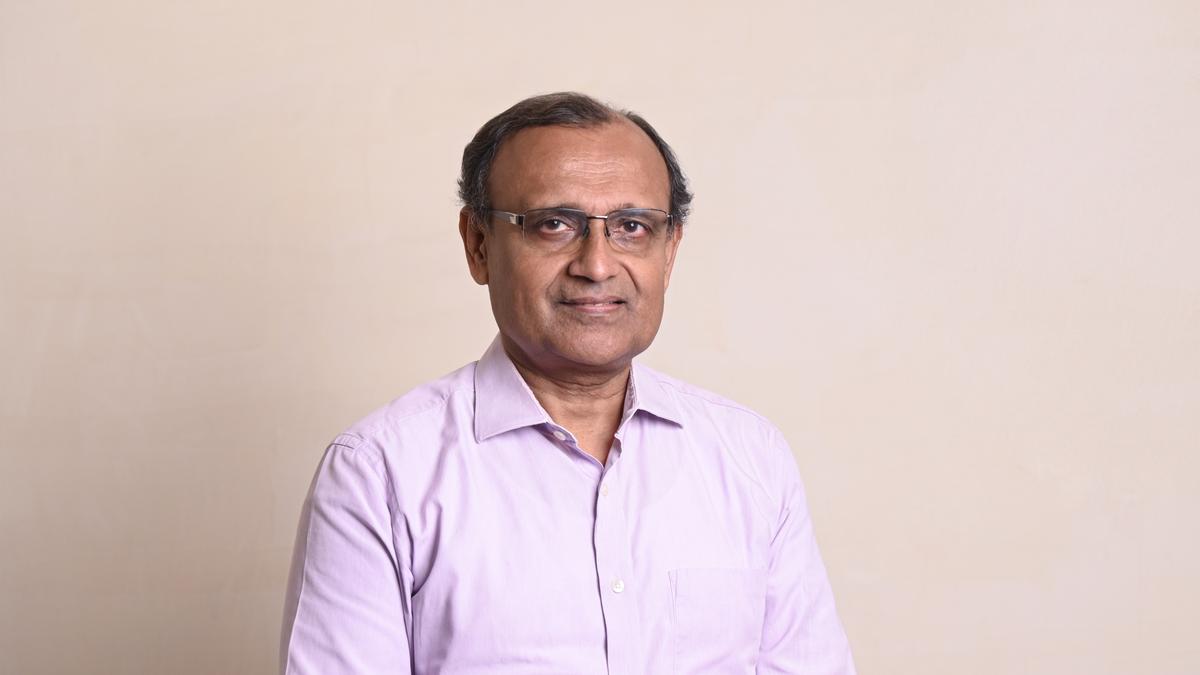
The U.S. has to decide first where they see India fit into their scheme of things, says T.S. Tirumurti, India’s former Ambassador and Permanent Representative to the U.N., New York. In an interview with The Hindu, Mr. Tirumurti spoke about the foreign policy challenges and opportunities India is facing in an uncertain world, including its ties with China, the U.S. and Russia. Edited excerpts.
What are your thoughts from Prime Minister Narendra Modi’s recent visit to China to attend the SCO summit? Can we say India and China are now settling into a “new normal” despite persisting differences?

I think we are still quite far from reaching a new normal in our relations with China. Yes, it is true that both sides have signalled an intention to move forward. We have certainly taken some initial steps, which are important but probably more symbolic than substantive, to bring about a thaw like resuming airlinks, Kailash-Manasarovar yatra, liberalising the visa regime, etc. However, we still need to address larger issues like trade imbalance, market access to Indian goods and services, de-escalation and early harvest issues on the border, construction of their largest dam on their side of the Brahmaputra near the Indian border, etc.
Moreover, the Chinese have become active again in our neighbourhood. For example, their critical support to Pakistan during Operation Sindoor and their attempt to encircle India through our neighbours either physically or through groupings are all manifestations of this. In addition, we now have to deal with China both a neighbour as well as the No.2 power. For the first time, we have a superpower sharing a border with us. All this is changing the complexion of our relationship with China. The old template is not enough to deal with China in both these avatars. So, lot more needs to be done to restore trust before we can reach a new normal in our relations. As of now, our relations with China are highly securitised, which constrains progress to this new normal.
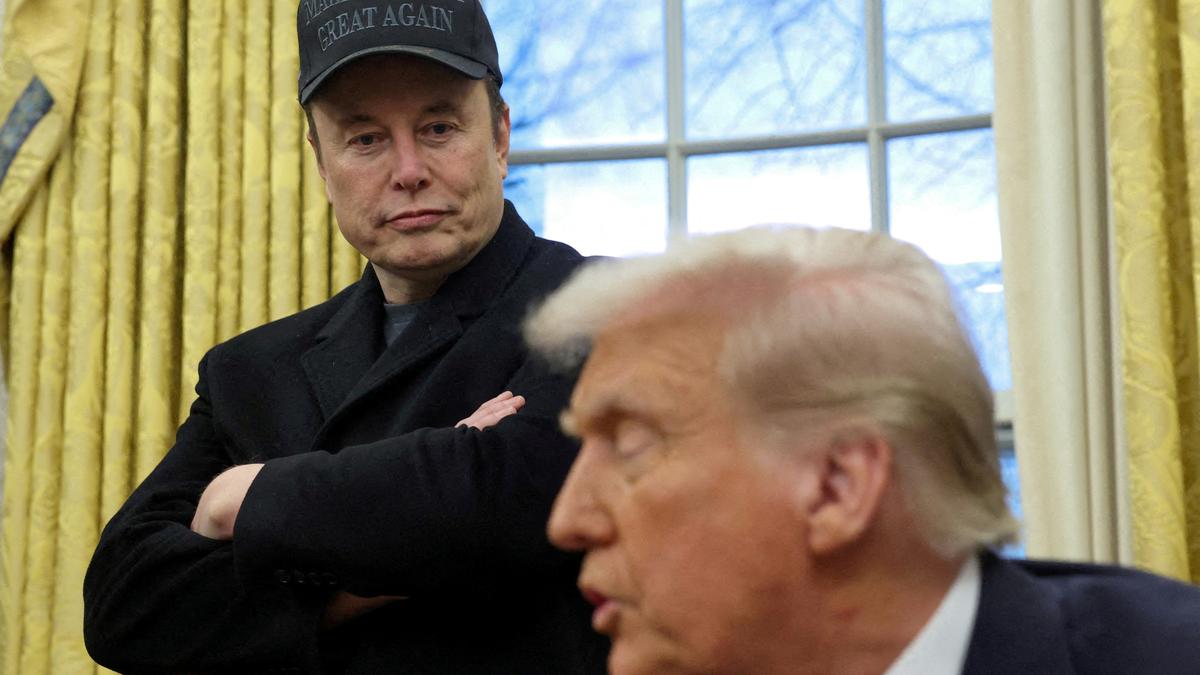
 Some argue that global disruptions since Donald Trump came to power have nudged India and China closer. Do you see U.S. tariffs and trade policies shaping India’s approach to China, or it is part of a policy taken independent of U.S. pressure tactics?
While it is true that President Trump has disrupted the trajectory of India-U.S. relations, I doubt that the U.S. tariffs nudged us closer to China in any substantive way, since it was becoming clear to both India and China that the four-year stand-off at the border was becoming counterproductive for both. Consequently, we have stepped back a bit in October 2024 and worked on the first tranche of some symbolic steps. However, what we have done in Tianjin is to show the U.S. that we have options, we can manage our differences with China and should not be taken for granted. But how serious these options are is debatable given the more systemic problems we are currently facing with China as I mentioned earlier. That said, while countering China where necessary, we should also find common cause where possible. Neither country is doing enough to find synergy in regional, plurilateral or global issues.
Watch | ‘Old templates won’t work with China’: T.S. Tirumurti on India-China ties
That takes us to the U.S.-India ties, which now face turbulence — 50% tariffs, frictions on trade and repeated public criticisms from U.S, etc. How do you read these developments?
The U.S. has to decide first where they see India fit into their scheme of things. Secondly, they will have to make sure that our relations are not episodic by which I mean that every episode cannot subject our relations to trial by fire. You will also notice that the countries which have capitulated to the U.S. tariff threats and agreed to one-sided deals are the closest allies of the U.S. like the European Union, Japan, South Korea, etc. They paid that price not for the trade deal but for keeping their alliance alive. Without it, they are rudderless in the so-called liberal world order. The challenge to that order is real since, for the first time, it is coming from within – from the U.S. However, when the U.S. tried the same tactics with non-allies like India, it is not working out well. That’s because we are keen to preserve our relations with the U.S., but not at any cost.
Further, naming and shaming doesn’t work well with our leadership, as we saw when Prime Minister Indira Gandhi walked out on President Nixon. The way the U.S. cosied up to Pakistan after Operation Sindoor has muddied the waters even more. Levying punitive tariffs for buying Russian oil has brought in a completely extraneous geopolitical element into the trade issue. The U.S. is also asking the EU and G7 to levy 100% tariffs on India and China. We are also waiting to see how the U.S.-China deal impacts the Indo-Pacific and, of course, our geopolitical interests. This will in turn impact QUAD and so on. I am convinced both countries see value in our partnership and that’s why the trade negotiations are resuming. With the U.S. asking NATO countries to stop buying Russian oil, maybe the Damocles sword over us on punitive tariffs will finally lift.
The tensions in Indo-U.S. relations also bring India’s ties with Russia under the spotlight. With no end in sight for the Ukraine war, Indian position comes under great criticism from the U.S. How do you assess India’s Ukraine policy?
I am convinced that we took the right decision in 2022 to abstain on the U.N. Security Council resolutions on Ukraine and call for a return to diplomacy where the legitimate interests of all parties are addressed. But what I have been consistently arguing for, including in my writings, is that India should play a more active role on the Ukraine front, at the very least as a tactical move to deflect criticism.
This does not mean mediation but to remain actively engaged, especially when we knew that the West has been upset with us. I had pointed out to the active role India played in the Korean war in U.N. Security Council between 1951 and 1952, in recognition of which we were made Chair of Neutral Nations Repatriation Committee after the armistice. Operation Sindoor shows us that if we seek greater engagement of our partners with our conflicts and issues, we need to engage more with their conflicts and issues, especially when geopolitics is determining economic and technological outcomes. When I see the current parleys between India and the EU, France, Russia, the U.S., etc, I only wish we had done this earlier.
West Asia is another flashpoint. India, unlike most other Global South members, has avoided strong criticism of Israel over Gaza, but joined SCO and BRICS members in condemning Israel’s attacks in Iran. What explains these positions?
I am not sure whether Global South has really been vocal or impactful on the Gaza war. Gulf countries like Saudi Arabia and the UAE have remained on the sidelines of Gaza war. Their larger interest was to remove the threat of Iran and its proxies from the region, which Israel largely accomplished. The Gulf countries also want to normalise relations with Israel after signing of the Abraham accords with U.S. help. You have seen how they rolled the red carpet out for President Trump without exerting pressure on him to stop the Gaza war. India saw all this as a vindication of its pro-Israeli tilt given our close bilateral relations with Israel. However, with the devastation happening in Gaza and the rapid deterioration in the West Bank, our position is becoming untenable. While we may not want to get ahead of Gulf and the Arab world on the Palestine issue, we have big interests in that region though our interests may not necessarily coincide with theirs. Let us hope that our recent more balanced articulation translates into a more active engagement by India in West Asia.
Critics say India’s policy of “strategic autonomy” is under strain amid U.S.–China rivalry and the Ukraine war. Do you believe strategic autonomy still works for India, or does it require redefinition?
Strategic autonomy has worked for India so far from the time of PM Nehru’s non-alignment, where we refused to join either of the two Cold War blocs – led by the U.S. and the Soviet Union, right till today’s multi-alignment, where we engage with both the big powers – the U.S. and China. It has given us the space for independent decision-making. Just imagine if we had been an “ally” of the U.S. or China now, we would have been struggling in their clasp. Further, strategic autonomy for a big power like us is the path to emerge as a potential pole in an emerging multipolar world. It is also about leadership – showing the world that there is another path other than joining one of the two camps, just as our non-aligned stand did for the developing world then.
How do you look at the shifts in the global order? What guiding principles should shape India’s foreign policy in such uncertain times?
There are certainly serious disruptions to the global order. On the one hand, forces are tearing each other apart in conflicts and violating international law with impunity. On the other hand, global challenges like climate change, energy security, pandemics, AI and digital issues, cyber threats, etc. are forcing the same countries to cooperate and work together. That’s the irony. At which point these two forces meet will determine the trajectory of the global order. Also, let us not get too nostalgic about a world order which we neither shaped nor did it really help us even if we learnt to use it to our advantage despite all odds. An example is our rise as a nuclear power, where every conceivable hurdle was put in front of us at every point, including sanctions, and we still managed to overcome all that and emerge as a nuclear power.
We were never for status quo and always called for meaningful reform whether in UN Security Council or other 1945 architecture linked institutions like World Bank, IMF or WTO. Looking ahead, I can only say that as a rising power, we need to be proactive. We have been second to none to contribute to the global commons like vaccine maitri during COVID-19 or to combat climate change, etc. However, the world expects us to play a bigger role in conflicts and geopolitics. No more can we just put our head down, mind our own business and expect to become the third largest economy or Viksit Bharat by 2047. That template is broken. We need to get our geopolitics right.