


Since his visit to China as External Affairs Minister in 1979, Prime Minister Atal Bihari Vajpayee had harboured a keen desire to resolve issues with China and Pakistan. His 1979 visit to China was the first by a senior leader since the 1962 India-China war, and it set in place the process of normalising India-China relations. However, despite Deng Xiaoping’s (the then leader of China) offer to make a deal on the border, the Indian side indicated that it was not yet ready to do so.
And so, two decades went by and relations between the two countries did get onto an even keel as they set about attempting to build peace on the Line of Actual Control (LAC), even as they built ties in other areas.
The Vajpayee factor
Vajpayee’s period as Prime Minister saw rapid ups and downs in the Sino-Indian relationship.
Following the nuclear tests of 1998, which Vajpayee said were needed to counter China, Sino-Indian relations reached their nadir. Beijing became party to the UN Security Council Resolution 1172 to penalise India for the tests. However, they soon reconciled and in April 1999, the two sides held another Joint Working Group (JWG) meeting, the first in 20 months.
During his visit to Beijing in 2003, Prime Minister Vajpayee proposed that the two sides needed to give a political push to their border talks. The Chinese agreed and the two sides decided to appoint Special Representatives (SR) who would lead the process. As a measure of the importance India attached to the initiative, the Prime Minister appointed his principal secretary and National Security Advisor Brajesh Mishra as the Indian SR. The Chinese appointed Dai Bingguo, a senior politician and diplomat whose effective job was as National Security Advisor to President Hu Jintao. Insiders told this writer, that Prime Minister Vajpayee wanted the border issue to be settled as soon as possible, perhaps in a matter of years. But he lost the 2004 elections, and even though the SR process continued, it lost the invaluable support that the Prime Minister had provided.
The major achievement of the SRs, and a quick one, was the agreement of 2005 outlining “the political parameters and agreed guidelines for a border settlement between India and China.”
The Political Parameters agreement has, so far, been the only negotiated document between the two sides on their boundary dispute.
The Political Parameters agreement
This was an extremely significant agreement, the essence of which suggested that the two countries would swap their claims — New Delhi would agree to the Chinese retaining Aksai Chin in Ladakh, while Beijing would concede the Indian claim on Arunachal Pradesh.
The preamble of the agreement noted that the two sides were convinced that “an early settlement of the boundary question will advance basic interests of the two countries and should therefore be pursued as a strategic objective.” This makes it clear that the boundary issue was now frontloaded to the Sino-Indian dialogue.
Furthermore, Article II stated that the settlement would be arrived at from “from the political perspective of overall bilateral relations.” The two sides would move away from a purely technical or historic-legal solution. Article VI said that “the boundary should be along well-defined and easily identifiable natural geographical features” that the two sides agree on. This was the issue which had plagued the 1980s talks between the two nations.
However, the key clauses of the agreement were articles IV and VII. Article IV said that the two sides would give due consideration “to each other’s strategic and reasonable interests” within the framework of their commitment to “mutual and equal security”. Article VII declared that in arriving at a settlement, “the two sides shall safeguard due interests of their settled populations in the border areas.”
A common-sense reading of these two articles suggested that the two sides were likely to strike a deal on a largely “as is where is” basis — Aksai Chin’s real strategic importance was to China, and settled populations were specific to India in Arunachal Pradesh. The task for the SRs was now to work out “an agreed framework” that could provide the basis for the “delineation and demarcation” of the Sino-Indian boundary. Having lost the initial momentum, by 2009, the SR’s task had been expanded to cover the gamut of Sino-Indian relations.
In June 2007, at the sidelines of a meeting in Berlin with Indian External Affairs Minister Pranab Mukherjee, Chinese foreign minister Yang Jiechi appeared to resile from Article VII.
Yang told Mukherjee that the “mere presence” of populated areas would not affect China’s claims on the Sino-Indian border.
In other words, China was reasserting its claim on Tawang, the most significant town in Arunachal Pradesh, and a major centre of Lamaist Buddhism.
All talk, no play
Despite all this, the SRs continued their work. At the end of the term of the Chinese SR Dai Bingguo, an informal meeting was held between him and his Indian counterpart Shivshankar Menon, and the two sides recorded the summary of the consensus that the two sides had been able to achieve. We have no record of what these points were, but in March 2013, Wei Wei, then Ambassador in New Delhi, wrote in The Hindu that the two sides had “reached an 18-point consensus on the resolution framework.” This was confirmed by Menon following his retirement and he also revealed in an interview that the work of the SRs in working out a framework for a border settlement had been done; all that was left was the political go-ahead to implement it on the ground. Yet, as Dai noted in his memoir Strategic Dialogues, China continued to insist that India concede the Tawang area to them as part of any settlement. Some of the decisions that had been taken were revealed, but only in passing. During the Doklam crisis of 2017, it was revealed that the two sides had agreed on the “basis of alignment” for the Sikkim-Tibet border, essentially the watershed between the Teesta and the Amo Chu river. They had also agreed that wherever the border had trijunctions with third countries the latter would be consulted before its finalisation. This involved Myanmar, Bhutan, Nepal and presumably Pakistan.
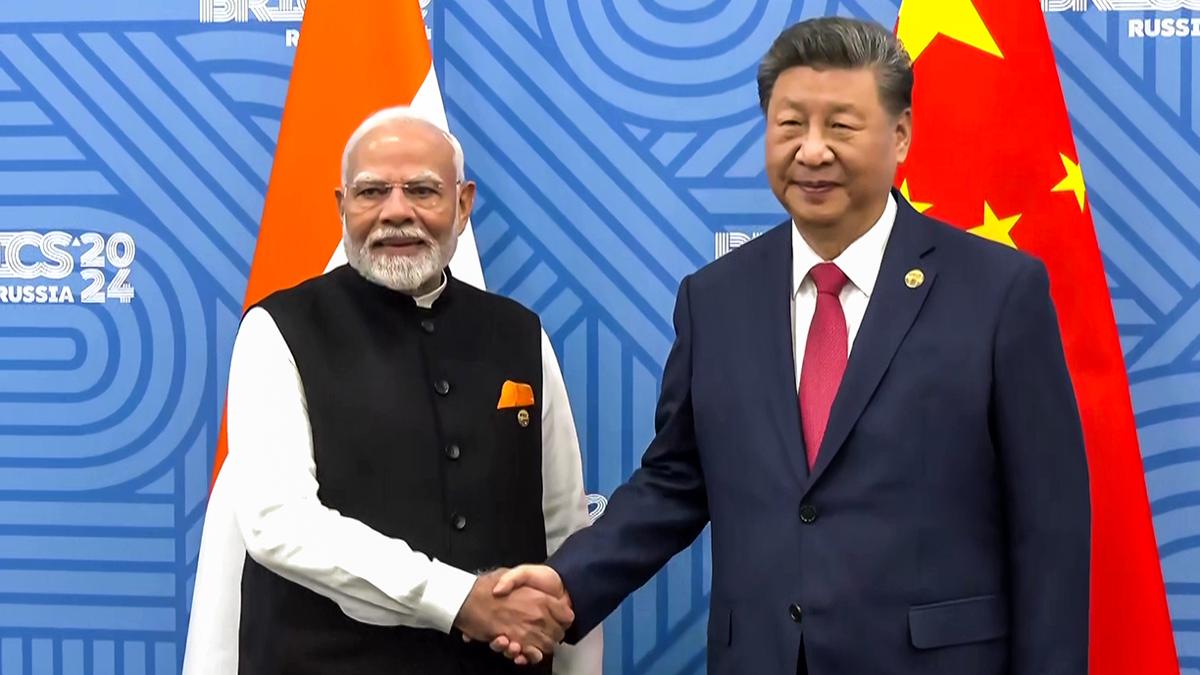
But a decade later in 2025, the SRs are still soldiering on. On August 19, they held their 24th round of talks. In the preceding decade, India-China relations had seen many ups and downs — the 2014 border incidents in Chumar, the 2017 Doklam crisis, the 2018-2019 détente, and the 2020 crisis. Between 2019 and 2024, they did not meet formally even once. But then talks were taken up following the instructions of Chinese President Xi Jinping and Prime Minister Narendra Modi after their summit in Kazan at the sidelines of the BRICS meet last year.
The way ahead
The last round of the SRs in August 2025 importantly reiterated the decision of the two sides to move ahead with their discussions to work out a “reasonable and mutually acceptable framework” for settlement of the boundary based on the 2005 Political Parameters agreement.
Taking up where they left off in 2019, the two SRs also decided to set up a special expert group to move ahead for an “early harvest” agreement, which is essentially the settlement of the Sikkim-Tibet boundary. Another task set up by the SRs is to work out new border management methods to replace the ones that failed to work in 2020.
As we have noted, China and India have the basics of an agreement needed to work out their border alignment. At present, unfortunately, both sides are continuing with their military buildup on either side of the LAC. Efforts to build down military deployments, such as the agreement of 1996, have failed to do the needful. Both countries continue to pay a high price for their deployments in defending what could become a normal international border following an agreement. Yet, that final push for settlement has not come and it will only come when the political leaderships of the two countries jointly accept that there is nothing to be gained, and possibly a lot to be lost by allowing the border to remain unsettled.
The writer is a Distinguished Fellow at the Observer Research Foundation, New Delhi. This is the third part of a three-part series on India-China border relations.
Published – September 09, 2025 08:30 am IST