






In the remote Qinghai-Tibetan Plateau, a rare fungus grows inside dead caterpillars. In traditional Chinese medicine, this parasitic fungus is prized for its purported medicinal effects. Known as Ophiocordyceps sinensis – colloquially, caterpillar fungus or “Himalayan gold” – it can fetch astronomical prices on the herbal medicine market: up to US$63,000 per pound.
Ophiocordyceps sinensis fungus is a parasite that targets the caterpillar that is the larva of the ghost moth. The process begins in late summer to early fall, when fungal spores infect the caterpillars. Over time, fungal filaments called mycelia slowly spread out and consume the caterpillars from within, turning them into hardened, mummified shells by winter. When spring arrives, the fungus enters its final stage: A grasslike fruiting body sprouts from the preserved caterpillar’s head and pushes up through the soil.
While many traditional Chinese/herbal medicine consumers are drawn to the fungus for its supposed health benefits, my interest lies in a darker side of its harvest: the deadly relationship between caterpillar fungus collection and lightning strikes. As a meteorologist, I study lightning and its impacts around the world. A few factors come together to make the situation on the Qinghai-Tibetan Plateau so dangerous.
A deadly harvest
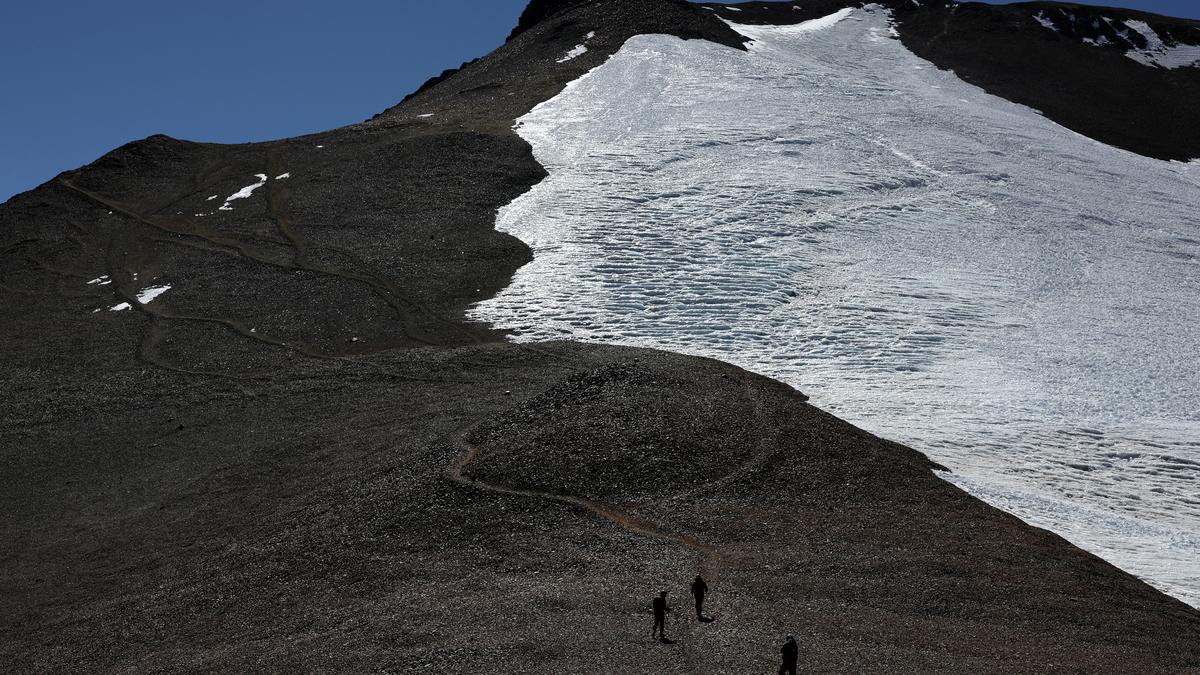
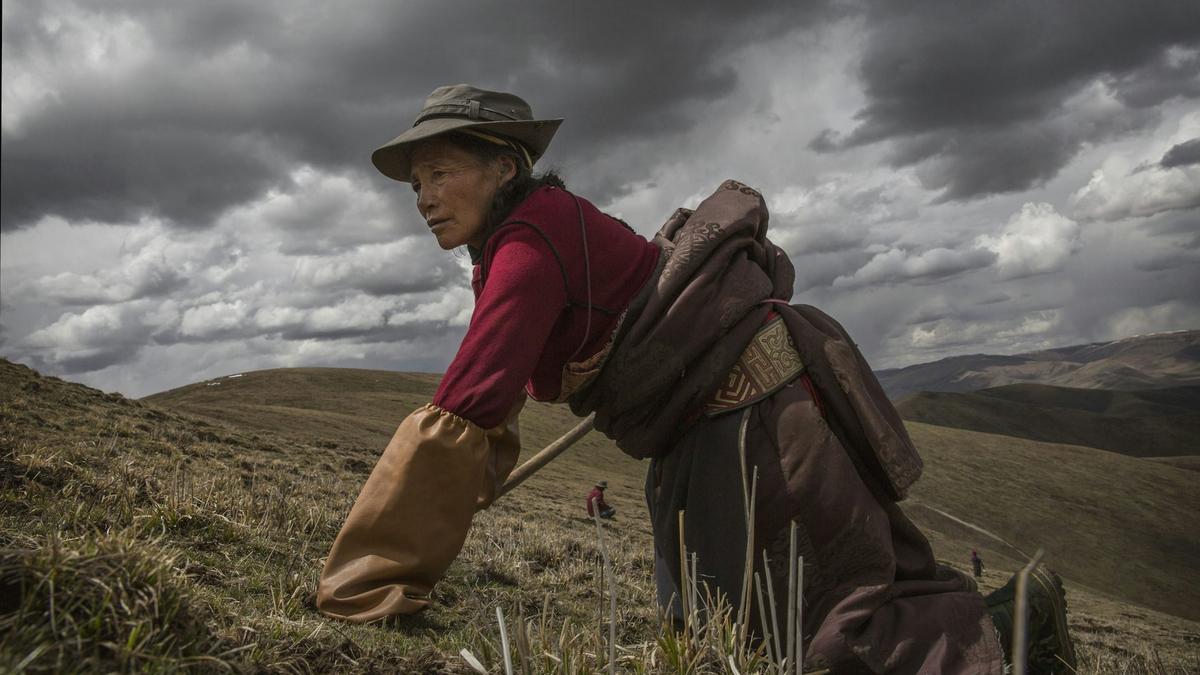
People hunt for this fungus during late spring and summer, exactly when lightning strikes are most common in these mountains. Villagers often spend weeks scouring the rugged mountains for this precious resource, sometimes up to 16,400 feet (5 kilometers) above sea level. That’s an altitude of more than 3 miles.
At these heights, the weather can change in an instant, and there’s nowhere safe to hide from storms. While this area doesn’t get as many lightning strikes as some parts of Asia, it’s still dangerous enough to be a serious threat during these crucial harvesting months.
Tragically, caterpillar fungus hunting has led to at least 31 lightning-related deaths and another 58 lightning-related injuries in the past decade, according to the yearbooks of Chinese meteorological hazards (中国气象灾害年鉴) and government websites, including the China Meteorological Administration and the National Disaster Reduction Center of China.
In May 2022, seven villagers from China, including a young child, were killed by lightning while harvesting the fungus. The following year, three people from Nepal were injured by lightning when collecting the fungus and had to be rescued by helicopter after spending days stranded in the mountains.
In our recent study, my colleague Ronald Holle and I found that the population-weighted lightning fatality rates in the fungus-collection hotspots of Yushu and Garze counties, located in the Sichuan Province of China, are staggering – 10 to 20 times higher than the already elevated rates in China overall. These numbers are on par with some of the most lightning-prone regions of Africa, where there is little lightning-safe infrastructure or safety education.
But lightning isn’t the only threat these villagers face in the mountains. They could encounter hail, heavy rains, strong winds and other severe weather. The complex terrain makes weather patterns highly dramatic and unpredictable. Making things even worse, cellphone signals and other communication options are limited or nonexistent, leaving villagers cut off from weather hazard alerts.
They could also face threats from wild animals and risky mountain slopes. In one tragic case, a collector was struck by lightning and fell to his death on steep terrain. Medical care is rarely available. When accidents occur, it may be days before help arrives.
Why take the risk?
It all comes down to the high-risk, high-reward nature of caterpillar fungus collection.
For local villagers, the potential rewards of harvesting caterpillar fungus are significant. With limited income opportunities in this remote region, many see the fungus trade as their best hope for survival. They face a tough choice: risk their lives or sink into poverty.
Improving lightning safety education and infrastructure are important but far from easy. Any real change would take a lot of investment.
While the local government does organize some lightning safety education, these mountain communities are isolated and the information is often outdated. And there’s simply no practical way to install adequate lightning protection across the vast, rugged terrain where the fungus is collected.
A fragile pursuit
The environment is suffering, too. With so many people hunting for the fungus, they’re damaging the delicate mountain soil, cutting down trees for firewood and leaving trash at their camps.
Years of overharvesting have forced collectors to spend more time in the mountains to find enough fungus, increasing their exposure to lightning and the fungus’s decline. Scientists warn that if this aggressive harvesting continues, the fungus might disappear completely in the next few decades.
There might be some hope. Researchers are exploring ways to cultivate the fungus as a possible substitute for the wildly harvested variety. Meanwhile, governments in China, India, Nepal and Bhutan have implemented regulations to protect the sustainability of caterpillar fungus.
But any solution will need to address the underlying economic and educational inequities in this remote region, opening up new opportunities for these communities to make a living so they don’t need to risk their lives chasing “Himalayan gold.”
Daile Zhang is an assistant professor of Atmospheric Sciences, University of North Dakota. This article is republished from The Conversation.
Published – February 05, 2025 05:59 pm IST