


Skip to content
  • Facebook
  • X
  • Linkedin
  • WhatsApp
  • Associate Journalism
  • About Us
  • Privacy Policy
  • 033-46046046
  • editor@artifex.news
Artifex.News

Artifex.News

Stay Connected. Stay Informed.

  • Breaking News
  • World
  • Nation
  • Sports
  • Business
  • Science
  • Entertainment
  • Lifestyle
  • Toggle search form
  • King Charles Will Miss Commonwealth Day Service World
  • Duleep Trophy: Ishan Kishan Smashes Hundred To Make Red-Ball Return Memorable Sports
  • Hamas Says Gaza Will “Rise Again”, Rebuild After Israeli Destruction World
  • EAM Jaishankar meets U.N. leadership, discusses India’s G20 Presidency, UNSC reforms World
  • Three years after Taliban return, economic woes loom large Business
  • China test-fires intercontinental ballistic missile into Pacific Ocean amid Taiwan tension World
  • Mani Shankar Aiyar Sparks Row With China Remark, Congress Distances Itself Nation
  • European Watchdog Partially Approves New Alzheimer’s Drug World

Dengue early warning system predicts risk two months in advance

Posted on February 1, 2025 By admin


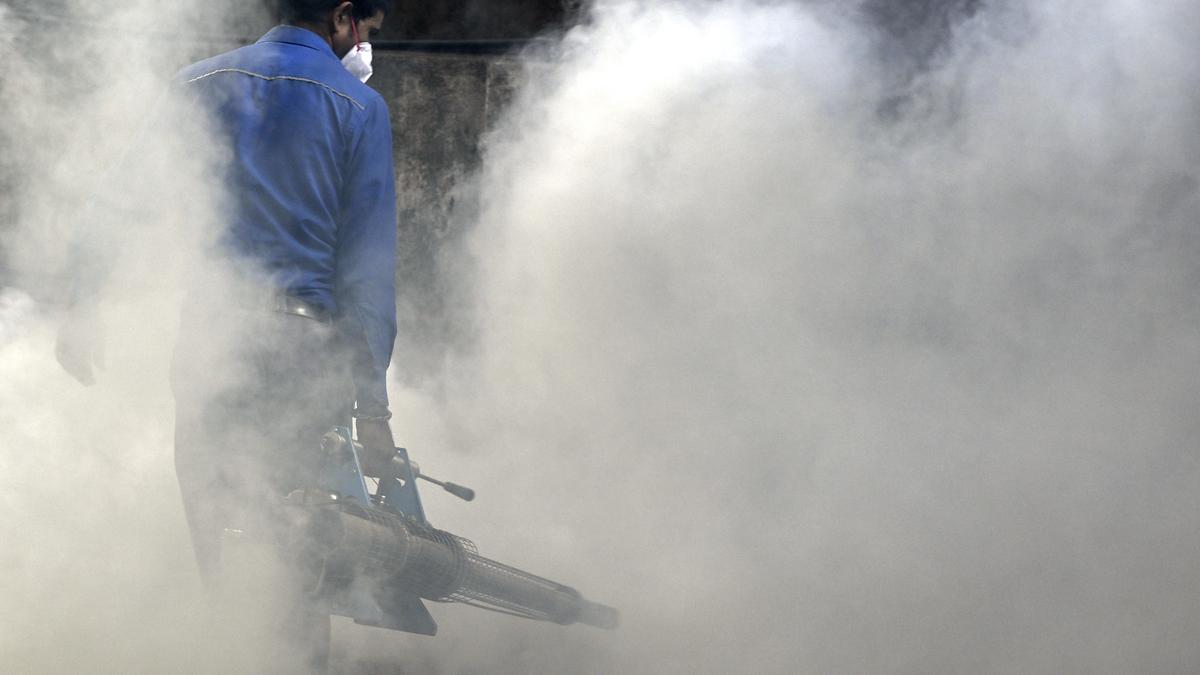
A worker fumigating a private building surroundings to control mosquitoes and to prevent spread of dengue, in Bengaluru

A study that looked at dengue deaths and meteorological conditions in Pune during the period 2004 to 2015 using both statistical tools and machine learning methods found that temperature, rainfall, and relative humidity were associated with increased dengue deaths due to increased cases of dengue. Importantly, the study showed that Pune had a time lag of two to five months between favourable weather conditions and dengue deaths, thus providing sufficient lead time to curb dengue outbreaks and thereby deaths. Results of the study led by researchers from Pune’s Indian Institute of Tropical Meteorology were published in the journal Scientific Reports.

The study found that moderate rainfall spread over the entire duration of the summer monsoon season was associated with increased dengue deaths in Pune compared with heavy or extreme rainfall. Unlike when the weekly cumulative rainfall was less than 150 mm, heavy or extreme rainfall above 150 mm in a week reduces dengue incidence. This is because heavy rainfall washes away or flushes out the mosquito eggs and larvae. The association between rainfall intensity and dengue incidence is consistent with observational data.

Similarly, in the case of mean temperature, the study found that dengue deaths were higher during the years when the mean temperature in Pune was above 27 degrees C, says Dr. Roxy Mathew Koll from IITM, Pune and the corresponding author of the paper. At this mean temperature, dengue transmission in Pune was optimal as it positively affected the longevity of mosquitoes, the number of eggs deposited by each female mosquito, the number of times a mosquito laid eggs, and the time between a blood meal and laying eggs. “We find a statistically significant positive correlation between the annual dengue mortality and the number of days with optimal temperatures (above 27 degree C) during the summer monsoon season (June to September) in Pune. This temperature window is specific to Pune and maybe different for other regions,” he says. 
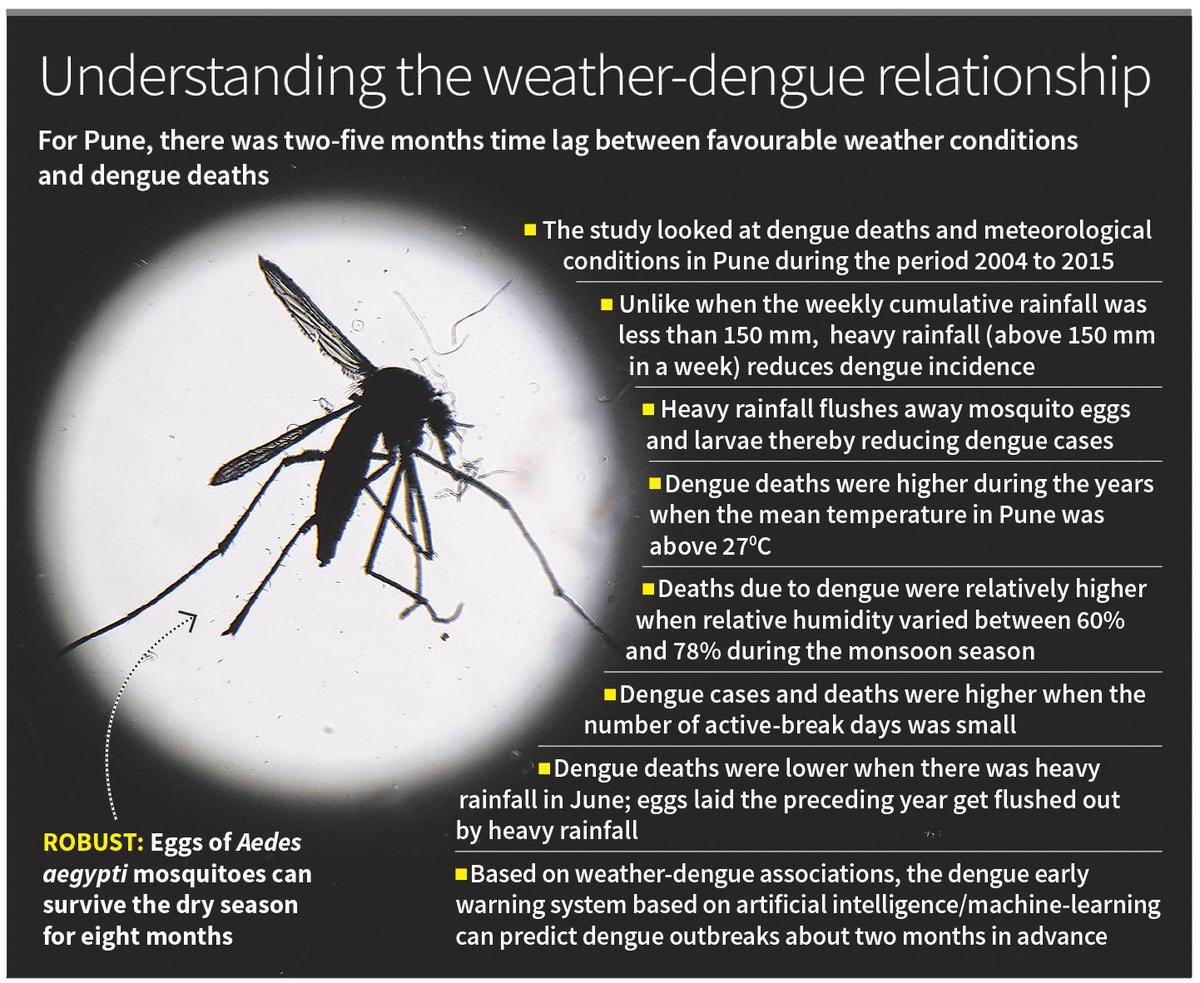
Likewise, the years when relative humidity varied between 60% and 78% during the monsoon season was when dengue deaths were relatively higher, the study found. Relative humidity impacts hatching, survival rate, and biting frequency of adult dengue mosquitoes. According to the authors, a minimum of 60% relative humidity is required for Aedes aegypti mosquitoes to survive as low humidity kills the mosquitoes due to water evaporating from their body.

They also found that there was an association between increased dengue cases and deaths and active-break phases of the monsoon. When the summer monsoon during a particular year has fewer number of active-break days, the number of dengue cases and deaths was higher compared with those years when the number of active-break days was higher. Dr. Koll explains that it is not the cumulative amount of rainfall during the monsoon season that influences dengue transmission but the pattern of rainfall — moderate rainfall during the monsoon season with fewer active-break days. “Increased number of active-break days suggests greater variability or fluctuation in rainfall, including the number of extreme rainfall events, during low dengue years,” says Sophia Yacob from IITM, Pune and the first author of the paper. “In contrast, evenly distributed rains with fewer active-break days result in increased dengue cases.”

“We found that dengue deaths were lower during the years when rainfall during June — the first month of the summer monsoon season — was heavy,” Dr. Koll says. This is because mosquito eggs are capable of surviving the dry season up to eight months. So eggs laid after the preceding monsoon season can hatch into mosquitoes when the monsoon season begins in June. Heavy rainfall during June therefore tends to wash off the eggs laid the preceding year, thereby reducing the mosquito population and dengue-related deaths at the beginning of the monsoon season. “Rainfall intensity during June plays a significant role in determining the total number of dengue cases for the year,” he says.

Based on weather-dengue associations, the authors developed a dengue early warning system based on artificial intelligence/machine-learning to predict potential dengue outbreaks about two months in advance. The model used observed mean temperature, cumulative rainfall, and relative humidity patterns. About 41% of the model’s prediction skill is determined by mean temperature, 29% by cumulative rainfall, and 20% by relative humidity.The dengue model was also used for future projections of dengue mortality over Pune by utilising climate projections from selected models suited for the Indian monsoon region.

“In response to climatic changes, dengue mortalities over Pune are projected to increase by 12-112% in the future (2021-2100) under low-to-high emission pathways,” the authors write. “The findings of this study have significant implications for policymakers, as they provide insights into the potential impacts of climate change on dengue mortality in Pune and provide a clear pathway to extend the model to any other region.”

Published – February 01, 2025 09:30 pm IST


Source link

Science

Post navigation

Previous Post: Union Budget aimed at economic betrayal of Bengal, says Trinamool Congress
Next Post: Shop Owner Refuses To ‘Re-Nazify’ Hitler Youth Knife, Wins Internet

Related Posts

  • South Africa passes its first sweeping climate change law Science
  • How was popcorn discovered? An archaeologist explains Science
  • Four gurukula students from Telangana nominated for Sakura Science Programme in Japan Science
  • H5N1 outbreak: route of mammalian transmission among cattle unclear Science
  • Quality of active TB case finding suboptimal nationally: study Science
  • The first man to experience jet streams Science

More Related Articles

AI has a big and growing carbon footprint, but algorithms can help Science
NASA’s Perseverance rover on Mars begins steep climb to rim of a crater Science
How do hummingbirds drink nectar at frenetic speed? Science
ISRO successfully launches earth observation satellite onboard third and final developmental flight SSLV-D3-EOS8 mission Science
Eye donation and corneal transplant Science
Are ground squirrels strictly granivorous? Science
SiteLock

Archives

  • February 2025
  • January 2025
  • December 2024
  • November 2024
  • October 2024
  • September 2024
  • August 2024
  • July 2024
  • June 2024
  • May 2024
  • April 2024
  • March 2024
  • February 2024
  • January 2024
  • December 2023
  • November 2023
  • October 2023
  • September 2023
  • August 2023
  • July 2023
  • June 2023
  • May 2023
  • April 2023
  • March 2023
  • February 2023
  • January 2023
  • December 2022
  • November 2022
  • October 2022
  • September 2022
  • August 2022
  • July 2022
  • June 2022
  • May 2022

Categories

  • Business
  • Nation
  • Science
  • Sports
  • World

Recent Posts

  • Record Number Of Journalists Killed In 2024: Report
  • Over 2 Crore Devotees Take Holy Dip On Maghi Purnima
  • ODI Tri-Series: Mohammad Rizwan And Salman Agha Smash Tons As Pakistan Defeat South Africa In Record Chase
  • Industrial Output Growth Slows To 3-Month Low Of 3.2% In December
  • Trump, Putin agree to begin ‘negotiations’ on ending Ukraine war

Recent Comments

  1. dfb{{98991*97996}}xca on UP Teacher Who Asked Students To Slap Muslim Classmate
  2. "dfbzzzzzzzzbbbccccdddeeexca".replace("z","o") on UP Teacher Who Asked Students To Slap Muslim Classmate
  3. 1}}"}}'}}1%>"%>'%> on UP Teacher Who Asked Students To Slap Muslim Classmate
  4. bfg6520<s1﹥s2ʺs3ʹhjl6520 on UP Teacher Who Asked Students To Slap Muslim Classmate
  5. pHqghUme9356321 on UP Teacher Who Asked Students To Slap Muslim Classmate
  • 1.3 Lakh Lavender Plants Adorn “Starry Night” Themed Bosnian Park World
  • Financial Inclusion Crucial For Women’s Economic Empowerment: Anurag Thakur Nation
  • The Grand Scooty Theft By A ‘Schoolgirl’ In Varanasi Nation
  • Outrage After Class 8 Students In US Asked To Rate Hitler In Assignment World
  • How AI is helping communities restore Madagascar’s ancient baobab forests Science
  • Chief Of UN Agency For Palestinians Refugees Stopped From Entering Gaza World
  • US, Chinese defence chiefs meet in Singapore World
  • Hathras Stampede, Bhole baba Bhole Baba, Who Held Hathras Event, Had Sexual Assault Cases Against Him Nation

Editor-in-Chief:
Mohammad Ariff,
MSW, MAJMC, BSW, DTL, CTS, CNM, CCR, CAL, RSL, ASOC.
editor@artifex.news

Associate Editors:
1. Zenellis R. Tuba,
zenelis@artifex.news
2. Haris Daniyel
daniyel@artifex.news

Photograher:
Rohan Das
rohan@artifex.news

Artifex.News offers Online Paid Internships to college students from India and Abroad. Interns will get a PRESS CARD and other online offers.
Send your CV (Subjectline: Paid Internship) to internship@artifex.news

Links:
Associate Journalism
About Us
Privacy Policy

News Links:
Breaking News
World
Nation
Sports
Business
Entertainment
Lifestyle

Registered Office:
72/A, Elliot Road, Kolkata - 700016
Tel: 033-22277777, 033-22172217
Email: office@artifex.news

Editorial Office / News Desk:
No. 13, Mezzanine Floor, Esplanade Metro Rail Station,
12 J. L. Nehru Road, Kolkata - 700069.
(Entry from Gate No. 5)
Tel: 033-46011099, 033-46046046
Email: editor@artifex.news

Copyright © 2023 Artifex.News Newsportal designed by Artifex Infotech.