




“From August 15, 1947, the chains of our bondage have been broken and we are free to translate our dreams into reality. The plans are there, but we find that our freedom was born in an era so fluid and fastchanging that any predetermined step otheithan the next became obsolete before it could be taken. We feel like the pilgrim who drags his weary limbs finally to the mountain top, only to find higher peaks stretching before his eyes.”
Also Read:Union Budget 2025: When and where to watch
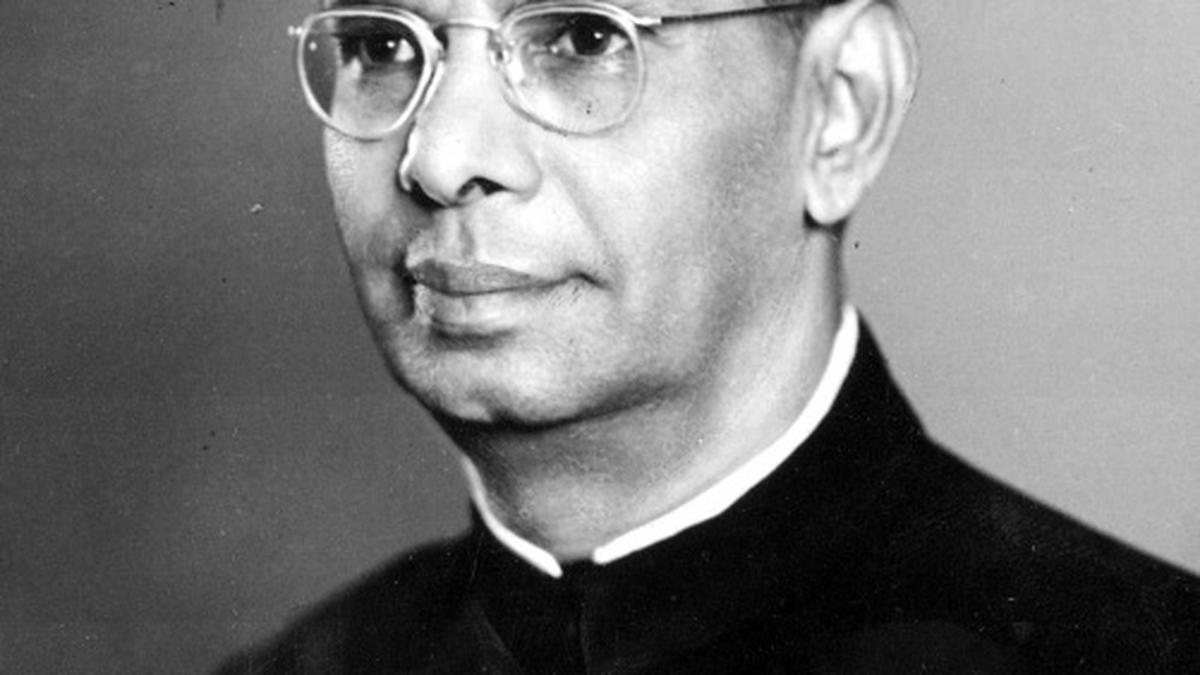
So spoke R.K Shanmukham Chetty (alternatively spelled Chettiar), the first Finance Minister of free India, as he presented the newly independent nation’s first full budget to the Indian Parliament on February 28, 1948, channelling the vision of the Nehru-led Congress government. This budget was also the first after the partition that seared the land, and the assassination of Mahatma Gandhi. It was cautious, yet struck a hopeful note for the future of newly-independent India.
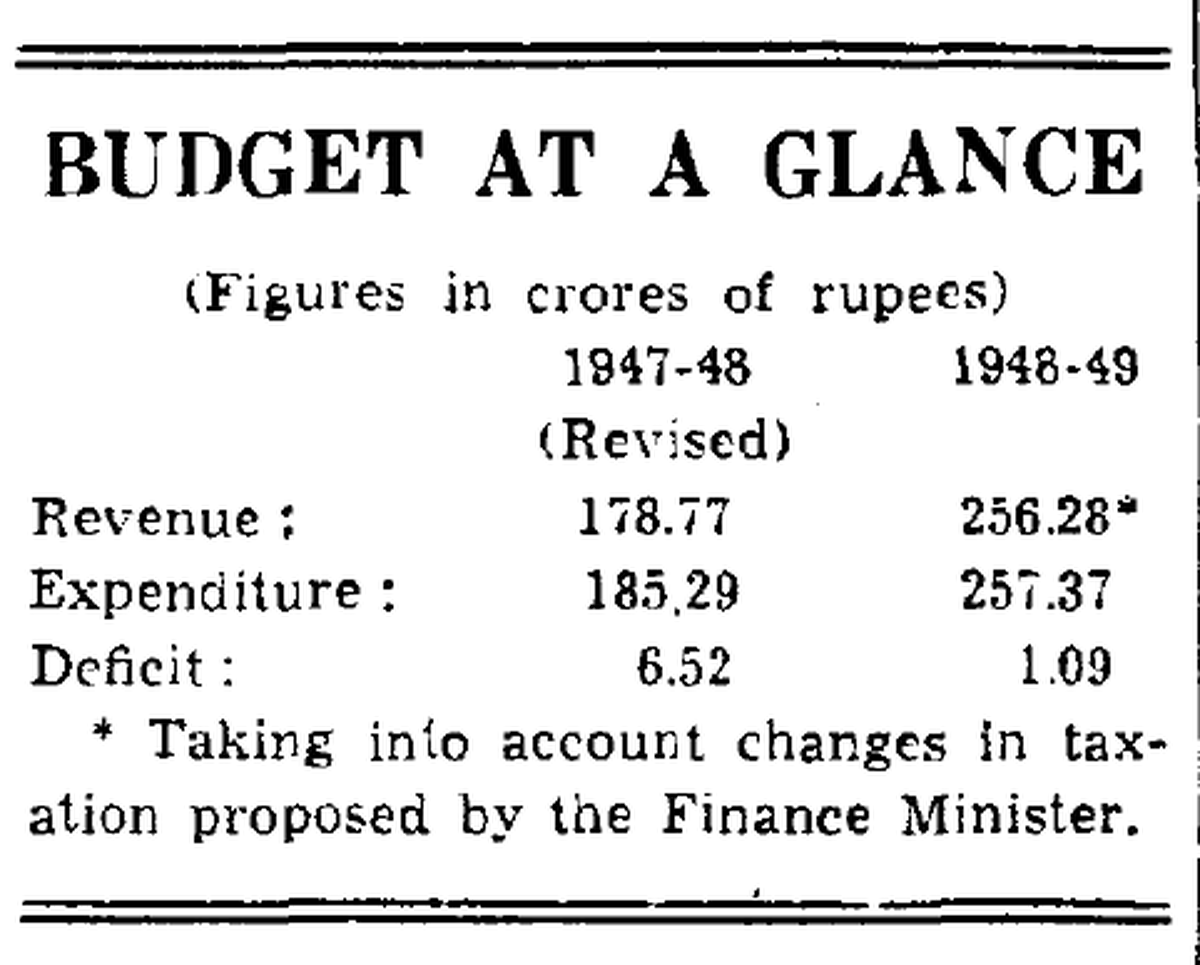
With revenue at Rs. 230.52 crore, on the basis of existing taxation, and the expenditure at Rs. 257.37 crore, Mr, Chetty estimated a deficit of Rs. 26.85 crore for the year 1948-49. The aim of the budget proposed by him then, was to bring down the deficit to one crore rupees.

The Budget provided for a defence expenditure of Rs. 121 crore, and set aside Rs. 165 crore for development schemes. This included Rs. 30 crore in grants and Rs. 34 crore in loans to the Provinces, while a provision of Rs. 20 crore was made for food subsidies.
“Our financial position…is good and if Pakistan proved a reliable debtor, it might even be better,” Mr Chetty announced, as he introduced the Budget in the Indian Parliament.
Prevailing conditions
In 1948, India had just attained freedom and was negotiating its place in a world newly scarred by the second World War. The country was reeling from the effects of Partition and ironing out financial arrangements with its new neighbour Pakistan. The interim budget had been announced in November 1947, soon after the nation “had been shaken to its very foundations by the great Punjab tragedy,” as Mr. Chetty described it. “Thousands of our people had been brutally butchered, and millions of innocent men, women and children driven out of their ancestral homes and forced to make a dusty, deadly trek in search of a new home. Our crying concern then was to dress the wounds of uprooted humanity, and to mobilise all our financial resources to set aright an unhinged economy.” Right as the time approached to announce the first full budget however, suddenly calamity struck again in the form of the assassination of Mahatma Gandhi on January 30, 1948.
The world too was limping back slowly after a devastating war. “The third year after war finds the world still in the meshes of those economic maladjustments which are the inevitable aftermath of total war—the nemesis that inexorably pursues the victor and the vanquished alike,” Mr. Chetty noted.
On a regional level, it was not merely India dealing with the after-effects of a prolonged colonial rule. As the Finance Minister noted, there was “serious economic dislocation in many Asian countries owing to violent internal struggles or fight for freedom from foreign domination.” Rising prices, inflation and reduced production, sometimes even lower than pre-war production, posed a global quandary, while there was also increased food insecurity. The standards of living of many across the world and India were quite low in this post-war period.
Also Read: 1955: Laying the foundation for India’s industrialisation
Before the war, India’s balance of trade was in her favour, with a surplus of export over imports. This became even more favourable during the war years due to restrictions on imports due to war-time conditions and “large payments which accrued to her on account of supplies and services to the allied nations and the Defence Expenditure Plan.”
Circumstances changed post the war though, and India was left with a substantial adverse balance in external payments. This was both to the renewed buying of necessities and material in the post war period, as well as increased foodgrain procurement. In 1946-47, the amount spent on importing food grains was Rs. 89 crore, along with a further Rs. 15 crore for the import of supplementary food articles. The estimates for 1947-48 had been pegged at Rs. 110 crore.

A final settlement was reached between Pakistan and India following the Partition, with the two nations dividing outstanding debt between them. Pakistan was to commence its first repayment only in 1952. “In addition to the Rs 75 crore given to her out of the cash balance of the undivided Government it has also been agreed that India would make available to Pakistan a further sum of Rs. 6 crore for meeting the expenditure on the setting up of Ordnance factories and similar special institutions required by her,” The Hindu’s report detailing the budget speech stated.
Provisions under the budget
Taxation and concessions to businesses
The Finance Minister indicated that in a period of inflationary trend, it was sound financial policy to budget for a surplus— ”thus preparing the House at the outset for new taxation proposals,” The Hindu noted in its report.
Among other provisions, the 1948 budget proposed a series of concessions to businessmen including a reduction in Business Profits Tax (BPT), the Super Tax and the tax on undistributed profits of companies “in order to stimulate saving and investment in the industry.” The BPT was slashed from 16 ⅔ to 10%. Abatement was proposed to be raised from one lakh to two lakhs or 6% of the capital employed (whichever is greater). Further, the lower limit after which the maximum rate of super tax would be levied was raised to ₹3.5 lakhs for earned and unearned incomes. The tax on undistributed profits was reduced by one anna.
Income tax on companies with an income of Rs. 25,000 and below was reduced to half the usual rates. An income tax exemption was introduced for contribution to approved charities.
When introducing the Budget in the House, Mr. Chetty announced that he had “increased the incidence of direct taxation and proportionately brought down indirect taxes.” He indicated that this was designed to both “stimulate industrial expansion and leave the industry some margin of saving,” and “let the poor man escape with the minimum burden.”
Export and duties
The budget introduced new export duties on oils, oil seeds and manganese, and increased higher export duties on tea, coffee, matches, vegetable products, coirs, cigarettes, cigars and tobacco. The export duty on oil seeds was to be Rs. 80 per ton, while that on vegetable oil was to be Rs. 200 per ton. Manganese would be see an export duty of Rs, 20 per ton. Excise duties on tea and coffee were increased to four anna per pound. The import duty on cars increased from 45 to 50% with a preference of 7.5% in favour of the UK.
The specific duty on exported cotton cloth was converted into a 25% ad valorem duty, while handloom cloth and cotton yarn were exempted from export duty. In a popular move among House members, the excise duty on betel nuts was abolished. The surcharge on trunk telephone calls was raised from 40% to 60%, while postal registration fees were increased from three to four annas.
Relief and rehabilitation of displaced people
The Budget took into account the hardships faced by the multitudes displaced by the Partition, with provisions for relief and rehabilitation. Mr. Chetty assured the House that “everything possible will be done to place these refugees in useful occupations as early as possible,” saying that it was “not merely a matter of humanitarian relief but one of economic investment.”
Capital expenditure
“The total provision in the Capital Budget for normal requirements and for financing the development schemes both of the Centre and the Provinces comes to the impressive figures of Rs. 70 crore this year and Rs.165.1/2 crore next year,” The Hindu noted in its report.
Central projects mentioned by the Finance Minister included: the expansion of the Forest Research Institute in Dehradun and Indian Agricultural Research Institute, the development of forests in the Andamans, river development schemes, preliminary work on the Kosi, Sone Valley, Ghandak and Assam Valley projects, reorganisation of the Central Waterways Navigation and Irrigation Research Stations, setting up a Tractor Testing Station and a Central Agricultural College, the loan of Rs 2 crore to the Damodar Valley Corporation and the investment of Rs. 1 crore in the Industrial Finance Corporation.
Besides this, Rs. 6.25 crore were allotted for the construction and improvement of National Highways.
Reactions
“As a performance it must rank high for its lucidity, careful marshalling of facts and skill of presentation,” The Hindu proclaimed of the Finance Minister’s speech in its lead article on February 29, 1948. The substance of the speech too, was well-accepted by commenters. A susbequent editorial in The Hindu said that the Budget presented by Mr. Chetty had justified his claim that it was an “anti-inflationary budget,” providing for increased revenue and decreased expenditure. The public debt of the Union was “considerably below a four digit figure” — less than half a year’s national income, the article said. “These facts fully sustain the Finance Minister’s proposition that the country’s finances are on a very strong and healthy basis, one such as should inspire confidence even in the most pessimistically inclined among us.”
Of the taxation measures, it was claimed that some were aimed “purely at finding fresh revenue in the least objectionable way,” with the increase in tax on foreign-owned companies from 2 annas to 3 annas being cited as an example. Export duties were imposed to “make the foreigner pay and not to benefit him at the expense of the Indian shipper,” the editorial claimed.
One criticism ventured was that the case for an increase in the surcharge on trunk telephone “is less strong than that for others” and that it may handicap business.
Although there were several tax measures avowedly made to assist the conduct of business, there was a sharp fall in the price of securities on the Stock Exchanges, indicating that business circles had expected more from the Congress-led government.
Published – January 30, 2025 07:40 pm IST