
Skip to content
  • Facebook
  • X
  • Linkedin
  • WhatsApp
  • Associate Journalism
  • About Us
  • Privacy Policy
  • 033-46046046
  • editor@artifex.news
Artifex.News

Artifex.News

Stay Connected. Stay Informed.

  • Breaking News
  • World
  • Nation
  • Sports
  • Business
  • Science
  • Entertainment
  • Lifestyle
  • Toggle search form
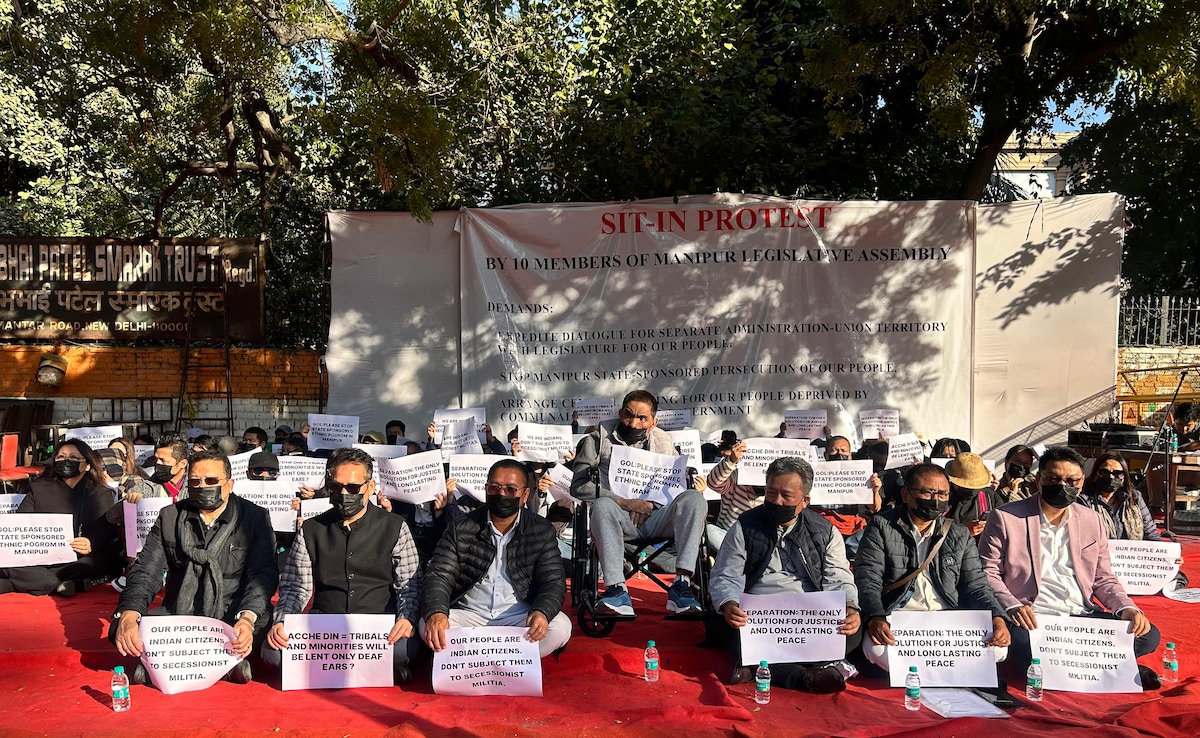
  • 10 Kuki-Zo MLAs Hold Protest In Delhi, Seek PM’s Intervention In Manipur Nation
  • 7.2 magnitude earthquake shakes southern Peru World
  • UK PM Rishi Sunak, Wife Akshata Murty’s Wealth Soars In 2024 Rich List World
  • Srinagar Records Highest Voter Turnout Since 1996 In Lok Sabha Polls Nation
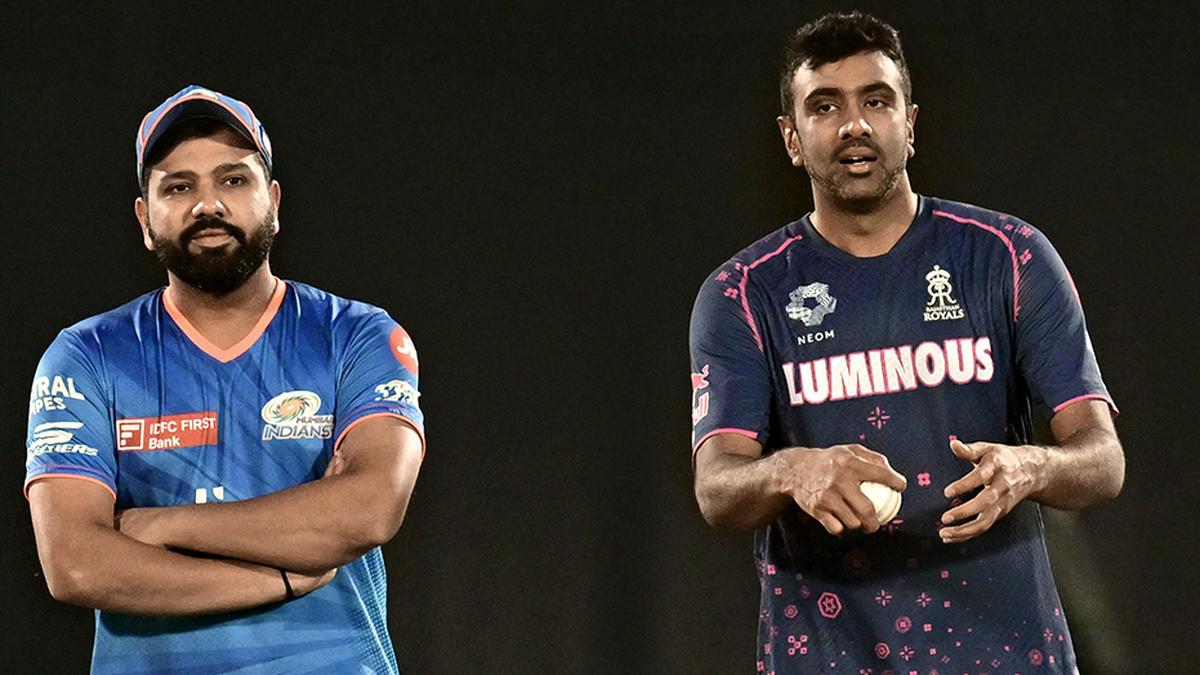
  • “After a stage, money doesn’t matter”: Ashwin on Rohit’s future in Mumbai Indians ahead of IPL 2025 mega auction Sports
  • Indian Navy Inducts Russia-Made Guided Missile Frigate INS Tushil Nation
  • Hamas Chief Yahya Sinwar killing LIVE updates: Kamala Harris says it’s a opportunity ‘to finally end the war in Gaza’ World
  • Rohan Bopanna-Matthew Ebden Sail Into Men’s Doubles Final Of Miami Open Sports

Notebook: The social character of scientific knowledge

Posted on December 19, 2024 By admin


“It’s still difficult to conclusively say what really happened with many things, scientifically”
| Photo Credit: Getty Images/iStockphoto

Many of us want to know how the SARS-CoV-2 virus originated. To do that, right now we need to unravel its evolution from its bat coronavirus ancestor by sequencing the genomes of animals and viruses near the outbreak site and we need to effect China’s cooperation to check whether SARS-CoV-2 could have ‘leaked’ from a lab. Where the virus came from was once singularly important because the answer could have pointed the way to avoiding similar outbreaks in future. But today, there is good reason for this question to take the back seat.

We don’t know where or how the virus originated. If it did in a lab, we would have to re-examine how we regulate research facilities and their safeguards and the manner of political oversight that won’t curtail research freedom. If the virus is au naturel, we would have to institute and/or expand pathogen surveillance, eliminate wildlife trafficking, and improve social security measures to ensure populations can withstand outbreaks without becoming distressed. But even as these possibilities aren’t equally likely (according to scientists I trust), the origin of SARS-CoV-2 is less important than it once was because the COVID-19 pandemic caused us to implement all these outcomes to varying degrees.

SARS-CoV-2 isn’t special of course: it’s still difficult to conclusively say what really happened with many things, scientifically. In 1977, a telescope in the U.S. recorded a signal from outer space that remains strange to this day. We don’t have a physical explanation for the “spooky” result of an experiment Anton Zeilinger and co. conducted in 1998. We lack a complete understanding of how general anaesthesia works its magic on the brain. Not even their makers fully know how powerful AI models work the way they do. No existing theory of nature can say what happens in intervals shorter than 10^(-43) seconds.

In fact, not knowing is ubiquitous. To quote philosopher Nicholas Rescher, “no one can say in advance what questions natural science can and cannot answer.” But science communication has taught me not all of us can know everything unless we invest considerable, perhaps even impossible, resources. Years ago, the philosopher Daniel Sarewitz wrote an article that changed my relationship with science. He argued that while we may know about the Higgs boson particle and that it gives other elementary particles their masses, we can’t truly know any of this until we learn the complicated mathematics required to make sense of it. Until then, we just have faith in the physicists who know. This relationship goes for most technical information in our lives.

Science journalists like me communicate science by providing for scientists’ claims, to quote Rescher, “the backing of a rationale that renders [their] correctness evident”, but I still demand a considerable amount of faith from readers. At some point faith also becomes trust but trust still isn’t understanding. (This said, the system of sanctions should they err provides a reasonable backstop for trust in scientists’ and journalists’ work.) The general idea here is that you pick someone you trust and you believe what they say to be true. Let’s call this the social character of scientific knowledge.

When people encounter a weighty concept scientists aren’t able to explain fully, the social character becomes more apparent than it normally is. Some people trust impassioned scientists unwilling to consider extra-scientific possibilities. Some lean towards authority figures who don’t trust science to provide the answer. Historically, people have turned to faith in the face of the unknown. The problems arise when we don’t know, or choose to overlook, where science ends and faith/trust begins. Then we fixate on answers that may never matter at the expense of answers that are already useful.

mukunth.v@thehindu.co.in

Published – December 20, 2024 12:15 am IST


Source link

Science Tags:Anton Zeilinger, COVID-19 pandemic, Daniel Sarewitz, Nicholas Rescher, SARS CoV 2

Post navigation

Previous Post: 35 Children Killed In Nigeria School Fair Stampede: Police
Next Post: Reality check on Sri Lanka’s Tamil question

Related Posts

  • What do countries and companies want in global plastic treaty talks? | Explained Science
  • NASA decision against using Boeing capsule to bring astronauts back adds to company’s problems Science
  • Rising number of ‘predatory’ academic journals undermines research and public trust in scholarship Science
  • GSLV-F14 Launch: GSLV-F14 carrying INSAT-3DS to lift off on Feb 17: ISRO Science
  • India launches its 1st reusable hybrid rocket ‘RHUMI-1’ Science
  • Nirmala Sitharaman: Wish I could bring taxes to almost nil but India needs to fund research Science

More Related Articles

Chandrayaan-3 takes another crucial step closer to moon Science
The Science Quiz | Security features of rupee notes Science
The birth and growth of music Science
What do the Atlantic Ocean hurricane forecasts foretell for India? Science
Trilobite fossils from upstate New York reveal extra set of legs Science
ISRO | Mission possible – The Hindu Science
SiteLock

Archives

  • December 2024
  • November 2024
  • October 2024
  • September 2024
  • August 2024
  • July 2024
  • June 2024
  • May 2024
  • April 2024
  • March 2024
  • February 2024
  • January 2024
  • December 2023
  • November 2023
  • October 2023
  • September 2023
  • August 2023
  • July 2023
  • June 2023
  • May 2023
  • April 2023
  • March 2023
  • February 2023
  • January 2023
  • December 2022
  • November 2022
  • October 2022
  • September 2022
  • August 2022
  • July 2022
  • June 2022
  • May 2022

Categories

  • Business
  • Nation
  • Science
  • Sports
  • World

Recent Posts

  • Pakistan developing missiles that eventually could hit U.S., top U.S. official says
  • No Organisation Called Kuki-Zo Council Exists, No District Called Lamka, Says Manipur Government
  • Pak Developing Missiles That Eventually Could Hit US: White House Official
  • Camera Found in Changing Room Of Bhopal MRI Centre, Footage Seized
  • ‘One Nation, One Poll’ Panel Gets More Members After Some Parties Object

Recent Comments

  1. dfb{{98991*97996}}xca on UP Teacher Who Asked Students To Slap Muslim Classmate
  2. "dfbzzzzzzzzbbbccccdddeeexca".replace("z","o") on UP Teacher Who Asked Students To Slap Muslim Classmate
  3. 1}}"}}'}}1%>"%>'%> on UP Teacher Who Asked Students To Slap Muslim Classmate
  4. bfg6520<s1﹥s2ʺs3ʹhjl6520 on UP Teacher Who Asked Students To Slap Muslim Classmate
  5. pHqghUme9356321 on UP Teacher Who Asked Students To Slap Muslim Classmate
  • In Violence-Hit Manipur, State Board Class 10 Students Pass Percentage Highest In A Decade Nation
  • Meta To Stop Paying Australian News Media World
  • Amid Tensions Over Aid Worker Deaths, Joe Biden To Speak With Benjamin Netanyahu Today World
  • 2 Male Cheetahs Released Into Open Wild Areas At Kuno National Park Nation
  • Dinesh Karthik Snubs Yashasvi Jaiswal, Picks India’s Opening Combination For Champions Trophy Sports
  • T20 World Cup 2024: From Rohit Sharma To Virat Kohli, Indian Team’s Report Card Sports
  • BRICS+ group’s share in global goods exports can overtake G7 by 2026: EY India World
  • Can humans get H5N1 infection by consuming raw milk? Science

Editor-in-Chief:
Mohammad Ariff,
MSW, MAJMC, BSW, DTL, CTS, CNM, CCR, CAL, RSL, ASOC.
editor@artifex.news

Associate Editors:
1. Zenellis R. Tuba,
zenelis@artifex.news
2. Haris Daniyel
daniyel@artifex.news

Photograher:
Rohan Das
rohan@artifex.news

Artifex.News offers Online Paid Internships to college students from India and Abroad. Interns will get a PRESS CARD and other online offers.
Send your CV (Subjectline: Paid Internship) to internship@artifex.news

Links:
Associate Journalism
About Us
Privacy Policy

News Links:
Breaking News
World
Nation
Sports
Business
Entertainment
Lifestyle

Registered Office:
72/A, Elliot Road, Kolkata - 700016
Tel: 033-22277777, 033-22172217
Email: office@artifex.news

Editorial Office / News Desk:
No. 13, Mezzanine Floor, Esplanade Metro Rail Station,
12 J. L. Nehru Road, Kolkata - 700069.
(Entry from Gate No. 5)
Tel: 033-46011099, 033-46046046
Email: editor@artifex.news

Copyright © 2023 Artifex.News Newsportal designed by Artifex Infotech.