


When Abubakr Yusufi boarded a flight to Moscow in July, he thought he wouldn’t be home for years.
The 23-year-old from a small village in Tajikistan hoped to join his uncle and cousins working in construction in the Russian capital and save enough money to return home and find a bride. But Yusufi only saw Moscow from the airplane window.
Also Read | Moscow attack turns spotlight on uneasy Tajikistan
Held for six hours at Vnukovo airport, he said border authorities stamped his passport with a deportation order and put him on a plane back to the Tajik capital, Dushanbe, the next day. Reuters could not determine why he was denied entry.
“I wanted to go to Russia to earn money,” Mr. Yusufi said, standing by his family’s cotton fields outside Hulbuk, a district capital some 15 miles (24 km) from the border with Afghanistan.
“Now I don’t know what to do.”
Nearly nine months after Islamist militants from Tajikistan attacked the Crocus City Hall, a concert venue near Moscow, killing 145 people, migrant workers from Central Asia describe growing hostility towards them in Russia.
More are being turned back at the border or deported as changes to the law make it easier to expel them, while a drop in the number of Tajiks leaving to work in Russia underlines how an economic model both countries have relied on is under strain.
Reuters spoke with six Tajiks who lived in Russia or who aspired to do so to discover how their lives changed after the March 22 shootings, one of the deadliest militant attacks on Russian soil.
Three, including Mr. Yusufi, said they had been eager to work in Russia but were turned away at the border. They expressed dissatisfaction with their situation back in Tajikistan, where they are working menial jobs and accumulating debts.
The three in Russia said a rise in street harassment and frequent police raids were making life there more difficult for migrants, a concern also raised by rights advocates.
The trend has economic and security implications for both nations.
Russia’s roughly 6 million migrant workers play a crucial role in keeping its wartime economy afloat. Labour shortages are fuelling wage growth and high inflation, and Central Asian states, including Tajikistan—a landlocked, heavily agricultural country with a history of Islamist violence—supply the bulk of that workforce.
President Vladimir Putin said in February that Russia needed 2.5 million more workers to grow its economy, pointing to shortages in construction and manufacturing, sectors traditionally favoured by migrants.
At the same time, nationalist politicians emboldened by the war in Ukraine and militant violence are ratcheting up rhetoric against foreigners and pushing legislation that impacts the lives of migrants working in Russia or those wanting to do so.
Impoverished Tajikistan, for whom the export of labour to Russia is an economic lifeline, has criticised the changes.
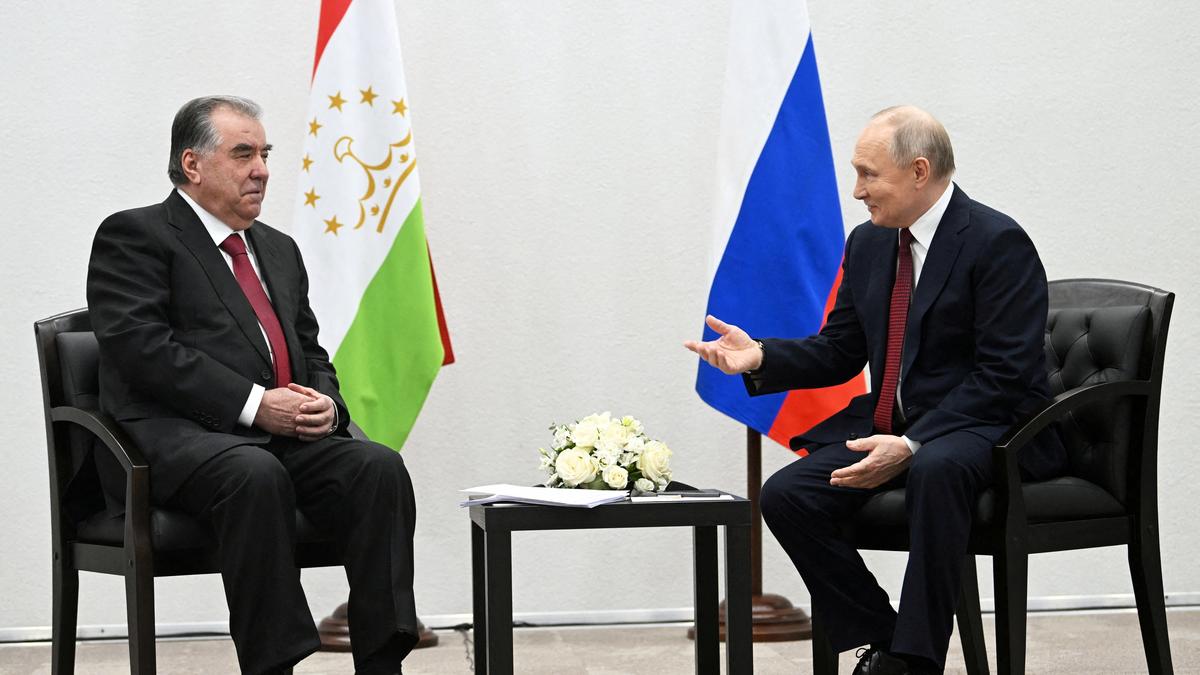
“We cannot but be alarmed by the trend of widespread violation of the fundamental rights and freedoms of our citizens,” Tajik Prime Minister Qohir Rasulzoda told a meeting of Russian and Tajik officials in October, using unusually blunt language.
Regional analysts warn that the combination of joblessness at home and no longer being wanted in Russia could ignite domestic political unrest and leave migrant workers more susceptible to recruitment by extremist groups.
Security analysts say dozens of Tajiks have joined a branch of Islamic State based in Afghanistan, which shares a border with Tajikistan. The group known as Islamic State Khorasan (ISIS-K) claimed the Crocus City Hall attack.
“Having a lot of young men on your territory without a job … risks that there will be dissatisfaction,” said Temur Umarov, a fellow at the Carnegie Russia Eurasia Center in Berlin.
Beyond exporting migrants to Russia, Dushanbe “doesn’t have a Plan B,” he added.
Tajikistan’s foreign ministry, Russia’s Federal Migration Service and its economy ministry did not respond to questions for this article. The Kremlin declined to comment.
Pressure on migrants
Immigration is an emotive issue in many countries and has played a prominent role in politics from Europe to the United States.
Patriarch Kirill, head of Russia’s Orthodox Church and a close ally of Putin, has repeatedly stated that large numbers of migrants pose an existential threat to Russia and its traditional values.
Migrants, Kirill said recently, come from a different “historical experience” and adhere to “a different civilisational code”.
Since the Crocus City Hall attack, Russian lawmakers have put forward a raft of measures to increase restrictions on foreign workers and make it easier to deport them.
Several Russian regions, including Moscow, have banned foreigners from working in sectors such as medicine, education or social services.
The lower house of parliament, the Duma, is also considering proposals to expand the list of deportable offences to include hooliganism and disobeying police.
Russia deported 50% more migrants in the first half of 2024 – about 100,000 in total – than the same period in 2023, according to Alexander Gorovoy, an interior ministry official overseeing migration policy.
The number of immigration-related workplace inspections jumped over two and a half times this year, Gorovoy told Kommersant newspaper in September.
Farukh, a 32-year-old Tajik who has lived in Russia since he was a teenager, said he has never felt more unsafe there.
“Whether or not your papers are OK, they can detain you for two to three days for checks. Some people have had their passports taken away. Many people are being deported … with no explanation given,” he told Reuters, speaking on condition that only his first name was used for fear of reprisals.
Since arriving in Russia in 2011, Farukh said he had made enough money working on construction sites to bring his wife and children to join him and had become a Russian citizen. But earlier this year, he sent his family back to Tajikistan out of concern for their safety.
“If it wasn’t for my debt problems, I would have already left Russia,” Farukh said.
Employers say they need more migrants, not fewer.
A recent survey by Russian job site hh.ru showed 53% of surveyed companies did not have enough foreign workers. The construction and service industries in particular rely heavily on such workers.
Russian unemployment is at a record low of 2.3%, with labour shortages exacerbated by mobilisation for the Ukraine war and the exodus of hundreds of thousands of people since the 2022 invasion.
In November, one of Russia’s top bankers, VTB CEO Andrei Kostin, said that without migrants the Russian economy would not be able to breathe.
“It’s easy to kick them out, but someone is needed to work,” Kostin said.
Economic Consequences
In Tajikistan, the economic consequences of the squeeze are already being felt.
Last year, remittances from workers abroad accounted for more than a third of its GDP. Average monthly wages in Tajikistan are about a quarter of what they are in Russia.
This year, the World Bank forecast Tajik economic growth would slow to 6.5% from 8.3% in 2023, citing the expected drop in remittances as one factor.
Roughly 392,000 people left Tajikistan to work abroad between January and June – 16% fewer than in the same period last year – Tajik Labour, Migration and Employment Minister Gulnora Hasanzoda told reporters. Almost all of its migrants go to Russia.
Tajik officials and some security experts say they fear the worsening economic outlook in the country could prove fertile ground for extremists.
Tajik President Emomali Rahmon warned in March of a rise in terrorist attacks by Tajiks abroad, saying 24 nationals had carried out attacks in 10 countries over the last three years.
Security analysts have linked Tajik ISIS-K militants to deadly attacks at home, as well as in Turkey, Iran, the United States and Europe.
Riccardo Valle, director of research at the Khorasan Diary, a non-partisan centre that reports on militancy in the region, says it is “just a matter of time” before a larger-scale attack occurs on Tajik soil.
The Crocus attacks were “a watershed moment for Tajik supporters of the Islamic State,” he told Reuters. “They know now that they’re capable of carrying out such attacks.”
This year, Tajikistan expanded a campaign in which thousands of officials have fanned out across the country to visit homes and teach about the danger of recruitment by militants, one of the biggest and most public initiatives of its kind.
In Khatlon, a southern region bordering Afghanistan, state employees visited some 213,000 families between January and November – nearly all households – officials said this month.
“The number of young people who have joined religious extremist groups in our province is very high,” regional head Davlatali Said told reporters in August, without providing further details.
Back on the family farm, which is in Khatlon, Yusufi is pondering what to do.
He doesn’t lack for work there, where he tends the livestock and vegetable garden. But his parents’ home needs repairs, and he knows he will never make as much money doing odd jobs around the village as he could earn in Russia.
He is considering signing up for the army. At least there he can earn a steady wage, he said.
“I’ll serve a year and come back, and then I can think about getting married.”
Published – December 18, 2024 10:10 am IST