



The story so far:-
Last week, Norway’s Parliament, the Storting, issued an unreserved apology for its assimilation policies towards Sami, Kven and Forest Finn peoples. It also laid out a series of resolutions to address the continuing discrimination faced by these communities, The New York Times reported.
A century-long process of Norwegianisation of indigenous peoples and migrant groups commenced in the 1850s and did not officially end till the 1960s. It saw the suppression of indigenous languages and traditional culture. Further, Sami children were separated from their parents and sent to boarding schools all across the Sapmi — ‘the land of the Sami’ which corresponds with present-day northern Russia, Finland, Norway and Sweden.
Who are the Samis, Kvens and Forest Finns?
Norway has designated certain groups with ‘long-standing attachment to the country’ as national minorities, including the Kvens/Norwegian Finns, Jews, Forest Finns, Roma and the Romani people. The Sami, meanwhile, are an Indigenous people spread across northern Europe, including Finland, Sweden, Norway and Russia. This region has been called Lapland; however the terms Lapps/Laplanders are considered derogatory by some Sami. Only about 1,00,000 Sami remain. The largest Sami population is concentrated in Norway — considered the heart of Sapmi — in areas such as Finnmark county.
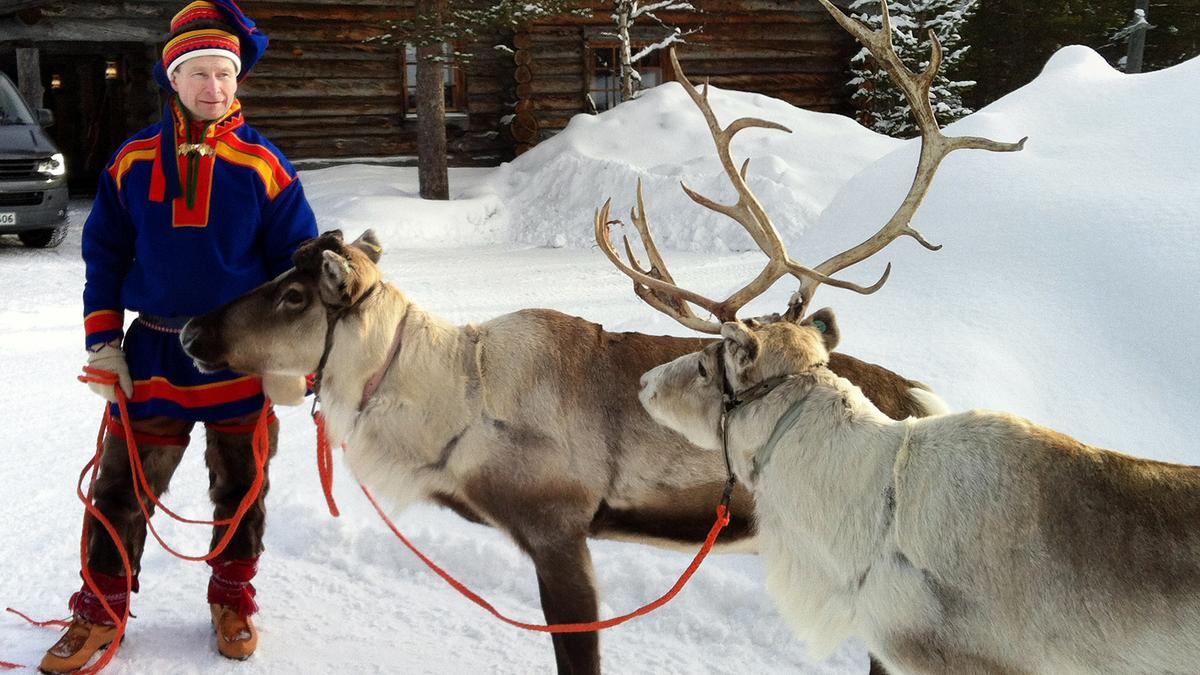
Inhabiting this chilly terrain for centuries, the Sami have developed their own culture and unique way of life. Many are reindeer herders, and the Norwegian government has designated reindeer herding as an activity exclusive to the Sami, issuing herding licenses based on ancestral lands.
Sami languages are any of three languages (sometimes considered dialects of one overarching language) belonging to the Finno-Ugric group of the Uralic language family — North Sami, East Sami and South Sami.
Both Kvens and Forest Finns are much smaller groups (than the Sami) which migrated to present-day Norway around 500 years ago.
Kvens are the descendants of migrants from the Torne River Valley, part of present-day Sweden and Finland, who historically practised slash and burn farming, fishing and blacksmithing. The Kven language, a Finnic language closely related to Meänkieli and Finnish, was recognised as an independent language in Norway in April 2005. Forest Finns, meanwhile, are descendants of immigrants from eastern Finland who settled in Sweden in the 1500s, before making their way to Norway in the early 1600s.
What were the Norwegianisation policies?
Indigenous peoples and minority groups historically faced discrimination from Scandinavian governments, and laws in the second half of the nineteenth century gave this historical prejudice a more solid form in Norway.
Norway engaged in a century-long process of “Norwegiansation” and assimilation, which intensified after the nation gained independence in 1905.
Policies to integrate and assimilate these groups by suppressing their native language and culture emerged. These policies used education and religion as a tool to erase local language and culture. Traditional practices such as ‘yoiking,’ a traditional call of the Samis, were forbidden during this time. Young Sami children were taken away from their parents and forced to live in foster homes and state-run boarding schools in the 1900s. The government demarcated some regions for “suitable populations,” where these groups were not allowed to settle. Groups also lost access to grazing land and fishing grounds.
Native cultural beliefs were suppressed by Christian mission churches belonging to the Evangelical Lutheran and Catholic denominations. The Sami were forced to give up their earlier shamanistic rituals.
Social discrimination persisted under the guise of scientific research. Members from these communities were made to undergo anthropological tests by scientists, and their burial grounds were exhumed to study the ethnic characteristics of their predecessors.
These Norwegianisation policies finally came to an end in the 1960s, with laws formally repealed or replaced in 1963.
What is the Truth and Reconciliation Committee?
Measures at the community and government level were taken up to address the past oppression. Today, the Sami have a university as well as schools teaching the Sami language, and a (mostly symbolic) independently elected Sami Parliament established in 1989, with which the Norwegian parliament has a working relationship. The Education Act of 1969 gave Sami students the right to compulsory and upper-secondary education in their own language, and policies have also sought to integrate the language in school curricula.
Community efforts too have persisted to preserve the unique identity of these groups. For example, Young Forest Finns works to revive the group’s culture and also has a museum under development.
The Truth and Reconciliation Commission was launched in 2018 to investigate the historical injustice and suggest measures for inclusion and revitalisation versus earlier policies of Norwegianisation and assimilation.
The Committee released a 700-page report on June 1, 2023. The current apology and a set of 17 resolutions to address prejudice against these groups stem from this report, which took 35 hours to read aloud in parliament, and was broadcast nationally. Recommendations in the report included the establishment of a centre for reconciliation work, preservation of minority and indigenous languages and language training. According to the report, the government is expected to submit regular reports in parliament, of the work undertaken for Indigenous people and national minorities, starting in 2027.
Other Nordic nations too have launched similar commissions, including the Truth Commission for the Sami People in Sweden and the Truth and Reconciliation Commission Concerning the Sami People in Finland. Both are expected to present their reports sometime next year.
What is the current apology?
The unreserved apology was tendered last week to the Sami, Kvens and Forest Finns by the Norwegian parliament following on the heels of last year’s Truth and Reconciliation Commission report. The move was approved by the Parliament and the apology read out loud on November 11.
All lawmakers except one group — a bloc from the right-wing Progress Party — voted for the resolution. This cited possible conflict among communities as a reason for voting against it. In a debate held in May, the party’s leader, Bard Hoksrud, said it was “ fundamentally wrong to give special privileges to some groups at the expense of others,” adding that they believed that “history should remain history.”
In a written response to a question from a journalist, Conservative party member Svein Haberg said, “The assimilation policy that was historically pursued continues to be both the root of personal hardship for the individuals and groups that were subject to this policy, and a source of conflict today.”
Silje Karine Muotka, a Sami leader, called it “a day with many emotions,” in a written statement. “Going forward, we expect an active policy of reconciliation…..The decision from today ensures long-term follow-up, and it has both financial and legal repercussions. But unfortunately, no settlement is made with ongoing injustice and conflicts over land and water,” she wrote.
In 1977, King Harald V apologised to the Sami people, and Sami People’s Day has been celebrated since 1993 on February 6 (the first Sami National Congress was held on February 6, 1917 in Trondheim, Norway). However, this is the first instance of a public apology to the Kvens and Forest Finns.
What are the continuing challenges?
Even after the formal repealing of the laws, prejudice in the nation has continued. The report by the Truth and Reconciliation Commission found that members of these groups have less access to health care in Norway, a country with a robust social security net.
The Sami have had a longstanding dispute with the Norwegian government over their way of life and land use, although some laws exist over the Samis’ right to grazing land. A 2007 law sought to limit the size of reindeer herds — ostensibly to prevent overgrazing, a move opposed by some Sami herders.
Indigenous and minority languages, too, remain critically endangered. Bullying, hate speech and harassment has persisted, as have negative stereotypes.
As reported by The New York Times, a 2021 survey was conducted as part of an Arctic University of Norway project which studied the efficacy of the Truth and Reconciliation Commission. According to the results of this survey, 60% of Norway residents said they thought most people knew little to nothing about how the assimilation policies affected the Sami. That figure rose to 88% when it came to how the practices affected Forest Finns and Kvens.
The project was led by Eva Josefsen, a political scientist at the Arctic University who is Sami herself. She highlighted that the lack of transparency about land rights was a sticking point, saying that there was a “general implementation gap between legal rights and what is actually delivered.”
Published – November 27, 2024 07:30 am IST