




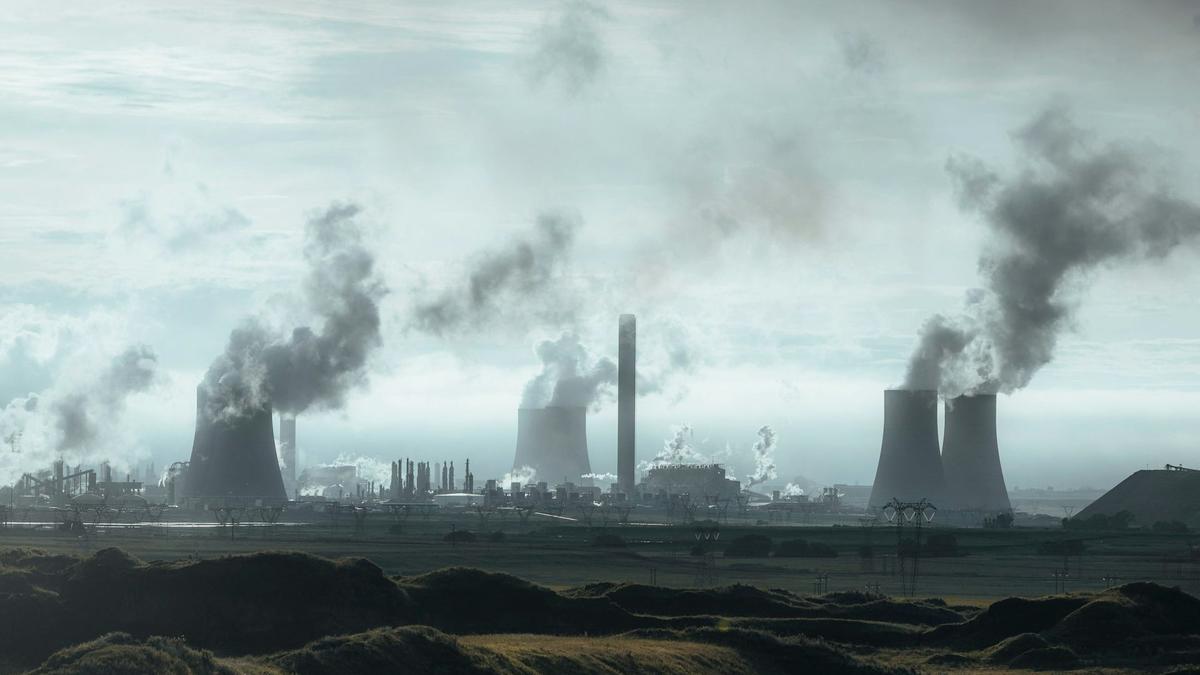
The giant Secunda complex of Sasol, South Africa’s biggest chemicals and energy company, provides the fundamental ingredients to South Africa’s petrochemical sector. It produces petrochemicals, plastics, chemicals essential to key industries such as agriculture (fertilisers) and mining (explosives), and 30% of the country’s liquid fuels. These value chains are very important to the economy. In 2021, this output accounted for 2.6% of GDP directly and 5.2% indirectly.
Sasol also employs more than 28,000 South Africans. It makes significant contributions to corporate taxes, wages, and social investment. It sustains a whole town built specifically for its Secunda workforce.
Sasol’s Secunda facilities are rare and interesting. Firstly, they use coal rather than oil or gas as a feedstock to make petrochemicals and liquid fuels, which is unusual. Secondly, as the largest manufacturer of petrochemicals in South Africa, the facility is hugely important.
However, Secunda faces two major challenges. First, its reliance on coal as the primary feedstock makes it the world’s largest single point emitter of carbon dioxide emissions. Second, converting the existing Secunda plant to use sustainable feedstocks is not economically viable.
We are academics with extensive experience in the energy sector: one with 40 years’ experience in energy and economic regulation, and the other as a chemical engineer for 30 years at Sasol. We worked with Tristan Hahn, a climate change strategist who previously worked for Sasol for several years, and the Trade and Industrial Policy Strategies think tank to research the future of the Secunda facility.
We found that South Africa’s petrochemical sector is at a crossroads. Compared to the petrochemical industry averages, the Secunda facility’s coal-based technology results in a much higher amount of carbon dioxide emitted per ton of product.
Given the technical challenges and likely financial impossibility of converting Secunda to sustainable feedstocks at its large scale, even with technological advancements, we concluded that the Secunda facility is entering the sunset phase of its life.
When the coal-based plant at Secunda gets to the end of its life, it will leave a big hole in the South African economy and end the supply of petrochemical feedstocks. South Africa needs to start planning for that eventuality, which might be closer than we think.
The problem with coal
Secunda was initially built in the late 1970s to use coal as its primary feedstock. In 2004, gas from Mozambique was introduced as a supplementary feedstock. Our research evaluated the possibility of converting Sasol’s operations to use green hydrogen and sustainable carbon as alternative feedstocks to coal and gas. However, we found this option to be both technically and commercially infeasible.
South Africa’s international commitments to decarbonisation, along with shareholder pressure, have pushed Sasol to pledge a 30% reduction in its greenhouse gas emissions by 2030. However, to achieve this target it has announced an 11% cut in production. This poses challenges for the supply of chemicals and liquid fuels, and could negatively affect employment and the economy.
Secunda’s reliance on coal is unsustainable in other ways. Its own coal supplies have reduced and deteriorated in quality.
Secunda has relied on natural gas from Mozambique as a supplementary feedstock for 20 years, but those reserves are now depleting. Sasol has notified major industrial customers, such as steel maker ArcelorMittal and Consol Glass, that it will stop supplying them with gas in 2027. This poses a significant threat to manufacturing in South Africa unless viable alternatives are found in time.
Without affordable and sustainable feedstocks, Sasol faces the dual challenge of maintaining production while reducing its carbon footprint.
The South African government’s policy decisions on carbon taxation and environmental regulation – such as the proposed carbon tax increase to US$30/tonne of CO₂ by 2030 – could further pressure Sasol. Higher carbon taxes could tip Secunda over the edge, leading to economic disruption and job losses.
Our research suggests another way South Africa could meet its nationally determined contribution to reducing greenhouse gas emissions. Prioritising renewable electricity and cutting emissions from Eskom’s coal-fired power stations could allow Secunda to continue some of its emissions. This would help preserve the country’s only source of petrochemicals.
Switching to new, green technologies
Sasol could also switch to using biomass, green hydrogen, and carbon capture and storage technologies instead of coal. None of these options are financially viable in the short to medium term, however. Biomass feedstocks are not available at the scale required and green hydrogen remains too expensive. Carbon capture and storage technologies are not yet commercially viable.
Secunda is also an ageing facility. Like all large industrial plants, it cannot operate indefinitely. When its equipment needs replacing, we believe that there is no commercial case to do so. Running this equipment carefully to the end of its useful life should be the main priority.
Sasol has been in financial distress for several years. It is grappling with declining shareholder value, rising debt, and expensive projects that have not delivered the expected returns. For example, Sasol’s Lake Charles Chemicals Project in the United States went way over budget. These financial constraints make the capital-intensive investments required for decarbonisation even more daunting.
Ultimately, the Secunda facility will close down. When this will happen will be partly determined by government regulation and leniency and partly by how Sasol manages the transition. Until then, it will have to find a way through a host of difficulties.
Alternatives to Secunda’s petrochemicals
Our research identified several economic development substitutes for South Africa.
These are: developing green hydrogen for the export of ammonia and fertiliser; manufacturing electric vehicles; and developing green steel using hydrogen-based direct reduced iron technology.
Each of these is in line with global trends towards decarbonisation. However, these alternatives are very new. They need substantial research, investment and infrastructure to get off the ground.
For this reason, our research calls for a detailed analysis to assess the feasibility and economic potential of these sectors.
Secunda, once a symbol of South Africa’s industrial prowess, now faces a sunset phase. In this transition, South Africa has a unique opportunity to redefine its petrochemical sector. There is no simple solution – policymakers must balance the need to reduce emissions with the socio-economic realities of thousands of jobs and billions in economic output.
For Sasol, the transition to a greener future is fraught with risks, but also opportunities – if the right investments and strategies are pursued.
Rod Crompton is visiting adjunct professor and Bruce Douglas Young is senior lecturer, both at the African Energy Leadership Centre, University of the Witwatersrand. This article is republished from The Conversation.
Published – October 25, 2024 10:57 am IST