Skip to content
  • Facebook
  • X
  • Linkedin
  • WhatsApp
  • Associate Journalism
  • About Us
  • Privacy Policy
  • 033-46046046
  • editor@artifex.news
Artifex.News

Artifex.News

Stay Connected. Stay Informed.

  • Breaking News
  • World
  • Nation
  • Sports
  • Business
  • Science
  • Entertainment
  • Lifestyle
  • Toggle search form
  • Hema Malini Shares Mathura’s Problems, Dealing With Monkeys One Of Them Nation
  • Domestic air passenger traffic grows 5.1% to about 138.9 million in May: ICRA Business
  • Cooperatives are the solution for hunger, farmers’ woes: Brazil Agriculture Minister Business
  • Payel Mukherjee: Actor Says She Was Attacked By A Biker In Kolkata Amid Rape-Murder Protests: If A Woman Can… Nation
  • What New Proposals Did Trump Make During His Economic Speech? World
  • R Ashwin Calls Ex-India Star Who Critcised His Action On Twitter. Here’s What Happened Next Sports
  • PM Modi Thanks Putin For Fertilizer Supply World
  • Betrayed By Indore Pick, Congress Bats For NOTA To “Teach BJP A Lesson” Nation

Redesigned programmes can vastly improve TB treatment outcomes

Posted on October 19, 2024 By admin


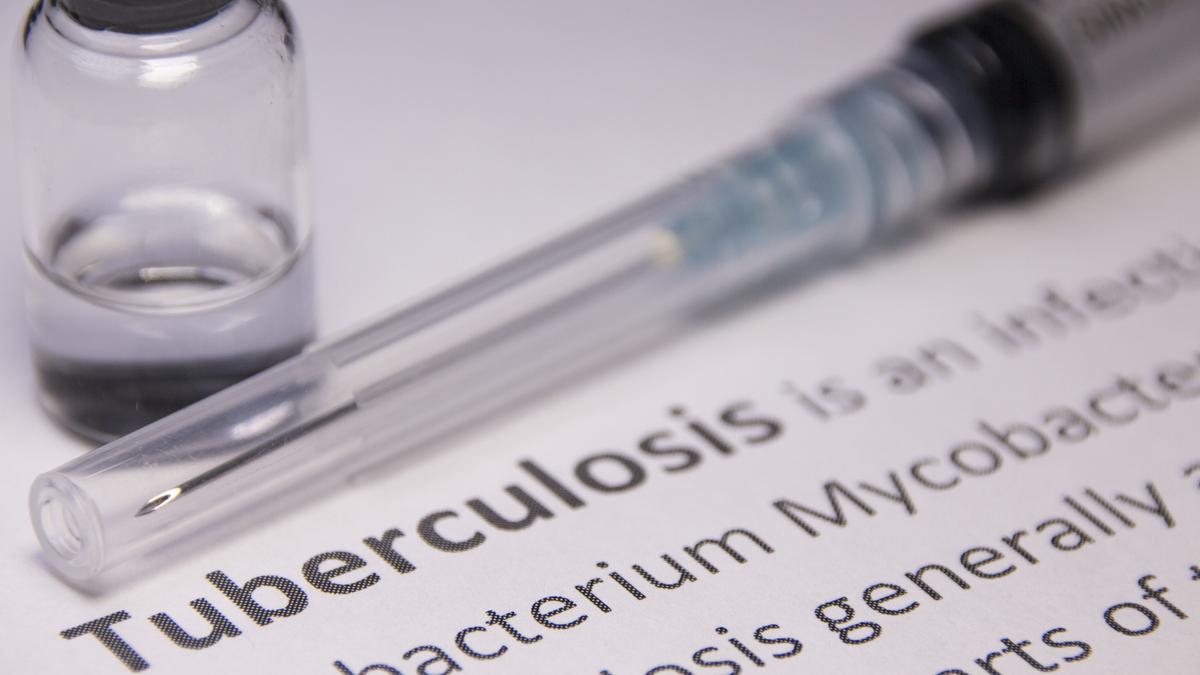
TB remains a major public health problem in India with an estimated three million new patients with TB and 3,00,000 TB deaths every year. The recent announcement by the Ministry of Health and Family Welfare of doubling the direct benefit transfer from ₹500 to ₹1,000 per month in the Nikshay Poshan Yojana (NPY) for the entire duration of treatment, and initiating the disbursement of ₹3,000 at the time of diagnosis is a welcome step. There is also a proposal to provide energy-dense nutritional supplements to underweight patients for two months and to extend nutritional and social support to the families. India is probably the only high TB burden country to roll out such a large-scale scheme that will address the nutritional needs and the economic distress of the patients.

TB remains a social disease in its causation and its outcomes. Social factors associated with poverty, such as overcrowding and undernutrition increase the risk of TB. Most other risk factors, too, like diabetes, smoking, and alcohol, are either more prevalent or are poorly managed in those living in poverty. Undernutrition contributes to more than a third to nearly half of new TB cases in India. Poor access to primary care, poor quality of care, and poor adherence generate a vicious cycle leading to severe disease and risk of death in the poor. Their predicament is grim as they face income loss, direct and indirect costs due to the disease and its treatment, food insecurity, and often an inability to return to usual work because of the sequelae of the disease.

The Nikshay Poshan Yojana is crucial because severe undernutrition is common in people with TB in India — the average weight of adult men is 43 kg and 38 kg for adult women at diagnosis. Without nutritional support, such patients have worse outcomes during and after treatment. These patients often do not have early weight gain, and this poses a high risk of death; even after effective treatment, undernutrition may persist, increasing the risk of recurrent TB. Studies also show a high prevalence of food insecurity in TB-affected households. Nutritional support thus has a sound clinical, public health, and ethical basis. It aligns with India’s 2017 adaptation of the WHO guidelines on nutrition care and support for patients with TB. There is compelling evidence that nutritional support with food baskets can improve treatment adherence and weight gain, allow a successful return to work, and reduce mortality risk. In the RATIONS trial, in patients provided with a 10 kg per month food basket, early weight gain was associated with over 50% reduced risk of death. Moreover, a low-cost intervention of six months with a food basket of cereals and pulses with micronutrient pills for family members reduced new cases by up to 50%, akin to a vaccine.

An evaluation of the NPY programme over five years by the Chennai-based National Institute of Epidemiology (NIE) has significant lessons. An important challenge is that the TB programme staff, now engaged in other new initiatives, feel overburdened by the processes of facilitating the direct benefit transfer. Another issue is that the most vulnerable communities cannot access the benefit because of a lack of proof of identity, residence, bank accounts, or distances involved. The NIE evaluationshowed that non-receipt of benefits under NPY was associated with a four-fold higher risk of adverse outcomes.

As clinicians and researchers working in this field, some clarifications and implementation issues must be addressed. First, there is a need for dedicated human resources for NPY activities, and these can also be utilised for newer initiatives like evaluating household contacts. Second, there is a need for locally contextualised counseling material for patients and family members to emphasise nutrition as an essential component of treatment. It should include locally available and culturally acceptable foods to optimise the intake of energy and calories. Quality protein intake is deficient in poorer households. Pulses, soybean ground nuts, milk, and eggs are more cost-effective sources than supplements derived from them, and this needs particular emphasis in the counseling. Third, given the evidence supporting food baskets, the recommendation related to energy-dense supplements should be deliberated upon. Commercial nutritional supplements risk higher cost, mystification, lower acceptability, and lower long-term sustainability. Given the prevalence of severe undernutrition in our patients, two months of nutritional support may not be sufficient.

Fourth, with regard to Nikshay Mitra, the coverage of the most vulnerable is inadequate, and a redesign is warranted. Due to the significant stigma of TB, an explicit advisory against pictures of patients and families receiving food baskets is needed. Finally, nutritional, financial, and social support initiatives can work best if they are integrated with other aspects of care — uninterrupted supply of drugs, better management of comorbidities, better evaluation of patients at diagnosis for high-risk features, and referral for in-patient care as is being done in Tamil Nadu — are vital to ensuring better outcomes.

(Anurag Bhargava and Madhavi Bhargava work in the departments of Medicine and Community at the Yenepoya Medical College, Mangalore, and led the RATIONS trial)

Published – October 19, 2024 09:15 pm IST


Source link

Science

Post navigation

Previous Post: “New Zealand Are Clueless”: India Great Tears Into Visitors Amid Sarfaraz Khan, Rishabh Pant’s Carnage
Next Post: Vladmir Putin for creating parallel SWIFT system to break U.S. dollar dominance

Related Posts

  • How has Daniel Kahneman’s work in psychology withstood the test of time? Science
  • Global coral bleaching event expands, now the largest on record Science
  • How plastics affect our daily life Science
  • Chandrayaan-3 | How NASA, ESA will support ISRO during the Moon landing on August 23 Science
  • NCBS museum hosts bee species from across India to spur research Science
  • IIT Bombay researchers show one way how animals find their way home Science

More Related Articles

GSLV-F14 Launch: GSLV-F14 carrying INSAT-3DS to lift off on Feb 17: ISRO Science
ISRO carries out assessment of space situation around L1 to ensure safety of Aditya-L1 spacecraft Science
National Science Day 2024: Why sustainable funding matters for India’s ‘science power’ ambition | Explained Science
Pulse oximeters: Does skin colour affect SpO2 measurements? Science
NASA just shut down a planetary defence mission that tracks asteroids. Now what? Science
Science Quiz | The obscure mathematics of string theory Science
SiteLock

Archives

  • October 2024
  • September 2024
  • August 2024
  • July 2024
  • June 2024
  • May 2024
  • April 2024
  • March 2024
  • February 2024
  • January 2024
  • December 2023
  • November 2023
  • October 2023
  • September 2023
  • August 2023
  • July 2023
  • June 2023
  • May 2023
  • April 2023
  • March 2023
  • February 2023
  • January 2023
  • December 2022
  • November 2022
  • October 2022
  • September 2022
  • August 2022
  • July 2022
  • June 2022
  • May 2022

Categories

  • Business
  • Nation
  • Science
  • Sports
  • World

Recent Posts

  • “Babar Azam Should Play Domestic Cricket Now”: Virender Sehwag Delivers Explosive Verdict
  • BCCI To Reject PCB’s ‘Delhi’ Proposal For Champions Trophy? Report Says…
  • Elon Musk offers voters $1 million a day to sign PAC petition backing the Constitution. Is that legal?
  • Inside Ex Hamas Chief Yahya Sinwar’s Bunker
  • India needs to hike domestic fertiliser output to offset unstable market: Economist

Recent Comments

  1. dfb{{98991*97996}}xca on UP Teacher Who Asked Students To Slap Muslim Classmate
  2. "dfbzzzzzzzzbbbccccdddeeexca".replace("z","o") on UP Teacher Who Asked Students To Slap Muslim Classmate
  3. 1}}"}}'}}1%>"%>'%> on UP Teacher Who Asked Students To Slap Muslim Classmate
  4. bfg6520<s1﹥s2ʺs3ʹhjl6520 on UP Teacher Who Asked Students To Slap Muslim Classmate
  5. pHqghUme9356321 on UP Teacher Who Asked Students To Slap Muslim Classmate
  • Accused Planned Rameshwaram Cafe Blast After Ayodhya Event: Anti-Terror Agency NIA Nation
  • Case Against BJP Leader CT Ravi Over Social Media Post: Karnataka Poll Body Nation
  • Rupee turns flat at 83.43 against U.S. dollar in early trade Business
  • Solar Eclipse To Plunge Parts Of US Into Darkness, Schools to Close World
  • 13-Year-Old Boy Kills Self After Being Scolded By Father In UP: Cops Nation
  • Sourav Ganguly Lodges Police Complaint Alleging Cyberbullying Sports
  • Noida Issues Traffic Advisory Ahead Of Resurfacing Work On Elevated Flyover Nation
  • New US House Speaker Announces Resolution Supporting Israel As First Bill World

Editor-in-Chief:
Mohammad Ariff,
MSW, MAJMC, BSW, DTL, CTS, CNM, CCR, CAL, RSL, ASOC.
editor@artifex.news

Associate Editors:
1. Zenellis R. Tuba,
zenelis@artifex.news
2. Haris Daniyel
daniyel@artifex.news

Photograher:
Rohan Das
rohan@artifex.news

Artifex.News offers Online Paid Internships to college students from India and Abroad. Interns will get a PRESS CARD and other online offers.
Send your CV (Subjectline: Paid Internship) to internship@artifex.news

Links:
Associate Journalism
About Us
Privacy Policy

News Links:
Breaking News
World
Nation
Sports
Business
Entertainment
Lifestyle

Registered Office:
72/A, Elliot Road, Kolkata - 700016
Tel: 033-22277777, 033-22172217
Email: office@artifex.news

Editorial Office / News Desk:
No. 13, Mezzanine Floor, Esplanade Metro Rail Station,
12 J. L. Nehru Road, Kolkata - 700069.
(Entry from Gate No. 5)
Tel: 033-46011099, 033-46046046
Email: editor@artifex.news

Copyright © 2023 Artifex.News Newsportal designed by Artifex Infotech.