





In the summer of 1976, a simple poplar tree standing in the Korean Demilitarized Zone (DMZ) became the unlikely catalyst for one of the tensest military escalations between the United States and North Korea. What began as routine tree-trimming quickly spiralled into a dangerous confrontation that nearly ignited a new conflict on the Korean Peninsula. The tree, which obscured visibility at a key checkpoint, would soon thrust the world into a bizarre standoff, forever remembered as Operation Paul Bunyan.
The Korean Demilitarized Zone (DMZ)
The Korean Demilitarized Zone (DMZ), established after the Korean War in 1953, was a narrow strip of land dividing North and South Korea. Despite its name, the DMZ was one of the most heavily militarised borders in the world. During the Cold War, it symbolised the bitter rivalry between communist North Korea, backed by the Soviet Union and China, and the U.S.-allied South Korea. The fragile peace was constantly tested by military posturing, skirmishes, and espionage, with soldiers from both sides stationed just metres apart, ever-ready for conflict. In this tense atmosphere, even the smallest incident could risk escalating into war.
The Incident: A routine task turns deadly
On August 18, 1976, a seemingly ordinary task took a fatal turn in the DMZ. At Checkpoint 3, a critical outpost in the Joint Security Area (JSA), a large poplar tree had grown so tall that it obstructed the view of U.S. and South Korean forces, compromising their line of sight to the Bridge of No Return, a key strategic route between North and South Korea. To restore visibility, a group of U.S. and South Korean soldiers, led by Captain Arthur Bonifas and Lieutenant Mark Barrett, were sent to trim the tree.
The image shows the view from Checkpoint 3 (CP#3) looking south toward Taesong-dong. The flag from Taesong-dong is in the center of the picture. KPA#8 is to the left. The hill behind KPA#8 is (was) Guard Post (GP) Collier.
The area to the left of KPA#8 is the depression area where Lt. Mark Barrett’s body was found after the Axe Murder Incident.
(Photo March 1976)
Armed only with axes, they began their task, unaware of the impending danger. As they worked, North Korean soldiers appeared, led by Senior Lieutenant Pak Chul, who aggressively demanded the operation stop, claiming the tree had symbolic significance. Tensions escalated rapidly, and without warning, the North Korean soldiers launched a violent attack. Captain Bonifas was killed on the spot, and Lieutenant Barrett, gravely wounded, later succumbed to his injuries.
This killing of two U.S. officers shocked the world, turning a simple tree-trimming operation into a deadly international crisis that brought the U.S. and North Korea to the brink of war.
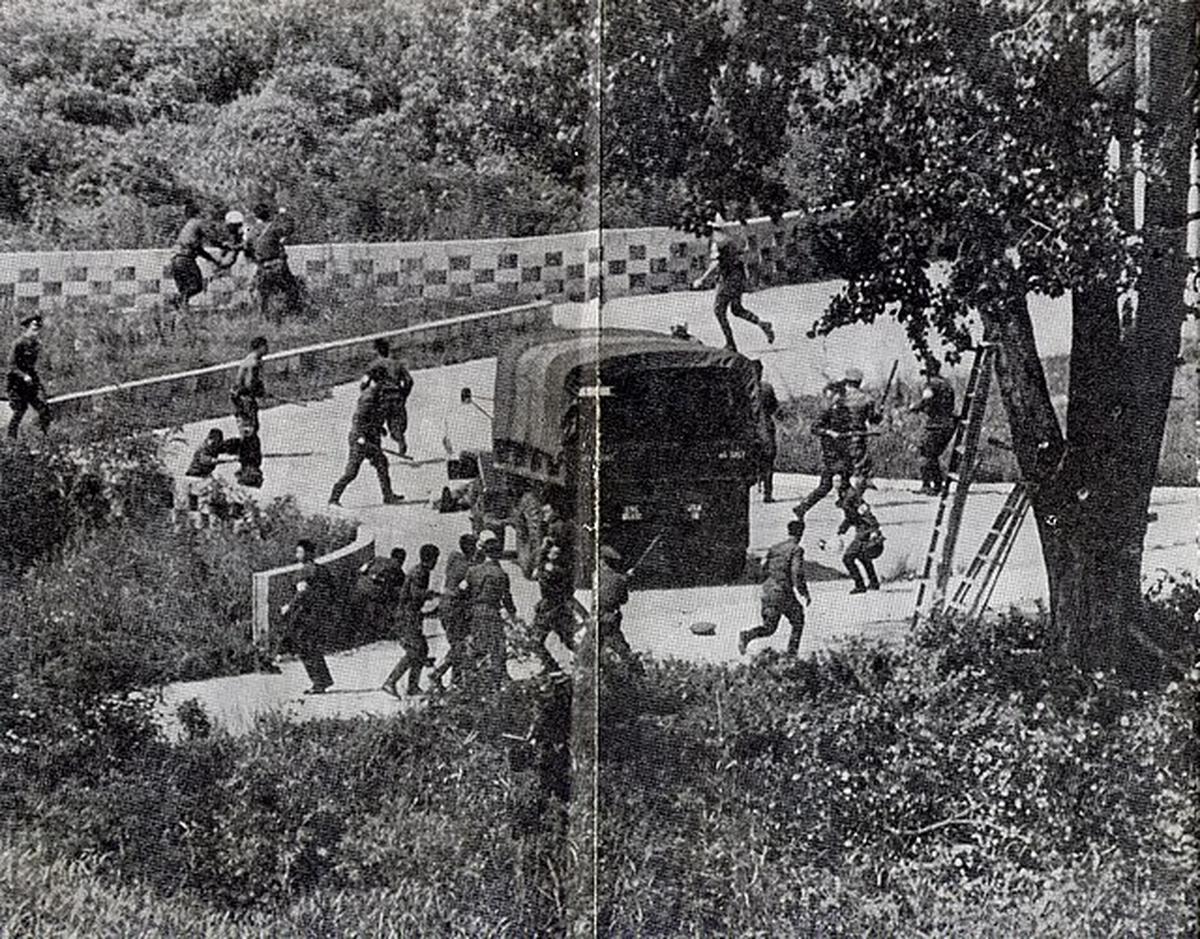
This is picture 7 of the fight sequence. UNC personnel are wearing white helmets. The pictures were taken by U.S. Military personnel, but these are scanned in from “Axe-wielding Murder at Panmunjom”. Copied from inside the back page of the booklet “Axe-wielding Murder at Panmunjom”: Published by UN Korean War Allies Association, Inc. C.P.O. Box 936 Seoul, Korea Contents of this publication may be reproduced in part or in entirety with or without credit to the publisher. Aug. 21, 1976
Operation Paul Bunyan: The response
In the wake of these killings, the United States responded with a show of overwhelming force in an operation that was as symbolic as it was absurd: Operation Paul Bunyan. On August 21, 1976, just three days after the deadly incident, the U.S. launched an elaborate military operation—not to attack North Korea, but to chop down the infamous poplar tree.
Backed by a staggering display of might, hundreds of soldiers, supported by tanks, fighter jets, attack helicopters, and B-52 bombers, returned to the site. The U.S. military assembled an overwhelming force of over 300 troops. The mission: to fell the tree that had triggered the crisis. The tree was cut down without resistance from the North Koreans, who watched in silence from their positions.
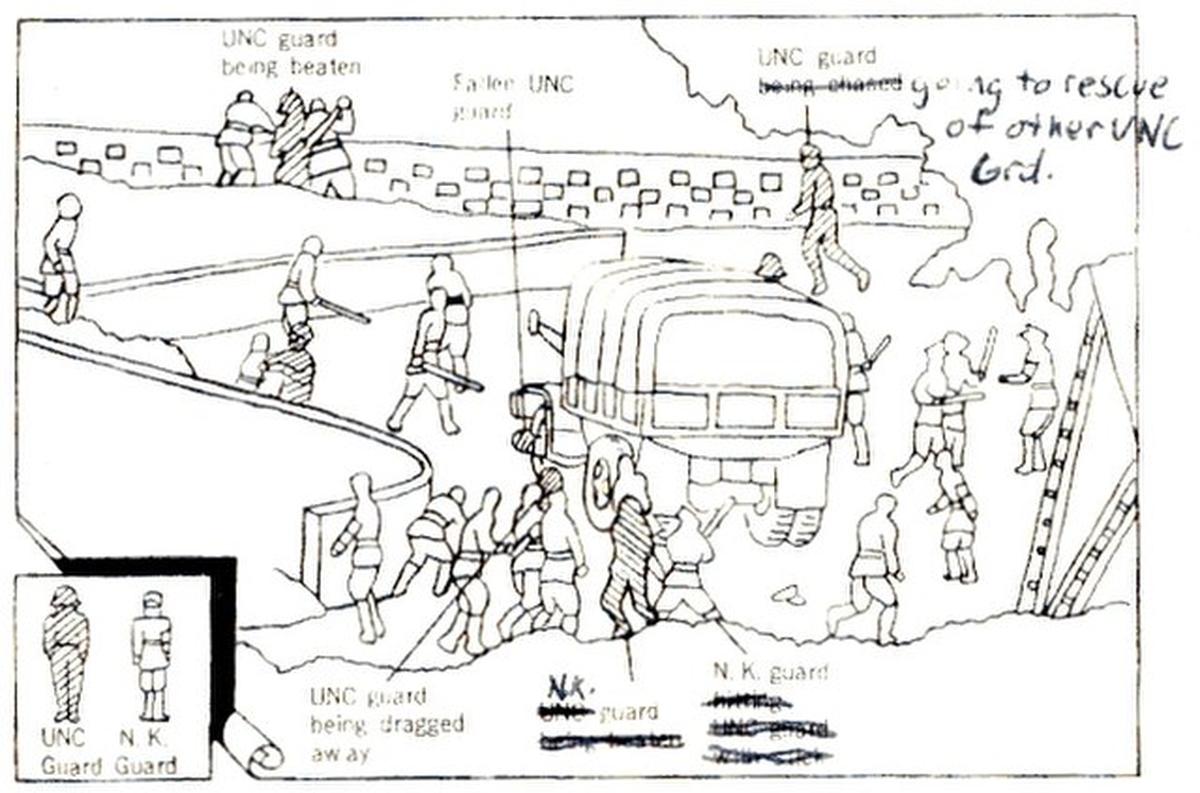
This is a diagram showing who is who in Picture 7.
Operation Paul Bunyan was designed to send a powerful message—one of strength and deterrence—while avoiding direct conflict. The sheer scale of the operation, involving such vast military resources to remove a single tree, highlighted the bizarre nature of the standoff and how close both nations had come to war over something so trivial. The tree was gone, but the event left a lasting mark on the fragile peace between North and South Korea.
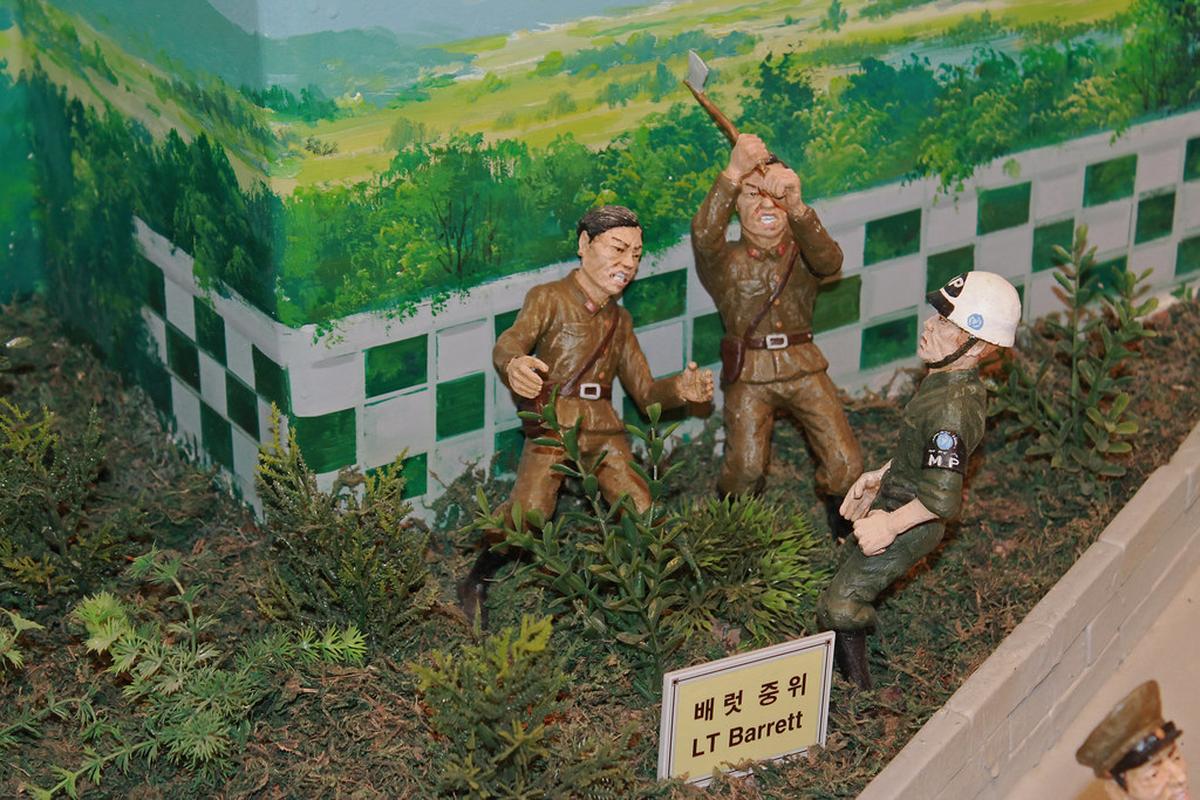
Re-creation of the events that took place.
Symbolism of the tree: A Cold War gesture
The cutting of the poplar tree during the Operation became much more than a simple act of revenge—it was a calculated Cold War gesture, dripping with symbolism. By deploying the force to remove a single tree, the U.S. sent a clear message to North Korea: any act of aggression would be met with a powerful response. The operation was not about the tree itself, but about demonstrating military might and asserting dominance without escalating into war.
What was once a mundane tree became a symbol of Cold War brinkmanship, showing how even the smallest disputes could ignite major tensions. Its removal highlighted the precarious balance between peace and conflict, where even nature could play a role in power struggles between two nations.
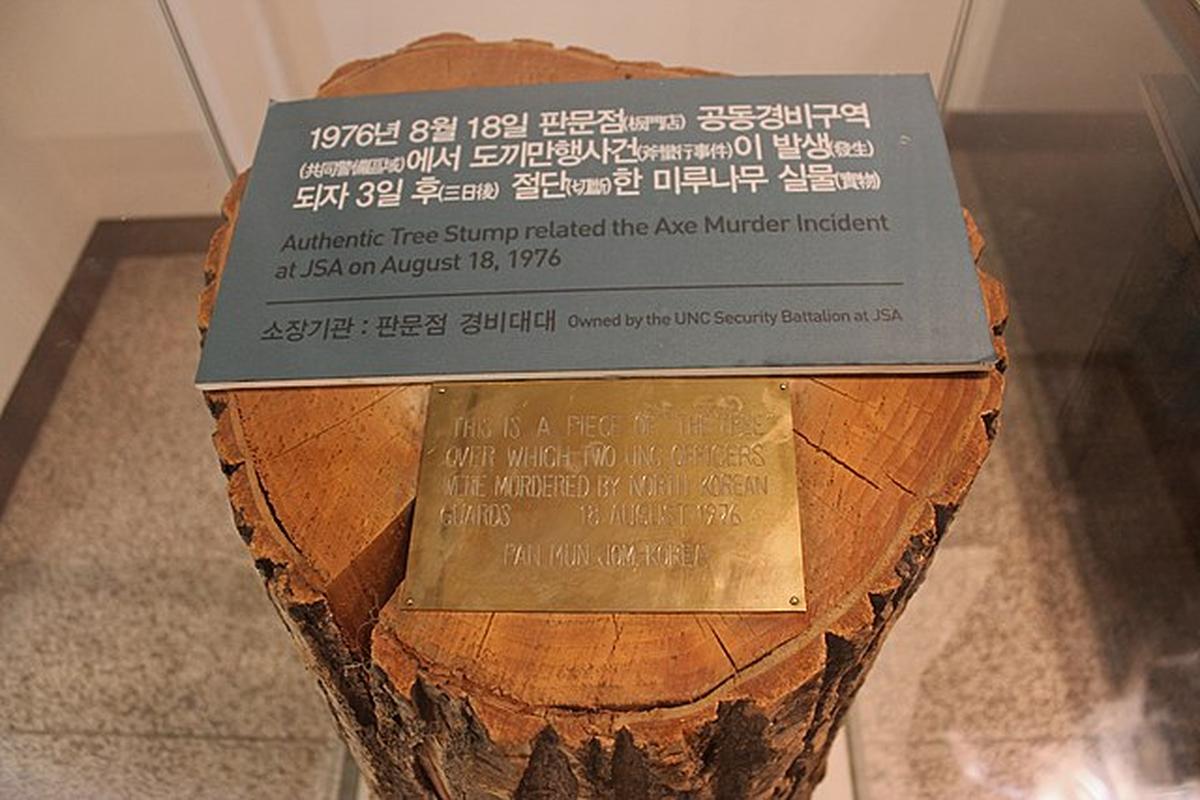
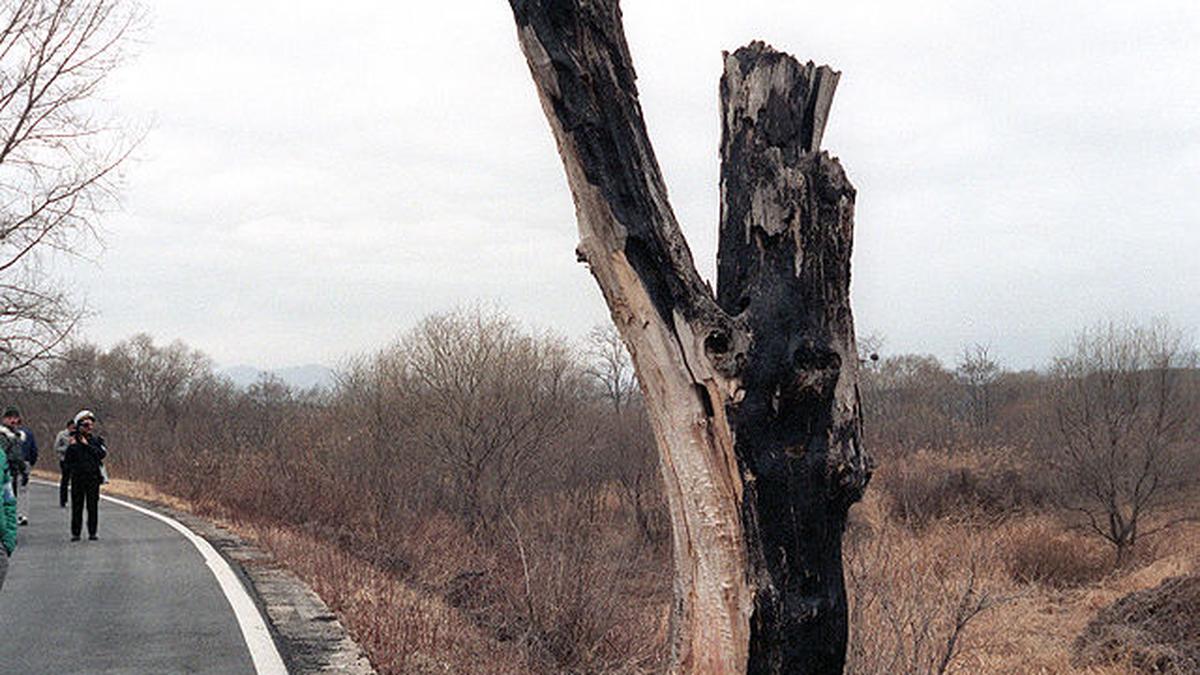
Portion of the tree from the infamous axe murder incident .
Aftermath: The lesson from a tree
The poplar tree that nearly sparked the war was removed without further violence, and Operation Paul Bunyan ended with no additional casualties. The incident revealed just how fragile peace in the Korean DMZ was. The absurdity of nearly going to war over a tree underscored the dangerous nature of Cold War-era power dynamics. It served as a reminder of how quickly minor events could escalate and emphasised the fine line between peace and war, especially in such a volatile region.
Just when you think wars and geopolitics are all about maps, territory, and grand strategies, remember there was a tree involved. A weird, symbolic chapter in history.
Published – October 28, 2024 12:00 pm IST