
Skip to content
  • Facebook
  • X
  • Linkedin
  • WhatsApp
  • Associate Journalism
  • About Us
  • Privacy Policy
  • 033-46046046
  • editor@artifex.news
Artifex.News

Artifex.News

Stay Connected. Stay Informed.

  • Breaking News
  • World
  • Nation
  • Sports
  • Business
  • Science
  • Entertainment
  • Lifestyle
  • Toggle search form
  • Covid Strikes Paris Olympics: British Star Swimmer Tests Positive After Winning Silver Sports
  • Man Who Lost Wife, Mother, Daughter In UP Stampede Nation
  • Puja Khedkar’s Mother Sent To 14 Days Judical Custody For Waving Gun At Farmers Nation
  • Venezuela issues arrest warrant for opposition leader Guaido: prosecutor World
  • “Do You Get Runs Outside India?”: James Anderson On Sledging Shubman Gill, Reveals India Star’s Reply Sports
  • Markets end lower after scaling record peaks intra-day Business
  • Kallakurichi hooch tragedy | The Hindu Nation
  • Ex-Rajasthan Minister Kirodi Lal Meena says He Resigned Because… Nation

New study reveals five genetically-distinct population of Asian elephants in India

Posted on September 28, 2024 By admin


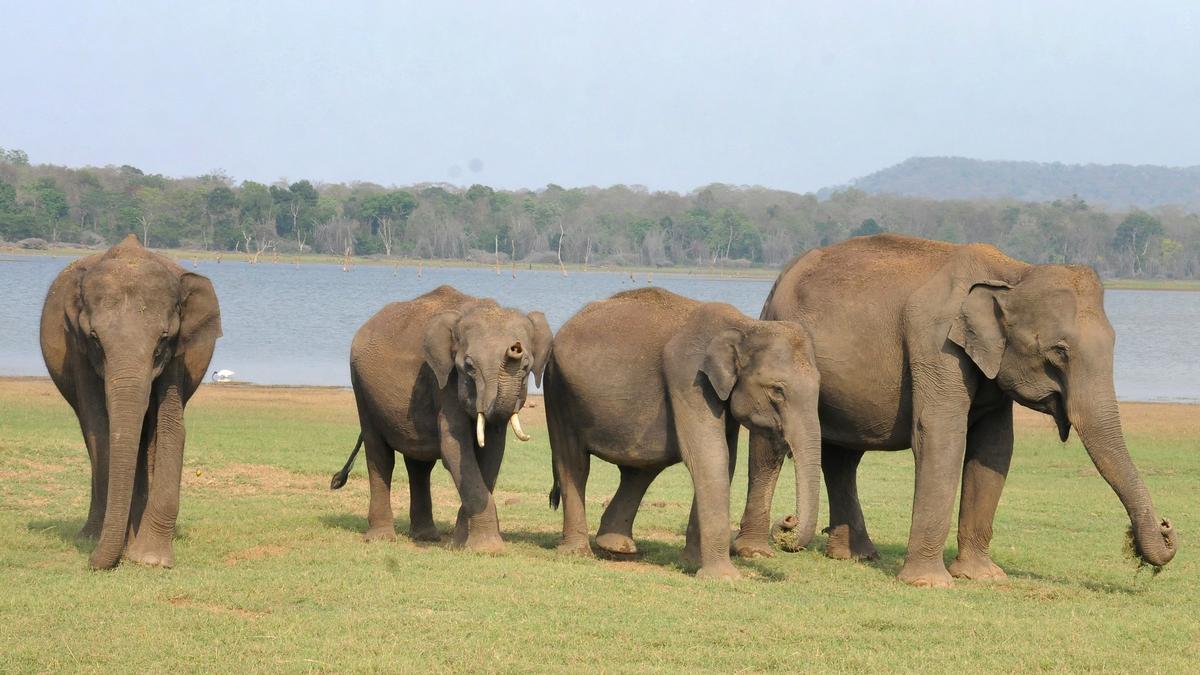
The study, which analysed whole genome sequences from captive and wild elephant blood samples, offers new hope for the species’ future by identifying key populations that need tailored conservation strategies.
| Photo Credit: File photo

The existence of five genetically-distinct populations of Asian elephants in India, more than previously thought, has been revealed in a recent study published in Current Biology.

‘’Divergence and serial colonisation shape genetic variation and define conservation units in Asian elephants’, authored by Uma Ramakrishnan’s group at the National Centre for Biological Sciences, in collaboration with Raman Sukumar and others at the Indian Institute of Science, have uncovered new insights into the genetic history of India’s Asian elephants.

60% of global population

“India is home to 60% of the global population of Asian elephants, found across South and Southeast Asia. Today, Asian elephant habitats in India are fragmented, surrounded by farmland, human settlements, commercial plantations, and linear transport infrastructure. This has resulted in widespread and often severe human-elephant conflicts. Despite their ecological and cultural significance, studies on the population genetic structure, diversity, and demographic history of these elephants—critical for identifying conservation and management units—have been limited,” said a release.

The study, which analysed whole genome sequences from captive and wild elephant blood samples collected across diverse landscapes, offers new hope for the species’ future by identifying key populations that need tailored conservation strategies.

The research identified five elephant populations spread across Northern, Central, and Southern India. Two populations in the north and three in the south. Historically, elephants migrated from the north to the south, but with each migration, their genetic diversity declined.

Anubhab Khan, the study’s lead author and faculty member at the Indian Institute of Science, Bengaluru, explained that this reduced genetic variation could be the result of a serial founder effect, where fewer individuals from each starting population migrate to establish new populations. As these populations become smaller, the risk of inbreeding depression increases — a phenomenon where harmful genetic variants are more likely to be inherited due to breeding among related individuals.

“The results also align with previous research, showing that the Northwest and Northeast Indian populations, nestled in the foothills of the Himalayas, are genetically distinct from other Indian populations. The Ganges and Brahmaputra rivers are potential barriers to gene flow in these regions.”

Lowest genetic diversity

The release further added that the southernmost population, located south of the Shencottah Gap, has the lowest genetic diversity and is particularly vulnerable. With fewer than 50 elephants remaining, Prof. Ramakrishnan warned that this population has a higher chance of extinction. The researchers suspect that recent development along a railway line, a highway, and other transportation infrastructure may have further reduced gene flow between northern and southern populations. The researchers advocate carefully considering any translocation of animals across the gap.

The identification of these five genetically-distinct populations underscores the need for region-specific conservation efforts. The research team also plans to develop a genetic toolkit based on DNA extracted from elephant faeces. This toolkit will help monitor populations more accurately and identify individual elephants in the wild, providing invaluable data for conservationists.

Published – September 28, 2024 10:49 pm IST



Source link

Science

Post navigation

Previous Post: S Jaishankar’s “Karma” Swipe At Pakistan
Next Post: IPL 2025 Players Retention Rules Out: New Auction Purse Revealed, No. Of Players Franchises Can Retain Is Not 5 But…

Related Posts

  • India’s first solar observatory mission Aditya-L1 to be launched at 11.50 a.m. on September 2, 2023 Science
  • Catalytic boost for cheaper biodiesel production Science
  • NASA names chief of UFO research; panel sees no alien evidence Science
  • New mpox clade Ib disproportionately affects children Science
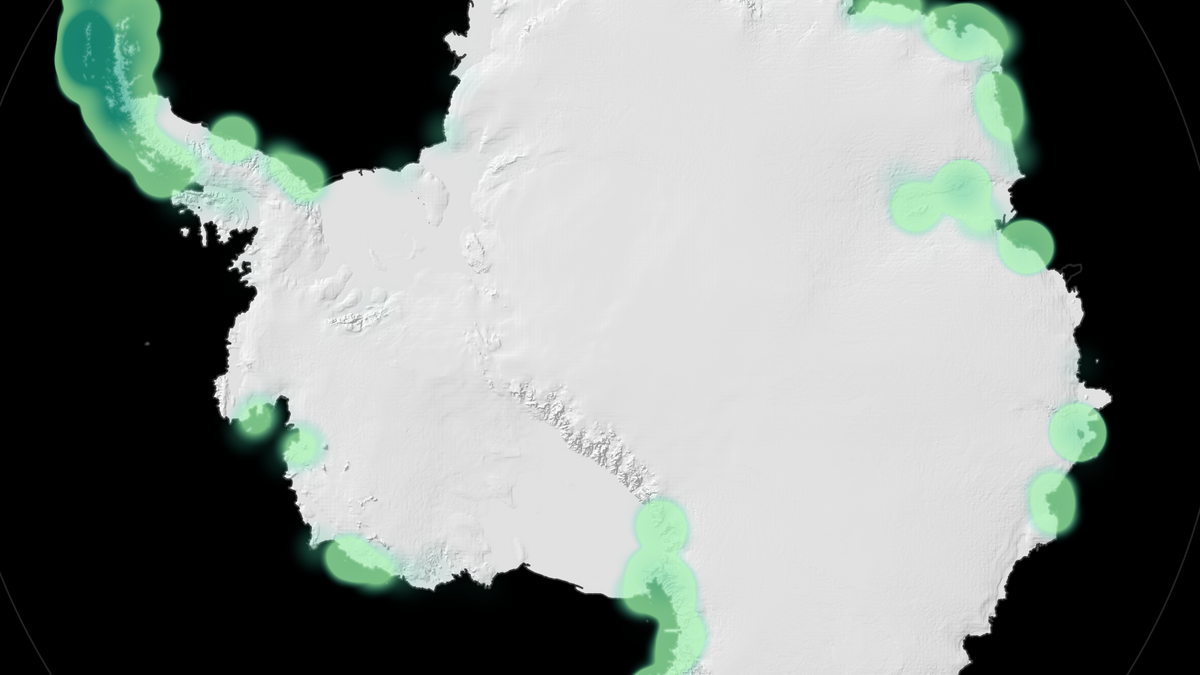
  • First vegetation map reveals a battle for Antarctica’s changing landscape  Science
  • What is aircraft turbulence and how common is it? | Explainer Science

More Related Articles

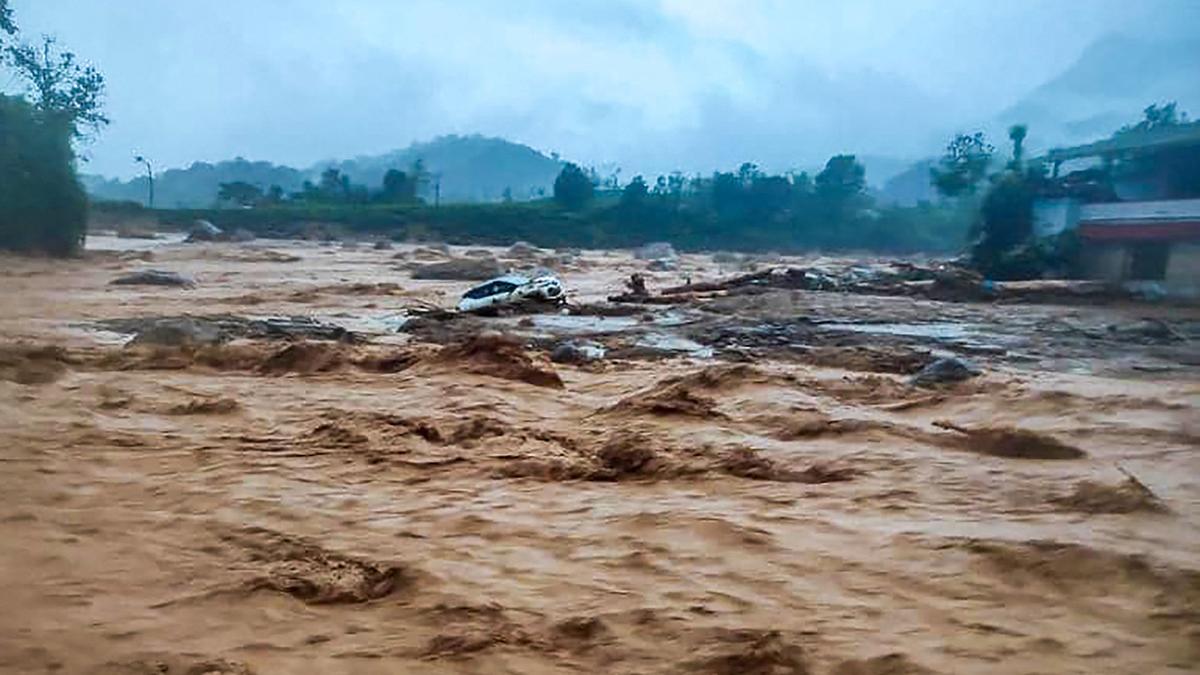
Climate change intensified rain that caused Wayanad landslides: study Science
X chromosome revival in older women ups autoimmune disease risk Science
Study reveals how Titanosaurs, earth’s biggest land animals, survived so long Science
In Chennai, solve a puzzle and learn about astronomy as Science at the Sabha returns Science
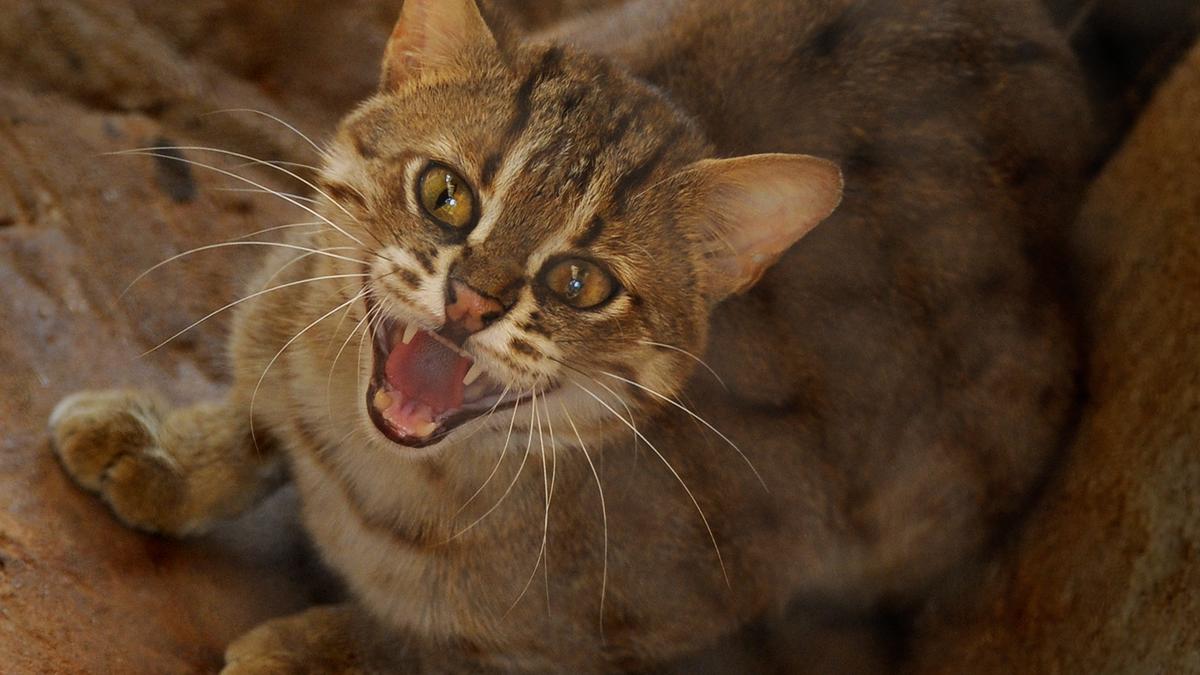
Sci-Five | The Hindu Science Quiz: On the world’s smallest cat Science
When Earth passed through the tail of Halley’s Comet Science
SiteLock

Archives

  • October 2024
  • September 2024
  • August 2024
  • July 2024
  • June 2024
  • May 2024
  • April 2024
  • March 2024
  • February 2024
  • January 2024
  • December 2023
  • November 2023
  • October 2023
  • September 2023
  • August 2023
  • July 2023
  • June 2023
  • May 2023
  • April 2023
  • March 2023
  • February 2023
  • January 2023
  • December 2022
  • November 2022
  • October 2022
  • September 2022
  • August 2022
  • July 2022
  • June 2022
  • May 2022

Categories

  • Business
  • Nation
  • Science
  • Sports
  • World

Recent Posts

  • India Players Tear Up As Families Send Them Heartwarming Messages Ahead Of Women’s T20 World Cup. Watch
  • World Health Organization approves first mpox diagnostic test
  • Cyient DLM acquires U.S. EMS provider Altek Electronics in $29.2 million deal 
  • India Trio Wins Men’s Team Gold In Junior Shooting World Championship, India Stay Top Of Medal Tally
  • India to see steepest rise in living standard of common man in coming decades: FM Nirmala Sitharaman

Recent Comments

  1. TpeEoPQa on UP Teacher Who Asked Students To Slap Muslim Classmate
  2. xULDsgPuBe on UP Teacher Who Asked Students To Slap Muslim Classmate
  3. KyJtkhneiLmcq on UP Teacher Who Asked Students To Slap Muslim Classmate
  4. mOyehudovB on UP Teacher Who Asked Students To Slap Muslim Classmate
  5. GFBvgSrWPcsp on UP Teacher Who Asked Students To Slap Muslim Classmate
  • Arizona Woman, Who Poisoned Husband’s Coffee, Strikes Plea Deal To Avoid Jail World
  • When Neeraj Chopra Supported Arshad Nadeem’s Plea For A New Javelin, Government Funds Sports
  • President Droupadi Murmu Holds Talks With Mauritian PM To Boost “Robust Partnership” Nation
  • Pakistani Judoka Dies After Suffering Head Injuries Sports
  • With Ball In Hand, Obsession In Heart, Mohammed Shami Gears Up For Comeback Sports
  • Joe Biden Lauds PM Modi’s Ukraine Visit For His Message Of Peace Nation
  • Centre Approves 34 New Dhruv Helicopters For Army, Indian Coast Guard Nation
  • Trump campaign announces $53 mn raised after conviction World

Editor-in-Chief:
Mohammad Ariff,
MSW, MAJMC, BSW, DTL, CTS, CNM, CCR, CAL, RSL, ASOC.
editor@artifex.news

Associate Editors:
1. Zenellis R. Tuba,
zenelis@artifex.news
2. Haris Daniyel
daniyel@artifex.news

Photograher:
Rohan Das
rohan@artifex.news

Artifex.News offers Online Paid Internships to college students from India and Abroad. Interns will get a PRESS CARD and other online offers.
Send your CV (Subjectline: Paid Internship) to internship@artifex.news

Links:
Associate Journalism
About Us
Privacy Policy

News Links:
Breaking News
World
Nation
Sports
Business
Entertainment
Lifestyle

Registered Office:
72/A, Elliot Road, Kolkata - 700016
Tel: 033-22277777, 033-22172217
Email: office@artifex.news

Editorial Office / News Desk:
No. 13, Mezzanine Floor, Esplanade Metro Rail Station,
12 J. L. Nehru Road, Kolkata - 700069.
(Entry from Gate No. 5)
Tel: 033-46011099, 033-46046046
Email: editor@artifex.news

Copyright © 2023 Artifex.News Newsportal designed by Artifex Infotech.