
Skip to content
  • Facebook
  • X
  • Linkedin
  • WhatsApp
  • Associate Journalism
  • About Us
  • Privacy Policy
  • 033-46046046
  • editor@artifex.news
Artifex.News

Artifex.News

Stay Connected. Stay Informed.

  • Breaking News
  • World
  • Nation
  • Sports
  • Business
  • Science
  • Entertainment
  • Lifestyle
  • Toggle search form
  • Argentina labour unions’ 24-hour strike against President Milei paralyzes daily life World
  • Halfway Through Monsoon, One-Fourth Of India Faces Rain Deficit: Weather Office Nation
  • Arsenal Face Manchester City Premier League Summit Meeting Sports
  • WHO chief Tedros says polio detected in Gaza, appeals for action World
  • “When I Saw Highlights…”: Ravichandran Ashwin’s Brutal Take On Pakistan’s Loss vs Bangladesh Sports
  • In Sena vs Sena Ruling, Did Speaker Contradict Top Court, Asks Chief Justice Nation
  • Stock exchanges slap fines on IOC, ONGC, GAIL for failure to meet listing regulations Business
  • 1 Arrested For Throwing Ink At Congress Leader Kanhaiya Kumar In Delhi Nation

A new genetic analysis of animals in the Wuhan market in 2019 may help find COVID-19’s origin

Posted on September 20, 2024 By admin


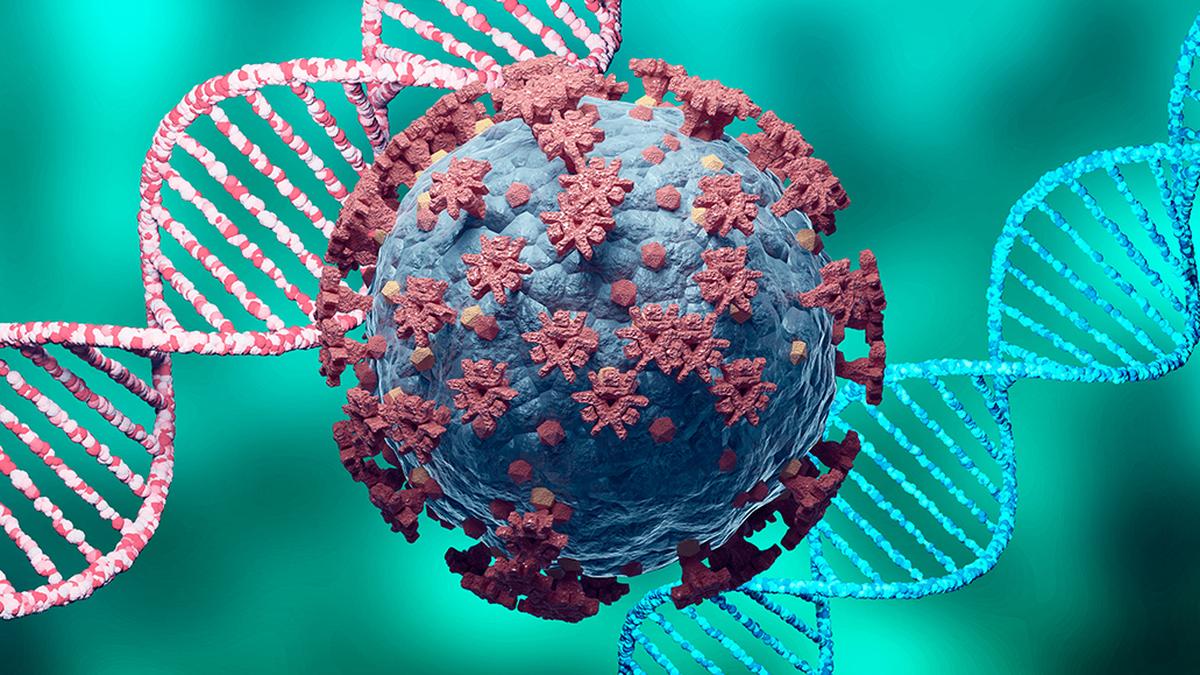
Photograph used for representational purposes only
| Photo Credit: Getty Images/iStockphoto

Scientists searching for the origins of COVID-19 have zeroed in on a short list of animals that possibly helped spread it to people, an effort they hope could allow them to trace the outbreak back to its source.

Researchers analysed genetic material gathered from the Chinese market where the first outbreak was detected and found that the most likely animals were racoon dogs, civet cats and bamboo rats. The scientists suspect infected animals were first brought to the Wuhan market in late November 2019, which then triggered the pandemic.

Michael Worobey, one of the new study’s authors, said they found which sub-populations of animals might have transmitted the coronavirus to humans. That may help researchers pinpoint where the virus commonly circulates in animals, known as its natural reservoir.

“For example, with the racoon dogs, we can show that the racoon dogs that were (at the market) … were from a sub-species that circulates more in southern parts of China,” said Worobey, an evolutionary biologist at the University of Arizona. Knowing that might help researchers understand where those animals came from and where they were sold. Scientists might then start sampling bats in the area, which are known to be the natural reservoirs of related coronaviruses like SARS.

While the research bolsters the case that COVID-19 emerged from animals, it does not resolve the polarized and political debate over whether the virus instead emerged from a research lab in China.

Mark Woolhouse, a professor of infectious diseases at the University of Edinburgh, said the new genetic analysis suggested that the pandemic “had its evolutionary roots in the market” and that it was very unlikely COVID-19 was infecting people before it was identified at the Huanan market.

“It’s a significant finding and this does shift the dial more in favor of an animal origin,” Woolhouse, who was not connected to the research, said. “But it is not conclusive.”

An expert group led by the World Health Organization concluded in 2021 that the virus probably spread to humans from animals and that a lab leak was “extremely unlikely.” WHO chief Tedros Adhanom Ghebreyesus later said it was “premature” to rule out a lab leak.

An AP investigation in April found the search for the COVID origins in China has gone dark after political infighting and missed opportunities by local and global health officials to narrow the possibilities.

Scientists say they may never know for sure where exactly the virus came from.

In the new study, published Thursday in the journal Cell, scientists from Europe, the U.S. and Australia analysed data previously released by experts at the Chinese Center for Disease Control and Prevention. It included 800 samples of genetic material Chinese workers collected on Jan. 1, 2020 from the Huanan seafood market, the day after Wuhan municipal authorities first raised the alarm about an unknown respiratory virus.

Chinese scientists published the genetic sequences they found last year, but did not identify any of the animals possibly infected with the coronavirus. In the new analysis, researchers used a technique that can identify specific organisms from any mixture of genetic material collected in the environment.

Worobey said the information provides “a snapshot of what was (at the market) before the pandemic began” and that genetic analyses like theirs “helps to fill in the blanks of how the virus might have first started spreading.”

Woolhouse said the new study, while significant, left some critical issues unanswered.

“There is no question COVID was circulating at that market, which was full of animals,” he said. “The question that still remains is how it got there in the first place.”

The Associated Press Health and Science Department receives support from the Howard Hughes Medical Institute’s Science and Educational Media Group. The AP is solely responsible for all content.

Published – September 20, 2024 04:41 pm IST


Source link

Science Tags:covid animal to human spread, covid origin china lab, how did covid 19 spread, what caused covid 19

Post navigation

Previous Post: Residents in Kyiv asked to stay indoors as air pollution blankets Ukrainian capital
Next Post: England’s Away Series In Pakistan: Visitors To Play Tests In Multan And Rawalpindi

Related Posts

  • Sci-Five: The Hindu Science Quiz: On Bioluminescence Science
  • Twisted magnetic field observed around Milky Way’s central black hole Science
  • Does the vegetative-to-reproductive transition in plants happen at the same time? Science
  • Newborn gas planets may be surprisingly flat: new study Science
  • Where does ‘us versus them’ bias in the brain come from? Science
  • Japan Moon lander put to sleep after surviving lunar night Science

More Related Articles

Japanese scientists find microplastics are present in clouds Science
Scientists pen letter to Principal Scientific Adviser demanding ‘transparency’ on Vigyan Puraskar Science
India’s first solar observatory mission Aditya-L1 to be launched at 11.50 a.m. on September 2, 2023 Science
Missed childhood TB cases impede achieving 2025 goal Science
Naturally occurring bile acid can blunt statin-induced diabetes Science
The Science Quiz | Non-classical states of matter Science
SiteLock

Archives

  • September 2024
  • August 2024
  • July 2024
  • June 2024
  • May 2024
  • April 2024
  • March 2024
  • February 2024
  • January 2024
  • December 2023
  • November 2023
  • October 2023
  • September 2023
  • August 2023
  • July 2023
  • June 2023
  • May 2023
  • April 2023
  • March 2023
  • February 2023
  • January 2023
  • December 2022
  • November 2022
  • October 2022
  • September 2022
  • August 2022
  • July 2022
  • June 2022
  • May 2022

Categories

  • Business
  • Nation
  • Science
  • Sports
  • World

Recent Posts

  • ‘Have Said It Before…’: Rishabh Pant’s Honest Take On Comparisons With MS Dhoni
  • Who is Anura Kumara Dissanayake, the new President of Sri Lanka?
  • 11 Bangladeshis arrested in Tripura for illegally entering India
  • The 297 Antiquities US Handed Over To India During PM Modi’s Visit
  • Class 7 Student Among 3 Electrocuted In Tamil Nadu: Police

Recent Comments

  1. TpeEoPQa on UP Teacher Who Asked Students To Slap Muslim Classmate
  2. xULDsgPuBe on UP Teacher Who Asked Students To Slap Muslim Classmate
  3. KyJtkhneiLmcq on UP Teacher Who Asked Students To Slap Muslim Classmate
  4. mOyehudovB on UP Teacher Who Asked Students To Slap Muslim Classmate
  5. GFBvgSrWPcsp on UP Teacher Who Asked Students To Slap Muslim Classmate
  • What More Do You Need? World
  • TotalEnergies deepens ties with India’s Adani Green with $444 mln JV Business
  • Mali military camp is attacked a day after 49 civilians and 15 soldiers were killed in assaults World
  • Ukrainian Missile Hits Russia’s Black Sea Navy Headquarters In Crimea World
  • New York flooded by heavy rains, subway partly paralysed World
  • Kurdish Leader Jailed For 42 Years Over 2014 Protests By Turkey Court World
  • On Virat Kohli, Rohit Sharma’s T20I Retirement, Big Revelation From India’s Departing Bowling Coach Sports
  • Gangs unleash attacks in Haiti’s capital, at least a dozen killed World

Editor-in-Chief:
Mohammad Ariff,
MSW, MAJMC, BSW, DTL, CTS, CNM, CCR, CAL, RSL, ASOC.
editor@artifex.news

Associate Editors:
1. Zenellis R. Tuba,
zenelis@artifex.news
2. Haris Daniyel
daniyel@artifex.news

Photograher:
Rohan Das
rohan@artifex.news

Artifex.News offers Online Paid Internships to college students from India and Abroad. Interns will get a PRESS CARD and other online offers.
Send your CV (Subjectline: Paid Internship) to internship@artifex.news

Links:
Associate Journalism
About Us
Privacy Policy

News Links:
Breaking News
World
Nation
Sports
Business
Entertainment
Lifestyle

Registered Office:
72/A, Elliot Road, Kolkata - 700016
Tel: 033-22277777, 033-22172217
Email: office@artifex.news

Editorial Office / News Desk:
No. 13, Mezzanine Floor, Esplanade Metro Rail Station,
12 J. L. Nehru Road, Kolkata - 700069.
(Entry from Gate No. 5)
Tel: 033-46011099, 033-46046046
Email: editor@artifex.news

Copyright © 2023 Artifex.News Newsportal designed by Artifex Infotech.