






File Photo: West Germans Celebrate The Unification Of Berlin Atop The Berlin Wall During The Collapse Of Communism In East Berlin On November 12, 1989. November, 1999 Marks The 10Th Anniversary Of The Fall Of The Berlin Wall. East Germany’s Communist Government Erected The Berlin Wall In August 1961. The Wall Fell After Weeks Of Massive Anti-Government Protests On November 9, 1989. The Fall Of The Berlin Wall Is Often Described As The “End Of The Cold War.” East German Border Guards Shot 77 People Who Tried To Escape To The West Over The Wall During The Course Of Its Existence.
| Photo Credit: STEPHEN JAFFE
In 1952, amid the rising tensions of the Cold War, Soviet leader Joseph Stalin dispatched a note that promised to reshape Germany’s future and, by extension, the geopolitical landscape of Europe. This mysterious communication, known as the Stalin Note, proposed the unification of East and West Germany, a prospect that tantalised some and alarmed others. Yet, despite its potential to change the course of history, the story of the Stalin Note remains an unfinished chapter, overshadowed by the eventual path Germany took toward reunification decades later.
Post-WWII Europe
- After World War II, Europe was divided into two spheres of influence: the Western Allies, led by the United States, on one side and the Soviet Union on the other.
- This division marked the start of the Cold War, a period of intense rivalry and tension between the East and the West.
- Germany was split into two separate states: West Germany (aligned with the Western Allies) and East Germany (under Soviet control).
- Berlin, the capital, became a powerful symbol of this division, with the infamous Berlin Wall physically tearing the city apart into East and West.
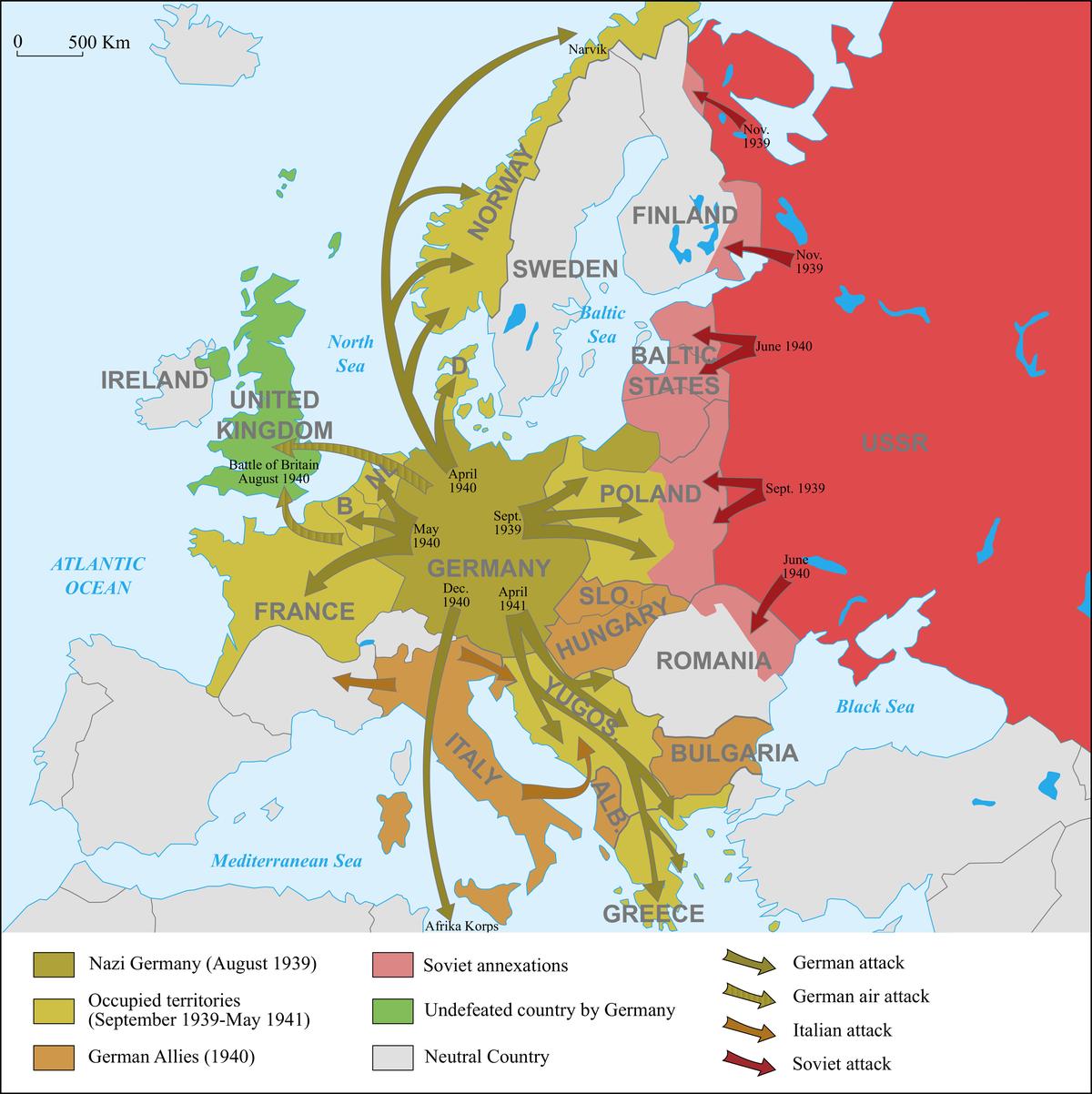
Map of military movements in Europe from 1939 to 1941
The importance of German Unification
German unification was a critical issue for Europe, symbolising the hope of healing the wounds left by World War II.
The reunification of Germany was a strategic concern for major powers:
- The Soviet Union saw a divided Germany as a buffer zone against Western influence.
- The Western Allies feared that a unified Germany under Soviet control could shift the balance of power in Europe.
The future of Germany was pivotal, as it would shape the direction of post-war Europe, making Stalin’s 1952 note a potential turning point in the Cold War.
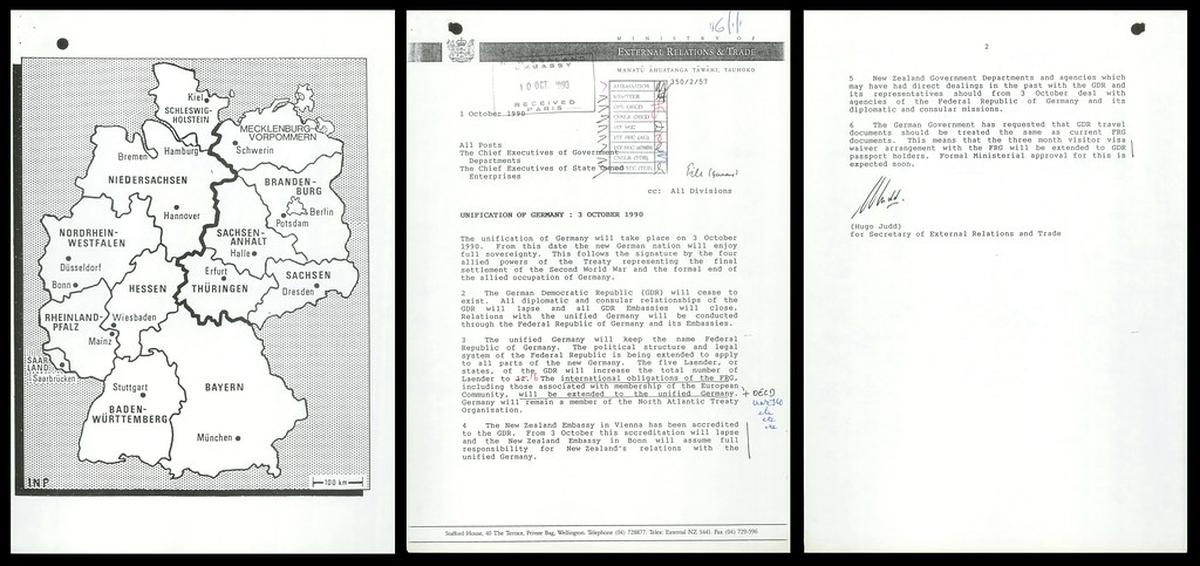
The correspondence detailed here is from the New Zealand Embassy In Paris. The correspondence refers to how New Zealand would end relations with the defunct Democratic Republic of Germany which operated through Vienna. Instead all relations with the unified Germany would run through the embassy in Bonn. Also noted is the fact that East German passports would still be valid and tourists would have the same visa entitlements for visiting New Zealand as West Germans previously had.
The 1952 Stalin Note
Mysterious letter
- In March 1952, Soviet leader Joseph Stalin sent a surprising letter to the Western Allies, proposing the unification of East and West Germany into a single, neutral state.
- The note suggested that this unified Germany would be free to choose its own government and would not be part of any military alliance, neither with the West nor the Soviet bloc.
- This proposal was unexpected and raised many questions among Western leaders. While some saw it as a potential opportunity to reunite Germany peacefully, others were sceptical of Stalin’s intentions.
- The note quickly became a topic of intense debate, as leaders wondered if it was a genuine offer or a strategic move by Stalin to gain more control over Europe.
Historical context
- The 1952 Stalin Note came at a time when the Cold War was intensifying, and Europe was firmly divided between East and West.
- Stalin’s proposal was likely motivated by several factors, including a desire to prevent West Germany from joining the Western military alliance, NATO, which would strengthen Western influence in Europe.
- The Soviet Union also aimed to destabilise the Western alliance by offering a seemingly peaceful solution to the German problem, possibly hoping to create divisions among Western leaders.
Western allies felt that Stalin might have been trying to buy time, as the Soviet Union was still recovering from the devastation of World War II and was not yet ready for another major conflict.
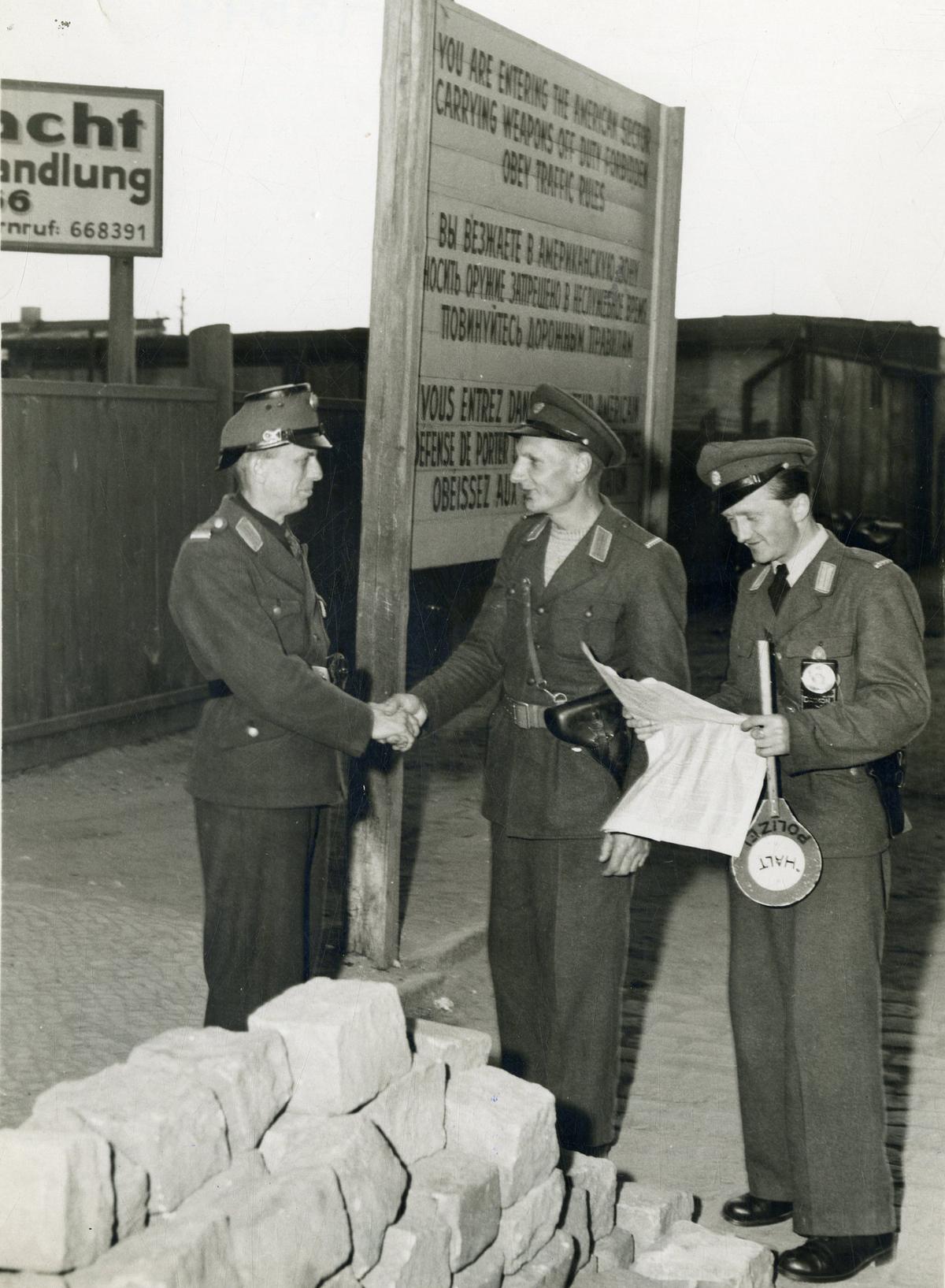
Hands actross the Border: The news that the eleven month old Berlin blocake wil be lifted on May 12th 1949 results in a handshake between an eastern sector German policeman (left) and his western sector counterpart at the U.S. Soviet sector border in Berlin. A third policeman happily scans a newspaper.
PHOTO: THE HINDU ARCHIVES
| Photo Credit:
ACME PHOTO
Western response
- Western leaders, particularly in the U.S. and Western Europe, were highly suspicious of Stalin’s motives. They feared that a unified Germany might fall under Soviet influence, tipping the balance of power in Europe.
- The U.S. and its allies were also concerned that accepting Stalin’s proposal would weaken their position in the Cold War and undermine the Western military alliance.
- After careful consideration, Western leaders dismissed the Stalin Note, believing it to be a Soviet ploy rather than a genuine offer for peace.
The decision to reject the proposal meant that Germany remained divided for several more decades, with the Cold War continuing to shape Europe’s future.
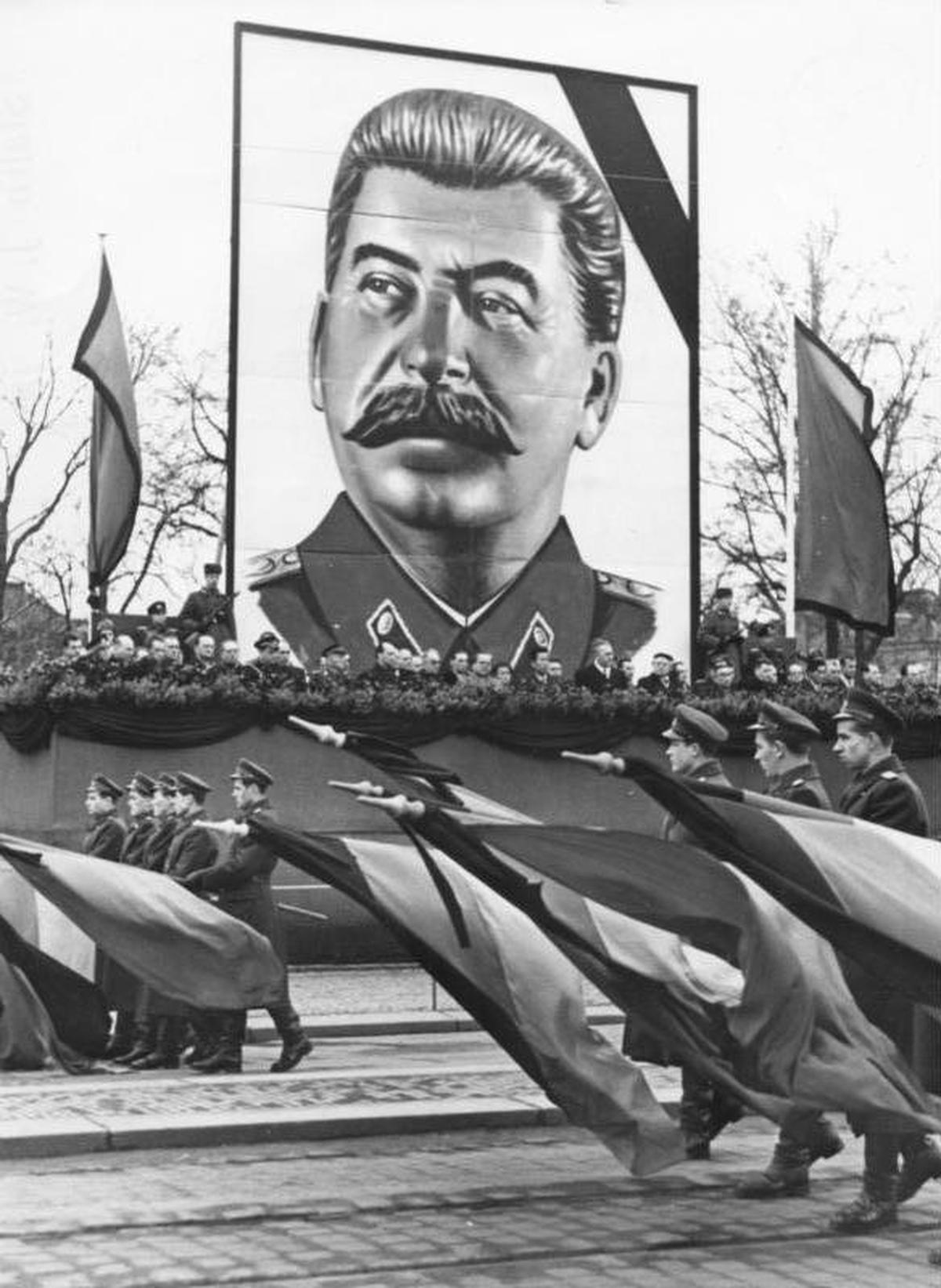
Members of the barracked People’s Police lower their flags. 200,000 residents of Dresden marched silently past the portrait of Stalin at the Soviet Army Memorial on Unity Square on March 9, 1953.
| Photo Credit:
Höhne, Erich; Pohl, Erich
The Unfinished story
The rejection of Stalin’s 1952 note had a profound impact on the course of German history. By dismissing the proposal, the division between East and West Germany was solidified, and the country remained split for nearly four more decades.
- This division became a central battleground of the Cold War, with both sides fortifying their positions in Germany and deepening the East-West divide.
- The failure to seize the opportunity for early unification meant that the German people continued to live in a divided nation, with the Berlin Wall standing as a stark reminder of the ideological conflict between the superpowers.
It wasn’t until 1989, with the fall of the Berlin Wall and the subsequent collapse of the Soviet Union, that Germany finally achieved unification, under very different circumstances than those proposed in 1952.
Lingering questions
- The Stalin Note remains one of the great mysteries of Cold War history. Historians still debate whether Stalin’s proposal was a genuine offer or a clever tactic designed to manipulate the West.
- Some wonder what might have happened if Western leaders had accepted the note. Could it have led to a peaceful reunification of Germany and possibly a less tense Cold War?
- Others question whether Stalin had ulterior motives, such as creating a unified Germany under Soviet influence, which might have shifted the balance of power in Europe.
These unanswered questions keep the story of the 1952 Stalin Note alive, leaving us to ponder the many “what ifs” of history and how a single decision can alter the course of nations.
Though the Stalin Note didn’t lead to German reunification, it left a lasting mark on Europe’s history and geopolitics. It symbolizes the deep East-West divide that persisted throughout the Cold War and the missed opportunity for early unification.
As we reflect on the 1952 Stalin note, we’re reminded that history is full of what-ifs—small moments that could have altered the course of nations.
Published – September 15, 2024 12:00 pm IST