





Two scientists have flagged what they have called evidence of “problematic behaviour” in multiple scientific papers co-authored by Mandyam Srinivasan, emeritus professor of visual neuroscience at Queensland University, Brisbane.
The papers are concerned with the honeybee waggle dance, a mode of communication between bees that plays a crucial role in pollination.
Based on his work on bees, Dr. Srinivasan received Australia’s Prime Minister’s Prize for Science in 2006, a Distinguished Alumni Award of the Indian Institute of Science in 2009, and a membership in the Order of Australia in 2012, among other honours.
The waggle dance
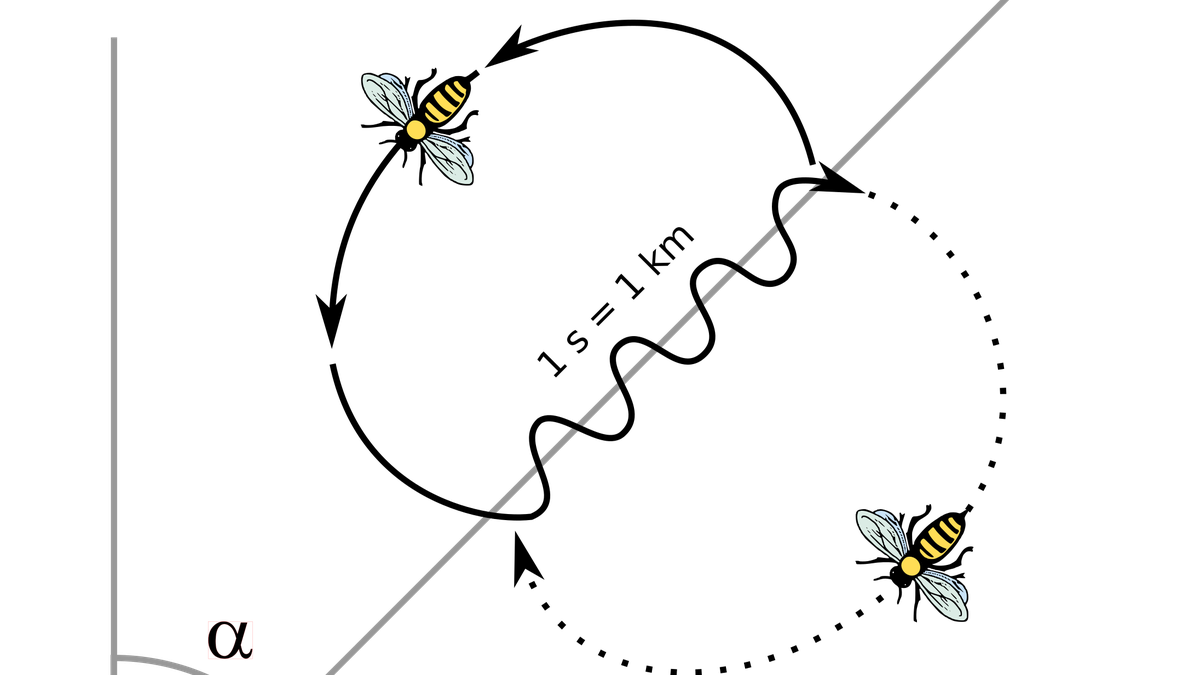
Bees use two kinds of dances to communicate information: the waggle dance — at the heart of the new controversy — and the circle dance. The purpose of either dance is for some honeybees to communicate to others the location of a flower patch with more nectar or pollen. One bee dances while the others watch it to figure out the directions.
During a waggle dance, the bees move in a figure of eight formation, roughly, while in a circle dance, the bees move in a circle. The waggle dance indicates both the distance and the direction to the patch. In this the straight line in the roughly figure of eight formation is called the waggle run. The circle dance indicates only the distance to the hive.
The allegations against Dr. Srinivasan are detailed in a report prepared by Laura Luebbert, a geneticist-turned bioinformatician, and Lior Pachter, the Bren Professor of computational biology, both at the California Institute of Technology.
Papers from 1996 to 2010
The report with the allegations is titled ‘The miscalibration of the honeybee odometer’. Drs. Luebbert and Pachter uploaded it to a repository of preprint papers on the internet called arXiv (pronounced ‘archive’) in May 2024. But it wasn’t until Dr. Pachter published a post on his personal blog about their findings and then a series of posts on X (formerly Twitter) in July, including one calling the implicated papers “junk”, that the allegations made headlines.
The two scientists have alleged in their report that multiple papers published between 1996 and 2010, and co-authored by Dr. Srinivasan, contain “erroneous information” and that “many of them contain duplicated and manipulated data”, as Dr. Pachter wrote on his blog.
To quote from the report: “We examine a series of articles on honeybee odometry and navigation published between 1996 and 2010, and find inconsistencies in results, duplicated figures, indications of data manipulation, and incorrect calculations. This suggests that redoing the experiments in question is warranted.”

They have published “the code to reproduce the figures and analyses” in their report on GitHub (at the link https://github.com/pachterlab/LP_2024).
‘Purely typos’
Neither Dr. Luebbert nor Dr. Pachter responded to requests for comment. Dr. Srinivasan however disagreed with their conclusions. The two scientists “have pointed out minor typographical errors, which I regret,” he told this reporter. “But these errors are purely typos: they have not played a role in the analysis of any of the data.”
Dr. Srinivasan had left a similar comment on Dr. Pachter’s blog post to which the latter replied: “The issues raised in our arXiv paper cover 10 of your papers, and do not constitute ‘typographical errors and minor oversights’.”
Dr. Srinivasan also asserted “deliberate fabrication or manipulation of data definitely did not occur in any of our studies” and that the reasoning underlying the allegations “is illogical or flawed”.
“The issues raised by Luebbert and Pachter definitely do not affect the conclusions of the studies presented in any of the papers, which have been repeated several times, not only in our laboratory but also independently in other laboratories.”
In all, Drs. Luebbert and Pachter flagged 10 papers published by Dr. Srinivasan’s lab, then in Australia.
‘Expression of concern’
The journals that published them include Science and the Journal of Experimental Biology (JEB).
After investigating the complaints, JEB published an “expression of concern for two papers to alert readers to issues with the data” on June 25.
Craig Franklin, editor-in-chief of JEB and a professor at the School of Environment at Queensland University, Australia, said, “We were made aware of a number of potential issues regarding a series of papers authored by Professor Mandyam V. Srinivasan in Journal of Experimental Biology. Our publication integrity team contacted the authors of the papers highlighted and investigated the issues raised, together with an expert working in this field, in accordance with the guidelines of the Committee on Publication Ethics.”
“As a result of our investigation, we published an expression of concern for two papers to alert readers to issues with the data,” with details in the journal’s publisher’s note, Dr. Franklin added. “Our key objective always is to maintain the integrity of the scientific record and, if additional concerns are raised, about these or other papers published in JEB, we will investigate.”
Drs. Luebbert and Pachter also flagged a paper published in 2005 in Proceedings of the National Academy of Sciences for containing an improbable number. The journal has since said it is investigating the matter.
Sample size in question
Opinion is divided on the data discrepancies. Microbiologist and data integrity consultant Elisabeth Bik said, “My short answer would be that it appeared that graphs were duplicated, but labels were changed, suggesting an intention to mislead.”
But not all ecologists harbour such a strong view.
“The issue is that Luebbert and Pachter allege that Srinivasan et al. have implausible data in multiple instances,” Robert Schuerch, a behavioural ecologist in the Department of Entomology at Virginia Tech in the U.S., said.
“For one of the instances, they say that the calibration data for how bees translate distance travelled to waggle run duration is unlikely, and they use our [team’s] studies to bolster their claim.”

“The data Srinivasan et al. present are extreme in comparison to our data, but they do not look impossible to me,” he added. “Given the small sample size they used, it is conceivable that they would end up with these results.”
“The methodologies in the Science paper are very terse, and I think that a more detailed description of the methods used would clear things up, but after more than a quarter century that seems unlikely to happen.”
Odometer unchanged
“I think the same is true for the ‘data duplications’ [allegation],” Dr. Schuerch added. “The fact that graphs were used in multiple publications is odd in hindsight, but it seems that the authors cited their earlier work at the time and declared that they were reusing data. Again, the description of the methods for how this reuse happened are short and seem to omit detail, so it is hard to say what exactly happened.”
On whether the conclusions of Dr. Srinivasan’s papers could change, Dr. Schuerch said, “at least in the case of the odometer, the conclusions would be the same, as others have replicated these findings.”
T.V. Padma is a science journalist in New Delhi.