
Skip to content
  • Facebook
  • X
  • Linkedin
  • WhatsApp
  • Associate Journalism
  • About Us
  • Privacy Policy
  • 033-46046046
  • editor@artifex.news
Artifex.News

Artifex.News

Stay Connected. Stay Informed.

  • Breaking News
  • World
  • Nation
  • Sports
  • Business
  • Science
  • Entertainment
  • Lifestyle
  • Toggle search form
  • Afghanistan vs India live score over Super Eight – Match 3 T20 16 20 updates Sports
  • ZSI names a newly discovered head-shield sea slug after President Droupadi Murmu Science
  • NEET Leak, Hazaribagh, Paper Leak, Oasis School, CBI: NEET-UG Paper Leak Had Genesis In Hazaribagh, Zeroing-In On School: CBI Officials Nation
  • Five France vs Spain classics: From Platini to Zidane and Spain’s golden generation Sports
  • Taiwan detects 28 Chinese warplanes around island World
  • Replace Mumbai Unit Chief, Congress Leaders Write To Mallikarjun Kharge Nation
  • Voting Held In Kerala For Russian Presidential Elections Nation
  • Taiwan president says China’s ‘strong rise’ is greatest challenge World

First vegetation map reveals a battle for Antarctica’s changing landscape 

Posted on August 13, 2024 By admin


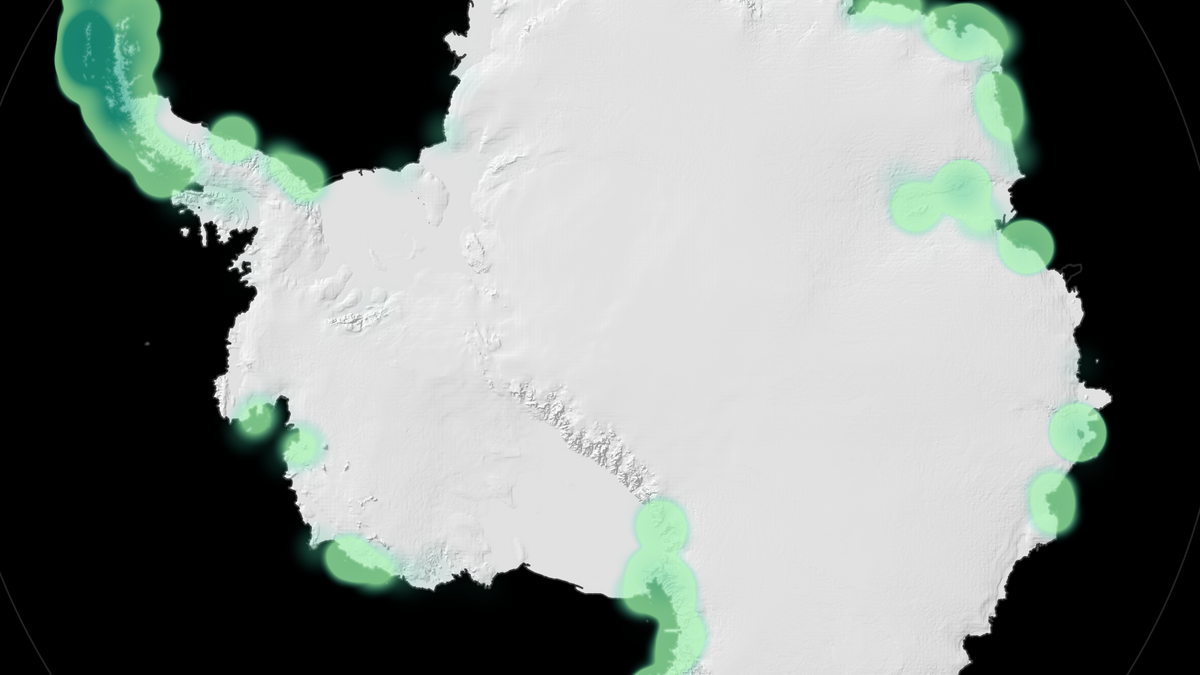
A heatmap showing where vegetation occurs across the vast expense of the Antarctic continent.
| Photo Credit: Andrew Gray/The Conversation

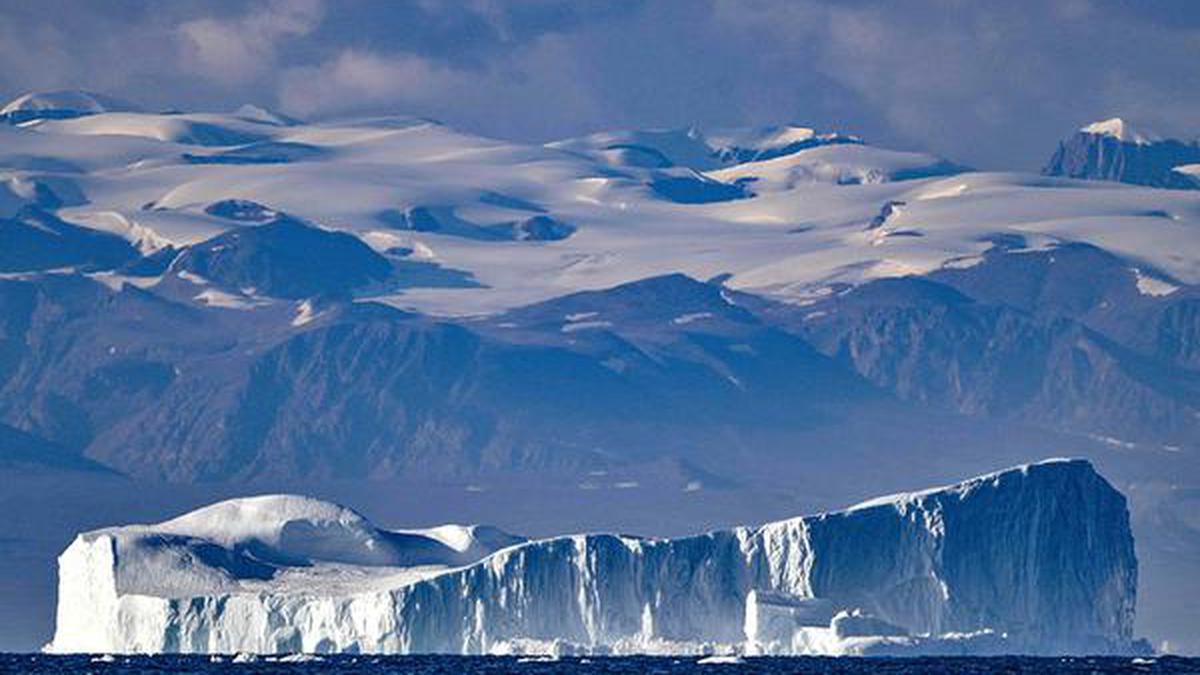
A tiny seed is stuck between loose gravel and coarse sand. There is nothing else alive around it. All it can see is a wall of ice reaching 20 metres up into the sky. It is cold. Survival is hard around here. In winter, it is dark even during the day. In summer, the sun bakes the ground hard and dry for 24 hours.

The seed was left here by tourists several years ago, who came to see the wonders of the last remaining wilderness on planet earth: Antarctica.

Life is changing. Warmer temperatures are melting the glaciers and the meltwater allows the seed to start growing. Antarctica is in the grip of some of the world’s fastest climate change. Its melting ice could contribute up to 5 meters of sea-level rise. Where the ice disappears, it leaves barren ground behind. By the end of this century, a small country’s-worth of land could appear from below the ice.

New land in Antarctica is colonised by pioneer organisms. The first to appear are algae and cyanobacteria – minuscule organisms tiny enough to fit between sand grains. Here, sheltered from the burning sun rays, the algae live and die and as they normally do, slowly stick the sand particles together to create a surface for other organisms to grow on.

Lichens and mosses follow. They are just a few centimetres tall but compared to other life on Antarctica’s shores they look like giants. Once lichens and mosses have made themselves a home, even larger organisms may show up and eventually the plants take hold. Their seeds, if stuck in a soft and moist mossy cushion, proliferate and grow.

Only two plant species are native to Antarctica. Both spread their seeds by wind. This makes them independent from animals and insects, which aren’t needed to carry the pollen or seed to another flower or fresh patch of soil. The wind just blows them there. All these plants need is that bit of moss or lichen to hold on to, so they are not blown away into the cold desert of snow and ice.

But this natural sequence of plant establishment has been broken, as the climate changes and conditions become more habitable. More than 100 plant species have invaded Antarctica already. The newcomers are doing well. For instance the fast-growing opportunist Poa annua, the common lawn grass, has rapidly spread across the sub-Antarctic Islands from South Georgia to Livingston Island and is now making its way south to the Antarctic Peninsula.

Researchers are wondering how much potential there is for new plant species to thrive in Antarctic soils. What will Antarctica look like in 100 years time? Could it be green like the tundra landscapes we know from the Arctic?

A new map

I’m part of a group of scientists who have just combined satellite data with field measurements to produce the first map of green vegetation across the whole Antarctic continent. 

We detected 44.2 km² of vegetation in total, mostly found in the Antarctic Peninsula and neighbouring offshore islands. This vegetation area makes up just 0.12% of Antarctica’s total ice-free area, highlighting that Antarctica remains the frozen continent dominated by snow and ice. For now.

An unspoiled Antarctic environment is worth protecting for its own good, but it also serves humanity. Climate and weather patterns across the world are driven by the immense large ice masses on the Antarctic continent. Their disappearance would change our planet as we know it.

My colleague Charlotte Walshaw from the University of Edinburgh was the lead scientist of the recent research mapping vegetation in Antarctica. She points out that these new maps provide key information on a scale which couldn’t be achieved in the past. “We can use these maps”, she told me, “to keep a very close eye on any large-scale change in vegetation distribution patterns.”

Vegetation in Antarctica encounters the harshest living conditions on the planet. Only the most resilient organisms can thrive there, and we don’t know yet what their future holds with climate change. Now that we know where to look for these plants, we can provide more accurate conservation measures to safeguard their future.

Claudia Colesie is senior lecturer in physiological plant ecology, The University of Edinburgh. This article is republished from The Conversation.

The Conversation


Source link

Science

Post navigation

Previous Post: What Trump Said About Kim Jong Un In Interview With Elon Musk
Next Post: ‘Cannot Wrap Your Athletes…’: Abhinav Bindra’s Big Take On Prakash Padukone’s Criticism

Related Posts

  • How does using the AC affect a car’s mileage while driving? Science
  • Stealing behaviour influenced by emotional instability: NIMHANS study Science
  • AlphaGeometry and the threat of AI’s takeover of mathematics | Explained Science
  • Starless and forever alone: more ‘rogue’ planets discovered Science
  • Are you sure you contain 10x as many microbes as human cells? Science
  • Rare blue supermoon brightens the night sky this week in the closest full moon of the year Science

More Related Articles

Russia’s war is weakening scientists’ ability to track the climate Science
Study shows elephants might call each other by name Science
Does seeking social proximity improve flight routes among pigeons? Science
HPV vaccine prevents cervical cancer cases in deprived groups: study Science
A mouth bacteria has starring role in colorectal cancer, study finds Science
NASA spacecraft launched to mysterious and rare metal asteroid in first mission of its kind Science
SiteLock

Archives

  • August 2024
  • July 2024
  • June 2024
  • May 2024
  • April 2024
  • March 2024
  • February 2024
  • January 2024
  • December 2023
  • November 2023
  • October 2023
  • September 2023
  • August 2023
  • July 2023
  • June 2023
  • May 2023
  • April 2023
  • March 2023
  • February 2023
  • January 2023
  • December 2022
  • November 2022
  • October 2022
  • September 2022
  • August 2022
  • July 2022
  • June 2022
  • May 2022

Categories

  • Business
  • Nation
  • Science
  • Sports
  • World

Recent Posts

  • CBI Submits Status Report In Supreme Court
  • Indonesia parliament postpones ratification of election rules change, lawmaker says
  • Sharad Pawar backs candidates demanding postponement of MPSC exam
  • Saud Shakeel, Mohammad Rizwan Run To Take 4, Produce Rare Sight In Cricket. Watch
  • Secunderabad Cantonment residents to get augmented water supply

Recent Comments

  1. TpeEoPQa on UP Teacher Who Asked Students To Slap Muslim Classmate
  2. xULDsgPuBe on UP Teacher Who Asked Students To Slap Muslim Classmate
  3. KyJtkhneiLmcq on UP Teacher Who Asked Students To Slap Muslim Classmate
  4. mOyehudovB on UP Teacher Who Asked Students To Slap Muslim Classmate
  5. GFBvgSrWPcsp on UP Teacher Who Asked Students To Slap Muslim Classmate
  • Paul Kagame: Spring of the patriarch World
  • Arrested Trinamool strongman Sheikh Shahjahan suspended for 6 years by party Nation
  • Matthew Perry Detailed How He Wanted To Be Remembered World
  • South Africa vs India: T20 World Cup 2024 Live Cricket Score, Live Score Of Today's Match on NDTV Sports Sports
  • Australia Legend Michael Clarke Becomes Brand Ambassador Of Lanka Premier League 2024 Sports
  • India vs Pakistan live score over Match 12 ODI 11 15 updates Sports
  • Luka Modric Thunderbolt Breaks Sevilla Hearts As Real Madrid Win Again Sports
  • Israel strikes Gaza after fresh Rafah evacuation order World

Editor-in-Chief:
Mohammad Ariff,
MSW, MAJMC, BSW, DTL, CTS, CNM, CCR, CAL, RSL, ASOC.
editor@artifex.news

Associate Editors:
1. Zenellis R. Tuba,
zenelis@artifex.news
2. Haris Daniyel
daniyel@artifex.news

Photograher:
Rohan Das
rohan@artifex.news

Artifex.News offers Online Paid Internships to college students from India and Abroad. Interns will get a PRESS CARD and other online offers.
Send your CV (Subjectline: Paid Internship) to internship@artifex.news

Links:
Associate Journalism
About Us
Privacy Policy

News Links:
Breaking News
World
Nation
Sports
Business
Entertainment
Lifestyle

Registered Office:
72/A, Elliot Road, Kolkata - 700016
Tel: 033-22277777, 033-22172217
Email: office@artifex.news

Editorial Office / News Desk:
No. 13, Mezzanine Floor, Esplanade Metro Rail Station,
12 J. L. Nehru Road, Kolkata - 700069.
(Entry from Gate No. 5)
Tel: 033-46011099, 033-46046046
Email: editor@artifex.news

Copyright © 2023 Artifex.News Newsportal designed by Artifex Infotech.