






‘Disdain towards derivatives speculation also comes from a lack of understanding of its social benefits’
| Photo Credit: Getty Images/iStockphoto
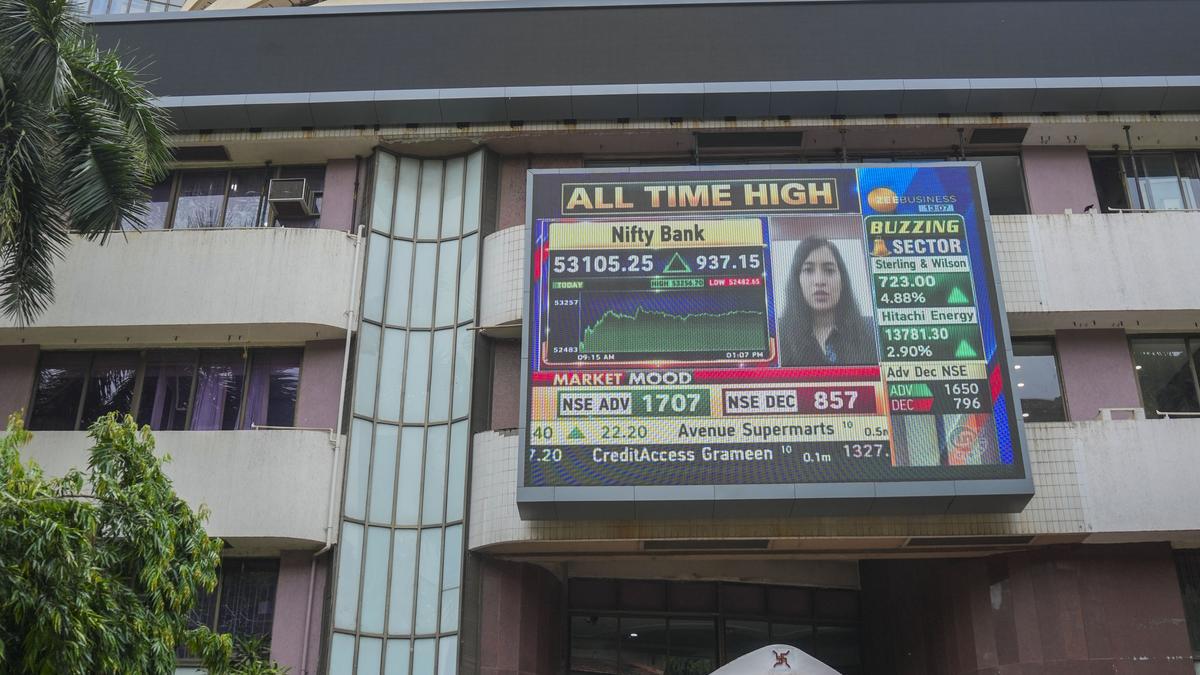
The Government of India, in its Budget, raised taxes on both short-term and long-term capital gains made in the stock market and also raised the securities transaction tax on derivatives transactions.
The fundamental belief behind the idea of imposing higher taxes on stock market profits is that gains from stock market speculation are akin to gains from gambling. In fact, the Economic Survey released a day prior to the Budget argued that unlike developed countries, a developing country such as India cannot afford to waste its limited savings on stock market speculation. Finance Secretary T.V. Somanathan even noted that capital gains could be taxed at higher rates as it is currently the fastest-growing income class.
Capital gains made in the stock market are somehow seen as easy profits earned by investors without providing any useful service to society. Similar disdain is also shown when the owner of a piece of real estate profits from a rise in the price of his or her property — as is evident in the removal of indexation benefits for real estate investors in the recent Budget. This is not surprising because many believe that when an investor buys an asset and sells it at a higher price in the future, he does not add any value to society in the process. In fact, capital gains are seen as a major reason behind growing inequality and taxing such gains is deemed good for society. The truth, however, is very different from this belief.

How capital gains occur
To understand why, one must first consider how capital gains occur in an economy. In a world where investors could perfectly forecast the future cash flow from different assets, there would be no capital gains because it would then be impossible for any investor to buy an asset at a price that is cheaper than its fair value. Here is an explanation, with a very simple example. Suppose investors knew very precisely that a business (or any other asset) would yield a one-time cash flow of ₹110 a year from now and they wanted a minimum annual return of 10%. Competition among investors to purchase the business would ensure that any buyer would have to pay ₹100 for it or risk losing it to other potential buyers. In such a Utopian world, there would be no opportunity for any investor to purchase the business for, let us say, ₹50 and sell it later at its fair value of ₹100 to earn a profit (or capital gains) of 100%.
The real world, of course, is far from perfect as the future is often uncertain. Hence, forecasts about the future cash flow of businesses can, at times, vary a lot. This basically means that investors may end up over-investing in certain businesses when compared to the likely future cash flow of these businesses, leading to overvaluation. They may also under-invest in other businesses, leading to undervaluation. Investors who put their money in undervalued businesses have the chance to earn capital gains when other investors finally recognise the fair value of these businesses and bid up their prices. So, an investor who makes capital gains is essentially one who deploys his capital efficiently into businesses whose future cash flow justifies the investment. An investor who suffers capital losses, on the other hand, is one who misallocates capital into businesses whose future cash flow does not justify the investment.
This lesson has important social implications. An economy that allocates a large part of its capital inefficiently would be poorer than another economy that allocates its capital more efficiently. This is because the way capital is allocated also determines how scarce resources are allocated towards satisfying different ends of society. Imagine if, during a pandemic such as COVID-19, investors in a country allocated most of their capital into building cruise ships and passenger aircraft which very few people want during a pandemic rather than building new hospitals and testing facilities that are in high demand. Such a country, where investors misallocated capital, would be directing its resources in an inefficient way than another economy where investors correctly prioritised health care over less important sectors. While a uniform tax on capital gains across all businesses may help prevent such resource misallocation, higher tax collections will still affect private incentives and the size of the overall economic pie.

The issue of ‘gambling instincts’
Now, some may dispute that the argument above, for the benefits of speculation, does not apply to most of the buying and selling that happens in the stock market. When a retail investor buys a share of a business, they rightly say, the investor’s cash often does not actually go into the balance sheet of the business but into the hands of the previous owner. What these critics do not understand, however, is that in many cases, early investors may not even be keen in investing in a business unless there is an active market such as the stock exchange where they could readily sell their shares to potential buyers in the future. The Centre says it wants to encourage long-term investing in companies by raising the tax on short-term capital gains. But it does not understand that without traders with “gambling instincts”, who regularly buy and sell stocks in the short-term, there would not be sufficient liquidity in the market for many long-term investors to easily sell their stocks.
Further, a highly liquid market also ensures that the shares of businesses are priced as accurately as possible. The efficient pricing of the shares of companies can help ensure that companies with promising prospects are able to raise funds more easily than companies with shaky prospects, thus aiding the efficient allocation of resources.

It is worse for derivatives
Meanwhile, gains that speculators make from derivatives such as futures and options suffer an even worse reputation than the more straightforward capital gains made from trading shares. But again, disdain towards derivatives speculation also comes from a lack of understanding of its social benefits.
Derivatives are contracts that allow investors to buy or sell an underlying asset such as a stock at a predetermined price in the future. In other words, these instruments allow one group of investors to offload the risk associated with changes in the price of an asset onto another group of investors who are willing to assume the risk. So, derivatives basically help in the transfer of risk among investors. It should be noted that without derivatives, many investors would simply not be willing to make many investments at all. A great example is of a farmer who may have the skills to produce agricultural output but not the skill or the risk appetite to forecast the future prices of his produce. In the absence of futures contracts that can assure the farmer a certain price for his produce in the future, the farmer will likely be discouraged from producing any output at all due to the risk of potential price fluctuations.
Derivatives trading can often look like pure gambling. This is particularly so in cases where neither party to the contract has any intention to ever actually buy or sell the underlying asset but purely wants to bet on changes in the price of the asset. Such bets on the price of an underlying asset can seem to be no different from bets placed on the outcome of a game of cricket or football. But note that such pure speculative bets in derivatives are not very different from much of the trading that happens in the cash market, where both the buyer and the seller of a stock may — unlike fundamental investors — trade without any long-term interest in the underlying business. We have seen that such active trading in stocks can be socially beneficial as it offers crucial liquidity to long-term investors who want to buy or sell based on fundamentals. Similarly, traders who bet in derivatives for purely speculative reasons help improve the availability of these instruments to fundamental investors who want to manage risk.
A better understanding of these benefits of stock market speculation can lead to better public policy.
prashanthperumal.j@thehindu.co.in