





Skip to content
  • Facebook
  • X
  • Linkedin
  • WhatsApp
  • Associate Journalism
  • About Us
  • Privacy Policy
  • 033-46046046
  • editor@artifex.news
Artifex.News

Artifex.News

Stay Connected. Stay Informed.

  • Breaking News
  • World
  • Nation
  • Sports
  • Business
  • Science
  • Entertainment
  • Lifestyle
  • Toggle search form
  • China building base on land India held until 2020: Kharge World
  • Liverpool, Manchester City Draw 1-1 To Leave Arsenal Top Of Premier League Sports
  • What is the historic amendment that enshrined abortion access in France’s Constitution? | Explained World
  • PM Modi To Attend ASEAN, East Asia Summit Meetings In Indonesia Next Week Nation
  • West Indies vs Afghanistan Live Score, T20 World Cup Live Updates Sports
  • Inter Beat Genoa To Take Further Step Towards Serie A Title Sports
  • Parents, Aunt Arrested After 6-Month-Old Baby In US Nearly Dies From More Than 50 Rat Bites World
  • PCB Chief Zaka Ashraf Discusses ‘Incidents’ In India During Cricket World Cup 2023 With Senior Officials: Report Sports

Choosing the right track to cut post-harvest losses

Posted on July 17, 2024 By admin


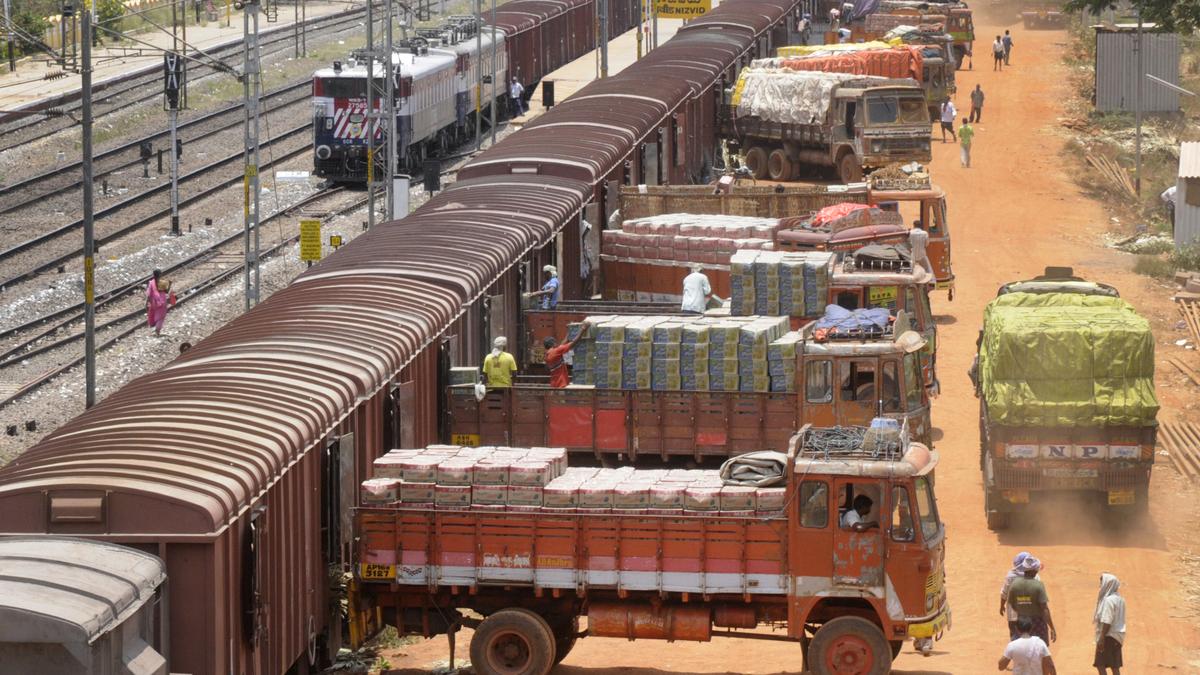
Mangoes being loaded at Nuzvid railway station, Krishna district, Andhra Pradesh. File
| Photo Credit: The Hindu

India ranks second in global agriculture production, but its share in global agricultural exports is only 2.4%, placing it eighth in the world. This is attributed to several factors that include low productivity, an inability to meet desired quality standards and inefficiencies in the supply chain such as an inadequate transportation network and infrastructure, which also leads to significant post-harvest losses.

India’s post-harvest losses amount to approximately ₹1,52,790 crore annually, according to a Ministry of Food Processing Industries 2022 study. As India’s population continues to grow, the challenge of meeting the food and nutrition demand of its people will continue to intensify. While growing more food is part of the solution, the prevention of post-harvest losses is crucial.

A closer look at India’s post-harvest loss

The biggest loss is from perishable commodities, which include livestock produce such as eggs, fish and meat (22%), fruits (19%) and vegetables (18%). During the export of perishables, approximately 19% of food is lost, particularly at the import-country (trade partner) stage. Storage, transportation and marketing play a critical role in ensuring that perishable products reach the consumer in time. The strengthening of agri-logistics is recognised as a priority by the Committee on Doubling Farmer’s Income (DFI).

There are multiple logistical requirements in a single supply chain. Starting with first mile transport from farmgate to mandi (wholesale/retail), long haul or wholesale transportation by rail, road, water or air, and last mile transportation to the consumer. The trade of perishables faces a time shortage once the crop is harvested. The latest agriculture Census shows that 86% of farmers in India are small and marginal (SMF). They struggle to attain economy of scale due to the small production. Together with a lack of assured market connectivity, this results in post-harvest losses, which includes income losses for the farmers.

In India, food price volatility has been caused partly by supply constraints affecting perishable produce. As in a NITI Aayog report, the revenue of the Indian Railways is primarily driven by freight transport, which includes commodities such as iron, steel, fertilizers and agricultural produce. In the 2022 fiscal year, it accounted for 75% of its total earnings. The Indian Railways efficiently connects urban centres and rural areas across the country. The Food Corporation of India is heavily dependent on the Indian Railways to move approximately 90% of its food grains. In contrast, about 97% of fruits and vegetables are transported by road.

Initiatives by the Railways

The Indian Railways has taken a few initiatives to improve its freight operations in perishables. The truck-on-train service carries loaded trucks on railway wagons. Efforts are being made to expand this service following successful trial runs involving commodities such as milk and cattle feed. During the COVID-19 pandemic, the Railways introduced parcel special trains to transport perishables and seeds between market and producers.

Additionally, to support SMFs, the Kisan Rail was initiated to connect perishables (inclusive of milk, meat and fish) production surplus regions to consumption regions more efficiently. A recent study highlighted the impact of the Kisan Rail scheme on reducing post-harvest losses and enhancing farmer incomes in India. For example, grape growers in Nashik, Maharashtra, secured a net profit of ₹5,000 per quintal by supplying about 22,000 quintals using Kisan Rail. This highlights the advantage of using rail-based long-haul of fruits and vegetables.

In recent times, the role of the Railways in the agricultural sector has shown promising results. However, initiatives must also focus on increasing awareness and accessibility of farmers to available Railway schemes. Friends of Champions 12.3 India, a coalition of food supply chain actors powered by WRI India, also identified that multiple touch points during the transport of perishables using the Railways is a challenge.

Therefore, investment in specialised wagons for temperature-controlled transport and the establishment of rail-side facilities for safe cargo handling are essential. This would also present a significant opportunity to enhance food safety in the agriculture sector, by minimising spoilage and contamination risks, thereby supporting both domestic and export markets. Further, the DFI committee recommends streamlining loading and unloading processes to minimise transit times. It also emphasises addressing staffing shortages through recruitment and training initiatives. Prioritising the Railways over roadways, particularly for fruit and vegetable transportation, promises efficient transportation.

Untapped opportunities

The Railways offers a tremendous opportunity to reduce post-harvest losses and positively impact not just livelihoods but also the environment. Findings from the Logistics Division, Ministry of Commerce, state that the Indian Railways generates up to 80% less carbon dioxide for freight traffic than road transport.

There is a need for adopting systems-based approach, cutting across modes of transport and geographies. The private sector can play a crucial role in enhancing operational efficiency and strengthening the rail infrastructure through public-private partnerships. The budgetary allocation for agriculture 2024 also aims to bridge the farm-to-market gap with modern infrastructure and value-addition support. Such Railway initiatives complement these efforts by supporting the efficient transportation of perishable goods and minimising post-harvest losses.

Shweta Lamba is Program Manager, Food, Land and Water program at WRI India. Nitya Sharma is Program Manager, Food, Land and Water program at WRI India. The views expressed are personal


Source link

Business Tags:budgetary allocation for agriculture, Committee on Doubling Farmer’s Income, COVID-19 pandemic and Indian Railways, export of perishables, Food Corporation of India and Indian Railways, food price volatility, Friends of Champions 12.3 India, inadequate transportation network and infrastructure, India and rank in global agriculture production, Indian Railways and carbon emissions, India’s post-harvest losses, India’s share in global agricultural exports, inefficiencies in supply chain, investment in temperature-controlled transport, Kisan Rai and perishables, loss from perishable commodities, low productivity, Ministry of Food Processing Industries study, rail infrastructure and public-private partnerships, small and marginal farmers

Post navigation

Previous Post: Top Democrat Adam Schiff calls on U.S. President Joe Biden to exit presidential race
Next Post: Donald Trump Close Aide Shalabh Kumar To NDTV

Related Posts

  • A Budget without a vision for agriculture Business
  • Red flags over runaway silver imports from UAE through Gift City Business
  • Myanmar’s economy in crisis as civil strife disrupts trade and livelihoods Business
  • Who is winning the smartphone exports race – Vietnam or India: Data Business
  • Idukki gets its first woman-led cardamom auction company Business
  • M&M Q4 profit rises 4% to ₹2,754 cr. as Tech M weighs Business

More Related Articles

Gold falls ₹50; silver plunges ₹500 Business
Explained | Why did the government impose a ceiling on wheat stocks? Business
Riding on festive demand, passenger vehicle sales soar to record high in October Business
Housing scheme to be launched for deserving middle class: Sitharaman in Budget speech Business
India To Be Part Of JPMorgan’s Emerging Markets Index. Here’s What It Means Business
Sam Bankman-Fried sentenced to 25 years for multi-billion dollar FTX fraud Business
SiteLock

Archives

  • July 2024
  • June 2024
  • May 2024
  • April 2024
  • March 2024
  • February 2024
  • January 2024
  • December 2023
  • November 2023
  • October 2023
  • September 2023
  • August 2023
  • July 2023
  • June 2023
  • May 2023
  • April 2023
  • March 2023
  • February 2023
  • January 2023
  • December 2022
  • November 2022
  • October 2022
  • September 2022
  • August 2022
  • July 2022
  • June 2022
  • May 2022

Categories

  • Business
  • Nation
  • Science
  • Sports
  • World

Recent Posts

  • Ishan Kishan “Nowhere On BCCI’s Selection Radar”, Report Reveals Why He Wasn’t Picked For SL Series
  • Journalist Told To Pay 5000 Euros For Mocking Italy PM Giorgia Meloni’s Height
  • Tax administration must be smoothened for capital markets growth
  • US Ambassador Visits Adani’s Khavda Project Site In Gujarat
  • Central Paris locks down for Olympics as athletes arrive

Recent Comments

  1. ywdVpqHiNZCtUDcl on UP Teacher Who Asked Students To Slap Muslim Classmate
  2. bRstIalYyjkCUJqm on UP Teacher Who Asked Students To Slap Muslim Classmate
  3. GkJwRWEAbS on UP Teacher Who Asked Students To Slap Muslim Classmate
  4. xreDavBVnbGqQA on UP Teacher Who Asked Students To Slap Muslim Classmate
  5. aANVRzfUdmyb on UP Teacher Who Asked Students To Slap Muslim Classmate
  • Why Players Flourish After Joining CSK? Navjot Sidhu’s Million-Dollar MS Dhoni Response Sports
  • Rohit Sharma, Virat Kohli Snubbed: 2024 T20 World Cup ‘Team of the Tournament’ Has Only 1 Indian Sports
  • Tata Steel Q4 PAT slides 64% to Rs 611 crore Business
  • Rachin Ravindra Shines, Kane Williamson All Class On Comeback As New Zealand Outbat Pakistan In Cricket World Cup Warm-Up Sports
  • Watch | Who is J.D Vance, Trump’s running mate in U.S. Presidential election? World
  • India vs Bangladesh live score over Match 17 ODI 31 35 updates Sports
  • FA Cup final: Garnacho, Mainoo seal stunning Cup win for Manchester United Sports
  • Mathews, Chameera to join Sri Lankan squad as travelling reserves Sports

Editor-in-Chief:
Mohammad Ariff,
MSW, MAJMC, BSW, DTL, CTS, CNM, CCR, CAL, RSL, ASOC.
editor@artifex.news

Associate Editors:
1. Zenellis R. Tuba,
zenelis@artifex.news
2. Haris Daniyel
daniyel@artifex.news

Photograher:
Rohan Das
rohan@artifex.news

Artifex.News offers Online Paid Internships to college students from India and Abroad. Interns will get a PRESS CARD and other online offers.
Send your CV (Subjectline: Paid Internship) to internship@artifex.news

Links:
Associate Journalism
About Us
Privacy Policy

News Links:
Breaking News
World
Nation
Sports
Business
Entertainment
Lifestyle

Registered Office:
72/A, Elliot Road, Kolkata - 700016
Tel: 033-22277777, 033-22172217
Email: office@artifex.news

Editorial Office / News Desk:
No. 13, Mezzanine Floor, Esplanade Metro Rail Station,
12 J. L. Nehru Road, Kolkata - 700069.
(Entry from Gate No. 5)
Tel: 033-46011099, 033-46046046
Email: editor@artifex.news

Copyright © 2023 Artifex.News Newsportal designed by Artifex Infotech.