



You finally got your hands on a new novel you’ve been wanting to read. You’re turning the crisp paper of the pages when suddenly you get a paper cut. Pain erupts on your finger. A discomfiting sensation surges through your entire body yelling out, “Brain, we have a problem!”
This unwanted yet necessary sensory experience most living beings share is pain. It is an essential component of our body’s warning system that directs our attention to potential external or internal harm.
The International Association for the Study of Pain defines pain thus: “An unpleasant sensory and emotional experience associated with actual or potential tissue damage, or described in terms of such damage.”
The way people perceive pain is highly personal and subjective in nature. In fact, scientists have suspected for some time now that the perception of pain might be sexually dimorphic: that is, different between (biological) men and women. But the particulars have been a mystery.
A study led by University of Arizona Health Sciences researchers, recently published in the journal Brain, demonstrated for the first time functional sexual dimorphism in nociceptors, the nerve cells responsible for perceiving pain.
Why do we perceive pain?
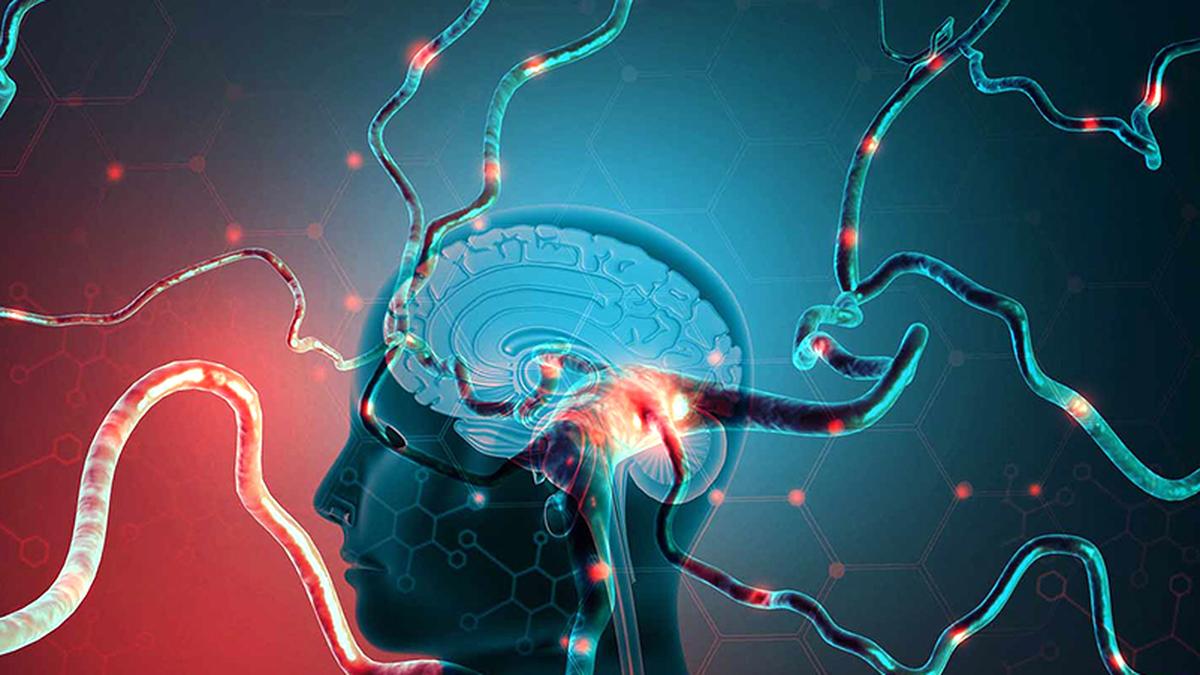
Nociceptor cells have bare nerve endings and they are found across our skin, bones, joints, and muscles. The receptors detect extreme pressure, temperature, and chemical signals released by the body when it is injured, turn them into electrical signals, and relay them to the brain via the spinal cord. The brain finally reads the message and perceives pain.
In the new study, the researchers investigated how the nociceptors first light up. “Activation of nociceptors likely produces the same perception of pain in men and women. What is different is how the nociceptors are activated.
“While the nociceptors are normally activated by high-intensity stimuli, under some circumstances the threshold for their activation may be decreased allowing low intensity and normally physiological stimuli to activate them and produce pain,” Frank Porreca, associate head of the Department of Pharmacology, University of Arizona Health Sciences Center, told this author in an email.
The nociceptor response threshold
Previous studies have reported that the nociceptor response threshold in females is lower than that in males. One possible biological mechanism underlying this difference could be peripheral nociceptor sensitisation: a phenomenon in which the threshold for pain is lowered by external factors, causing the receptors to respond to stimuli that they’d otherwise ignore. But researchers still needed to know how this variation in sensitisation arises.
To understand sexual dimorphism in nociceptors sensitisation, the research team investigated how easily pain receptors in the dorsal root ganglion — a cluster of nerve cells located near the spinal cord — could be excited. They collected the samples from three male and female mice, two macaque monkeys (one of each sex), and donor nerve cells from four men and three women.
Dr. Porecca’s lab has been exploring the relationship between sleep and chronic pain. In an April 2022 study, the team found that prolactin, a hormone responsible for the growth of breast tissue, also selectively promoted pain responses in female rodents. Later, the researchers found receptors for prolactin were expressed more in female-specific pain disorders such as endometriosis.
Their studies of sleep and chronic pain also established that orexin B, a neurotransmitter that regulates wakefulness, produced sensitisation in male rodents but not female rodents.
‘Differentially sensitised’
In the new study, the researchers studied how prolactin and orexin-B affect on nociceptor activation thresholds in the nerve cell samples they had. They cultured the nerve cells overnight in the presence of mouse prolactin for the mice and human prolactin for both the monkey and the human samples. For orexin-B, they applied the neurotransmitter to cultured nerve cells of all three species.
In the mice cohort, a technique to separate and identify proteins revealed prolactin had increased the firing-up of nociceptors in females and orexin-B had done the same thing in the males. Immunohistochemistry analysis of monkeys and humans also revealed similar effects.
The team’s observations here were consistent with the older findings. “Our paper showed that nociceptors from male and female animals or humans can be differentially ‘sensitised’, i.e. have a lowering of their activation threshold,” Dr. Porecca, the corresponding author of this study, said.
The devil’s in the differences
When doctors prescribe medicine to help manage pain, they typically overlook the sex of the patient. In fact, other than certain female-specific hormonal therapies, health workers generally treat pain the same way among both men or women — even though we also know the rate at which different pain conditions occur differs between the sexes.
For example, pain arising from conditions not linked to visible tissue damage, such as irritable bowel syndrome, migraines, and painful bladder syndrome, are more common in women alongside female-specific issues such as endometriosis and dysmenorrhea.
On the other hand, cluster headaches and gout are more common in men, together with male-specific ailments like prostatitis.
Unravelling the different mechanisms that drive nociceptor sensitisation and activation will bring us a step closer to understanding qualitative sex differences in pain perception, which in turn is essential to design precise and sex-specific pain therapies.
“We studied multiple species because we were aware of some data in rodents and human cells of differential expression of the transcript for proteins, and we didn’t know if this could translate into functional differences in sensitisation/activation,” Dr. Porecca said.
Nociceptors can be male or female
Dr. Porecca said the widespread existence of these mechanisms across species suggests they’re evolutionarily relevant.
In addition, the activation or sensitisation interfering ability of these mechanisms hold the potential for being exploited for the development of highly targeted therapeutics.
The study presents a unique concept: nociceptors are either male or female. The researchers expect their findings have two implications for medical research.
First, that it will encourage medical practitioners to factor in the sex of a patient when making decisions about pain therapies.
Second, that in clinical trials of therapies with new pain treatment mechanisms, researchers will have to be more careful about the number of men and women in the trial so that they might be alerted to effects that may only occur in one sex.
Dr. Porecca also said it might be time to revisit some ‘failed’ clinical trials to check if there might have been a sex-specific effect to a drug.
Sanjukta Mondal is a chemist-turned-science-writer with experience in writing popular science articles and scripts for STEM YouTube channels.