Skip to content
  • Facebook
  • X
  • Linkedin
  • WhatsApp
  • Associate Journalism
  • About Us
  • Privacy Policy
  • 033-46046046
  • editor@artifex.news
Artifex.News

Artifex.News

Stay Connected. Stay Informed.

  • Breaking News
  • World
  • Nation
  • Sports
  • Business
  • Science
  • Entertainment
  • Lifestyle
  • Toggle search form
  • Russian troops set their eyes on Ukraine’s once-peaceful town of Toretsk World
  • Ed-tech startup Byju breached loan terms, small stake sale blocked, order shows Business
  • Chidambaram On Cauvery Water Dispute Tamil Nadu Karnataka Have To Act On Commissions Decision Nation
  • Kamlesh Shah, Congress MLA From Kamal Nath’s Home Turf Chhindwara, Joins BJP Nation
  • Constitutional changes on the agenda as new bloc is set to form government in Nepal World
  • Rupee rises 8 paise to 83.37 against U.S. dollar in early trade Business
  • Sci-Five | The Hindu Science Quiz: On first human to enter space Science
  • Telangana BJP Manifesto Panel Chief Quits Party, Crosses Over To Congress Nation

Brown, botany, and Brownian motion

Posted on June 8, 2024 By admin


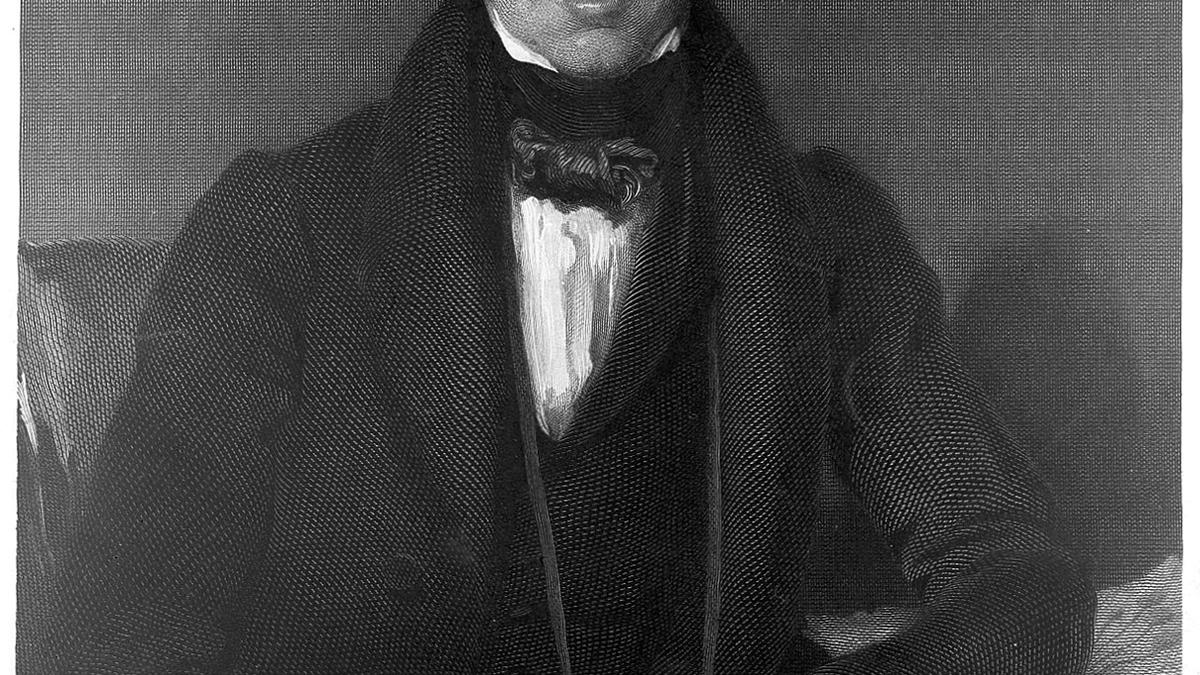
Portrait of Robert Brown.
| Photo Credit: WELLCOME LIBRARY, LONDON / Wikimedia Commons

Even a little over 200 years ago, the world was very unlike what we are used to everyday now. Instant communication was inconceivable. Getting from one place to another was often a slow, laborious process. And vast spaces were still uncharted. 

Australia was one such landmass, really! The HMS Investigator was a British vessel used for an expedition from 1801-1803 to map the Australian coastline. Part of this expedition was Robert Brown, a botanist who went on to contribute immensely through his original work on the flora of Australia. 

Drawn to botany

Brown, however, didn’t always want to take to botany. Born in 1773 in the coastal town on Montrose in Scotland, Brown’s family moved to Edinburgh in 1790. Despite initially planning to study medicine at the University of Edinburgh, Brown found himself drawn to botany. He travelled into the Scottish Highlands, collecting plants and writing their descriptions with meticulous detail, and even discovered a new species of grass, Alopecurus alpinus.

Even when his studies were interrupted by military service, being stationed in Ireland as a surgeon’s mate afforded him plenty of time to tend to his interests. So much so that by the turn of the century, he established himself as an amateur botanist in the Irish community, without a formal degree. 

HMS Investigator’s naturalist

Brown’s hopes of earning a living as a full-time botanist received a boost when he was selected as the naturalist for a scientific expedition aboard the Investigator, and the British Navy appointed Lieutenant Matthew Flinders as its commander. The voyage was planned to explore “New Holland” – the continent that we now call Australia. 
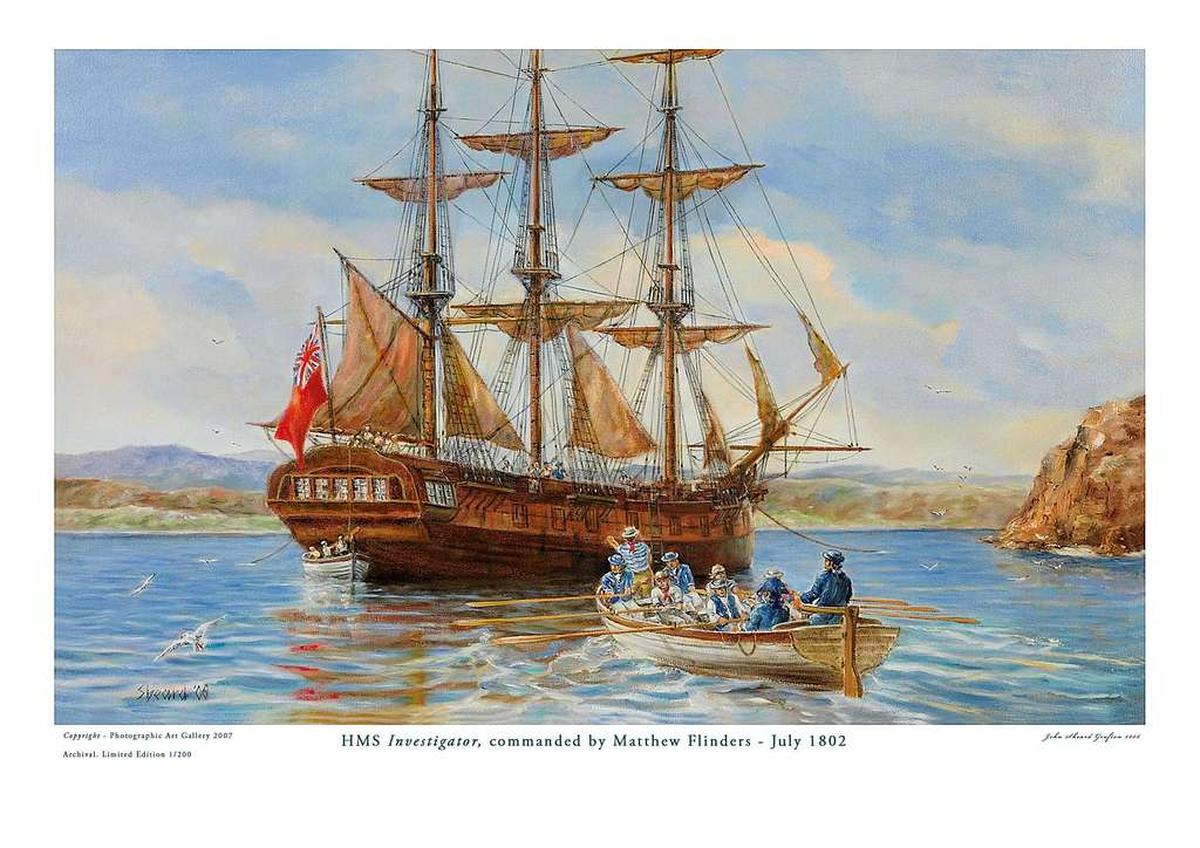
An illustration of the HMS Investigator.

An illustration of the HMS Investigator.
| Photo Credit:
Wikimedia Commons

Tasked with collecting as many plants, insects, and bird species as possible, Brown set sail from London aboard the Investigator in July 1801. Months later, they stopped at the Cape of Good Hope for a couple of weeks, during which Brown experienced “some of the pleasantest botanizing,” in his own words. 

Having arrived in Western Australia by December, Brown spent the next year and a half collecting over 3,000 specimens, many of which were previously unknown and local to Australia. With the circumnavigation of Australia completed and the mapping of Australian coastline achieved, the voyage came to an end on June 9, 1803 when the Investigator reached Port Jackson. 

Classifies plant species

Even though many specimens were lost during his return to England, Brown devoted considerable time after getting home in 1805 classifying the specimens that he had carried with him. With the expedition effectively launching his career as a botanist, Brown went about publishing some of his results from this trip in a 1810 book titled Prodromus Florae Novae Hollandiae et Insulae Van Diemen. Now considered his major work and a classic in systematic botany that laid the foundations for Australian botany, Brown published only one volume as it didn’t quite fly off the shelves. 

As interested in studying the physiology of plants as he was in collecting and classifying them, Brown was captivated by the pollen particles of a certain plant species floating in water under his microscope. He observed that there were smaller particles jiggling in what seemed like random motions within the grains of pollen. 

Repeats his experiment

While Brown wasn’t the first to observe such motion in small particles, he went on to repeat his experiment with other plants, powdered pit coal, dust, glass, and metals, with similar results. Despite the fact that Brown died in 1858 without providing any theory to back his observations, this random jittery behaviour is referred to as Brownian motion. 

The task of explaining its mechanics was taken upon by celebrated theoretical-physicist Albert Einstein. In addition to reasoning that atoms or molecules of a liquid would bombard particles and make them move randomly when tiny, visible particles were suspended in a liquid, he also explained it further in a 1908 paper. He even gave a formula based on the distance the particle travels, which was later tested experimentally and verified. 

In addition to Brownian motion, a number of plant species are also named in Brown’s honour. Brown’s banksia (Banksia brownii) and Brown’s box (Eucalyptus brownii) are two such species. Both of these, unsurprisingly, are found in Australia.


Source link

Science

Post navigation

Previous Post: Eye care diagnosis from a distance
Next Post: ONGC seeks foreign partners for Mumbai High oilfield

Related Posts

  • How quantum algorithms solve problems that classical computers can’t Science
  • Racing for Moon real estate Science
  • Right against climate change a distinct fundamental and human right, SC judgment Science
  • ‘Green-beard’ genes could explain how altruism arose in nature Science
  • Pfizer reports patient death in Duchenne gene therapy study Science
  • How the World Health Organization could fight future pandemics Science

More Related Articles

Archaeologists, Sanskrit scholars tie up to decipher Rigveda text Science
Crown shyness: let our realms stay apart Science
Global rise in the incidence of IBD a cause for concern, say experts Science
The Science Quiz | A brief history of the earth Science
Sci-Five | The Hindu Science Quiz: On Asteroids Science
New book throws light on the people who helped build India’s first rockets Science
SiteLock

Archives

  • July 2024
  • June 2024
  • May 2024
  • April 2024
  • March 2024
  • February 2024
  • January 2024
  • December 2023
  • November 2023
  • October 2023
  • September 2023
  • August 2023
  • July 2023
  • June 2023
  • May 2023
  • April 2023
  • March 2023
  • February 2023
  • January 2023
  • December 2022
  • November 2022
  • October 2022
  • September 2022
  • August 2022
  • July 2022
  • June 2022
  • May 2022

Categories

  • Business
  • Nation
  • Science
  • Sports
  • World

Recent Posts

  • SAIL to invest ₹6,500 crore towards capex in FY-25: CMD Amarendu Prakash
  • BJP Appoints Rajasthans Satish Poonia As Haryana In Charge
  • Mikel Merino’s Extra-Time Heroics Fire Spain Past Germany, Into Euros Semis
  • JSW Energy plans ₹15,000 crore capex in FY25
  • UK PM Keir Starmer Tells Joe Biden UK Support For Ukraine “Unwavering”

Recent Comments

  1. GkJwRWEAbS on UP Teacher Who Asked Students To Slap Muslim Classmate
  2. xreDavBVnbGqQA on UP Teacher Who Asked Students To Slap Muslim Classmate
  3. aANVRzfUdmyb on UP Teacher Who Asked Students To Slap Muslim Classmate
  4. YQCyszVBmIP on UP Teacher Who Asked Students To Slap Muslim Classmate
  5. aiXothgwe on UP Teacher Who Asked Students To Slap Muslim Classmate
  • On BJP’s “Ghamandia” Jibe At Opposition’s INDIA Bloc, Sharad Pawar Says.. Nation
  • BJP To Release List Of 100 Candidates For Lok Sabha Polls Next Week, PM May Be On It: Sources Nation
  • Arsene Wenger To Visit India From November 19 To 23, Confirms AIFF President Sports
  • Sceptical Nizamabad farmers ask why PM has not laid foundation stone for Turmeric Board Business
  • RBI Committed To Bring Down Inflation To 4%: RBI Governor Shaktikanta Das Business
  • DRDO To Test Shoulder-Fired Air Defence Missiles At High-Altitudes Nation
  • Rohit Sharma, Virat Kohli Lead Celebrations As India Stars Dance To ‘Chak De India’. Watch Sports
  • Elon Musk Joins Disney As “Chief DEI Officer”, Internet Calls It April Fools Prank World

Editor-in-Chief:
Mohammad Ariff,
MSW, MAJMC, BSW, DTL, CTS, CNM, CCR, CAL, RSL, ASOC.
editor@artifex.news

Associate Editors:
1. Zenellis R. Tuba,
zenelis@artifex.news
2. Haris Daniyel
daniyel@artifex.news

Photograher:
Rohan Das
rohan@artifex.news

Artifex.News offers Online Paid Internships to college students from India and Abroad. Interns will get a PRESS CARD and other online offers.
Send your CV (Subjectline: Paid Internship) to internship@artifex.news

Links:
Associate Journalism
About Us
Privacy Policy

News Links:
Breaking News
World
Nation
Sports
Business
Entertainment
Lifestyle

Registered Office:
72/A, Elliot Road, Kolkata - 700016
Tel: 033-22277777, 033-22172217
Email: office@artifex.news

Editorial Office / News Desk:
No. 13, Mezzanine Floor, Esplanade Metro Rail Station,
12 J. L. Nehru Road, Kolkata - 700069.
(Entry from Gate No. 5)
Tel: 033-46011099, 033-46046046
Email: editor@artifex.news

Copyright © 2023 Artifex.News Newsportal designed by Artifex Infotech.