India is one of the world’s leading manufacturers as well as consumers of antimicrobial drugs. However, many of these life-saving drugs are now becoming ineffective against disease-causing bacteria. Around 4.9 million people around the world died in 2019 due to ineffective antimicrobial drugs. These deaths include those due to the infections as well as the morbidity resulting from antimicrobial resistance. Yet we have also been struggling to find new drugs.
One way out of this crisis is for researchers to discover new pathways crucial for the survival of pathogens, and disrupt them. However, the modern targeted drug-discovery process is a complex process and often requires customised solutions for each target.
How does drug discovery begin?
Two research groups working at the CSIR-Centre for Cellular and Molecular Biology, Hyderabad, recently identified potential targets for new antimalarial drugs by studying the basic biology of Escherichia coli bacteria and the human malarial parasite Plasmodium falciparum.
Manjula Reddy’s group has been studying how the bacteria’s outer cell-walls expand when the bacterial cell grows in size before dividing into two. The group’s focus is on the peptidoglycan layer, a mesh of sugar and amino acids in E. coli essential for the bacteria’s survival. When the cell grows, the mesh breaks and extra peptidoglycan material is added to enlarge the mesh.
In the last decade, Dr. Reddy’s group has identified a set of peptidoglycan hydrolase enzymes that are responsible for cutting the peptidoglycan layer, with the latest one published in the journal PLoS Genetics in February. These enzymes are present in all types of bacteria, and are potent drug targets. Inhibiting them could prevent the peptidoglycan layer from expanding, thus killing the bacteria.
Likewise, Puran Singh Sijwali’s group studies how the P. falciparum parasite grows in human red blood cells and liver cells, depending on its developmental stage. The group focuses on how the parasite degrades its own proteins that it doesn’t need anymore. It uses a class of enzymes called Cullin RING ligases. They tag proteins with another small protein called ubiquitin. The protein degradation apparatus identifies the ubiquitin and breaks the protein to which ubiquitin is attached.
Recently, Dr. Sijwali’s group reported two such enzymes crucial for the parasite’s development in the journal PLoS Pathogens.
How many steps does discovery have?
The next step for them is to find drugs that act on these identified targets. But a quick search on the PubMed database (of life science and biomedical research papers) shows scientists across the world publish thousands of papers reporting new drug targets — yet most of them haven’t translated to new drugs yet.
A major reason for the barrier is the need for people with expertise in various areas to work together over an extended period of time.

Normally, the drug-discovery process starts with finding an inhibitor molecule that binds to a target and blocks its function. Researchers check for how well the two molecules bond with each other, which depends on their structures and chemical properties. Dr. Reddy developed a simple and robust assay that lets her visualise if drug-like molecules act on her target enzymes. But most scientists need access to the structures of their potential drug targets to move the work ahead.
Dr. Reddy works with E. coli, a model organism. Many protein structures of E. coli are already available in databases. But this isn’t the case for the work of Dr. Sijwali and others: determining the enzymes’ structures they have been working with is challenging because these are large molecules made of multiple proteins (each containing more than 20,000 atoms).
How else can enzyme structures be revealed?
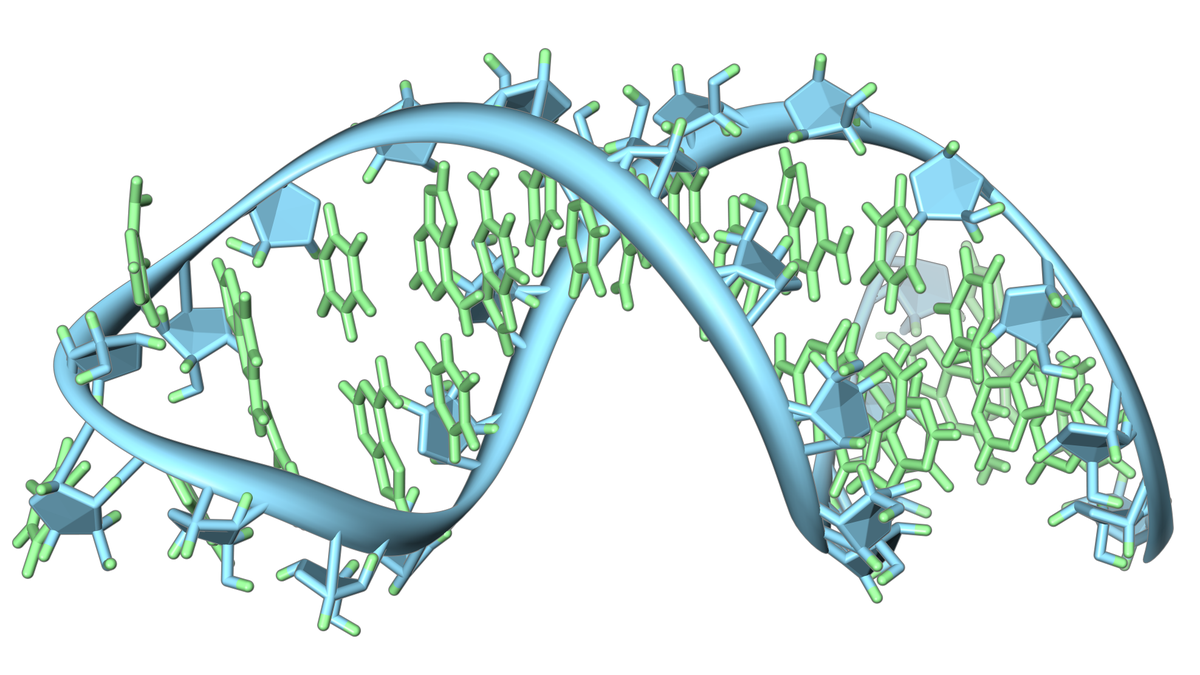
The next best thing is to assess an enzyme’s structure based on the known structures of similar molecules, known as homologs, in other organisms. The more evolutionarily related the homologs are, the more similar their structures will be.
Scientists then run the structures of the target molecules through computer programs called molecular docking simulations. These programs try to fit the known structures of small drug-like compounds into the structure of the target molecule and predict how well they will bind each other. It helps that multiple such chemical libraries are available.
There are libraries of drugs already approved by agencies such as the U.S. Food and Drug Administration for their safety and many of them are already sold in the market for a disease. There are also much larger libraries of chemical compounds that research institutes have made and/or identified to be effective against a disease of their interest but which haven’t yet been tested for human safety.
Can artificial intelligence help?
Where existing libraries also fall short, some AI-driven computer programs can also predict the structures of potential drug molecules. Chemists can synthesise them de novo (from scratch) or one can pick existing molecules with similar structures and modify them.
Some, like Dr. Sijwali, are contributing their expertise to AI-based companies to help with computational drug discovery, and plan to work with the pharmaceutical industry to synthesise them.
Others recommend drug companies add the newly discovered targets to their to-be-tested lists. These companies already have the capacity to conduct high-throughput screening — a process in which researchers check the suitability of thousands or even millions of molecules in parallel. Such molecules are more logistically and financially feasible than one scientist testing a handful of drug targets.
Why is drug discovery challenging?
Once a suitable group of molecules has been identified, they will have to be tested procedurally for safety and efficacy. First in a cell culture model and then in experimental animal models, researchers check if the inhibitors selectively work against pathogens (rather than against human cells). Today, many startups also work as contract research labs and perform such tests. After this begin the clinical trials, which are closely regulated to ensure they are ethically conducted and produce data uncompromised by any bias. If the trials’ results surpass a predetermined threshold of success, regulatory authorities approve the drugs for the market.
This road between identifying new drug targets and actually having drugs against those targets is long but necessary. It requires expertise of many kinds to ease the process. Developing tools such as molecular docking simulations, AI-driven drug discovery, and chemical libraries all exemplify collaborations between infectious disease biologists, structural biologists, computational biologists, chemists, and various research institutions motivated by a common cause and, of course, sufficient funding. This network also has to expand to include startups and the industry at large.
Researchers are making more fundamental discoveries vis-à-vis pathogens that are relevant to more local communities — P. falciparum or Mycobacterium tuberculosis in South Asia, e.g. The research and innovation community in these regions should take note of them, team up, and use the best techniques and facilities available to them to accelerate drug discovery.
Somdatta Karak, PhD is the head of science communication at CSIR-Centre for Cellular and Molecular Biology, Hyderabad.