Skip to content
  • Facebook
  • X
  • Linkedin
  • WhatsApp
  • Associate Journalism
  • About Us
  • Privacy Policy
  • 033-46046046
  • editor@artifex.news
Artifex.News

Artifex.News

Stay Connected. Stay Informed.

  • Breaking News
  • World
  • Nation
  • Sports
  • Business
  • Science
  • Entertainment
  • Lifestyle
  • Toggle search form
  • 12 Trains Cancelled, Several Diverted After Andhra Train Accident Nation
  • What Was Champai Soren’s Fault Nation
  • New Chinese Envoy Xu Feihong Nation
  • Philippine VP Sara Duterte quits cabinet ahead of midterm election World
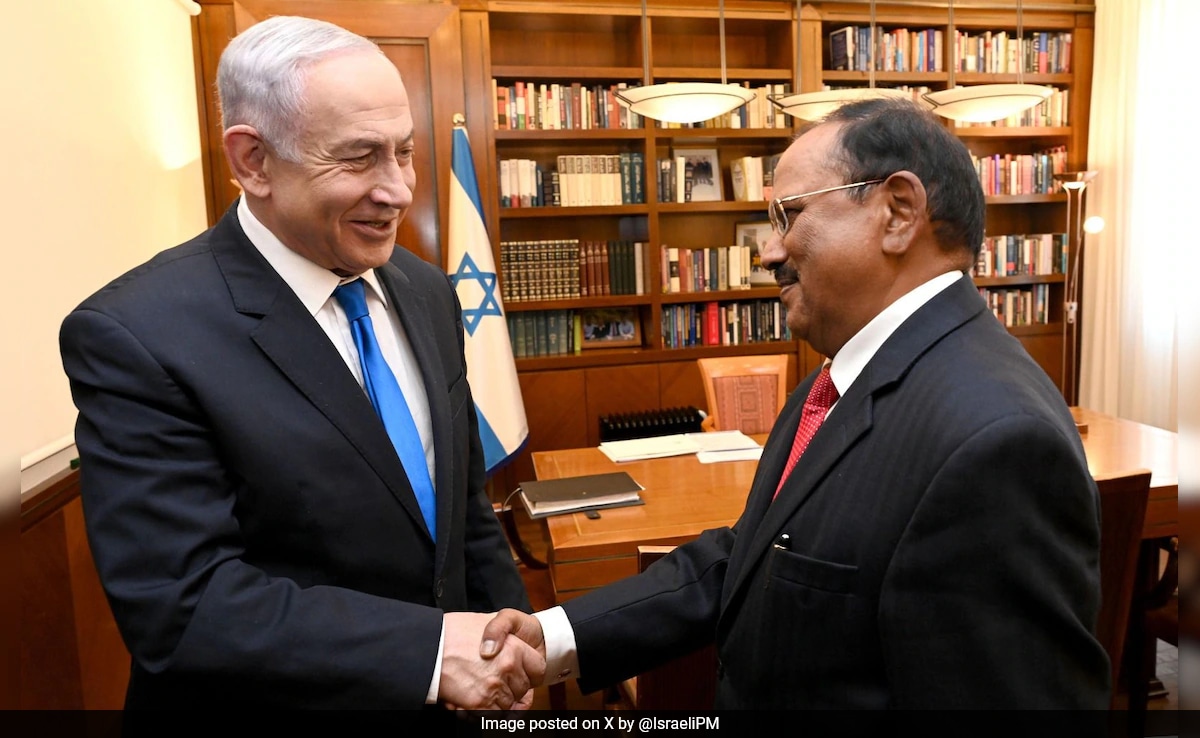
  • Ajit Doval Meets Israeli PM Benjamin Netanyahu, Discuss Gaza War, Humanitarian Aid World
  • AAP Releases 5th List Of 12 Candidates For Chhattisgarh Assembly Polls Nation
  • Bengaluru Residents, Hospitals Cry For Help As Water Reserves Dwindle Nation
  • Iran President Raisi backs Palestinian self-defence, warns Israel World

funds needed for nuclear energy

Posted on March 21, 2024 By admin


The Kudankulam nuclear power project in Tamil Nadu.
| Photo Credit: REUTERS

The story so far: On March 21, Brussels hosted the first-ever Nuclear Energy Summit, co-chaired by the Prime Minister of Belgium Alexander De Croo and the Director General of the International Atomic Energy Agency (IAEA) Rafael Mariano Grossi. Several world leaders joined the summit to highlight the role of nuclear energy in addressing climate change.

How did this come about?

The UN Climate Change Conference (COP28) in Dubai (UAE) in December 2023 stated the indispensable role of nuclear energy to meet climate goals. The declaration signed by 22 world leaders mentioned the need to triple nuclear energy capacity by 2050. The Nuclear Energy Summit, an initiative in collaboration with the IAEA’s ‘Atoms4Netzero’ programme, is part of the multilateral approach to decarbonisation. Nuclear power emits four times less carbon than solar farms or other renewable sources such as wind, hydropower, and geothermal. Most importantly, nuclear power has the capacity to supply uninterrupted energy irrespective of geographical constraints making it a crucial component of the wider renewable energy mix. Nuclear power plants (NPP) also have low operating costs, smaller land imprint and a longer life cycle compared to all the other renewable energy sources.

How can nuclear energy be financed?

Two key motives for the large-scale adoption of nuclear power as the base load energy source are technology and finance. Recent developments in nuclear technology including Small Modular Reactors (SMR), radiation proofing in existing plants, and extended fuel cycles, have the potential to substantially mitigate nuclear-related risks. Signifying the destigmatisation of nuclear energy is the entry of technology startups in an the otherwise government-run industry. The role of technical advancements in reducing carbon emissions is highlighted by an IAEA study, which predicts that while existing technologies will play a significant role, by 2050, half of carbon reductions will come from technologies currently in the prototype stage.

However, in spite of technical advancements, Multilateral Development Banks (MDBs) and private investors have not made any significant contribution to the industry. The World Bank has not provided financing for a nuclear project since its $40 million loan to Italy in 1959. There is a pressing need to reassess nuclear financing policies of MDBS to accommodate private capital or blended finance models.

Has the cooperative model worked?

There are successful financial practices that can be replicated, for instance the cooperative funding models of France, South Korea, Russia, and the U.K. where a group of investors raise credit from the market and take full responsibility for project delivery. In Finland, large power plants have been funded by multiple private companies since the 1970s using a cooperative finance model called ‘Mankala’. Under this model, companies jointly own energy producers and share the costs of building and operating plants. They don’t pay dividends but can buy the energy at a cost based on their ownership share, with investors being wholesalers, retailers, or large industrial firms. Financial creativity and market support with low interest rates can unravel the potential of nuclear energy at scale.

There are 440 nuclear reactors in the world, accounting for a quarter of the world’s low-carbon energy. The number of nuclear reactors is increasing, with 60 reactors under construction and 110 in the planning stage, most being in Asia, particularly China, which is soon to overtake the U.S. and the nuclear giant France. China has set a target to produce 10% of its electricity from nuclear energy by 2035 and 18% by 2060. However, the state of nuclear infrastructure development and finance mobilisation is not proportional. NuScale Power, previously expected to be the first U.S. company licensed to build a 462MW SMR in Utah, terminated its planned project due to rising costs. Nuclear powerhouses Westinghouse and Areva also filed bankruptcy due to project overruns.

What about India?

India’s first commercial NPP in Pahalgarh, Tarapur offers reliable energy at 2/kWh lower than solar power tariffs. At Kudankulam, Tamil Nadu, a newer power plant offers electricity in the range of 4-6/kWh comparable to coal-fired thermal power plants. Despite its versatile nature, nuclear power contributes only 1.6% of the total renewable energy mix in India. Stigma, weaponisation risk, radiation leak, regulation, high upfront cost, and long project overruns are the reasons for low adoption rate of nuclear energy.

Recently, the nuclear industry has been undergoing novel liberalisation, with ambitious plans for growth in India and abroad. Beginning with the invitation of $26 billion in private investments, a phase-wise tripling of nuclear capacity from 7,480 MW to 22,480 MW by 2031-2032, and Prime Minister Modi’s attendance at the core loading of the Prototype Fast Breeder Reactor (PFBR) all mark a positive future for the industry. The PFBR’s ability to generate fuel and power at the same time represents a significant advancement in India’s mostly self-reliant nuclear industry.

The author is a policy professional and a consultant at RIS, New Delhi. Tweets @Alinyst


Source link

Business Tags:finance for nuclear energy, generating nuclear energy, Kudankulam nuclear energy power plant, Kudankulam power project, nuclear energy, nuclear energy future, nuclear energy technology, nuclear summit brussels

Post navigation

Previous Post: Sri Lanka to secure likely six year-moratorium on debt owed to India, Paris Club 
Next Post: Decade Long BJP-AAP Tussle Reaches Its Crescendo

Related Posts

  • Thirty-two firms express interest in IT hardware PLI: Minister Business
  • RBI To Release Monetary Policy Statement Today, Pause In Repo Rate Likely Business
  • Nifty hits fresh all-time high; Sensex climbs 150 points Business
  • Rupee jumps 9 paise to 83.37 against U.S. dollar in early trade Business
  • Budget 2023 | PAN to be used as common identifier for digital systems Business
  • India has high debt like China, but risks are moderated: IMF Business

More Related Articles

Market mayhem: investors’ wealth plunges ₹7.59 lakh crore on October 23 Business
Several commercial team members resigned as part of strategic restructuring: SpiceJet Business
Rupee trades flat at 83.24 against U.S. dollar in early trade Business
Mumbai region to see 34% growth in skyscrapers by 2030, says study Business
ICICI Bank reports 40% rise in standalone net profit to ₹9,648 crore Business
Retail inflation eases marginally to 5.09% in February Business
SiteLock

Archives

  • July 2024
  • June 2024
  • May 2024
  • April 2024
  • March 2024
  • February 2024
  • January 2024
  • December 2023
  • November 2023
  • October 2023
  • September 2023
  • August 2023
  • July 2023
  • June 2023
  • May 2023
  • April 2023
  • March 2023
  • February 2023
  • January 2023
  • December 2022
  • November 2022
  • October 2022
  • September 2022
  • August 2022
  • July 2022
  • June 2022
  • May 2022

Categories

  • Business
  • Nation
  • Science
  • Sports
  • World

Recent Posts

  • In Mongolia, young leaders seek to usher in new dawn of democracy
  • MK Stalin Reacts To BSP Tamil Nadu Chief’s Murder, Cops Arrest 8 Suspects
  • “Was It Yuzvendra Chahal’s Idea?”: PM Narendra Modi’s Quip On T20 World Cup Final Celebration Goes Viral – Watch
  • PCB Chief Mohsin Naqvi’s Huge Remark On Chances Of India-Pakistan Series
  • Catholic Church To Pay $76 Million To Hundreds Of Sex Abuse Victims In Canada

Recent Comments

  1. GkJwRWEAbS on UP Teacher Who Asked Students To Slap Muslim Classmate
  2. xreDavBVnbGqQA on UP Teacher Who Asked Students To Slap Muslim Classmate
  3. aANVRzfUdmyb on UP Teacher Who Asked Students To Slap Muslim Classmate
  4. YQCyszVBmIP on UP Teacher Who Asked Students To Slap Muslim Classmate
  5. aiXothgwe on UP Teacher Who Asked Students To Slap Muslim Classmate
  • IPL 2024: Rishabh Pant suspended for one match due to slow over-rate, fined ₹30 lakh Sports
  • Kenyan Climber, His Nepali Guide Die On Mount Everest World
  • A fire at a lithium battery factory in South Korea kills 22 mostly Chinese migrant workers World
  • India vs Sri Lanka, Asia Cup 2023 Final: W,0,W,W,4,W – Mohammed Siraj Leaves Everyone Stunned With Near-Perfect Over. Watch Sports
  • US Welcomes India’s Move Of Reducing Tariffs On Agricultural Product Nation
  • Vikramaditya Singh’s Big Move As Congress Struggle To Douse Himachal Crisis Nation
  • Iranian teen injured on Tehran Metro while not wearing a head scarf has died, state media says World
  • England vs Pakistan 4th T20I Live Score and Latest Updates: Babar Azam And Co. Face Must-Win Scenario Sports

Editor-in-Chief:
Mohammad Ariff,
MSW, MAJMC, BSW, DTL, CTS, CNM, CCR, CAL, RSL, ASOC.
editor@artifex.news

Associate Editors:
1. Zenellis R. Tuba,
zenelis@artifex.news
2. Haris Daniyel
daniyel@artifex.news

Photograher:
Rohan Das
rohan@artifex.news

Artifex.News offers Online Paid Internships to college students from India and Abroad. Interns will get a PRESS CARD and other online offers.
Send your CV (Subjectline: Paid Internship) to internship@artifex.news

Links:
Associate Journalism
About Us
Privacy Policy

News Links:
Breaking News
World
Nation
Sports
Business
Entertainment
Lifestyle

Registered Office:
72/A, Elliot Road, Kolkata - 700016
Tel: 033-22277777, 033-22172217
Email: office@artifex.news

Editorial Office / News Desk:
No. 13, Mezzanine Floor, Esplanade Metro Rail Station,
12 J. L. Nehru Road, Kolkata - 700069.
(Entry from Gate No. 5)
Tel: 033-46011099, 033-46046046
Email: editor@artifex.news

Copyright © 2023 Artifex.News Newsportal designed by Artifex Infotech.